Vaihda tulosteeseen
 Lue lisää







































 Teoksille tai reproduktioille, joiden mikä tahansa sivu on suurempi kuin 105 cm (noin 41 tuumaa), kehys toimitetaan osina purettuna sarjana. Tämä menetelmä varmistaa turvallisen toimituksen ja ehkäisee vaurioita kuljetuksen aikana.


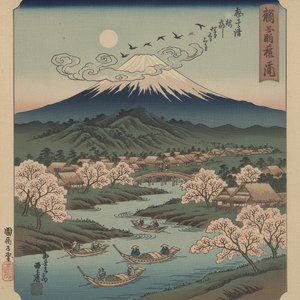
A Poetic Echo of Edo Japan: Exploring Hiroshige’s Station 23
Utagawa Hiroshige (1797-1858), a titan amongst *ukiyo-e* artists, didn't merely depict landscapes; he crafted visions imbued with the spirit of his era—a time of burgeoning commerce alongside profound cultural conservatism. “Station 23, Fujieda,” produced around 1847/52, exemplifies this masterful blend of observation and imagination. More than just a scenic portrayal of a coastal town nestled in Fuji Prefecture, it’s a window into the anxieties and aspirations of Edo society during its twilight years.
- Subject Matter: The print captures a bustling beach scene dominated by a horse-drawn carriage carrying passengers. Amidst this activity is a solitary dog, adding an element of quiet contemplation to the energetic tableau.
- Style & Technique: Hiroshige’s signature style—known as *tokaido* or “the journey”—is characterized by meticulous detail and atmospheric perspective. The artist skillfully employs woodblock printing techniques to achieve subtle gradations of color and texture, creating a sense of depth that transcends the flatness inherent in this medium.
- Historical Context: Produced during the reign of Emperor Tokugawa Minhō, Station 23 reflects the growing influence of Western ideas on Japan’s artistic sensibilities. However, Hiroshige retains a distinctly Japanese aesthetic, prioritizing harmony and conveying emotion through carefully considered composition and tonal variations.
Symbolism Within Tranquility: Interpreting Visual Elements
Beyond its immediate depiction of Fujieda Beach, Station 23 resonates with symbolic significance. The horse-drawn carriage represents the movement of commerce and societal progress—albeit tempered by the stillness of the sea. The dog, often interpreted as a symbol of loyalty and companionship, offers a counterpoint to the human activity surrounding it. Hiroshige’s masterful use of light and shadow enhances these interpretations, creating an emotional landscape that invites contemplation.
Hiroshige's Legacy: Influence Beyond Japan
Station 23 stands as testament to Hiroshige’s enduring impact on Western art history. Impressionists like Claude Monet and Vincent van Gogh were profoundly moved by his landscapes, recognizing in them a precursor to their own explorations of light and color. Hiroshige's ability to capture fleeting moments of beauty—a skill honed through years of painstaking observation—became a cornerstone of the Impressionist aesthetic.
Resources for Further Exploration
- Artwork Database: Station 23, Fujieda
- Artist Database: Hiroshige Utagawa II & Toyokuni Utagawa IV
- Artist Database: Hiroshige I, Utagawa Kiemon & Tsuruya
- Artist Database: Utagawa Hiroshige
- Museum Database: Nakagawa-machi Bato Hiroshige Museum of Art
Kysymykset ja vastaukset
Minkä tyyppinen teos Hiroshige:n "Asio 23, Fujieda" on?
Luettelossa teos Hiroshige:n "Asio 23, Fujieda" on luokiteltu tyypiksi Seinätaide. Kategoria auttaa löytämään samankaltaisia teoksia.
Kuka myy teoksen Hiroshige:n "Asio 23, Fujieda" käsinmaalattuja kopioita?
"Asio 23, Fujieda" on saatavilla muodossa käsinmaalattu öljyvärireproduktio pellavakankaalle. Voit tehdä tilauksen Käsinmaalattu jäljennös -sivulla, jossa voit valita haluamasi koon.
Kuka on teoksen "Asio 23, Fujieda" taiteilija?
Teos "Asio 23, Fujieda" on yhdistetty Hiroshige.
 Esikatselu
 Jaa teos
 Jaa
Jaa
 Tiedot
 Opas
Opas

 Lataa kuva
 Samanlaisia kohteita
 Röntgenkuvaus
 Diaesitys
 Kysymykset ja vastaukset
 Tilastot