Romanticism
A gun crew (Thomas Stothard)
Thomas Stothard (1755–1834) on luonut teoksen A gun crew. Se kuuluu Romanticism-liikkeeseen. Se on valmistettu materiaalilla Oil On Canvas.
- Oil On Canvas

 Esikatselu

 Käsinmaalattu öljymaalaus
 Jaa teos
 Jaa
 Teostiedot


 Lataa kuva
 Samanlaisia kohteita
 Röntgenkuvaus
 Diaesitys
 Kysymykset ja vastaukset

 Tilastot
A gun crew lyhyesti
- Teoksen nimi
- A gun crew
- Taiteilija
- Thomas Stothard (1755–1834)
- Taiteilijan syntymäpaikka
- Lontoo, Yhdistynyt kuningaskunta
- Tekniikka
- Oil On Canvas
- Taidesuuntaus
- Romanticism
- Aikakausi
- 19th Century
- Aihe
- maritime struggle, shipwreck rescue, human resilience, dramatic coastline, 18th century seafaring, historical labor
Mitä A gun crew esittää?
The Subject and Artist of the Work
In the dramatic scene of A gun crew, the viewer finds themselves amidst a chaotic struggle on a rugged, rocky shore. Sailors strain with every ounce of their strength, their bodies leaning into the heavy weight of a massive object—perhaps a piece of a shipwreck or a heavy fragment of debris—as they attempt to haul it from the sea. The air feels thick with the exertion of these men, caught in a moment of intense physical toil against the unyielding elements. This struggle highlights the sheer hardship and resilience required to survive the unpredictable nature of the ocean.
The artist behind this intense depiction is Thomas Stothard. Born in London, United Kingdom, Stothard brings a sense of narrative urgency to the canvas, focusing on the human cost of maritime life. He moves away from mere stillness to capture the very essence of desperation and the precariousness of existence at sea. Every figure in the composition seems locked in a battle against overwhelming forces, both natural and man-made, as they fight to reclaim something from the waves.
Composition and Visual Elements
The scene unfolds within a tightly packed space that pulls the viewer directly into the heart of the chaos. Figures cluster together in a frantic mass, their bodies overlapping to convey a sense of urgent, shared struggle. Every movement feels compressed, as if the very air is heavy with the effort of the men. Diagonal lines, formed by the straining ropes and the angled limbs of the sailors, cut through the frame to lead the eye toward the central point of action. This arrangement creates a feeling of immediacy, trapping the viewer within the struggle.
A flattened perspective heightens this sense of claustrophobia, making the rocky shore and the wreckage feel as though they are pressing inward. Light does not merely fall upon the scene; it seems to emanate from multiple sources, pouring down from above and glowing from within the wreckage itself. These light sources cast dramatic shadows that define the rugged textures of the environment and the straining muscles of the crew. The interplay of light and shadow emphasizes the desperation of the moment, highlighting the raw power of nature as it clashes against human resilience.
Technique and Artistic Style
The oil paint clings to the canvas with a heavy, impasto-like texture, particularly where the wreckage meets the shore. This thick application of pigment gives the scene a tactile, rugged quality, making the struggle feel physically present. The brushwork is not precise; instead, it is loose and expressive, using energetic strokes to capture the sudden movement and the chaotic energy of the sailors. Every layer of paint contributes to a sense of depth and turmoil, as if the medium itself is caught in the same upheaval as the figures on the rocks.
The style leans heavily into Romanticism, prioritizing raw emotion and the intensity of the moment over clinical realism. This emotional weight is carried by a dark and earthy color palette. Deep browns and blacks dominate the shadows, while strong, sudden bursts of red pull the eye through the darkness. Light emanates from multiple sources, appearing to glow from within the wreckage itself and from above, casting dramatic shadows that heighten the sense of urgency. The result is a scene defined by tension and the visceral power of the elements.
A gun crew korkearesoluutioiset kuvat
Tekijänoikeudet: teos on vapaasti käytettävissä, taiteilija kuoli vuonna 1834.
Thomas Stothard, A gun crew. Tekijänoikeudet vapaat.
Kysymyksiä teoksesta A gun crew ja vastauksia niihin
Mitä tekniikkaa teoksessa Thomas Stothard:n "A gun crew" on käytetty?
Thomas Stothard käytti teoksessa "A gun crew" Oil On Canvas-tekniikkaa. Tekniikka määrittelee alkuperäisen teoksen materiaalisen luonteen.
Mitä Thomas Stothard:n "A gun crew" esittää?
Thomas Stothard:n "A gun crew" esittää: maritime struggle, shipwreck rescue, human resilience, dramatic coastline, 18th century seafaring, historical labor, force of nature.
Onko teoksen Thomas Stothard:n "A gun crew" kuva vapaasti käytettävissä?
Tekijänoikeuksien osalta teos "A gun crew" on vapaasti käytettävissä – tekijänoikeussuoja on päättynyt.
Kuka on teoksen "A gun crew" taiteilija?
"A gun crew" on Thomas Stothard:n luoma teos. Tällä sivulla olevat tiedot kuvaavat Thomas Stothard:n alkuperäistä työtä.
Mihin tyylisuuntaan "A gun crew" kuuluu?
"A gun crew" on Romanticism-tyylisuuntaan kuuluva teos. Tyylisuunta ilmaisee taiteellisen perinteen, johon teos kuuluu.
Mihin Thomas Stothard'n uran vaiheeseen "A gun crew" kuuluu?
"A gun crew" kuuluu Thomas Stothard uran Mature Period-vaiheeseen. Tämä luokittelu yhdistää teoksen taiteilijan kehitysvaiheeseen.
Mikä selittää teoksen Thomas Stothard:n "A gun crew" tekijänoikeustilanteen?
Thomas Stothardn teos "A gun crew" on vapaasti käytettävissä – tekijänoikeussuoja on päättynyt. Tekijänoikeusajat lasketaan taiteilijan kuolinvuodesta, ja Thomas Stothard kuoli vuonna 1834.
Miten teos "A gun crew" sijoittuu osaksi Thomas Stothard'n tuotantoa?
"A gun crew" kuuluu Thomas Stothard:n Romanticism-kauden tuotantoon, jonka tunnettuun teemaan kuuluvat classical & romantic blend, seafaring hardship depicted, humanity vs. nature's force, british maritime history, stothard's sentimental style, illustrative historical scenes, moralizing narrative art."
Onko "A gun crew" tyypillinen esimerkki siitä, mitä Thomas Stothard yleensä loi?
Thomas Stothard:n tunnettujen teemojen – classical & romantic blend, seafaring hardship depicted, humanity vs. nature's force, british maritime history, stothard's sentimental style, illustrative historical scenes, moralizing narrative art – joukossa "A gun crew" tuo oman painopisteensä aiheeseen maritime struggle, shipwreck rescue, human resilience, dramatic coastline, 18th century seafaring, historical labor, force of nature.
Tietoa taiteilijasta, Thomas Stothard

1755–1834, Yhdistynyt kuningaskunta
Thomas Stothard
Thomas Stothard: Unelmien ja historiallisten kaiujen kutojan Vuonna 1755 Lontoon vilkkaassa sydämessä syntyneen Thomas Stothardin elämä oli kuin taidokas kudelma, joka oli tehty herkän kauneuden, taiteellisen oppipoikavuuden ja tarinankerronnan ikuisen lumon säikeistä. Hänen varhaisia vuosia leimasi hauras terveys – lapsuus viettiin pitkältan poissa kotoa hänen alttiutensa vuoksi – mutta tämä ajanjakso kasvatti hänessä syvän arvostuksen hiljaista pohdiskelua kohtaan, mikä myöhemmin antoi sielun hänen taiteelleen. Hän aloitti taiteellisen matkansa brokadisilkki-kuvioiden piirtäjänä, taito, joka opetti hänelle tarkkanäköisyyden yksityiskohtiin sekä syvän ymmärryksen tekstuureista ja väreistä – ominaisuuksia, jotka hän myöhemmin siirsi kuuluisille kuvituksilleen. Stothardin virallinen koulutus alkoi Royal Academyssa vuonna 1778, mikä oli käännekohta, joka työnsi hänet visuaalisen kerronnan uralle.
Tietoa taiteilijasta Thomas Stothard Thomas Stothardn merkittävimmät teokset
Myös Thomas Stothard -teoksia
 The Supper by the Fountain1820
 Portrait Of General Francis Marion )1732
 The Return of Othello, 'Othello,' Act II, Scene II1799
 The Horrors of War, Sketch for Burghley House Mural1800
Esseitä teoksesta A gun crew
 Emotion vs. Observation: A Guide to Romanticism and RealismMaster the differences between Romanticism and Realism through expert analysis. Discover the art of emotion versus observation now.
 Echoes of Conflict: A Curated Exploration of Art Capturing the Intensity of War and Human ResilienceExplore a profound collection of historical war art. From visceral realism to poignant depictions of human resilience, discover museum-qual…
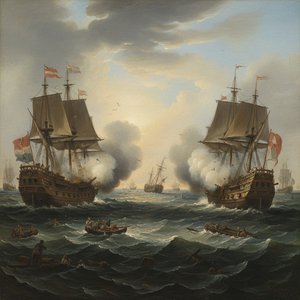 Masterpieces of Maritime Warfare: The Artistry and Intensity of Naval Combat in Historical PaintingExplore the dramatic intensity of naval combat through art history. From Romanticism to classical maritime masterpieces, discover how legen…