() ·

A painting made for you, by hand

Swimming

Käsinmaalattu öljyvärinen jäljennös

Käsinmaalattu öljyväri kankaalle haluamassasi koossa ja kehyksissä, taiteilijoidemme valmistamana tilauksesta. ( Vaihda tulosteeseen Siirry digitaaliseen kuvaan)

Keräilykohteen kuvaus

Explore Thomas Eakins’ ‘Swimming,’ a seminal American masterpiece! This 1884 oil painting captures nude male figures in motion with realism & intrigue. Discover its homoerotic themes & artistic significance.

Taiteilijan elämäkerta

Thomas Eakins (1844-1916) oli amerikkalainen realistinen taiteilija, joka tunnettiin epäilemättömästi tarkkoista muotokuvistaan ja urheilunäkymistä. Tutustu hänen merkittävään perintöönsä!

from ·

Chapter 1

How large should it be?

Slide to change the size; the picture on the left shows the frame at its real width. The proportions of the original are kept.

Vakiokoko
räätälöity
CM
INCH

Valitse valmiista mitoistamme sellaiset, jotka vastaavat teoksen alkuperäisiä mittasuhteita.

leveys
korkeus

Kirjoita tarvitsemasi leveys ja korkeus, jotta teos sopii kehyksiisi tai seinällesi. Koska kyseessä on käsinmaalattu teos, taiteilija voi maalata hieman enemmän kuvan ympärille tai rajata sitä hieman, jos haluat eri muotoisen koon — valinta on sinun. Lähetämme sinulle digitaalisen mallikuvan hyväksyttäväksi ennen kuin maalaus alkaa. Tällä sivulla näkyvä kuva ei vastaa lopullista tulosta — vain mallikuva näyttää sen.

Chapter 2

How should it arrive?

Choose the edges of the stretched canvas

Choose your frame

Corner sample of the WhiteWrap canvas edge finish, stretched on massiivipuu bars
White €1
Corner sample of the BlurSideWrap canvas edge finish, stretched on massiivipuu bars
Blurside €1
Corner sample of the ExtendedWrap canvas edge finish, stretched on massiivipuu bars
Extended €1
Corner sample of the P118B picture frame: valettu polystyreeni, 5 cm wide and 3 cm thick
P118B €10
Corner sample of the P118H picture frame: valettu polystyreeni, 5 cm wide and 3 cm thick
P118H €10
Corner sample of the P118W picture frame: valettu polystyreeni, 5 cm wide and 3 cm thick
P118W €10
Corner sample of the P438Z picture frame: valettu polystyreeni, 5.5 cm wide and 3.5 cm thick
P438Z €10
Corner sample of the P508JH picture frame: valettu polystyreeni, 7 cm wide and 3.5 cm thick
P508JH €12
Corner sample of the P508YH picture frame: valettu polystyreeni, 7 cm wide and 3.5 cm thick
P508YH €12
Corner sample of the P805H picture frame: valettu polystyreeni, 5 cm wide and 3.5 cm thick
P805H €10
Corner sample of the P805Z picture frame: valettu polystyreeni, 5 cm wide and 3.5 cm thick
P805Z €10
Corner sample of the P919BZ picture frame: valettu polystyreeni, 7 cm wide and 3.5 cm thick
P919BZ €10
Corner sample of the P919G picture frame: valettu polystyreeni, 7 cm wide and 3.5 cm thick
P919G €10
Corner sample of the P919XJ picture frame: valettu polystyreeni, 7 cm wide and 3.5 cm thick
P919XJ €10
Corner sample of the P959ZH picture frame: valettu polystyreeni, 5 cm wide and 3 cm thick
P959ZH €10
Corner sample of the P968JZ picture frame: valettu polystyreeni, 6 cm wide and 4 cm thick
P968JZ €12
Corner sample of the W106C picture frame: massiivipuu, 5 cm wide and 3 cm thick
W106C €8
Corner sample of the W218G picture frame: massiivipuu, 5 cm wide and 3 cm thick
W218G €10
Corner sample of the W218JH picture frame: massiivipuu, 5 cm wide and 3 cm thick
W218JH €8
Corner sample of the W218Y picture frame: massiivipuu, 5 cm wide and 3 cm thick
W218Y €10
Corner sample of the W307PJ picture frame: massiivipuu, 6 cm wide and 3 cm thick
W307PJ €10
Corner sample of the W316G picture frame: massiivipuu, 6 cm wide and 3 cm thick
W316G €10
Corner sample of the W316PJ picture frame: massiivipuu, 6 cm wide and 3 cm thick
W316PJ €8
Corner sample of the W316Y picture frame: massiivipuu, 6 cm wide and 3 cm thick
W316Y €10
Corner sample of the W398PJ picture frame: massiivipuu, 5 cm wide and 3 cm thick
W398PJ €8
Corner sample of the W4111J picture frame: massiivipuu, 6.5 cm wide and 3.5 cm thick
W4111J €10
Corner sample of the W500HY picture frame: massiivipuu, 7 cm wide and 5 cm thick
W500HY €15
Corner sample of the W500JH picture frame: massiivipuu, 7 cm wide and 5 cm thick
W500JH €15
Corner sample of the W692G picture frame: massiivipuu, 8 cm wide and 4 cm thick
W692G €12
Corner sample of the W849H picture frame: massiivipuu, 5 cm wide and 3 cm thick
W849H €8
Corner sample of the W940BG picture frame: massiivipuu, 7.5 cm wide and 4.5 cm thick
W940BG €15
Corner sample of the W953PJ picture frame: massiivipuu, 6 cm wide and 3.5 cm thick
W953PJ €8
Corner sample of the H24-GOLD picture frame: kaiverrettua puuta ja gessoa, 10 cm wide and 6 cm thick
H24-GOLD €30
Corner sample of the H24-SILVER picture frame: kaiverrettua puuta ja gessoa, 10 cm wide and 6 cm thick
H24-SILVER €30
Corner sample of the H36-GOLD picture frame: kaiverrettua puuta ja gessoa, 15 cm wide and 6.5 cm thick
H36-GOLD €45
Corner sample of the H36-SILVER picture frame: kaiverrettua puuta ja gessoa, 15 cm wide and 6.5 cm thick
H36-SILVER €45
Kehyksen esikatselu
Kehystetty

Moulding: . Overall size with the frame: .

Chapter 3

Who paints it, and should anything change?

Examples of what can be changed: Replace face with customer photo; Add pet (e.g., replace cat with dog); Include hidden message in background; Change background landscape or elements.
After order, OriginalUniqueArt.com team will email client for instructions and provide a mockup preview

Maailmanlaajuinen toimitus () 3–4 viikossa tavallisen 5 viikon sijaan. (2 marraskuu). Laadusta ei tingitä.

Chapter 4

The finishing touches

A nameplate, as in a museum?

Kaiverretun pronssilaatan tiedot

This elegant plaque features the artist's name and the title of the artwork, finely engraved for a timeless presentation.

It is made from bronze with a refined, elegant finish. The text is precisely laser-engraved for a sharp and permanent result. Measuring 9x2 cm, the plaque is compact yet easy to read. It's built to be durable and scratch-resistant, offering a professional, museum-quality look. Mounting is simple thanks to the included adhesive backing.

Läpinäkyvän akryylilaatan tiedot

The plaque includes essential engraved details such as the artist's name, the title of the artwork, the date it was created, the type of media used-like oil on canvas or watercolor-a brief description of the piece, and a QR code that links to the complete artwork information.

It is crafted from clear acrylic, offering a sleek, modern appearance. The text is UV-engraved in black to ensure strong visual contrast. With a size of 10x15 cm, it ensures optimal readability. It comes equipped with two metal hooks for secure wall mounting. The plaque is designed to be weather-resistant, making it suitable for various environments, and it includes interactive features that work seamlessly with smartphone scanning.

Mustan akryylilaatan tiedot

This elegant plaque includes engraved information such as the artist's name, the title of the artwork, the date it was created, the type of media used (like oil on canvas or watercolor), a short description of the artwork, and a QR code for quick access to more information.

The plaque itself is made from refined black acrylic with a premium finish. The text is laser-engraved in white for high contrast and readability. Its size is 10x15 cm, designed to be easy to read. It comes with two metal hooks for professional mounting. The design is sleek and fits any interior style. It is also weather-resistant and durable, with built-in digital integration for mobile compatibility.

A protective varnish?

When do you need it?

Chapter 5

Your painting, as you ordered it

Swimming

Reproduktiotekniikka

Replikaatin koko

-

Kokenut huipputaiteilija

Lisää yksityiskohtia, hienostuneisuutta ja enemmän aikaa tuotantoon

-

Reproduktion kehystysvaihtoehdot

-

-

Teoksille tai reproduktioille, joiden mikä tahansa sivu on suurempi kuin 105 cm (noin 41 tuumaa), kehys toimitetaan osina purettuna sarjana. Tämä menetelmä varmistaa turvallisen toimituksen ja ehkäisee vaurioita kuljetuksen aikana.

Vaatii ammattimaista kokoamista – kyseessä ei ole tee-se-itse-tuote.
Sarja on koottava ja kangas kiristettävä kokeneen kehystysammattilaisen toimesta käyttäen puuliimaa (ei sisälly pakkaukseen), kangaspinnetteitä ja puristimia, jotta kehyksen kulmat pysyvät suorina liiman kuivuessa. Virheellinen kokoaminen tai epätasainen kankaan kiristys voi vaurioittaa teosta pysyvästi, eikä tällaiset vauriot ala takuun piiriin.

  • Kaikki massiivipuupalat sisältyvät, tarkasti mittojen mukaan leikattuina.

  • Kootaan mukana tulevilla ruuveilla sekä kulmaliitoksia varten tarvittavalla puuliimalla, jota ei toimiteta, joten se on hankittava kehystäjältä.

  • Vaatii ammattilaisvälineitä, jotka eivät sisälly pakkaukseen: kankaan venytyspihdit (kiristin) ja puristimet, joilla pidetään kehyksen puut suorassa liiman kuivuessa.

Tärkeää:
Kulmaliitoksissa tarvitaan puuliimaa, kehyksien osat on pidettävä puristimilla, kunnes liima on täysin kuivunut, ja koottuun kehykseen jännitettävän kankaan kiristämiseen tarvitaan kangaspenssipihti. Mikään näistä ei sisälly pakkaukseen. Suosittelemme varmistamaan kokeneen kehystäjän saatavuuden ennen tämän kokoisen kehyksen tilaamista.

Nimilaatta

-

-

Suojalakkaus

Kiiltävä lakka (syventää värejä, suojaa valolta ja kosteudelta)

-

Mukauta taideteokseni

Esimerkkejä muokattavista asioista: Vaihda kasvot asiakkaan omaan valokuvaan; Lisää lemmikki (esim. vaihda kissa koiraan); Lisää taustalle piilotettu viesti; Muuta taustan maisemaa tai elementtejä.

-

Pikatoimitus

Maailmanlaajuinen toimitus () 3–4 viikossa tavallisen 5 viikon sijaan. (2 marraskuu). Laadusta ei tingitä.

-

Pikatoimitus

Maailmanlaajuinen toimitus () 5 viikon kuluessa. (9 marraskuu).

Sisältyy hintaan

Kokonaishinta

€ 400

Kokonaishinta € 400

Lasivaihtoehto on saatavilla vain alle 110 cm kokoisille teoksille

Included with every order

  • Ilmainen pikatoimitus ympäri maailman
  • Korkealaatuinen pellavakangas
  • Kattava kuljetusvakuutus
  • Tulliveron palautustakuu
  • Takuu täydellisestä värien vastaavuudesta
  • 100 päivän palautusoikeus (vain valmistusvirheet)
  • 100% rahat takaisin -takuu
  • Määräalennus tarjolla

The Genesis of a Revolutionary Image

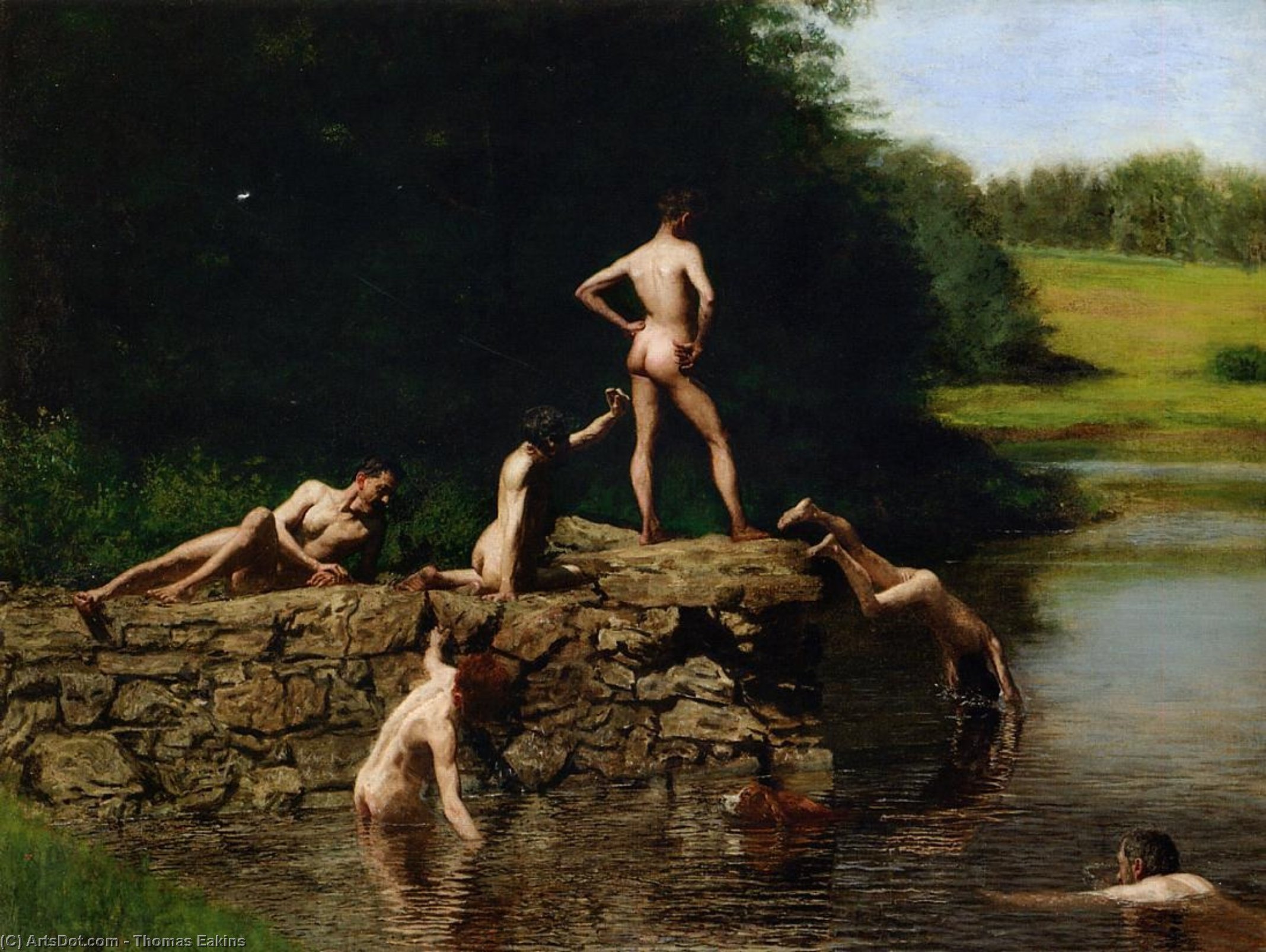
Thomas Eakins’ “Swimming,” painted in 1884, isn't merely a depiction of men enjoying a summer day; it’s a profound exploration of the human form, movement, and the burgeoning spirit of American realism. Born from meticulous observation and a desire to capture not just appearances but the very essence of experience, this oil on canvas transcends simple representation, inviting viewers into a world of dynamic energy and subtle psychological depth. Eakins, deeply influenced by his scientific training – he’d studied anatomy at Jefferson Medical College – approached the subject with an almost clinical precision, yet infused it with a remarkable sensitivity to light, color, and the inherent beauty of the human body in motion.

The genesis of “Swimming” lies within Eakins' broader project: documenting the lives of Philadelphia’s elite. He sought subjects not for their social standing alone, but for their physicality – their strength, grace, and vulnerability. The painting itself emerged from a series of preparatory sketches and photographs taken at Dove Lake, a popular swimming spot outside the city. These studies reveal Eakins' painstaking process: capturing the precise angles of limbs in water, analyzing the interplay of light on skin, and meticulously charting the subtle shifts in posture as men plunged into the lake. The resulting image is not a spontaneous snapshot but the culmination of countless hours of observation and artistic refinement.

A Bold Statement of Form and Sexuality

“Swimming” immediately challenged the prevailing Victorian sensibilities surrounding nudity in art. While classical sculpture often idealized the male nude, Eakins presented figures stripped bare with an unapologetic directness. The painting’s composition—six men positioned within a rocky stream environment—creates a dynamic tableau of movement and camaraderie. The deliberate positioning of the bodies, particularly the prominent but subtly ambiguous rendering of one figure's lower torso, sparked considerable controversy at the time. Eakins wasn’t simply depicting a swimming scene; he was engaging with complex questions about masculinity, sexuality, and the role of the male body in American culture.

The homoerotic undertones within “Swimming” are undeniable, yet they aren't presented in a sensationalized or overtly provocative manner. Instead, Eakins’ focus remains firmly on capturing the physicality of the human form – the ripple of muscles, the sheen of wet skin, the fluidity of movement. The painting invites viewers to contemplate not just the act of swimming but also the unspoken connections between the men depicted, fostering a sense of intimacy and shared experience.

Technique and Atmosphere: A Symphony of Realism

Eakins’ mastery of technique is immediately apparent in “Swimming.” He employed a layered approach to oil paint, building up form through meticulous brushwork that captures the texture of skin, stone, and water. The use of light is particularly striking – soft, diffused illumination creates an atmosphere of hazy warmth, while carefully rendered shadows define the contours of the figures’ bodies. The painting's perspective draws the eye into the scene, guiding it from the foreground to the distant trees and hills, creating a sense of depth and immersion.

Furthermore, Eakins’ understanding of color is remarkable. He skillfully utilized muted earth tones—ochres, browns, greens—to evoke the natural setting while simultaneously highlighting the vibrant hues of skin and water. The subtle variations in tone create a dynamic interplay of light and shadow, adding to the painting's overall sense of realism and immediacy. The careful attention to detail – from the ripples on the water’s surface to the texture of the stone wall—demonstrates Eakins’ commitment to capturing every nuance of his subject.

A Legacy of Innovation

“Swimming” stands as a pivotal work in American art history, representing a significant departure from traditional academic painting. It exemplifies Eakins' pioneering approach to realism – his willingness to depict the human body with unflinching honesty and psychological insight. The painting’s influence can be seen in the works of subsequent generations of American artists who sought to capture the complexities of modern life with a similar blend of observation, emotion, and technical skill. Today, “Swimming” continues to captivate viewers with its dynamic composition, evocative atmosphere, and profound exploration of the human condition.

Kysymykset ja vastaukset

Ovatko "Swimming" värit voimakkaita vai pehmeitä?

Teoksen "Swimming" väri-intensiteetti on Monochromatic. Intensiteetti kuvaa värien voimakkuutta.

Miten "Swimming" sijoittuu Thomas Eakins'n toistuvien aiheiden joukkoon?

Thomas Eakins:n tunnettujen teemojen – renaissance anatomical study, realist observation & detail, homosocial camaraderie", scientific inquiry's gaze, philadelphia social scene, eakins' provocative vision, exploration of male form", pushing artistic boundaries" – joukossa "Swimming" tuo oman painopisteensä aiheeseen nude figures, swimming scene, male bathers, american art, motion & form, realistic depiction, lake landscape.

Minkä kokoisena minun kannattaisi tulostaa "Swimming" huoneeseeni?

Living Room-tilaan "Swimming"-teokselle suositellaan Large-kokoista tulostetta.

More about this painting

Esikatselu Esikatsele AR-tilassa Vaihda tulosteeseen Siirry digitaaliseen kuvaan Jaa teos
Tiedot Opas Lisää suosikkeihin Lataa kuva Samanlaisia kohteita Röntgenkuvaus Diaesitys Q&A Tilastot

In numbers

  • 1884the year it was painted
  • 29frames to choose from
  • standard sizes, in its own proportions
  • 5weeks to paint and deliver it
Thomas Eakins

Thomas Eakins

1844 - 1916, Yhdysvallat

Quick facts about Thomas Eakins

  • Artistic Movement Or Style: Realismi
  • Artists Or Movements Influenced By This Artist: ['Amerikkalainen Realismi']
  • Artists Who Influenced This Artist: ['Jean-Léon Gérôme']
  • Date Of Birth: 25. heinäkuuta 1844
  • Date Of Death: 25. kesäkuuta 1916
  • Full Name: Thomas Cowperthwait Eakins
  • Nationality: Amerikkalainen
  • Notable Artworks:
    • Max Schmitt
    • The Gross Clinic
    • Swimming Hole
  • Place Of Birth: Philadelphia, USA

Taiteilijan elämäkerta

Thomas Eakins: Elokuvanajan Totuuden Tulkija

Thomas Cowperthwait Eakins, syntynyt Philadelphiassa 25. heinäkuuta 1844, on amerikkalaisen taiteen merkittävin hahmo – totuutta tavoitteleva maalaaja, joka omisti elämänsä ihmiskokemuksen syvälliseen ymmärtämiseen. Hän ei ollut kiinnostunut pelkästään *kuvaamaan* maailmaa; hän pyrki purkamaan sen, ymmärtämään sen anatomian, sekä fyysisen että psykologisen, ja sitten rekonstruoimaan sen kankaalle uskomattomalla rehellisyydellä, joka usein rajoittui provokaatioon. Eakinsin tie ei ollut välitön tunnustus, vaan hidas, harkittu kehitys, kiista ja lopulta pysyvä tunnustaminen mahdollisesti syvällisimpänä realistina 1800-luvun ja varhaisen 2000-luvun amerikkalaisessa taiteessa. Hänen Philadelphian maailmansa ei ollut suurten maisemien tai romanttisten ihanteiden kaupunkia; se oli maailma lääkäreitä, roijareita, metsästäjiä ja tavallisia ihmisiä – ja nämä olivat hänen aiheensa, maalattu uskomattomalla tarkkuudella.

Varhaiset Vaikutukset ja Taiteellinen Muodostuminen

Eakinsin lapsuus loi sekä älyllistä uteliaisuutta että taiteellista taipumusta. Hänen isänsä, Benjamin Eakins, kirjoitusmestari ja käsinkirjoittaja, opetti hänelle kurinalaisuutta ja tarkkailua. Tämä perusta vahvistui entisestään hänen koulutuksensa Central High Schoolissa ja Pennsylvanian taideakatemiassa, jossa hän erottui huomattavasti piirtämisessä ja anatomiassa – intohimo, joka läpäisi koko teoksensa. Kuitenkin hänen aika Euroopassa, erityisesti Jean-Léon Gérômen opetus Pariisissa, muokkasi hänen taiteellista lähestymistapaansa merkittävästi. Gérômen korostus tarkkaan piirtämiseen ja historialliselle tarkkuudelle resonoi Eakinsin omien taipumusten kanssa, mutta hän siirtyi nopeasti siihen ylittämällä pelkän kopioinnin. Espanjan loman jälkeen hän hienosääti ymmärrystään valosta, varjoista ja suoran havainnon voimasta. Hän ei ollut tyytyväinen vain vanhojen mestareiden jäljittelyyn; hän halusi ymmärtää *miten* he saavuttivat niiden vaikutukset ja soveltaa sitä sitten omaan ainutlaatuiseen näkökulmaansa. Tämä aika vahvisti hänen sitoutumistaan maalaamiseen suoraan elävästä, mikä määrittäisi hänen uransa.

Liike ja Tekniikka

Eakinsin teokset ovat tunnettuja kiintymisestään realismia kohtaan – kieltäytymisestä idealisoimasta tai romantisoimasta aiheitaan. Hänen muotokuvansa, jotka käsittävät satoja, eivät ole kunniaosoituksia, joita malli toivoisi; ne ovat läpikuulavia tutkimuksia hahmoista, paljastavat sekä vahvuutta että haavoittuvuutta. Hän maalasi ihmisiä heidän ammateissaan – kirurgeja työssä *The Gross Clinic* -ssa, roijareita taistelussa *Max Schmitt in a Single Scull* -ssa – vangiten ei vain fyysisen ulkonäkönsä vaan myös heidän intensiteettinsä ja ammattinsa vaatimukset. Tämä omistautuminen totuudelle ulottui tekniikkaan. Eakins oli kiinnostunut liikkeestä, ja hän käytti innovatiivisia menetelmiä sen tarkkaan vangitsemiseen. Hän opiskeli anatomiata huolellisesti, usein leikkien ruumiita ymmärtääkseen ihmiskehon perusrakennetta. Hän jopa kokeili valokuvausta, käyttäen sitä työkaluna liikkeen tarkemman kuvan saavuttamiseksi maalauksissaan. Hänen varjo-valon käytönsä – dramaattinen valon ja varjon kontrasti – korosti entisestään realismia ja psykologista syvyyttä teoksissaan.

Kiista ja Perintö

Eakinsin ura oli kuitenkin merkitty kiistoihin. Hänen vaatimuksensa maalata suoraan elävästä, usein nude-malleilla, törmäsi Victorian Philadelphian konservatiivisiin aatteisiin. Hänen opetusmenetelmänsä Pennsylvanian taideakatemiassa olivat yhtä epätavallisia; hän korosti ihmiskehon tutkimista elävästä ja kannusti oppilaita kyseenalaistamaan perinteisiä taiteellisia konventioita. Tämä johti ristiriitoihin kollegoidensa kanssa ja lopulta hänen eräänsä vuonna 1886. Henkilökohtaiset skandaalit vahingoittivat hänen mainettaan elinaikanaan, jättäen hänet suuressa osassa taiteellista yhteisöä. Kuitenkin Eakins pysyi omistautuneena, jatkoi maalaamista ja opettamista yksityisesti kunnes terveytensä alkoi heiketä. Kuollessaan vuonna 1916 hänen työnsä tunnustettiin lopulta, ja hänet on nyt juhlittu keskeisenä hahmona amerikkalaisessa taiteessa. Hänen totuutta tavoittelevansa realisminsa, ihmiskehon tarkka anatomiatieteellinen ymmärrys ja syvällinen ihmisluonnon ymmärtämisen voima inspiroivat edelleen taiteilijoita ja vangitsevat yleisön huomion tänään. Hän jätti jälkeensä ei vain maalauksia, vaan taiteellisen johdonmukaisuuden perinnön ja rohkean pyrkimyksen totuuteen – todisteen havainnon voimasta ja ihmiskehon kauneudesta.

Avainteokset ja Kestävän Vaikutuksen

Useita teoksia seisoo Eakinsin geniaalisuuden huipentumina. *Max Schmitt in a Single Scull* (1871), jossa on mestarillinen kuvaus liikkeestä ja valosta, on ehkä hänen tunnetuin maalauksensa. *The Gross Clinic* (1875), joka oli kiistanalaista sen hetkellä, kun se esitteli epäpedanttina kirurgin työskentelyä, on edelleen voimakas todiste lääkäreiden omistautumisesta ja taitavuudesta. *William Rush and His Model* (1908) osoittaa hänen myöhäisempää tyyliään yhdistämällä muotokuvan ja allegorisen elementin. Näiden tiettyjen teosten lisäksi Eakinsin vaikutus näkyy lukemattomissa taiteilijoissa, jotka seurasivat häntä – niissä, jotka pyrkivät vangitsemaan ympäröivän maailman totuudella, tarkkuudella ja ihmisluonnon syvällisellä ymmärtämisellä. Hänen realisminsa asetti pohjan myöhemmille liikkeille, kuten Ashcan Schoolille, ja resonoi edelleen nykytaiteilijoiden kanssa. Hän on edelleen elävä voima amerikkalaisessa taiteessa, muistutus siitä, että todellinen taide ei ole kopiointia tai koristelemista, vaan rohkean pyrkimyksen totuuteen.

Pikaista tietoa

  • Subject or theme: Swimming, leisure
  • Notable elements: Nude figures, motion
  • Artistic style: Academic realism
  • Title: Swimming
  • Year: 1884

Taidevisat

Jokaisessa kysymyksessä on vain yksi oikea vastaus.

Kysymys 1:
What is the primary subject depicted in Thomas Eakins’ ‘Swimming’?
Kysymys 2:
In what year was ‘Swimming’ painted?
Kysymys 3:
Which of the following best describes Eakins’ artistic approach in ‘Swimming’?
Kysymys 4:
The painting ‘Swimming’ is considered significant within American art history primarily because it:
Kysymys 5:
What artistic movement did Eakins' work, including 'Swimming', align with?