
 Esikatselu
 Jaa teos
 Jaa
Jaa
 Tiedot
 Opas
Opas

 Lataa kuva
 Samanlaisia kohteita
 Röntgenkuvaus
 Diaesitys
 Kysymykset ja vastaukset
 Tilastot
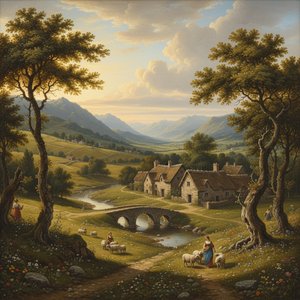
In Arcadia

- 197.0 x 290.0 cm

 Lue lisää
Giclée- ja taideprintit
Museolaatuisia giclée- tai kankaitaulun tulosteita nopealla tuotannolla ja joustavilla viimeistelyvaihtoehdoilla. ( Osta käsinmaalattu taideteos Siirry digitaaliseen kuvaan)




































Valitse valmiista mitoistamme sellaiset, jotka vastaavat teoksen alkuperäisiä mittasuhteita.

Syötä tarvitsemasi leveys ja korkeus, jotta tuloste sopii kehyksiisi tai seinällesi. Tulostetta voidaan vain leikata, sitä ei voida koskaan suurentaa alkuperäistä kuvaa suuremmaksi, joten eri muotoinen koko aiheuttaa osan kuvasta katoamisen. Lähetämme sinulle digitaalisen mallikuvan hyväksyttäväksi ennen kuin aloitamme tulostuksen. Tällä sivulla näkyvä kuva ei näytä lopullista rajausta — vain mallikuva näyttää sen.
Maailmanlaajuinen toimitus () 2 viikossa tavallisen 4–5 viikon sijaan. (13 marraskuu)

Ilmainen pikatoimitus ympäri maailman

Korkealaatuinen pellavakangas

Kattava kuljetusvakuutus

Tulliveron palautustakuu

Takuu täydellisestä värien vastaavuudesta

100 päivän palautusoikeus (vain valmistusvirheet)

100% rahat takaisin -takuu

Määräalennus tarjolla
 Lasivaihtoehto on saatavilla vain alle 110 cm kokoisille teoksille

In Arcadia
Giclée- ja taideprintit
Replikaatin koko
-


Kokonaishinta
€ 72
Taiteilijan elämäkerta
Early Life and Artistic Foundations
Thomas Alexander Harrison, born in Philadelphia in 1853, emerged as a significant figure in the landscape and marine painting traditions of his time. While details surrounding his early childhood remain somewhat elusive, it is known that he received initial artistic training at the prestigious Pennsylvania Academy of Fine Arts. However, his path wasn’t immediately dedicated to pure artistry; for nearly six years, Harrison worked as a draftsman for a United States government survey expedition meticulously mapping the Pacific coast. This experience, from 1872-1877, proved formative, instilling in him a deep appreciation for the vastness of nature and an analytical eye honed by precise observation—qualities that would later define his artistic style.
In 1879, Harrison embarked on a pivotal journey to Paris, a decision that irrevocably shaped his career. He enrolled at the École nationale supérieure des Beaux-Arts, studying under the renowned academic painter Jean-Léon Gérôme and briefly with Jules Bastien-Lepage. While benefiting from their instruction, Harrison soon found himself chafing against the constraints of traditional academic methods. This dissatisfaction led him to seek inspiration elsewhere, specifically in the coastal regions of Brittany, France.
Brittany and the Luminosity of Impressionism
The rugged coastline of Brittany became Harrison’s artistic sanctuary. In towns like Pont-Aven and Concarneau, he immersed himself in capturing the poetic light and ever-changing moods of the sea. It was here that his signature style began to blossom—a luminous naturalism infused with impressionistic sensibilities. Unlike many of his contemporaries who rigidly adhered to academic conventions, Harrison embraced a more fluid approach, prioritizing the direct observation of nature and the evocative power of color and atmosphere.
His early success at the Paris Salon in 1882 with *Châteaux en Espagne* (Castles in Spain), depicting a daydreaming boy on the beach, signaled his growing recognition. However, it was his large canvas *En Arcadie*, exhibited in 1885, that truly established his reputation. This work, a remarkable study of flesh tones and light, resonated with younger artists and demonstrated Harrison’s mastery of plein-air painting—painting outdoors directly from nature.
Influences and Artistic Development
Harrison's artistic development was influenced by several key factors. His brother, Birge Harrison, also a successful artist, provided both companionship and encouragement. The French Impressionists, with their focus on capturing fleeting moments of light and color, undoubtedly played a role in shaping his aesthetic vision. However, Harrison’s work distinguishes itself through its unique blend of analytical precision—a legacy of his surveying experience—and emotional sensitivity.
He became an integral part of the artist colony at Concarneau, where he shared ideas and techniques with fellow painters like Cecilia Beaux. Her observations suggest that Harrison's engineering background contributed to his methodical approach to painting, allowing him to dissect and reconstruct natural forms with remarkable accuracy. This analytical foundation, combined with his passion for capturing atmospheric effects, resulted in seascapes of exceptional depth and luminosity.
Major Achievements and Recognition
Throughout his career, Harrison consistently garnered critical acclaim and numerous awards for his paintings. His serial depictions of gently breaking waves, such as *The Wave* (circa 1885), became iconic representations of the Breton coastline. This particular work, now held in the collection of the Pennsylvania Academy of the Fine Arts, exemplifies his ability to convey both the power and serenity of the ocean.
Harrison’s paintings were not merely technical exercises; they were imbued with a sense of poetic emotion. He sought to capture the essence of nature—its light, its movement, and its inherent beauty. His work resonated with audiences who appreciated his ability to evoke a feeling of tranquility and wonder. The influence of his art extended beyond the canvas, even capturing the attention of literary figures like Marcel Proust, whose writings suggest an appreciation for Harrison’s evocative depictions of coastal scenes.
Historical Significance and Legacy
Thomas Alexander Harrison occupies a unique position in American art history as a bridge between traditional academic painting and the emerging Impressionist movement. He successfully synthesized these seemingly disparate styles, creating a body of work that is both technically masterful and emotionally resonant. His dedication to plein-air painting helped to popularize this technique among American artists, paving the way for future generations of landscape painters.
Although he spent most of his career in France, Harrison remained deeply connected to his American roots. He exhibited his work widely in both Europe and the United States, contributing significantly to the cross-cultural exchange of artistic ideas. Today, his paintings are held in prominent museum collections around the world, serving as a testament to his enduring legacy as a luminous interpreter of nature’s beauty.

Thomas Alexander Harrison
1853 - 1930 , United States
Pähkinänkuoressa
- Full Name: Vincent Willem van Gogh
- Nationality: Dutch
- Date Of Birth: 1853
- Date Of Death: 1930
- Place Of Birth: Philadelphia, United States of America
- Notable Artworks:
- Sunflowers
- Bedroom in Arles
- Starry Night
- Wheatfield with Crows
- Artistic Movement Or Style: Post-Impressionism
- Artists Who Influenced This Artist:
- Jean-François Millet
- Charles Bargue
- Artists Or Movements Influenced By This Artist:
- Fauves
- Expressionism
Aiheeseen liittyvät artikkelit

The Arcadian Ideal: Tracing the History and Mythic Roots of Pastoral Landscape Painting
Trace the mythic evolution of pastoral landscapes from Arcadia to Romanticism. Explore this masterclass in art history now.
Evoking Arcadia: A Historical & Aesthetic Exploration of Rural Landscape Art
Explore the rich history of pastoral landscape art, from classical Arcadia to Impressionism & beyond. Discover key artists, movements, and how to collect serene rural scenes for your home. Expert insights at OriginalUniqueArt.
Akateemisen realismin mestariteokset: 10 taideteosta, jotka muuttivat maailmaa | OriginalUniqueArt
Tutustu akateemisen realismin 10 mestariteokseen! Uppoudu 1800-luvun taiteen maailmaan, opi kuuluisien taiteilijoiden tarinoita ja löydä inspiraatiota sisustukseesi. Laadukkaat reproduktiot OriginalUniqueArt.com:ssa.

The Arcadian Ideal: Exploring the Enduring Allure of Pastoral Landscape Art
Explore the history of pastoral art from Patinir to Constable. Discover the enduring allure of the Arcadian ideal today.

The Arcadian Archetype: Examining the Shepherd within the Landscape Tradition
Explore the evolution of pastoral landscapes from Greek myth to Thomas Cole. Trace this timeless art tradition with us.