

 Esikatselu
 Jaa
Jaa Jaa
Jaa
 Tarkemmat tiedot

 Lataa
Lataa
 Samanlaisia
 Röntgenkuva
 Diaesitys
 Tilastot
Death on the Battlefield


 Näytä lisää
Giclée-printit ja taideprintit
Museolaatuisia giclée- tai kankaitaulun tulosteita nopealla tuotannolla ja joustavilla viimeistelyvaihtoehdoilla. ( Osta käsintehty maalaus Siirry digitaaliseen kuvaan)




P118B $10

P118H $10

P118W $10

P438Z $10

P508JH $12

P508YH $12

P805H $10

P805Z $10

P919BZ $10

P919G $10

P919XJ $10

P959ZH $10

P968JZ $12

W106C $8

W218G $10

W218JH $8

W218Y $10

W307PJ $10

W316G $10

W316PJ $8

W316Y $10

W398PJ $8

W4111J $10

W500HY $15

W500JH $15

W692G $12

W849H $8

W940BG $15

W953PJ $8




Valitse valmiista mitoistamme sellaiset, jotka vastaavat teoksen alkuperäisiä mittasuhteita.

Voit syöttää omat mitat sopiaksesi tiettyyn kehykseen tai tilaan. Jos valittu koko ei vastaa alkuperäisen kuvan mittasuhteita, rajaamme teosta tai laajennamme kuvaa peilatulla tai yhtenäisellä reunalla. Digitaalinen mallikuva lähetetään hyväksyttäväksi ennen tuotannon aloittamista.
Huomaathan, että näytöllä näkyvä esikatselu ei vastaa lopullista rajausta tai laajennusta. Vain mallikuva näyttää lopullisen sommittelun tarkasti.
Vaikka räätälöityjä kokoja on saatavilla, suosittelemme valitsemaan mitat valmiista listasta alkuperäisten mittasuhteiden säilyttämiseksi.
Toimitus maailmanlaajuisesti () kahdessa viikossa tavallisen 4–5 viikon sijaan. (16 syyskuu)

Ilmainen pikatoimitus ympäri maailman

Korkealaatuinen pellavakangas

Kattava kuljetusvakuutus

Tulliveron palautustakuu

Täydellinen värien vastaavuustakuu

100 päivän palautusoikeus (vain valmistusvirheet)

100% rahat takaisin -takuu

Määräalennus tarjous
 Lasivaihtoehto on saatavilla vain alle 110 cm kokoisina teoksina

Death on the Battlefield
Giclée-printit ja taideprintit
Replikaatin koko
-


Kokonaishinta
$ 80
A Macabre Vision of Mortality
In the hauntingly beautiful masterpiece Death on the Battlefield, the Florentine master Stefano della Bella invites us into a realm where the boundaries between life and decay dissolve. The composition is dominated by a striking, skeletal figure mounted upon a powerful horse, an image that immediately commands the viewer's attention with its raw, visceral energy. This is not merely a depiction of death, but a theatrical performance of mortality. As the skeleton raises an arm toward the heavens, clutching a scepter and wearing a crown, it assumes the role of a grim sovereign, presiding over the chaos of conflict. The dynamic movement of the horse, positioned with a sense of urgent momentum, creates a sweeping motion that guides the eye across the canvas, making the skeletal rider feel as though it is charging through the very fabric of time itself.
The artistry of della Bella, rooted in his profound training as an etcher and draughtsman, shines through in the intricate details of this work. Though he was a master of the fine line, the essence of his printmaking precision is felt in every contour of the bone and every muscle of the steed. The sky above, stretching from corner to corner, provides a vast, atmospheric backdrop that lends a sense of epic scale to the scene. Small, delicate details—such as the presence of birds drifting through the upper reaches of the frame—offer a poignant contrast to the central figure. These creatures of life, soaring amidst the symbols of death, serve to heighten the emotional tension, reminding us of the fragile coexistence between the living world and the inevitable end that awaits all things.
Symbolism and the Baroque Spirit
To understand Death on the Battlefield, one must look through the lens of the Baroque era, a period obsessed with the concept of memento mori—the reminder that death is an ever-present companion. The crown and scepter held by the skeletal figure are deeply symbolic; they suggest that even the highest earthly powers and most glorious conquests are ultimately subject to the leveling force of death. This piece serves as a powerful allegory for the futility of war and the transient nature of human ambition. For the collector or the interior designer, this artwork offers more than just visual splendor; it provides a profound philosophical depth, making it a conversation piece that challenges the viewer to contemplate the fleeting essence of existence.
The emotional impact of the work lies in its ability to be simultaneously terrifying and mesmerizing. There is a certain dark elegance in the way della Bella captures the skeletal form, transforming what could be a grotesque image into something of profound aesthetic grace. For those seeking to adorn a space with art that possesses both historical weight and dramatic flair, this reproduction offers an unparalleled opportunity. It brings into a room a sense of history, a touch of the sublime, and a masterful command of light and shadow that can transform a modern interior into a gallery of contemplative thought.
Taiteilijan elämäkerta
Stefano Della Bella – Italian Baroque Printmaker
Stefano della Bella (1610-1664) stands as a pivotal figure in the Baroque era, primarily recognized for his prolific output of prints and drawings—a medium he mastered with unparalleled detail and sensitivity. While only one painting is definitively attributed to him, over 1,400 etchings, alongside thousands of sketches, cemented his reputation as a draftsman of exceptional skill and established him as a cornerstone of Italian Baroque art history. His life unfolded across multiple cities – Florence, Rome, Paris – each contributing to the multifaceted tapestry of his artistic journey. Born in Florence into a family steeped in artistic tradition—his father was a sculptor—della Bella’s early education instilled within him a meticulous approach to observation and representation that would permeate his entire oeuvre. Early Training and Influences: The Goldsmith's Workshop and Remigio Cantagallina Stefano’s formative years began in the workshop of Orazio Vanni, a goldsmith who imparted foundational skills in precision and craftsmanship. This apprenticeship provided him with invaluable experience in manipulating metal—a skill that would later translate into his mastery of etching techniques. Crucially, he studied under Remigio Cantagallina, whose own instruction stemmed from Jacques Callot – a connection that profoundly shaped della Bella’s artistic sensibilities. Callot's influence is palpable in della Bella’s earliest prints, characterized by dramatic narratives and meticulous rendering of form—a shared fascination with capturing the essence of human experience through visual storytelling. This lineage established dalla Bella firmly within the broader Baroque tradition, where theatricality and emotional intensity were paramount. Rome – Patronage and Classical Inspiration Della Bella's relocation to Rome in 1633 marked a transformative period in his artistic development. Supported by the Medici family—Florence’s ruling dynasty—he immersed himself in the intellectual fervor of the Roman Renaissance, absorbing the grandeur of classical antiquities and engaging with the vibrant cultural landscape of the time. This exposure fueled his imagination and broadened his artistic horizons. He meticulously documented scenes from daily life – bustling marketplaces, religious processions – transforming them into stunning prints that captured the spirit of Rome’s cosmopolitan atmosphere. Furthermore, he undertook extensive studies of Roman architecture, incorporating classical motifs into his compositions—a testament to the enduring influence of Greco-Roman ideals on Baroque art. Parisian Engagement and Artistic Innovation: Rembrandt's Legacy In 1639, della Bella ventured to Paris, invited by Alessandro del Nero, Florentine ambassador to France. This Parisian sojourn proved pivotal in shaping his artistic style, as he encountered the burgeoning artistic dynamism of the city—a hub for printmaking and a crucible of new ideas. He collaborated with prominent publishers like Israël Henriet and François Langlois, adapting his technique to suit French tastes and incorporating elements of Dutch landscape painting – influenced by Rembrandt’s masterful use of light and shadow. Della Bella's prints from this period showcased an unprecedented level of detail and tonal subtlety—a departure from the Mannerist conventions that dominated earlier Baroque art. Notably, he experimented with innovative printing methods, anticipating the Rococo aesthetic that would emerge in subsequent decades. Legacy and Significance: A Master of Printmaking Technique Stefano della Bella’s enduring legacy resides not merely in the sheer volume of his output but also in his unparalleled mastery of etching—a technique he honed to breathtaking precision. His prints are characterized by an astonishing level of detail, achieved through painstaking observation and meticulous execution. He skillfully employed tonal gradations—capturing subtle nuances of light and shadow—creating images that resonated with emotional depth and psychological complexity. Della Bella’s work stands as a testament to the transformative power of printmaking—a medium capable of conveying both grandeur and intimacy simultaneously. His prints continue to inspire admiration for their artistic merit and serve as invaluable windows into the cultural milieu of the Baroque era, securing his place among the most celebrated artists of his time.
Stefano della Bella
1610 - 1664 , Italia
Pikatiedot
- Artistic Movement Or Style: Baroque art
- Artists Who Influenced This Artist:
- Jacques Callot
- Remigio Cantagallina
- Date Of Birth: 1610
- Date Of Death: 1664
- Full Name: Stefano Della Bella
- Nationality: Italian
- Notable Artworks:
- Pont Neuf
- Entry of the Polish Ambassador to Rome
- Place Of Birth: Florence
Liittyvät artikkelit

The Equine Muse: A Historical & Artistic Exploration of Horses in Painting
Explore the captivating history of horses in painting! Discover Renaissance masterpieces, Baroque grandeur & expert insights for collecting equestrian art. Learn about symbolism, techniques & lasting value with OriginalUniqueArt.

Barokin mestariteokset: Taidetta ja loistoa kotiisi – OriginalUniqueArt.com
Uppoudu barokin loistokkuuteen! Tutustu Caravaggion, Rembrandtin ja Vermeerin kaltaisten mestareiden tunnetuimpiin teoksiin. Taidehistoriaa kotiisi – löydä upeat taidetulosteet ja canvas-taulut OriginalUniqueArt.comista.
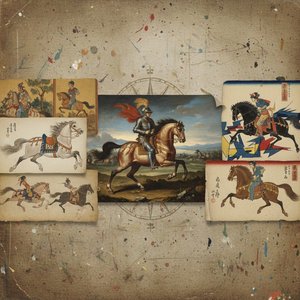
The Noble Steed on Canvas: A Historical & Artistic Exploration of Horse Painting Across Cultures
Explore the rich history of horse painting! Discover masterpieces from Stubbs to Munnings & learn about symbolism, techniques & artists. Find museum-quality reproductions at OriginalUniqueArt.

Barokin loisto: Kuinka tuoda ylellisyyttä ja tunnetta nykyaikaiseen sisustukseen
Tutustu barokki sisustuksen loistoon! Opi luomaan ylellistä ja tunnelmallista kotia historiallisen tyylin inspiroimana. Vinkkejä, esimerkkejä ja in apua.

The Dramatic Flourish: Exploring the Baroque Movement's Enduring Legacy in Art History
Explore the dramatic world of Baroque art! Discover iconic artists like Caravaggio & Rubens, defining techniques, and its lasting impact on art history. Expert insights for collectors & enthusiasts at OriginalUniqueArt.