
 Esikatselu
 Jaa teos
 Jaa
Jaa
 Tiedot
 Opas
Opas

 Lataa kuva
 Samanlaisia kohteita
 Röntgenkuvaus
 Diaesitys
 Q&A
Q&A Tilastot
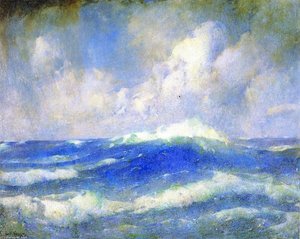
The Open Sea

- 122.0 x 147.0 cm


 Lue lisää
Giclée- ja taideprintit
Museolaatuisia giclée- tai kankaitaulun tulosteita nopealla tuotannolla ja joustavilla viimeistelyvaihtoehdoilla. ( Osta käsinmaalattu taideteos Siirry digitaaliseen kuvaan)




P118B €10

P118H €10

P118W €10

P438Z €10

P508JH €12

P508YH €12

P805H €10

P805Z €10

P919BZ €10

P919G €10

P919XJ €10

P959ZH €10

P968JZ €12

W106C €8

W218G €10

W218JH €8

W218Y €10

W307PJ €10

W316G €10

W316PJ €8

W316Y €10

W398PJ €8

W4111J €10

W500HY €15

W500JH €15

W692G €12

W849H €8

W940BG €15

W953PJ €8




Valitse valmiista mitoistamme sellaiset, jotka vastaavat teoksen alkuperäisiä mittasuhteita.

Syötä tarvitsemasi leveys ja korkeus, jotta tuloste sopii kehyksiisi tai seinällesi. Tulostetta voidaan vain leikata, sitä ei voida koskaan suurentaa alkuperäistä kuvaa suuremmaksi, joten eri muotoinen koko aiheuttaa osan kuvasta katoamisen. Lähetämme sinulle digitaalisen mallikuvan hyväksyttäväksi ennen kuin aloitamme tulostuksen. Tällä sivulla näkyvä kuva ei näytä lopullista rajausta — vain mallikuva näyttää sen.
Maailmanlaajuinen toimitus () 2 viikossa tavallisen 4–5 viikon sijaan. (2 marraskuu)

Ilmainen pikatoimitus ympäri maailman

Korkealaatuinen pellavakangas

Kattava kuljetusvakuutus

Tulliveron palautustakuu

Takuu täydellisestä värien vastaavuudesta

100 päivän palautusoikeus (vain valmistusvirheet)

100% rahat takaisin -takuu

Määräalennus tarjolla
 Lasivaihtoehto on saatavilla vain alle 110 cm kokoisille teoksille

The Open Sea
Giclée- ja taideprintit
Replikaatin koko
-


Kokonaishinta
€ 71
A Tempestuous Vision: Soren Emil Carlsen’s “The Open Sea”
Soren Emil Carlsen's "The Open Sea," painted in 1909, isn’t merely a depiction of the ocean; it’s an immersion into its raw power and profound solitude. This monochromatic seascape, rendered in shades of gray and white, immediately commands attention with its dramatic composition – a clear division between the tumultuous sky and the vast expanse of water below. Carlsen, deeply influenced by both late 19th-century Realism and Impressionism, masterfully captures the atmospheric effects of an impending storm, evoking a sense of awe mingled with unease. The painting’s strength lies not in precise detail but in its ability to convey the *feeling* of being confronted by nature's formidable force – a sentiment powerfully resonant even today.
Crafting Atmosphere: Technique and Materials
Carlsen’s technique is characterized by a deliberate looseness, prioritizing texture and emotional impact over photographic accuracy. Visible brushstrokes dominate the canvas, creating a rough, uneven surface that mirrors the chaotic nature of the sea and sky. Thick impasto is particularly evident in areas representing crashing waves, lending them an almost sculptural quality. The absence of hard lines – instead, blurred edges and subtle gradations of gray – contribute to the painting’s atmospheric effect, drawing the viewer into a world shrouded in mist and anticipation. The choice of oil paint on canvas allowed for layering and blending, essential to achieving the depth and luminosity that define Carlsen's style. The monochromatic palette isn’t simply a stylistic choice; it amplifies the drama, stripping away distractions and focusing attention entirely on form, light, and shadow.
A Study in Light and Perspective
The lighting in “The Open Sea” is diffused and overcast, suggesting an approaching storm or a scene perpetually veiled in mist. There are no sharp shadows; instead, the artist employs subtle tonal variations to create a sense of depth and spatial recession. Atmospheric perspective – where distant objects appear lighter and less distinct – further enhances this effect, conveying the immense scale of the ocean and sky. The horizon line, slightly undulating due to the waves, adds dynamism to the composition while maintaining a sense of balance. The painting’s horizontal format reinforces this feeling of vastness, inviting the viewer to lose themselves in the endless expanse before them.
Symbolism and Emotional Resonance
Beyond its technical brilliance, “The Open Sea” carries significant symbolic weight. The turbulent ocean can be interpreted as a metaphor for the unknown, the challenges of life, or even the overwhelming forces of nature. The monochromatic palette reinforces a sense of somberness and introspection, inviting contemplation on themes of isolation, vulnerability, and perhaps even fear. Carlsen’s work taps into a primal human response to the sea – a mixture of respect, awe, and a recognition of our own insignificance in the face of such power. It's a painting that lingers in the mind long after viewing, prompting reflection on the beauty and terror inherent in the natural world.
Discovering the Artist: A Legacy of Luminism
Soren Emil Carlsen (1853-1932) was a pivotal figure in American painting, bridging the gap between European artistic traditions and the burgeoning modern art scene. Born in Copenhagen and later settling in Chicago, he developed a distinctive style characterized by tonalist landscapes and seascapes – a legacy deeply rooted in Danish Luminism, an approach emphasizing subtle gradations of light and color to evoke mood and atmosphere. His work, as evidenced by his other pieces like “Kattegat Landscape,” demonstrates a profound understanding of capturing the ephemeral qualities of light and weather. Explore more of Carlsen’s captivating oeuvre at OriginalUniqueArt to fully appreciate the breadth and depth of his artistic vision.
Kysymykset ja vastaukset
Onko Soren Emil Carlsen:n "The Open Sea" maalaus, piirros vai grafiikan lehti?
Luettelossa teos Soren Emil Carlsen:n "The Open Sea" on luokiteltu tyypiksi WallArt. Kategoria auttaa löytämään samankaltaisia teoksia.
Mikä hallitseva sävy lävistää teoksen Soren Emil Carlsen:n "The Open Sea"?
Teoksen Soren Emil Carlsen:n "The Open Sea" hallitseva sävy on Green to Violet Spectrum. Tämä sävy toimii paletin perusvärinä.
Mihin vaiheeseen Soren Emil Carlsenin kehityksestä "The Open Sea" edustaa?
Soren Emil Carlsen'n uralla teos "The Open Sea" sijoittuu aikakaudelle Late Career. Tämä vaihe auttaa vertaamaan sitä taiteilijan muihin teoksiin.
Taiteilijan elämäkerta
Soren Emil Carlsen: The Quiet Mastery of Light and Stillness
Soren Emil Carlsen (1848 or 53 – 1932) was a Danish-born American Impressionist painter who profoundly impacted the artistic landscape of California. Born in Copenhagen, Denmark, he embarked on an extraordinary journey that began with architectural studies at the Royal Academy and culminated in establishing himself as one of the foremost figures in American art—a reputation cemented by his unwavering dedication to teaching and his remarkable ability to capture the essence of beauty within the commonplace. Carlsen’s artistic legacy resides not merely in his canvases but in the enduring influence he exerted on generations of artists, shaping their perspectives and fostering a deep appreciation for observation and technique.- Early Life and Artistic Foundations
- Emigration to America and Parisian Influences
- The “American Chardin”: Tonalism and Light’s Embrace
- Teaching Legacy: Shaping Future Generations of Artists
- A Lasting Impression: Carlsen's Artistic Achievements and Enduring Appeal
Early Life and Artistic Foundations
Soren Emil Carlsen’s artistic inclinations were nurtured from a young age within a family steeped in creative pursuits. His mother practiced painting, providing him with an early exposure to visual art—a formative experience that would later inform his own stylistic choices. Crucially, he pursued architectural studies at the Royal Academy of Copenhagen for four years, instilling within him a foundational understanding of structure and form—skills that transcended mere technical proficiency and imbued his artwork with a subtle elegance rooted in geometric precision. This grounding in architecture served as an invaluable counterbalance to his burgeoning passion for painting, shaping his artistic sensibility and fostering a meticulous attention to detail.Emigration to America and Parisian Influences
A pivotal moment arrived in 1872 when Carlsen emigrated to Chicago, Illinois, driven by the allure of American artistic innovation. He initially worked as an architectural draftsman, honing his skills while simultaneously immersing himself in the vibrant cultural milieu of the burgeoning city. Recognizing the importance of further refining his craft, he sought guidance from Lauritz Bernhard Holst, a celebrated Danish marine artist who had established himself in Chicago—a collaboration that exposed him to techniques of depicting light and atmosphere on water, profoundly influencing his later landscapes. However, it was his sojourn to Paris in 1875 where Carlsen experienced the transformative power of artistic mentorship under Jean-Baptiste-Siméon Chardin—the revered French master of still life painting. Chardin’s approach to capturing subtle nuances of light and texture served as an inspiration for Carlsen, shaping his stylistic vision and establishing a connection with a tradition of understated beauty that would permeate his entire oeuvre.The “American Chardin”: Tonalism and Light’s Embrace
Returning from Paris, Carlsen swiftly established himself as “The American Chardin,” a testament to his unparalleled ability to imbue everyday objects—such as copper pans and game birds—with dignity and poetic resonance. His distinctive style embodied the tonalist aesthetic: muted palettes, delicate gradations of light, and an unwavering focus on mood and atmosphere. Unlike many of his contemporaries who prioritized vibrant color schemes, Carlsen deliberately subdued hues, prioritizing instead the subtle interplay of tones to convey emotion and capture the essence of a particular moment in time. This sensitivity to light—a hallmark of Chardin’s art—became central to Carlsen's artistic practice, distinguishing him from other painters of his era and elevating his work to a level of contemplative beauty.Teaching Legacy: Shaping Future Generations of Artists
Carlsen’s influence extended far beyond his own canvases; he was a devoted educator who profoundly impacted countless aspiring artists. He began his teaching career as the first instructor of drawing and painting at the Chicago Academy of Design, laying the groundwork for generations of artistic talent. Later, he served as director of the California School of Design (now San Francisco Art Institute) from 1887 to 1889—a role that nurtured the artistic landscape of the West Coast. He continued his commitment to teaching throughout his life, holding positions at the National Academy of Design, the Art Students League, and the Pennsylvania Academy of Fine Arts for over four decades—a testament to his unwavering belief in the transformative power of artistic education. Among his most notable students was Guy Rose, who would become a prominent figure in California Impressionism, carrying forward Carlsen’s legacy of observation and tonalist technique.A Lasting Impression: Carlsen's Artistic Achievements and Enduring Appeal
Soren Emil Carlsen’s artistic output—characterized by exquisite still lifes, serene landscapes, and evocative marine paintings—continues to resonate with audiences today because of its timeless quality. His masterful blend of technical skill, emotional depth, and poetic sensibility transcends stylistic trends, securing his place as one of America's most enduring artists. Represented in prominent museums across the nation—including the Art Institute of Chicago, the Metropolitan Museum of Art, and the San Diego Museum of Art—Carlsen’s paintings offer a glimpse into a world seen through the eyes of a visionary artist—a realm where beauty resides in simplicity, and light holds dominion over perception.
Soren Emil Carlsen
1853 - 1932 , Tanska
Pähkinänkuoressa
- Artistic Movement Or Style: Impressionismi
- Artists Or Movements Influenced By This Artist: ['Amerikkalainen impressionismi']
- Artists Who Influenced This Artist: ['Jean-Baptiste-Siméon Chardin']
- Date Of Birth: 1853-10-19
- Date Of Death: 1932-01-02
- Full Name: Soren Emil Carlsen
- Nationality: Amerikkalainen
- Notable Artworks:
- Musta kala ja simpukat
- Pieni yksityiskohtainen kukka
- Place Of Birth: Kööpenhagens kaupunki, Danmark
Aiheeseen liittyvät artikkelit
The Allure of the Horizon: A Comprehensive Exploration of Seascape Art Through History & Emotion
Explore the captivating world of seascape art! Discover its history, key artists & movements – from Dutch Masters to Impressionism. Expert insights for collectors and enthusiasts at OriginalUniqueArt.

The Soul of Impressionism: Why Oil on Canvas Captures Eternal Light and Timeless Emotion
Discover the enchanting alchemy of Impressionism. Explore how the mastery of oil on canvas, through glazing and impasto, captures eternal light and emotion. Perfect for lovers of Monet and Van Gogh seeking the profound depth of hand-painted fine art.

Oil on Canvas: A Historical & Technical Exploration of a Timeless Artistic Medium
Explore the rich history & enduring techniques of oil painting on canvas. Discover the science behind its longevity, conservation practices, and contemporary relevance. Expert insights for art enthusiasts.

The Enduring Legacy of Oil on Canvas: Technique, History & Aesthetic Impact
Explore the rich history & techniques of oil painting – from Renaissance masters to Impressionism. Discover pigments, layering methods, and why this timeless medium endures. Expert insights for artists & art enthusiasts.

Romantic Realism's Finest: 10 Masterpieces for Your Home | OriginalUniqueArt
Explore 10 defining masterpieces of Romantic Realism! Discover Courbet, Millet & Daumier's powerful paintings—capturing emotion and social realities. Find museum-quality reproductions for your home at OriginalUniqueArt.com.