

 Esikatselu
 Jaa
Jaa Jaa
Jaa
 Tarkemmat tiedot

 Lataa
Lataa
 Samanlaisia
 Röntgenkuva
 Diaesitys
Dante running from the three beasts
 Acrylic On Canvas
- WallArt
- Romanticism
 1827
1827 37.0 x 52.0 cm
 National Gallery of Victoria
 Näytä lisää
Käsinmaalattu öljykopio
Käsinmaalattu öljyväri kankaalle haluamassasi koossa ja kehyksissä, taiteilijoidemme valmistamana tilauksesta. ( Osta printti Osta kuva)




P118B $10

P118H $10

P118W $10

P438Z $10

P508JH $12

P508YH $12

P805H $10

P805Z $10

P919BZ $10

P919G $10

P919XJ $10

P959ZH $10

P968JZ $12

W106C $8

W218G $10

W218JH $8

W218Y $10

W307PJ $10

W316G $10

W316PJ $8

W316Y $10

W398PJ $8

W4111J $10

W500HY $15

W500JH $15

W692G $12

W849H $8

W940BG $15

W953PJ $8




Valitse valmiista mitoistamme sellaiset, jotka vastaavat teoksen alkuperäisiä mittasuhteita.

Voit syöttää omat mitat sopimaan tiettyyn kehykseen tai tilaan. Jos valitsemasi koko ei vastaa alkuperäisen kuvan mittasuhteita, rajaamme taideteoksen tai jatkamme maalausta käsin maalatuilla elementeillä. Digitaalinen esikatselu lähetetään hyväksyttäväksi ennen tuotannon aloittamista.
Huomioithan, että näytöllä oleva esikatselu ei vastaa todellista rajausta tai jatkamista. Vain digitaalinen mallikuva näyttää lopullisen sommittelun tarkasti.
Vaikka mittatilaustyöt ovat mahdollisia, suosittelemme valitsemaan mitan ennalta määritetystä listasta alkuperäisten mittasuhteiden säilyttämiseksi.
Tilauksen jälkeen OriginalUniqueArt.com -tiimi lähettää asiakkaalle ohjeet ja esikatselukuvan.
Maailmanlaajuinen toimitus () 3–4 viikossa tavallisen 5 viikon sijaan. (21 elokuu). Laadusta ei tingitä.

Ilmainen pikatoimitus ympäri maailman

Korkealaatuinen pellavakangas

Kattava kuljetusvakuutus

Tulliveron palautustakuu

Täydellinen värien vastaavuustakuu

60 päivän palautusoikeus (vain valmistusvirheet)

100% rahat takaisin -takuu

Määräalennus tarjous
 Lasivaihtoehto on saatavilla vain alle 110 cm kokoisina teoksina

Dante running from the three beasts
Reproduktiotekniikka
Replikaatin koko
-


Kokonaishinta
$ 300
Teoksen kuvaus
A Flight from Darkness: William Blake’s ‘Dante Running from the Three Beasts’
William Blake's “Dante Running from the Three Beasts,” painted in 1827, isn’t merely a depiction of a scene from Dante Alighieri’s *Divine Comedy*; it’s a visceral embodiment of the human struggle against earthly temptation and the arduous journey towards spiritual enlightenment. This powerful image, now housed within the National Gallery of Victoria in Melbourne, pulsates with an intensity born from Blake's deeply personal interpretation of Dante’s epic poem. It represents the opening moment of Dante’s descent into Hell, a desperate flight from the seductive allure of sin and the promise of salvation through confronting darkness.
Blake’s artistic approach transcends simple illustration; he transforms a narrative cornerstone into a profound meditation on morality and the nature of good and evil. The composition is dominated by Dante, rendered in fiery red, a color traditionally associated with passion and sacrifice, as he sprints away from three monstrous figures – a lion representing pride, a lynx embodying cunning, and a she-wolf symbolizing avarice. These beasts aren’t simply allegorical representations; they are terrifyingly real, their forms imbued with a palpable sense of menace. The background is shrouded in an ominous twilight, suggesting the oppressive weight of sin and the perilous path ahead.
The Romantic Vision: Technique and Style
Executed primarily in pen, ink, and watercolour over pencil, “Dante Running from the Three Beasts” showcases Blake’s mastery of layered technique. The initial lines of pen and ink establish a skeletal framework, outlining the figures and landscape with stark precision. Watercolour then washes over this groundwork, creating atmospheric depth and lending a luminous quality to the scene. Notice how Blake utilizes loose, expressive brushstrokes – particularly in the rendering of Dante's clothing and the swirling darkness behind him – to convey movement and urgency. The use of contrasting textures—the sharp edges of the beasts against the fluid washes of color—further enhances the image’s dramatic impact.
Blake’s style is firmly rooted in Romanticism, a movement characterized by an emphasis on emotion, imagination, and the sublime. He rejects the rigid conventions of academic art, prioritizing personal expression and spiritual insight over realistic representation. The painting's dynamic composition, heightened colors, and symbolic imagery are all hallmarks of this artistic sensibility.
Symbolism and Dante’s Journey
Beyond its immediate visual impact, “Dante Running from the Three Beasts” is rich in symbolism. Each beast represents a specific sin that Dante must confront on his journey through Hell. The lion embodies the vanity and arrogance of those who prioritize earthly possessions and status; the lynx symbolizes deceit and cunning; and the she-wolf represents greed and insatiable desire. Dante’s flight signifies humanity's initial resistance to temptation, a desperate attempt to avoid the consequences of sin. However, Blake subtly suggests that true salvation lies not in fleeing from darkness but in confronting it with courage and faith.
The presence of Virgil, depicted as a guiding figure on the left, underscores the importance of reason and wisdom in navigating the complexities of the spiritual realm. Virgil represents human intellect, offering Dante a path through the infernal landscape. The inclusion of this secondary character highlights Blake’s belief that both faith and reason are essential components of the journey towards enlightenment.
A Legacy of Vision: Historical Context
Created during a period of intense social and political upheaval in England – the aftermath of the Napoleonic Wars and the rise of industrialization – “Dante Running from the Three Beasts” reflects Blake’s own anxieties about the corruption of society and the decline of traditional values. He viewed art as a means of exposing moral failings and inspiring spiritual renewal. Commissioned by John Linnell, a devout patron who sought to bring Dante's epic poem to a wider audience, this painting stands as a testament to Blake’s unique artistic vision and his profound engagement with religious and philosophical themes.
Today, “Dante Running from the Three Beasts” continues to captivate viewers with its dramatic intensity and symbolic depth. It remains a powerful reminder of humanity's eternal struggle between good and evil, and a testament to William Blake’s enduring legacy as one of the most visionary artists of all time.
Taiteilijan elämäkerta
Early Life and Influences
Sir William Blake Richmond (1842–1921) was born at 10 York Street, London, England on November 29, 1842. His formative years were deeply shaped by his affiliation with the ancients, a movement dedicated to exploring the profound connection between imagination and reality—inspired primarily by the visionary poet and artist William Blake. This influence manifested prominently in Richmond’s initial artistic endeavors, notably exemplified by paintings such as “Abel the Shepherd” and “Christ and the Woman of Samaria,” which debuted at the Royal Academy in 1825. These early works underscored a preoccupation with spiritual themes and symbolic imagery characteristic of Blake's aesthetic vision.Career Highlights
Richmond swiftly established himself as a celebrated portrait painter, skillfully capturing the nuanced personalities and social standing of prominent figures within British society—particularly the aristocracy and nobility. His technique was marked by meticulous attention to detail and an ability to convey emotion with remarkable sensitivity. Among his most notable achievements were “Trees at Bocca d’Arno,” a landscape infused with Romantic idealism, and “The Crown of Peace,” a monumental depiction reflecting Victorian grandeur and commemorating Queen Victoria's reign. These paintings stand as testaments to Richmond’s mastery of artistic conventions while simultaneously embodying the spirit of his era.Notable Associations and Travels
A pivotal moment in Richmond’s artistic journey occurred in 1828 when he embarked on a transformative voyage to Paris, where he immersed himself in the vibrant intellectual milieu of the École des Beaux-Arts and Hospitals. This immersive experience fostered connections with influential artists and thinkers—including Ruskin—and broadened his understanding of European art history. Furthermore, Richmond’s encounter with Beau Brumell at Calais proved significant; exchanging snuff pins served as a symbolic gesture reflecting their shared appreciation for refined taste and aesthetic ideals. His patronage by Lord Sidmouth yielded invaluable counsel and resulted in the creation of a portrait commemorating the lord's distinguished service to the Crown—a piece now housed within the National Portrait Gallery.Legacy and Later Artistic Development
While Richmond’s artistic output shifted towards more conventional portraits during his later years, his enduring legacy as a pioneering figure in British Romanticism remains undeniable. He continued to refine his craft, producing works that showcased both technical prowess and expressive depth. His dedication to capturing the essence of his subjects ensured that his art would resonate across generations—inspiring artists and captivating audiences alike with its beauty and intellectual richness. Richmond’s contribution to the artistic landscape cemented his place as one of the foremost portrait painters of his time.
Sir William Blake Richmond
1809 - 1896 , Yhdistynyt kuningaskunta
Pikatiedot
- Artistic Movement Or Style: Romanticism
- Artists Who Influenced This Artist: ['William Blake']
- Date Of Birth: March 28, 1809
- Date Of Death: March 19, 1896
- Full Name: Sir William Blake Richmond
- Nationality: British
- Notable Artworks:
- Trees at Bocca d'Arno
- The Crown of Peace
- Place Of Birth: Brompton, United Kingdom
Liittyvät artikkelit
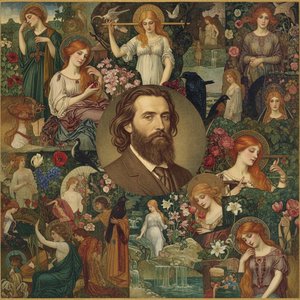
Dante Gabriel Rossettin 25 mestariteosta: Taidetta ja inspiraatiota kotiisi | OriginalUniqueArt
Tutustu Dante Gabriel Rossettin 25 lumoavinta mestariteosta! Uppoudu viktoriaanisen ajan symbolismiin ja Pre-Raphaelite taiteen maailmaan. Löydä inspiraatiota sisustukseesi ja hanki korkealaatuisia taideprinttejä OriginalUniqueArt.comista. Tutki kokoelma verkossa!

10 Vesivärimaalausta, Jotka Muuttivat Taiteen – Inspiroi Sisustuksesi OriginalUniqueArtilla
Tutustu 10 legendaariseen vesivärimaalaukseen, jotka muuttivat taiteen historiaa! Inspiroiva tarina Turnerista Monetiin. Löydä upeita akvarelleja ja sisustusideoita OriginalUniqueArtilla. Tutki kokoelma verkossa!

Ephemeral Visions: Exploring the History & Emotional Resonance of Watercolor Painting
Explore the captivating history of watercolor painting, from ancient techniques to modern masters like Kandinsky & Blake. Discover essential artists, collecting tips & the emotional power of this luminous medium. Expert insights for art enthusiasts.

Ephemeral Visions: Exploring the Artistic Legacy & Contemporary Practice of Watercolor Painting
Explore the captivating world of watercolor painting! Discover its rich history, essential techniques, influential artists & collecting tips. A comprehensive guide for art enthusiasts from OriginalUniqueArt.

Ephemeral Visions: Exploring the Artistic Legacy & Nuances of Watercolor Painting
Explore the captivating world of watercolor painting! Discover its rich history, essential techniques, influential artists & collecting tips from art experts. A comprehensive guide for enthusiasts.

