

 Katso seinällä
 Lähetä
 Jaa
Jaa
 Tarkemmat tiedot
 Opas
Opas

 Lataa kuva
 Samanlaisia kohteita
 Röntgenkuvaus
 Diaesitys
 Tilastot
Mrs Margaret Hick


 Lue lisää
Giclée- ja taideprintit
Museolaatuisia giclée- tai kankaitaulun tulosteita nopealla tuotannolla ja joustavilla viimeistelyvaihtoehdoilla. ( Tilaa käsinmaalattu jäljennös Siirry digitaaliseen kuvaan)




P118B €10

P118H €10

P118W €10

P438Z €10

P508JH €12

P508YH €12

P805H €10

P805Z €10

P919BZ €10

P919G €10

P919XJ €10

P959ZH €10

P968JZ €12

W106C €8

W218G €10

W218JH €8

W218Y €10

W307PJ €10

W316G €10

W316PJ €8

W316Y €10

W398PJ €8

W4111J €10

W500HY €15

W500JH €15

W692G €12

W849H €8

W940BG €15

W953PJ €8




Valitse valmiista mitoistamme sellaiset, jotka vastaavat teoksen alkuperäisiä mittasuhteita.

Kirjoita tarvitsemasi leveys ja korkeus, jotta tuloste sopii kehyskokoon tai seinällesi. Tulostetta voidaan vain leikata, sitä ei voi koskaan tehdä suuremmaksi kuin alkuperäinen kuva, joten eri muotoinen koko aiheuttaa osan kuvasta katoamisen. Lähetämme sinulle digitaalisen mallikuvan hyväksyttäväksi ennen kuin aloitamme tulostuksen. Tällä sivulla näkyvä kuva ei näytä lopullista leikkausta — vain mallikuva näyttää sen.
Maailmanlaajuinen toimitus () 2 viikossa tavallisen 4–5 viikon sijaan. (24 lokakuu)

Ilmainen pikatoimitus ympäri maailman

Korkealaatuinen pellavakangas

Kattava kuljetusvakuutus

Tulliveron palautustakuu

Takuu täydellisestä värien vastaavuudesta

100 päivän palautusoikeus valmistusvirhetapauksissa

100% rahat takaisin -takuu

Määräalennus saatavilla
 Lasivaihtoehto on saatavilla vain alle 110 cm kokoisille teoksille

Mrs Margaret Hick
Giclée- ja taideprintit
Replikaatin koko
-


Kokonaishinta
€ 70
Mrs Margaret Hick: A Portrait of Victorian Dignity
Sir Francis Grant’s “Mrs Margaret Hick,” painted in 1861, stands as a quintessential example of Victorian portraiture—a genre defined by meticulous realism and an unwavering focus on conveying social status. More than just a likeness, the painting embodies the values of its time: composure, refinement, and a quiet confidence that speaks volumes about Mrs. Hick’s position within the aristocratic circles of Britain.
- Subject Matter & Context: The portrait depicts Margaret Turner Hicks, likely a woman of considerable wealth and influence, reflecting the prevalent societal norms of Victorian England. Grant's meticulous attention to detail captures her serene countenance amidst a carefully orchestrated outdoor setting—a deliberate choice that underscores her elevated social standing.
- Composition & Technique: Grant employs a balanced compositional arrangement, centering Mrs. Hick’s figure subtly off-center while utilizing the landscape as a grounding element. The artist skillfully utilizes soft brushstrokes and blended pigments to achieve remarkable smoothness – a hallmark of Victorian painting—creating an illusion of depth and capturing the subtle nuances of light and shadow on her skin and clothing.
- Color Palette & Symbolism: Dominated by muted creams, whites, blues, browns, and greens, the color palette reflects the restrained aesthetic favored during the Victorian era. The delicate blue sash serves as a focal point, injecting a hint of vibrancy into the overall tonal scheme. Beyond mere decoration, these colors contribute to conveying an atmosphere of tranquility and understated elegance.
- Style & Artistic Influences: Grant’s style aligns closely with the prevailing artistic conventions of his time—influenced by artists like John Ferneley and Alexander Nasmyth—demonstrating a commitment to capturing the essence of human form and environment with unwavering accuracy. The painting exemplifies the Victorian ideal of portraying subjects as embodiments of virtue and grace.
- Emotional Impact & Legacy: “Mrs Margaret Hick” transcends its formal depiction, conveying a palpable sense of dignity and inner peace. Her direct gaze communicates intelligence and assurance—qualities admired in Victorian society—leaving an enduring impression on viewers who appreciate the artistry of Grant’s masterful technique and his ability to encapsulate the spirit of an era.
This exquisite reproduction allows you to experience the beauty and sophistication of Victorian art firsthand, bringing a timeless masterpiece into your home or inspiring interior design projects.
Kysymykset ja vastaukset
Mikä taiteilija ja mikä tyyli ovat takana teoksen "Mrs Margaret Hick"?
Sir Francis Grant loi teoksen "Mrs Margaret Hick" Victorian Portraiture-suuntauksen piirissä.
Käyttääkö teos Sir Francis Grant:n "Mrs Margaret Hick" voimakkaita kontrasteja vai pehmeitä harmonioita?
Sir Francis Grant:n "Mrs Margaret Hick" teoksen väriyhdistelmä yhdistää Voimakas kontrastin ja Yhtenäinen väripaletti harmonian.
Mikä koko "Mrs Margaret Hick"-teokselle suositellaan Olohuone-tilaan?
Suositeltu yhdistelmä teokselle Sir Francis Grant:n "Mrs Margaret Hick": Suuri kokoinen vedos tilaan Olohuone.
Taiteilijan elämäkerta
Sir Francis Grant (1803 - 1878): Celebrated Scottish Portrait & Sporting Painter and Royal Academy President, famed for capturing British aristocracy like Queen Victoria
Sir Francis Grant, a name synonymous with refined portraiture and dedicated service to the British art establishment, emerged as one of the most sought-after artists of his era. Born in 1803 into a landed family in Perthshire, Scotland, young Francis initially seemed destined for a career in law. However, the pull of artistic expression proved too strong to resist. Though largely self-taught, he briefly studied under Alexander Nasmyth in Edinburgh, laying an early foundation before forging his own distinctive path. This path wasn’t immediately clear; Grant's initial successes came with sporting scenes, capturing the energy and vibrancy of rural life – subjects that would initially define his reputation. A pivotal moment arrived through his marriage, granting him access to the exclusive world of Melton Mowbray’s hunting set. There, he honed his skills under John Ferneley, a master of equestrian art, and began to specialize in depictions of horses and hounds – endeavors that showcased an exceptional eye for detail and composition.Early Artistic Beginnings & Sporting Achievements
Grant's artistic journey commenced with a fascination for sketching landscapes and animals, fueled by a lifelong passion for hunting. His early canvases captured the dynamism of rural pursuits with remarkable accuracy and sensitivity. The celebrated *Melton Breakfast* (1834), exhibited at the Royal Academy, stands as an exemplar of this period – a vibrant portrayal of a morning hunt that immediately garnered acclaim. It demonstrated Grant’s ability to convey movement and atmosphere, establishing him as a prominent figure in the burgeoning field of sporting painting. His meticulous attention to detail—the textures of fur, feathers, and foliage—reflected Ferneley's influence and solidified his reputation for capturing the essence of equestrian art. This formative experience instilled in him a profound understanding of observation and representation that would inform his subsequent artistic endeavors.The Rise of Portraiture & Royal Patronage
However, Grant’s true breakthrough occurred in the realm of portraiture. Recognizing his talent for conveying not merely physical likeness but also inner character and social standing, he swiftly transitioned to capturing the dignity and nuance of aristocratic subjects. His marriage brought him into contact with influential circles within Melton Mowbray's hunting society, providing invaluable opportunities for artistic development and fostering connections with prominent patrons. This patronage proved crucial in securing commissions from the British elite – including the momentous portrait of Queen Victoria herself (1842). This monumental undertaking showcased Grant’s mastery of technique and his ability to portray majesty and grace—a testament to his skill as a portraitist and cementing his position among the foremost artists of his time. The resulting image, lauded for its elegance and psychological depth, became an iconic representation of Victorian royalty.A Style Defined by Neoclassical Elegance & Romantic Sensibility
Grant’s artistic style blended Neoclassical elegance with a touch of Romantic sensibility – a harmonious fusion that distinguished him from many contemporaries. He skillfully employed chiaroscuro—the dramatic interplay of light and shadow—to sculpt form and convey emotion, mirroring the stylistic conventions favored by artists like Lawrence but tempering them with Victorian restraint. His portraits possessed an understated grandeur, reflecting his profound understanding of human psychology and capturing the subtle nuances of personality. The meticulous rendering of fabrics, textures, and facial expressions underscored Grant’s dedication to realism while simultaneously imbuing his canvases with a sense of poetic beauty. This distinctive approach solidified his reputation as one of Scotland's most accomplished painters.Legacy & Recognition: Presidency of the Royal Academy
Grant’s artistic achievements culminated in 1866 with his election as President of the Royal Academy—a prestigious honor recognizing not only his prolific output but also his respected standing within the British art world. During his tenure, he championed innovation and fostered dialogue between artists and scholars, furthering the Academy's mission to promote excellence in visual arts. He instituted a groundbreaking practice: the holding of major loan exhibitions – expanding the Academy’s reach and influence and attracting wider public engagement. Grant’s unwavering commitment to artistic integrity ensured that the Royal Academy remained a cornerstone of British cultural heritage. His enduring legacy resides not only in his celebrated paintings but also in his transformative role as leader—a testament to his profound contribution to Victorian art history. He remains a pivotal figure – a skilled portraitist, a respected visionary, and a chronicler of his time. His work offers not just aesthetic pleasure but also a fascinating glimpse into a bygone era.
Sir Francis Grant
1803 - 1878 , Iso-Britannia
Tietoa taiteilijasta
- Artistic Movement Or Style: Neoclassical, Romanticism
- Artists Or Movements Influenced By This Artist:
- Martin Archer Shee
- Solomon Hart
- Artists Who Influenced This Artist:
- Alexander Nasmyth
- John Ferneley
- Date Of Birth: 18 Jan. 1803
- Date Of Death: 5 Oct. 1878
- Full Name: Sir Francis Grant
- Nationality: Scottish
- Notable Artworks:
- Melton Breakfast
- Lady Glenlyon
- Queen Victoria Riding
- Place Of Birth: Edinburgh, United Kingdom
Aiheeseen liittyvät artikkelit
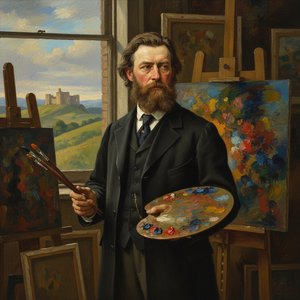
George Paul Chalmers: Rediscovering the Angus Rembrandt & Scottish Colourist Roots
Explore the captivating world of George Paul Chalmers (1833-1878), a pivotal Scottish painter. Discover his landscapes, portraits & connection to the Aesthetic Movement and Colourists. Learn about this 'Angus Rembrandt's' legacy with OriginalUniqueArt.
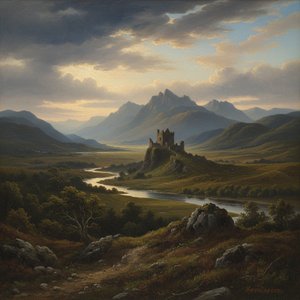
Alexander Nasmyth: Picturing Scotland's Romantic Landscape – Innovation & Identity
Explore the life & art of Alexander Nasmyth, a pivotal figure in Scottish Romantic landscape painting. Discover his iconic works, including portraits of Robert Burns, and learn about his lasting influence on national identity. Fine art reproductions available.

John Constablein 25 mestariteosta: Taidetta ja tunnelmaa kotiisi – OriginalUniqueArt.com
Tutustu John Constable'n 25 mestariteokseen – romanttisia maisemamaalauksia, jotka vangitsevat englantilaisen luonnon tunnelman. Taidehistoriaa ja inspiraatiota kotiisi OriginalUniqueArt.com:ssa. Löydä kaikki taideteokset verkossa!

Evocations of Place: A Historical Journey Through Landscape Art
Explore the rich history of landscape art with OriginalUniqueArt. Discover renowned artists, movements like Impressionism & Romanticism, and expert guidance for collecting timeless pieces. Find your perfect serene escape today!

Romanttisen maisemamaalauksen mestariteokset: Taidetta ja inspiraatiota kotiin
Uppoudu romanttisen maisemamaalauksen maailmaan! Tutustu Caspar David Friedrichin, Turnerin ja muiden mestareiden ikonisiin teoksiin. Löydä inspiraatiota kotiisi taiteen avulla OriginalUniqueArt.comista – laadukkaat taideprintit ja sisustusideoita.

