Katso seinällä
 Lähetä
 Jaa
Jaa
 Tarkemmat tiedot
 Opas
Opas

 Lataa kuva
 Samanlaisia kohteita
 Röntgenkuvaus
 Diaesitys
 Tilastot
The Last Judgment (detail) (38)


 Lue lisää
Giclée- ja taideprintit
Museolaatuisia giclée- tai kankaitaulun tulosteita nopealla tuotannolla ja joustavilla viimeistelyvaihtoehdoilla. ( Tilaa käsinmaalattu jäljennös Siirry digitaaliseen kuvaan)




P118B €10

P118H €10

P118W €10

P438Z €10

P508JH €12

P508YH €12

P805H €10

P805Z €10

P919BZ €10

P919G €10

P919XJ €10

P959ZH €10

P968JZ €12

W106C €8

W218G €10

W218JH €8

W218Y €10

W307PJ €10

W316G €10

W316PJ €8

W316Y €10

W398PJ €8

W4111J €10

W500HY €15

W500JH €15

W692G €12

W849H €8

W940BG €15

W953PJ €8




Valitse valmiista mitoistamme sellaiset, jotka vastaavat teoksen alkuperäisiä mittasuhteita.

Voit syöttää omat mitat sopiaksesi tiettyyn kehykseen tai tilaan. Jos valittu koko ei vastaa alkuperäisen kuvan mittasuhteita, rajaamme teosta tai laajennamme kuvaa peilatulla tai yhtenäisellä reunalla. Digitaalinen mallikuva lähetetään hyväksyttäväksi ennen tuotannon aloittamista.
Huomaathan, että näytöllä näkyvä esikatselu ei vastaa lopullista rajausta tai laajennusta. Vain mallikuva näyttää lopullisen sommittelun tarkasti.
Vaikka räätälöityjä kokoja on saatavilla, suosittelemme valitsemaan mitat valmiista listasta alkuperäisten mittasuhteiden säilyttämiseksi.
Maailmanlaajuinen toimitus () 2 viikossa tavallisen 4–5 viikon sijaan. (8 lokakuu)

Ilmainen pikatoimitus ympäri maailman

Korkealaatuinen pellavakangas

Kattava kuljetusvakuutus

Tulliveron palautustakuu

Takuu täydellisestä värien vastaavuudesta

100 päivän palautusoikeus valmistusvirhetapauksissa

100% rahat takaisin -takuu

Määräalennus saatavilla
 Lasivaihtoehto on saatavilla vain alle 110 cm kokoisille teoksille

The Last Judgment (detail) (38)
Giclée- ja taideprintit
Replikaatin koko
-


Kokonaishinta
€ 69
A Vision of Divine Reckoning
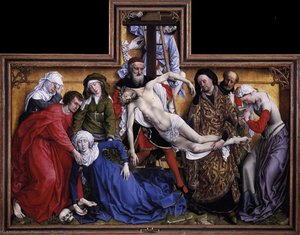
In the quiet, hallowed halls of art history, few works command the soul with such visceral intensity as Rogier van der Weyden’s The Last Judgment. This breathtaking detail from the monumental Beaune Altarpiece serves as a window into the profound spiritual anxieties of the fifteenth century. As we gaze upon this fragment, we are not merely observing a painting; we and we are witnessing a cosmic drama unfolding. The scene captures a moment of eternal consequence, where the boundaries between the earthly and the divine dissolve. Through his masterful command of Early Netherlandish precision, Van der Weyden presents a landscape of the soul, where every gesture and every gaze carries the weight of eternity.
The composition is a masterclass in hierarchical storytelling. At its heart, the artist directs our focus toward the celestial authority that presides over the fate of humanity. The arrangement of figures creates a rhythmic movement—a spiritual ascent and descent—that guides the viewer’s eye through a sea of faces caught in various states of awe, terror, and devotion. There is an undeniable tension in the way the figures interact; some are lost in prayer, while others appear paralyzed by the sheer magnitude of the divine presence. For the discerning collector or designer, this piece offers more than just aesthetic beauty; it provides a profound focal point that invites contemplation and deepens the emotional resonance of any curated space.
The Alchemy of Light and Detail
To understand the allure of Van der Weyden is to appreciate his revolutionary use of technique. Working with oil on panel, he utilized the delicate process of glazing—layering thin, translucent skins of pigment—to achieve a luminosity that seems to emanate from within the wood itself. This method allows light to penetrate the surface and reflect back, creating a jewel-like brilliance that characterizes the Northern Renaissance. Notice the meticulous rendering of textures: the heavy, sculptural folds of drapery, the subtle warmth of human skin, and the sharp, crystalline clarity of the atmosphere. Such precision was likely influenced by his early training as a goldsmith, a background that gifted him an unparalleled ability to render the minute details of the physical world.
This technical virtuosity serves a higher symbolic purpose. The hyper-realistic textures do not merely mimic reality; they sanctify it. By capturing the tangible weight of fabric and the delicate anatomy of the figures, Van der Weyden makes the theological concept of judgment feel tangibly present. For those seeking to incorporate high-quality reproductions into an interior, this level of detail ensures that the artwork remains captivating from every angle, offering new discoveries with every glance. The interplay of light and shadow creates a sense of depth that can transform a room, lending an air of historical grandeur and intellectual sophistication.
A Legacy of Devotion and Drama
The historical context of the Beaune Altarpiece adds a layer of poignant gravity to the work. Commissioned during a period of intense religious fervor in Burgundy, the altarpiece was designed for the Hospital of Beaune, serving as a constant reminder to the sick and the suffering of their own mortality and the hope of salvation. This sense of memento mori—the remembrance of death—is woven into the very fabric of the painting. It is an art of empathy, designed to stir the heart and provoke a turning toward the divine. The emotional impact is nothing short of overwhelming; it is a work that demands a response, whether through quiet reverence or profound introspection.
Bringing a reproduction of this masterpiece into a contemporary setting allows for a unique dialogue between the past and the present. It serves as an anchor of stability and depth in a modern world, offering a connection to the enduring human struggle with faith and destiny. Whether placed in a private study, a grand gallery, or a thoughtfully designed living space, The Last Judgment acts as a powerful testament to the enduring power of the human spirit and the timeless beauty of Northern European mastery.
Kysymykset ja vastaukset
Minkä tunteen kanssa "The Last Judgment (detail) (38)" yhdistetään?
Teoksen Rogier van der Weyden:n "The Last Judgment (detail) (38)" tunnetila on määritelty olevan Dramatic. Se tiivistää teoksen välittämän tunnelman.
Minä vuonna teos Rogier van der Weyden:n "The Last Judgment (detail) (38)" on luotu?
Teos Rogier van der Weyden:n "The Last Judgment (detail) (38)" on valmistunut vuonna 1446.
Mistä voin ostaa painoksen teoksesta Rogier van der Weyden:n "The Last Judgment (detail) (38)"?
Tilataksesi painoksen teoksesta Rogier van der Weyden:n "The Last Judgment (detail) (38)", voit tehdä tilauksen suoraan osoitteessa tämä sivu: taideteosvedos puuvillakangas- tai arkistoluokan kankaalle painettuna.
Voinko nähdä teoksen Rogier van der Weyden:n "The Last Judgment (detail) (38)" eri valaistuksissa?
Rogier van der Weyden:n "The Last Judgment (detail) (38)" -teoksen röntgennäkymä löytyy teoksen X-säteily -sivulta: interaktiivinen tutkimusmatka kuvaan yhdenentoista optisen kerroksen läpi.
Kuinka vanha Rogier van der Weyden oli luodessaan "The Last Judgment (detail) (38)" vuonna 1446?
Kun "The Last Judgment (detail) (38)" luotiin vuonna 1446, Rogier van der Weyden (syntynyt 1400) oli 46 vuotias.
Kenelle taiteilijalle "The Last Judgment (detail) (38)" on laitettu tekijyys?
"The Last Judgment (detail) (38)" on Rogier van der Weyden:n luoma teos. Tällä sivulla olevat tiedot kuvaavat Rogier van der Weyden:n alkuperäistä työtä.
Mihin taidesuuntaukseen Rogier van der Weyden:n "The Last Judgment (detail) (38)" kuuluu?
Teoksen Rogier van der Weyden:n "The Last Judgment (detail) (38)" tyylisuunta on Early Netherlandish Painting. Tämä luokittelu sijoittaa teoksen muiden samankaltaisten taiteilijoiden ja teosten joukkoon.
Taiteilijan elämäkerta
A Master of Emotion: The Life and Legacy of Rogier van der Weyden
Rogier van der Weyden, syntynyt noin 1400 Tournai’ssa Belgian pääkaupungissa, nousi varhaisessa renessanssikaudella merkittäväksi taiteilijaksi. Hänen elämänsä ja työnsä ovat kiehtovia, täynnä yksityiskohtia ja vaikutuksia, jotka ovat muokanneet myöhempää taidetta. Alkuperäinen nimi oli Roger de la Pasture, ja hän kuoli Brysselissä vuonna 1464. Van der Weydenin varhaiset elinvaiheet ovat osittain hämärän peitossa, mutta tiedetään, että hän aloitti uransa kultaseppänä, mikä antoi hänelle arvokkaan käsityksen yksityiskohtien ja tarkkuuden tärkeydestä. Tämä tausta vaikutti merkittävästi hänen maalauksensa tyyliin.Early Life and Artistic Training
Van der Weydenin varhaiset opinnot eivät olleet perinteisiä, vaan hän sai koulutuksenan kultaseppänä. Tämän ammatin vaatima tarkkuus ja huolellisuus siirtyivät suoraan hänen maalauksensa tyyliin. Hän oli taitava työskentelemään arvokkaiden metallien kanssa, mikä näkyi hänen teoksissaan hienovaraisena yksityiskohtaisuudessa ja materiaalien realistisessa esittelyssä. Vuonna 1427 hänestä tuli mestari Tournai’n Taiteilijoiden yhdistyksessä, merkittävä saavutus, joka vahvisti hänen asemansa ammattitaiteilijana ja avasi oven tärkeitä tilauksia varten. Hän aloitti palvelussaan Philip the Goodin hovimestarina vuonna 1435, mikä tarjosi hänelle taloudellista turvaa sekä vaikutusvaltaa ja mahdollisuuksia kehittyä taiteilijana. Tämä aika oli ratkaiseva hänen uransa kannalta, sillä hän alkoi irtautua aikaisemman renessanssin tiukemmista konventioista ja pyrki luomaan teoksia, jotka herättivät katsojassa todellisia tunteita.Style and Technique: The Language of Emotion
Van der Weydenin taiteen tunnusmerkkejä ovat hänen rikas väripalettinsa, huolellinen yksityiskohtien kuvaus ja kyky välittää syviä tunteita. Hänen maalauksissaan on usein *pathos*, eli tunteiden ilmenemistä, joka onnistuu herättämään katsojassa voimakkaita reaktioita. Tämä ei saavuttu dramaattisten eleiden tai ylilyötyjen ilmeiden kautta, vaan hienovaraisesti sisällyttämällä se teoksen rakenteeseen ja yksityiskohtiin. Hänen hahmojensa muotonsa ovat arvokkaita ja patoutuneita, mikä antaa niille kunnioittavan vaikutelman. Van der Weyden hallitsi erinomaisesti öljymaalia, käyttäen sitä kerroksittain luodakseen valoisuutta ja syvyyttä. Hänen työnsä on täynnä hienovaraisia sävyeroja ja heijastaa hänen kykyään välittää ihmisen sisäistä maailmaa.Notable Works and Artistic Influences
Van der Weydenin tuotannossa on useita merkittäviä teoksia, jotka ovat osoitus hänen taiteellisesta taitonsa. *Kristuksen laskeutuminen ristiltä* (Museo del Prado, Madrid) on ehkä hänen kuuluisimpia teoksiaan – voimakkaasti tunteellinen kuvaus Kristuksen alaslaskemisesta ristiltä, jossa käytetään dramaattista *chiaroscuroa* ja onnistuu herättämään katsojassa syvän surun. Myös *Annunciation*, joka sijaitsee El Escorialissa, Espanjassa, on mestariteos, joka osoittaa hänen kykyään tuoda perinteisiin aiheisiin uutta eloa. Lisäksi *The Deposition* -sarja, jossa on useita versioita, demonstroi hänen taitoaan välittää tunteita ja yksityiskohtia. Van der Weydenin vaikutus ulottui myös Italiaan ja Espanjaan, jossa hänen teoksensa esittivät uudenlaisen emotionaalisuuden ja realismin paikallisiin taiteellisiin perinteisiin.Legacy and Historical Significance
Van der Weydenin maine heikkeni 17-luvulla, mutta se herättyi uudelleen 19-luvulla. Hän on nyt yksi merkittävimmistä taiteilijoista 15-luvulta, rinnakkain Jan van Eyck’n ja Robert Campinin kanssa. Hänen innovatiiviset tekniikkansa ja tunteisiin vetoavat kompositiot avasivat tien myöhemmille taiteilijoille ja vaikuttivat länsimaisen taiteen kehitykseen vuosisatojen ajan. Rogier van der Weydenin perintö elää edelleen, todisteena hänen kestävästä geniussta ja ihmiskunnan kokemuksen syvällisestä ymmärtämisestä. Hänen teoksensa ovat jatkuvan kiinnostuksen kohteita, jotka inspiroivat taiteilijoita ja herättävät katsojissa voimakkaita tunteita.
Rogier van der Weyden
1400 - 1464 , Belgia
Tietoa taiteilijasta
- Artistic Movement Or Style: Varhainen hollantilainen maalaus
- Artists Or Movements Influenced By This Artist:
- Italian renessanssi
- Espanjan maalaus
- Artists Who Influenced This Artist:
- Robert Campin
- Jan van Eyck
- Date Of Birth: c. 1400
- Date Of Death: 1464
- Full Name: Rogier van der Weyden
- Nationality: Belgialainen
- Notable Artworks:
- Kaikkien surmaaminen
- Pyhä Luukas piirtää Madonnan
- Poisto
- Ilmoitus
- Place Of Birth: Tournai, Belgia
Aiheeseen liittyvät artikkelit
The Alchemy of Light: Discovering the Luminous Realism of Early Netherlandish Masters
Embark on a journey through the Northern Renaissance. Discover how Early Netherlandish masters revolutionized art through oil innovation, luminous realism, and profound symbolic depth. Explore the breathtaking technical brilliance of the Flemish masters.

The Enduring Legacy of Oil on Canvas: Technique, History & Aesthetic Impact
Explore the rich history & techniques of oil painting – from Renaissance masters to Impressionism. Discover pigments, layering methods, and why this timeless medium endures. Expert insights for artists & art enthusiasts.
The Alchemical Revolution: Unlocking the Hyper-Real Mastery of Early Netherlandish Art
Explore the breathtaking hyper-realism of Early Netherlandish art. Discover how the alchemical revolution of oil painting unlocked unparalleled light, texture, and symbolic depth in the Northern Renaissance masterpieces.

Oil on Canvas: A Historical & Technical Exploration of a Timeless Artistic Medium
Explore the rich history & enduring techniques of oil painting on canvas. Discover the science behind its longevity, conservation practices, and contemporary relevance. Expert insights for art enthusiasts.

Romantic Realism's Finest: 10 Masterpieces for Your Home | OriginalUniqueArt
Explore 10 defining masterpieces of Romantic Realism! Discover Courbet, Millet & Daumier's powerful paintings—capturing emotion and social realities. Find museum-quality reproductions for your home at OriginalUniqueArt.com.