

 Katso seinällä
 Lähetä
 Jaa
Jaa
 Tarkemmat tiedot
 Opas
Opas

 Lataa kuva
 Samanlaisia kohteita
 Röntgenkuvaus
 Diaesitys
 Tilastot
The Rower
 Oil On Panel
- Fauvism
 1914
1914- Modern
 60.0 x 80.0 cm
 Lue lisää
Giclée- ja taideprintit
Museolaatuisia giclée- tai kankaitaulun tulosteita nopealla tuotannolla ja joustavilla viimeistelyvaihtoehdoilla. ( Tilaa käsinmaalattu jäljennös Siirry digitaaliseen kuvaan)




P118B $10

P118H $10

P118W $10

P438Z $10

P508JH $12

P508YH $12

P805H $10

P805Z $10

P919BZ $10

P919G $10

P919XJ $10

P959ZH $10

P968JZ $12

W106C $8

W218G $10

W218JH $8

W218Y $10

W307PJ $10

W316G $10

W316PJ $8

W316Y $10

W398PJ $8

W4111J $10

W500HY $15

W500JH $15

W692G $12

W849H $8

W940BG $15

W953PJ $8




Valitse valmiista mitoistamme sellaiset, jotka vastaavat teoksen alkuperäisiä mittasuhteita.

Voit syöttää omat mitat sopiaksesi tiettyyn kehykseen tai tilaan. Jos valittu koko ei vastaa alkuperäisen kuvan mittasuhteita, rajaamme teosta tai laajennamme kuvaa peilatulla tai yhtenäisellä reunalla. Digitaalinen mallikuva lähetetään hyväksyttäväksi ennen tuotannon aloittamista.
Huomaathan, että näytöllä näkyvä esikatselu ei vastaa lopullista rajausta tai laajennusta. Vain mallikuva näyttää lopullisen sommittelun tarkasti.
Vaikka räätälöityjä kokoja on saatavilla, suosittelemme valitsemaan mitat valmiista listasta alkuperäisten mittasuhteiden säilyttämiseksi.
Maailmanlaajuinen toimitus () 2 viikossa tavallisen 4–5 viikon sijaan. (26 syyskuu)

Ilmainen pikatoimitus ympäri maailman

Korkealaatuinen pellavakangas

Kattava kuljetusvakuutus

Tulliveron palautustakuu

Takuu täydellisestä värien vastaavuudesta

100 päivän palautusoikeus valmistusvirhetapauksissa

100% rahat takaisin -takuu

Määräalennus saatavilla
 Lasivaihtoehto on saatavilla vain alle 110 cm kokoisille teoksille

The Rower
Giclée- ja taideprintit
Replikaatin koko
-


Kokonaishinta
$ 80
A Moment Frozen in Fauvist Vibrancy
In the annals of early twentieth-century modernism, few works capture the electric tension between classical poise and avant-garde rebellion as intimately as Roger de La Fresnaye’s 1914 masterpiece, The Rower. This captivating oil on panel serves as a profound window into a pivotal moment in art history, where the structured geometry of Cubism began to dance with the raw, unbridating emotion of Fauvism. At first glance, the viewer is met with a striking central figure: a man seated with an air of nonchalant confidence, his legs crossed and eyes shielded by sunglasses, draped in a deep black shirt that anchors the composition. He sits not merely as a subject, but as a totem of modern identity, embodying the burgeoning spirit of a new era.
The painting’s brilliance lies in its masterful use of color and light, characteristic of the Fauvist movement. De La Fresnaye employs a palette that feels both deliberate and spontaneous, using bold, energetic brushstrokes to breathe life into the scene. While the man remains the focal point, the surrounding environment is rich with subtle narrative layers. The presence of additional benches and a solitary chair near the frame's edge suggests a shared space, perhaps a quiet corner of a riverside retreat, while a delicate vase in the background adds a touch of domestic elegance to the otherwise rugged, modern composition. This interplay between the structured elements of the setting and the fluid, vibrant application of paint creates a visual rhythm that is both soothing and stimulating.
The Intersection of Tradition and Radicalism
To understand The Rower, one must look toward the artist’s own storied lineage. Born into an aristocratic French family in Le Mans, Roger de La Fresnaye was steeped in the traditions of classical education and high culture. However, his soul belonged to the radical shifts occurring in the Parisian salons. This painting represents the exquisite synthesis of that tension; it possesses the formal stability one might expect from a classically trained hand, yet it is infused with the "wild beast" energy of the Fauves. The way the light interacts with the dark tones of the subject's attire and the rhythmic placement of the background elements demonstrate a sophisticated command over spatial depth, achieved through color rather than traditional perspective.
For the discerning collector or interior designer, this artwork offers more than mere aesthetic pleasure; it provides a sophisticated focal point that bridges the gap between historical significance and contemporary chic. The piece possesses a timeless quality—the subject's modern attire and sunglasses make him feel remarkably contemporary, yet the 1914 provenance anchors the work in a legendary era of artistic discovery. Whether placed in a minimalist gallery setting or as a bold statement piece in a richly textured room, The Rower invites conversation, evoking a sense of mystery, leisure, and the enduring allure of the modern human condition.
Taiteilijan elämäkerta
Roger de La Fresnaye – Symbolism, Cubism, and the Pursuit of Radiant Color
Roger de la Fresnaye, born into the aristocratic lineage of the La Fresnayes in 1885, was a painter whose brief but incandescent career illuminated the burgeoning landscape of early 20th-century art. His story is one of inherited privilege tempered by artistic ambition, classical training disrupted by avant-garde fervor, and ultimately, a life tragically cut short by illness. The Château de la Fresnaye in Falaise, ancestral home to his family with its long history of military service, provided an early backdrop for a life that would eventually blend tradition with radical innovation. Though steeped in the values of his upbringing, young Roger found himself drawn not to the battlefield but to the canvas, embarking on a journey that would see him navigate the complex currents of Symbolism, Cubism, and beyond. His initial education was classically grounded, yet it quickly evolved as he sought artistic instruction at the Académie Julian and later the École des Beaux-Arts in Paris – institutions where the seeds of his future stylistic explorations were sown.From Nabis Dreams to Cubist Geometry
The formative years of de la Fresnaye’s artistic development were profoundly shaped by the *Nabis*, a group of Post-Impressionist painters who prioritized subjective experience and symbolic meaning over strict representation. Studying under Maurice Denis and Paul Sérusier at the Académie Ranson, he absorbed their emphasis on flattened forms, decorative patterns, and evocative color palettes – qualities evident in works like Woman with Chrysanthemums. This period reveals a dreamlike quality, a stylistic echo of the Nabis’ pursuit of spiritual resonance through art. The influence of Denis's profound understanding of line and color is palpable here; Sérusier’s exploration of tonal harmonies instilled in de la Fresnaye a sensitivity to subtle nuances that would inform his later explorations. He wasn’t merely copying; he was absorbing, distilling, and transforming their aesthetic principles into something uniquely his own. The resulting canvases shimmer with luminosity—a testament to the Nabis' unwavering belief in color as a vehicle for conveying emotion and conveying deeper truths. Around 1912, de la Fresnaye decisively embraced the *Section d’Or*, a collective of artists passionately committed to Cubism’s revolutionary challenge to traditional perspective and sculptural illusion. This pivotal moment marked a dramatic shift away from the decorative harmonies of Symbolism toward the geometric precision and fragmentation characteristic of Picasso and Braque's pioneering approach. He wasn’t simply adopting; he was actively engaging with the intellectual debates surrounding Cubism, grappling with its implications for representing reality. His response to cubism wasn’t one of slavish imitation but rather a careful synthesis—a blending of geometric abstraction with a vibrant chromatic sensibility that distinguished him from his peers and cemented his position as a leading figure in the movement. The resulting artworks are imbued with dynamism and complexity, reflecting both the influence of Delaunay's Orphism – which championed pure color fields – and de la Fresnaye’s own distinctive vision.War, Illness, and a Refining Aesthetic
The outbreak of World War I profoundly impacted de la Fresnaye’s life and artistic trajectory. He enlisted in the French army, driven by a sense of civic duty and a desire to contribute to the nation's defense. However, his military service was tragically curtailed by tuberculosis—a debilitating illness that ravaged his body and fundamentally altered his creative output. The physical suffering endured during this period instilled in him a heightened awareness of fragility and mortality, informing his subsequent artistic explorations. As he convalesced, de la Fresnaye abandoned the bold geometric forms of his Cubist phase for a more lyrical style characterized by delicate lines and muted colors—a deliberate rejection of the energetic dynamism that had defined his earlier work. This stylistic retreat wasn’t driven by despair but rather by a profound reconsideration of artistic priorities—a quest for beauty within constraint.Legacy and Enduring Influence
Despite his tragically premature death in 1925 at the age of forty, Roger de la Fresnaye left behind a remarkably significant body of work that continues to resonate with audiences today. His paintings – including monumental canvases like *The Conquest of the Air*, which captures the spirit of aviation’s dawn—are celebrated for their masterful use of color and form, embodying the synthesis of Symbolist idealism and Cubist geometric abstraction. He stands as a testament to the transformative power of artistic vision—a nobleman turned modernist who dared to explore the boundaries of aesthetic expression with unwavering conviction. His legacy extends beyond his individual achievements; he served as an inspiration for subsequent generations of artists, demonstrating that innovation could emerge from both tradition and personal experience. De La Fresnaye’s paintings reside in prominent museums across Europe, ensuring that his distinctive artistic voice continues to inspire contemplation and admiration for years to come.
Roger de La Fresnaye
1885 - 1925 , Ranska
Tietoa taiteilijasta
- Artistic Movement Or Style: Symbolismi ja Kubismi
- Artists Or Movements Influenced By This Artist: ['Cubismi']
- Artists Who Influenced This Artist:
- Maurice Denis
- Paul Sérusier
- Georges Braque
- Date Of Birth: 1885
- Date Of Death: 1925
- Full Name: Roger de La Fresnaye
- Nationality: Ranska
- Notable Artworks:
- La Madelon
- Le Cuirassier
- Place Of Birth: Le Mans, France
Aiheeseen liittyvät artikkelit
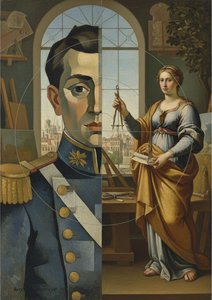
Roger de la Fresnaye: Cubism, Tradition & the Search for Order in Early 20th-Century French Painting
Explore the captivating world of Roger de la Fresnaye, a pivotal French Cubist painter. Discover his unique blend of tradition & modernity, influences, and lasting legacy with OriginalUniqueArt.

Maurice Quentin de La Tour: Light, Shadow & the Rococo Portrait
Explore the captivating world of Maurice Quentin de La Tour, a master of Rococo portraiture. Discover his innovative pastel techniques, intimate depictions of French aristocracy, and lasting artistic legacy. Learn more at OriginalUniqueArt.

Francisco Goya: 25 mestariteosta – Taidetta kotiisi OriginalUniqueArtilta
Tutustu Francisco Goyan 25 mestariteokseen! Uppoudu espanjalaisen taiteen historiaan, romanttisiin maalauksiin ja vaikuttaviin muotokuviin. Löydä täydellinen seinätaide kotiisi OriginalUniqueArtilta – korkealaatuiset reproduktiot ja inspiroivat sisustusideat. Tutki kokoelma verkossa!

Meistä
Tutustu tarinaamme! Tuomme maailmanluokan taidetta elämääsi asiantuntevan valikoiman, räätälöityjen ratkaisujen ja ilmaisten ennusteiden avulla. Yksityishenkilöt ja yritykset ovat luottaneet meihin vuodesta 2000 lähtien.
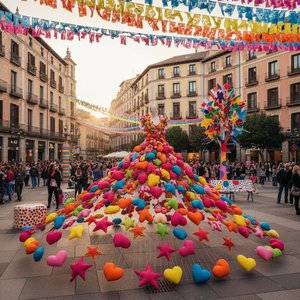
Águeda Ruiz de la Prada: A Study of Eclecticism & Emotional Resonance in Contemporary Spanish Painting
Discover the vibrant world of Ágatha Ruiz de la Prada, a leading figure in contemporary Spanish art. Explore her eclectic style, emotional depth & legacy – a must-read for discerning collectors.

