Neo-Dada · 1955
Monogram (Robert Rauschenberg, 1955)
Robert Rauschenberg (1925–2008) on luonut teoksen Monogram. Se on peräisin vuodelta 1955. Se kuuluu Neo-Dada-liikkeeseen.
- 1955

 Esikatselu

 Käsinmaalattu öljymaalaus
 Jaa teos
 Jaa
 Teostiedot


 Lataa kuva
 Samanlaisia kohteita
 Röntgenkuvaus
 Diaesitys
 Kysymykset ja vastaukset

 Tilastot
Monogram lyhyesti
- Teoksen nimi
- Monogram
- Taiteilija
- Robert Rauschenberg (1925–2008)
- Taiteilijan syntymäpaikka
- Port Arthur, Yhdysvallat
- Päivämäärä
- 1955
- Taidesuuntaus
- Neo-Dada
- Aihe
- ram, tire, assemblage, decay, transformation, industrial
Mitä Monogram esittää?
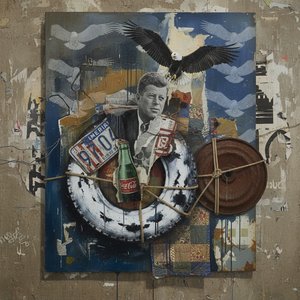
A Fusion of Nature and Industry: Robert Rauschenberg's "Monogram"
Robert Rauschenberg’s 1955 “Monogram” is a seminal work from his groundbreaking “Combines” series, a pivotal moment in art history that blurred the lines between painting, sculpture, and assemblage. This iconic piece transcends simple categorization, offering a complex visual narrative rich with symbolism and challenging traditional artistic boundaries. It's a powerful statement about post-war American culture, consumerism, and the evolving role of the artist.
Subject & Style: Neo-Dada Meets Pop Art
At its core, "Monogram" presents a striking juxtaposition of organic and industrial elements. The central image is the head of a ram, instantly recognizable through its long, curving horns. However, Rauschenberg doesn't present this animal in a naturalistic way. Instead, he obscures the face with painted markings, transforming it into an almost abstract form. Behind the ram’s head looms a large tire – a ubiquitous symbol of American transportation and industrial progress. This unexpected pairing is characteristic of the Neo-Dada movement, which Rauschenberg helped pioneer. Neo-Dada rejected the seriousness of Abstract Expressionism, embracing humor, irony, and found objects to critique societal norms. The work foreshadows elements of Pop Art, anticipating its embrace of everyday imagery and mass culture.
Technique & Materials: The "Combine" Process
“Monogram” exemplifies Rauschenberg’s innovative “Combines.” This term, coined by the artist himself, describes works that incorporate a variety of materials beyond traditional paint on canvas. Here, he utilizes a tire, fabric scraps, paper fragments, and painted surfaces to create a layered and textured composition. The base upon which the ram's head rests is covered in a collage-like arrangement of these disparate elements – torn papers, crumpled fabrics—adding to the work’s chaotic yet compelling visual energy. Rauschenberg’s technique involved a process of intuitive layering and assemblage, often incorporating materials he found or collected, further emphasizing the element of chance and spontaneity within his creative practice.
Symbolism & Historical Context
The symbolism in "Monogram" is open to interpretation, contributing to its enduring appeal. The ram itself can be seen as a symbol of power, virility, and even aggression. Its painted-over face suggests a loss of identity or a questioning of traditional representations. The tire, representing industrialization and mobility, introduces a contrasting element of modernity and perhaps even environmental concern. Created in 1955, the work reflects the post-war American landscape – a period of rapid economic growth, consumerism, and technological advancement. The piece can be viewed as a commentary on this era's complex relationship with nature and industry, questioning the impact of human progress on the natural world.
Emotional Impact & Legacy
"Monogram" evokes a range of emotions – from curiosity and intrigue to unease and even a sense of playful absurdity. The unexpected combination of elements challenges viewers to reconsider their perceptions of art and its relationship to everyday life. The work’s impact on subsequent generations of artists is undeniable, influencing the development of assemblage art, Pop Art, and contemporary sculpture. Owning a reproduction of "Monogram" allows you to bring this iconic piece into your space—a conversation starter and a testament to Rauschenberg's revolutionary vision.
Monogram korkearesoluutioiset kuvat
Tekijänoikeudet suojattu: nämä tiedostot on tarkoitettu vain henkilökohtaiseen käyttöön, eivätkä ne sisällä julkaisuoikeutta.
Robert Rauschenberg, Monogram (1955).
Kysymyksiä teoksesta Monogram ja vastauksia niihin
Milloin teos Robert Rauschenberg:n "Monogram" on luotu?
Robert Rauschenberg:n "Monogram" on luotu vuonna 1955.
Mitä Robert Rauschenberg:n "Monogram" esittää?
Robert Rauschenberg:n "Monogram" esittää: ram, tire, assemblage, decay, transformation, industrial, found objects, surreal.
Onko Robert Rauschenberg:n "Monogram" vapaasti käytettävissä oleva teos?
Tekijänoikeuksien osalta teos "Monogram" on on edelleen tekijänoikeuden alainen.
Kuka on luonut teoksen "Monogram"?
Teoksen "Monogram" taiteilija on Robert Rauschenberg. Teos on luetteloitu Robert Rauschenberg nimellä.
Mihin taidesuuntaukseen Robert Rauschenberg:n "Monogram" kuuluu?
Robert Rauschenberg:n "Monogram" kuuluu Neo-Dada-suuntaukseen. Tämä tyylisuunta antaa teokselle sen tyylillisen kontekstin.
Mihin vaiheeseen Robert Rauschenbergin kehityksestä "Monogram" edustaa?
Robert Rauschenberg'n uralla teos "Monogram" sijoittuu aikakaudelle Mid-Career. Tämä vaihe auttaa vertaamaan sitä taiteilijan muihin teoksiin.
Kuinka vanha Robert Rauschenberg oli luodessaan "Monogram" vuonna 1955?
Kun "Monogram" luotiin vuonna 1955, Robert Rauschenberg (syntynyt 1925) oli 30 vuotias.
Mikä selittää teoksen Robert Rauschenberg:n "Monogram" tekijänoikeustilanteen?
Robert Rauschenberg:n "Monogram" on on edelleen tekijänoikeuden alainen. Tekijänoikeuden voimassaolo lasketaan taiteilijan kuolinvuodesta, joka oli 2008.
Miten "Monogram" asettuu osaksi Robert Rauschenberg'n teemoja ja tyyliä?
"Monogram" kuuluu Robert Rauschenberg:n Neo-Dada-kauden tuotantoon, jonka tunnettuun teemaan kuuluvat dadaism & surrealism, assemblage art techniques, pop art sensibilities, representative of 'combines' style, exploration of found object art, key work in rauschenberg’s oeuvre, demonstrates his experimental approach, juxtaposition of nature/industry."
Tietoa taiteilijasta, Robert Rauschenberg

1925–2008, Yhdysvallat
Robert Rauschenberg
Robert Rauschenberg: Aelikonien ja Muutosten Taiteilija Robert Rauschenberg (1925-2008) oli yhdysvaltalainen taidekuningas, jonka työ muutti käsitystä siitä, mitä taide voisi olla. Hänen elämänsä ja hänen teoksensa heijastavat jatkuvaa muutosta, kokeilua ja kulttuurien kohtaamista – kaikki piirteitä, jotka ovat edelleen relevantteja nykytaiteessa. Syntynyt Port Arthressa, Texasin öljylouhikoissa, Rauschenberg ei koskaan täysin päässyt eroon lapsuutensa vaikutuksesta: sen raakaa luonnon kauneutta ja ihmisten elämää tehtaiden ympärillä. Tämä kokemus loi pohjan hänen myöhemmälle työnsä pohjalta, joka oli aina kiinnostunut löytämään uusia näkökulmia arkipäivän esineisiin ja ilmiöihin.
Tietoa taiteilijasta Robert Rauschenberg Robert Rauschenbergn merkittävimmät teokset
Myös Robert Rauschenberg -teoksia
 Tila1963
 Merkit1970
 Barge1963
 Odalisk1958
Esseitä teoksesta Monogram
 Francis Picabia: Dada's Provocateur – Reassessing Mechanical Forms & Mystical UndercurrentsExplore the revolutionary art of Francis Picabia – Dada's enigmatic provocateur. Discover his mechanical forms, hidden symbolism & lasting …
 Robert Rauschenberg: Bridging Painting & Life – A Comprehensive Exploration of Combines, Silkscreens, and the Erasure of BoundariesExplore the revolutionary art of Robert Rauschenberg – Combines, silkscreens & more. Discover his impact on Pop Art, investment potential &…
 Spontaneity and Matter: Distinguishing CoBrA from Art InformelMaster the differences between CoBrA and Art Informel with our expert guide. Learn to identify these post-war movements today.