The Three Graces
Acrylic On Canvas
WallArt
Cubism
1912
207.0 x 173.0 cm
Käsinmaalattu öljykopio
Käsinmaalattu öljyväri kankaalle haluamassasi koossa ja kehyksissä, taiteilijoidemme valmistamana tilauksesta. ( Switch to Print
Switch to Image)
P118B $10
P118H $10
P118W $10
P438Z $10
P508JH $12
P508YH $12
P805H $10
P805Z $10
P919BZ $10
P919G $10
P919XJ $10
P959ZH $10
P968JZ $12
W106C $8
W218G $10
W218JH $8
W218Y $10
W307PJ $10
W316G $10
W316PJ $8
W316Y $10
W398PJ $8
W4111J $10
W500HY $15
W500JH $15
W692G $12
W849H $8
W940BG $15
W953PJ $8
Valitse valmiista mitoistamme sellaiset, jotka vastaavat teoksen alkuperäisiä mittasuhteita.
Voit syöttää omat mitat sopimaan tiettyyn kehykseen tai tilaan. Jos valitsemasi koko ei vastaa alkuperäisen kuvan mittasuhteita, rajaamme taideteoksen tai jatkamme maalausta käsin maalatuilla elementeillä. Digitaalinen esikatselu lähetetään hyväksyttäväksi ennen tuotannon aloittamista.
Huomioithan, että näytöllä oleva esikatselu ei vastaa todellista rajausta tai jatkamista. Vain digitaalinen mallikuva näyttää lopullisen sommittelun tarkasti.
Vaikka mittatilaustyöt ovat mahdollisia, suosittelemme valitsemaan mitan ennalta määritetystä listasta alkuperäisten mittasuhteiden säilyttämiseksi.
Tilauksen jälkeen OriginalUniqueArt.com -tiimi lähettää asiakkaalle ohjeet ja esikatselukuvan.
Maailmanlaajuinen toimitus () 3–4 viikossa tavallisen 5 viikon sijaan. (28 heinäkuu). Laadusta ei tingitä.
Ilmainen pikatoimitus ympäri maailman
Korkealaatuinen pellavakangas
Kattava kuljetusvakuutus
Tulliveron palautustakuu
Täydellinen värien vastaavuustakuu
60 päivän palautusoikeus (vain valmistusvirheet)
100% rahat takaisin -takuu
Määräalennus tarjous
The Three Graces
Reproduktiotekniikka
Replikaatin koko
-
Kokonaishinta
$ 300
Teoksen kuvaus
A Symphony in Pastel Hues – Exploring Robert Delaunay’s “The Three Graces”
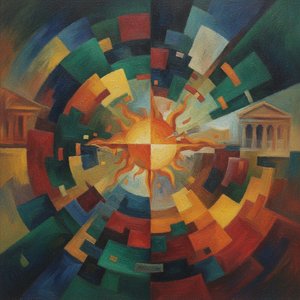
Robert Delaunay's "The Three Graces," completed in 1912, stands as a cornerstone of Orphism and a testament to the transformative power of abstract color theory. Painted during a period of intense artistic experimentation—the Belle Époque giving way to the burgeoning avant-garde—this monumental canvas transcends mere representation, immersing viewers in a realm where form and pigment converge to evoke profound emotion.
- Subject Matter: The painting depicts three nude women – representing Grace, Fertility, and Charity – poised gracefully amidst a dynamic landscape populated by two horses. This classical allusion is deliberately disrupted by Delaunay’s radical approach to visual language.
- Style: Orphism, spearheaded by Delaunay alongside Sonia Delaunay, rejected traditional perspective and realism in favor of fragmented geometric shapes overlaid with vibrant pastel colors. The resulting aesthetic prioritizes sensation over intellect, aiming to stimulate the viewer's subconscious mind.
Technique – Embracing Simultaneity
Delaunay’s masterful technique exemplifies the core principles of Orphism. He employed a layering process—often applying paint in multiple stages—to achieve what he termed “simultaneity.” This meant that different areas of the canvas appeared to glow with independent color sources, creating an illusion of depth and movement without adhering to conventional spatial conventions.
- Color Palette: The painting’s palette is dominated by delicate shades of pink, peach, lavender, and turquoise—colors chosen not for their descriptive accuracy but for their expressive qualities. Delaunay meticulously calibrated hues to generate a harmonious visual experience that resonated with the emotional core of the artwork.
- Brushwork: Loose, gestural brushstrokes contribute to the painting’s dynamism, conveying a sense of energy and spontaneity. These marks are deliberately imprecise, rejecting meticulous detail in favor of capturing the fleeting beauty of light and color.
Historical Context – The Dawn of Abstract Expression
"The Three Graces" emerged from the crucible of artistic innovation that characterized early twentieth-century Europe. Influenced by Cézanne’s exploration of geometric simplification and Picasso’s groundbreaking Cubist experiments, Delaunay pushed boundaries further, anticipating developments in abstract expressionism decades later.
- Belle Époque Legacy: Despite its departure from academic traditions, the painting retains echoes of the Belle Époque aesthetic—particularly in its idealized depiction of feminine beauty. However, this classical reference is swiftly subsumed by Delaunay’s embrace of abstraction.
- Symbolism: The figures themselves embody universal themes of grace, fertility, and charity – concepts central to Christian iconography. Yet, Delaunay transforms these symbols into purely visual elements, prioritizing their emotive impact over doctrinal significance.
Emotional Resonance – Capturing the Essence of Beauty
Ultimately, “The Three Graces” succeeds in conveying a profound sense of serenity and wonder. The luminous colors and dynamic brushwork evoke feelings of tranquility and contemplation, inviting viewers to immerse themselves in a visual experience that transcends rational comprehension.
This remarkable artwork continues to inspire artists and collectors alike, serving as a poignant reminder of the transformative potential of color and form—a legacy firmly rooted in Delaunay’s pioneering vision of abstract art.
Taiteilijan elämäkerta
Robert Delaunay (1885–1941): A Pioneer of Abstract Color
Robert Delaunay, born in Paris in 1885, emerged as a pivotal figure in the radical artistic shifts of the early twentieth century. Though initially drawn to more traditional forms of painting—particularly decorative arts—his journey swiftly propelled him toward an exploration of color and light that would ultimately define his legacy and contribute significantly to the birth of abstract art. Delaunay wasn’t merely interested in *representing* the world; he sought to capture its very essence through a vibrant language of geometric shapes and luminous hues, co-founding the Orphism movement with his wife, Sonia Delaunay, and others who shared their vision. His early life was marked by instability – his parents divorced when he was young, and he was raised by relatives – but this perhaps fostered an independent spirit that would serve him well in challenging artistic conventions. He initially pursued decorative arts, honing his skills in stained glass and textile design before dedicating himself to painting around 1904.Early Influences and Divisionism
Delaunay’s formative years were steeped in Impressionistic aesthetics, absorbing the techniques of Neo-Impressionism, or Divisionism. Like many artists of his time, he was captivated by Claude Monet’s explorations of light and atmosphere, particularly in his series depicting Rouen Cathedral. However, Delaunay quickly moved beyond simply replicating optical phenomena; he began to investigate the expressive potential of color itself—a pursuit that would become central to his artistic identity. This fascination with color led him to experiment with complementary hues—such as red and green or blue and orange—creating shimmering surfaces reminiscent of Monet’s paintings. A pivotal friendship with Jean Metzinger proved formative during this period, as they collaboratively explored the possibilities of fragmented forms and mosaic-like compositions. These early collaborations laid groundwork for their later involvement in Cubism, though Delaunay would ultimately diverge from its more analytical approach.Cubism and Beyond: Synthesizing Form and Color
While acknowledging the influence of Pablo Picasso and Georges Braque’s groundbreaking Cubist innovations—particularly their dissection of objects into geometric components—Delaunay resisted a purely analytical interpretation of the movement. He wasn’t interested in dissecting objects into geometric components; rather, he sought to synthesize them into dynamic arrangements of color and light. This decisive shift culminated in the development of Orphism – a term coined by poet Guillaume Apollinaire – which aimed to create a purely abstract art that evoked emotional responses through its chromatic intensity. Unlike Cubism’s focus on intellectual rigor, Orphism prioritized intuition and sensory experience—a radical departure from prevailing artistic conventions. Delaunay believed that color wasn’t merely a descriptive element but an active force capable of shaping our perception of reality.Simultaneous Contrasts: Exploring Light and Color Dynamics
Perhaps Delaunay’s most iconic work, *Simultaneous Contrasts: Sun and Moon* (1913), exemplifies this approach with breathtaking clarity. The painting depicts the Eiffel Tower—a symbol of Parisian modernity—deconstructed into a network of intersecting planes and vibrant hues. Rather than portraying the tower as it appeared to the eye, Delaunay presented it as a complex interplay of light and color—a visual representation of Apollinaire’s concept of “simultanéité”. The painting's bold use of complementary colors—primarily yellow and blue—creates a dynamic tension that captures the essence of the tower’s architectural grandeur. It is considered one of the seminal works of Orphism, demonstrating Delaunay’s mastery of color theory and his unwavering commitment to expressive abstraction.Later Years and Legacy: Architectural Inspirations
The outbreak of World War I forced Delaunay and Sonia Delaunay to relocate to Spain and Portugal, where they continued to work and exhibit amidst challenging circumstances. Upon returning to Paris in the 1920s, Delaunay explored a range of subjects—including portraits and figurative scenes—but always remained steadfastly devoted to his core principles of color and abstraction. He undertook ambitious projects such as designing large-scale colored reliefs for the 1937 Paris International Exposition—a testament to his ability to translate his artistic vision into architectural contexts. Robert Delaunay’s untimely death in 1941 marked a profound loss for the art world, but his influence continues to resonate today. His pioneering work laid the foundation for many subsequent developments in abstract art, and his exploration of color remains a source of inspiration for artists across disciplines—a legacy that transcends time and embodies the enduring power of artistic innovation.Robert Delaunay
1885 - 1941 , Ranska
Pikatiedot
- Artistic Movement Or Style: Orphism, Cubism
- Artists Or Movements Influenced By This Artist: ['Der Blaue Reiter']
- Artists Who Influenced This Artist:
- Jean Metzinger
- Paul Klee
- Date Of Birth: 12. huhtikuuta 1885
- Date Of Death: 25. lokakuuta 1941
- Full Name: Robert Delaunay
- Nationality: Ranskalainen
- Notable Artworks:
- Eiffel Tower
- Simultaneous Contrasts
- Windows Open Simultaneously
- Place Of Birth: Paris, Ranska

Lasivaihtoehto on saatavilla vain alle 110 cm kokoisina teoksina