
 Esikatselu
 Jaa teos
 Jaa
Jaa
 Tiedot
 Opas
Opas

 Lataa kuva
 Samanlaisia kohteita
 Röntgenkuvaus
 Diaesitys
 Kysymykset ja vastaukset
 Tilastot
Rhythm Color

 Lue lisää
Giclée- ja taideprintit
Museolaatuisia giclée- tai kankaitaulun tulosteita nopealla tuotannolla ja joustavilla viimeistelyvaihtoehdoilla. ( Osta käsinmaalattu taideteos Siirry digitaaliseen kuvaan)




P118B €10

P118H €10

P118W €10

P438Z €10

P508JH €12

P508YH €12

P805H €10

P805Z €10

P919BZ €10

P919G €10

P919XJ €10

P959ZH €10

P968JZ €12

W106C €8

W218G €10

W218JH €8

W218Y €10

W307PJ €10

W316G €10

W316PJ €8

W316Y €10

W398PJ €8

W4111J €10

W500HY €15

W500JH €15

W692G €12

W849H €8

W940BG €15

W953PJ €8




Valitse valmiista mitoistamme sellaiset, jotka vastaavat teoksen alkuperäisiä mittasuhteita.

Syötä tarvitsemasi leveys ja korkeus, jotta tuloste sopii kehyksiisi tai seinällesi. Tulostetta voidaan vain leikata, sitä ei voida koskaan suurentaa alkuperäistä kuvaa suuremmaksi, joten eri muotoinen koko aiheuttaa osan kuvasta katoamisen. Lähetämme sinulle digitaalisen mallikuvan hyväksyttäväksi ennen kuin aloitamme tulostuksen. Tällä sivulla näkyvä kuva ei näytä lopullista rajausta — vain mallikuva näyttää sen.
Maailmanlaajuinen toimitus () 2 viikossa tavallisen 4–5 viikon sijaan. (12 marraskuu)

Ilmainen pikatoimitus ympäri maailman

Korkealaatuinen pellavakangas

Kattava kuljetusvakuutus

Tulliveron palautustakuu

Takuu täydellisestä värien vastaavuudesta

100 päivän palautusoikeus (vain valmistusvirheet)

100% rahat takaisin -takuu

Määräalennus tarjolla
 Lasivaihtoehto on saatavilla vain alle 110 cm kokoisille teoksille

Rhythm Color
Giclée- ja taideprintit
Replikaatin koko
-


Kokonaishinta
€ 72
Robert Delaunay’s “Rhythm Color”: A Symphony of Geometric Light
The artwork "Rhythm Color," executed by Robert Delaunay in 1913, stands as an emblem of Orphism—a movement that irrevocably altered the trajectory of modern art. More than just a visual spectacle, it embodies a profound philosophical inquiry into the nature of perception and artistic expression itself. Delaunay’s ambition wasn't to depict reality; rather, he sought to distill its essence into pure color and form, mirroring the burgeoning fascination with scientific discoveries concerning light and vibration during this transformative period.- Style & Context: Orphism emerged from Cubism, rejecting its fragmentation of perspective in favor of a more holistic approach. Influenced by Nietzsche’s concept of Dionysian ecstasy—a primal surge of emotion and instinct—the movement aimed to liberate art from representational constraints and tap into the subconscious realm. The canvas pulsates with an energy that transcends mere visual observation.
- Technique: Delaunay employed oil on canvas, utilizing a technique characterized by layering translucent washes of color—primarily reds, yellows, and blues—over textured surfaces achieved through impasto. This method allowed for the creation of luminous effects and palpable materiality, capturing the dynamism inherent in the artist’s vision.
Decoding Geometric Harmony: Composition & Color Palette
The composition is dominated by a rectangular frame enclosing overlapping circles and geometric shapes—primarily squares and rectangles—arranged in a seemingly random yet meticulously balanced configuration. However, beneath this surface lies an underlying order rooted in mathematical principles. Delaunay’s color palette eschews traditional hues, opting instead for vibrant shades that vibrate with luminosity. The interplay of complementary colors—red against blue, yellow against violet—creates visual tension and reinforces the sense of movement throughout the artwork. Each shape contributes to a larger harmonic whole, reflecting the artist's belief in the interconnectedness of form and color.Symbolism Beyond Representation: Light & Vibration
Beyond its formal qualities, “Rhythm Color” carries symbolic weight rooted in Delaunay’s fascination with scientific theories concerning light and vibration. He believed that color possessed a vibrational energy—akin to sound—that could influence human consciousness. The luminous circles represent this radiant force, conveying an aspiration toward transcendence and spiritual illumination. They symbolize the artist's desire to capture not just what is seen but what is felt—a profound communion with the underlying rhythms of existence.Emotional Resonance: Capturing the Dionysian Spirit
Ultimately, “Rhythm Color” succeeds in evoking a powerful emotional response. Its chaotic yet harmonious arrangement mirrors the exhilaration and disorientation experienced during moments of ecstatic inspiration—a core tenet of Orphism’s philosophical underpinning. The artwork invites contemplation on themes of beauty, dynamism, and spiritual awakening, resonating with viewers who appreciate art that transcends mere visual gratification.A reproduction of “Rhythm Color” offers an exceptional opportunity to experience the brilliance of Delaunay's vision—a testament to his pioneering role in shaping the landscape of modern art.
Kysymykset ja vastaukset
Mitä aihetta ja tunnelmaa Robert Delaunay:n "Rhythm Color" yhdistää?
"Rhythm Color" esittää aiheita abstract composition, geometric forms, color field art, dynamic rhythm, circular design, modern abstraction, vibrant palette, ja sen tunnelmaksi on tallennettu Elegant.
Miten "Rhythm Color" tasapainottaa valon ja varjon?
Teoksen Robert Delaunay:n "Rhythm Color" mitatut arvot ovat: kirkkaus balanced, luminanssi Gentle Luminance.
Mitä tunnetta Robert Delaunay:n "Rhythm Color" välittää?
Robert Delaunay:n "Rhythm Color" välittää Reflective tunnelman.
Taiteilijan elämäkerta
Robert Delaunay (1885–1941): A Pioneer of Abstract Color
Robert Delaunay, born in Paris in 1885, emerged as a pivotal figure in the radical artistic shifts of the early twentieth century. Though initially drawn to more traditional forms of painting—particularly decorative arts—his journey swiftly propelled him toward an exploration of color and light that would ultimately define his legacy and contribute significantly to the birth of abstract art. Delaunay wasn’t merely interested in *representing* the world; he sought to capture its very essence through a vibrant language of geometric shapes and luminous hues, co-founding the Orphism movement with his wife, Sonia Delaunay, and others who shared their vision. His early life was marked by instability – his parents divorced when he was young, and he was raised by relatives – but this perhaps fostered an independent spirit that would serve him well in challenging artistic conventions. He initially pursued decorative arts, honing his skills in stained glass and textile design before dedicating himself to painting around 1904.Early Influences and Divisionism
Delaunay’s formative years were steeped in Impressionistic aesthetics, absorbing the techniques of Neo-Impressionism, or Divisionism. Like many artists of his time, he was captivated by Claude Monet’s explorations of light and atmosphere, particularly in his series depicting Rouen Cathedral. However, Delaunay quickly moved beyond simply replicating optical phenomena; he began to investigate the expressive potential of color itself—a pursuit that would become central to his artistic identity. This fascination with color led him to experiment with complementary hues—such as red and green or blue and orange—creating shimmering surfaces reminiscent of Monet’s paintings. A pivotal friendship with Jean Metzinger proved formative during this period, as they collaboratively explored the possibilities of fragmented forms and mosaic-like compositions. These early collaborations laid groundwork for their later involvement in Cubism, though Delaunay would ultimately diverge from its more analytical approach.Cubism and Beyond: Synthesizing Form and Color
While acknowledging the influence of Pablo Picasso and Georges Braque’s groundbreaking Cubist innovations—particularly their dissection of objects into geometric components—Delaunay resisted a purely analytical interpretation of the movement. He wasn’t interested in dissecting objects into geometric components; rather, he sought to synthesize them into dynamic arrangements of color and light. This decisive shift culminated in the development of Orphism – a term coined by poet Guillaume Apollinaire – which aimed to create a purely abstract art that evoked emotional responses through its chromatic intensity. Unlike Cubism’s focus on intellectual rigor, Orphism prioritized intuition and sensory experience—a radical departure from prevailing artistic conventions. Delaunay believed that color wasn’t merely a descriptive element but an active force capable of shaping our perception of reality.Simultaneous Contrasts: Exploring Light and Color Dynamics
Perhaps Delaunay’s most iconic work, *Simultaneous Contrasts: Sun and Moon* (1913), exemplifies this approach with breathtaking clarity. The painting depicts the Eiffel Tower—a symbol of Parisian modernity—deconstructed into a network of intersecting planes and vibrant hues. Rather than portraying the tower as it appeared to the eye, Delaunay presented it as a complex interplay of light and color—a visual representation of Apollinaire’s concept of “simultanéité”. The painting's bold use of complementary colors—primarily yellow and blue—creates a dynamic tension that captures the essence of the tower’s architectural grandeur. It is considered one of the seminal works of Orphism, demonstrating Delaunay’s mastery of color theory and his unwavering commitment to expressive abstraction.Later Years and Legacy: Architectural Inspirations
The outbreak of World War I forced Delaunay and Sonia Delaunay to relocate to Spain and Portugal, where they continued to work and exhibit amidst challenging circumstances. Upon returning to Paris in the 1920s, Delaunay explored a range of subjects—including portraits and figurative scenes—but always remained steadfastly devoted to his core principles of color and abstraction. He undertook ambitious projects such as designing large-scale colored reliefs for the 1937 Paris International Exposition—a testament to his ability to translate his artistic vision into architectural contexts. Robert Delaunay’s untimely death in 1941 marked a profound loss for the art world, but his influence continues to resonate today. His pioneering work laid the foundation for many subsequent developments in abstract art, and his exploration of color remains a source of inspiration for artists across disciplines—a legacy that transcends time and embodies the enduring power of artistic innovation.
Robert Delaunay
1885 - 1941 , Ranska
Pähkinänkuoressa
- Artistic Movement Or Style: Orphism, Cubism
- Artists Or Movements Influenced By This Artist: ['Der Blaue Reiter']
- Artists Who Influenced This Artist:
- Jean Metzinger
- Paul Klee
- Date Of Birth: 12. huhtikuuta 1885
- Date Of Death: 25. lokakuuta 1941
- Full Name: Robert Delaunay
- Nationality: Ranskalainen
- Notable Artworks:
- Eiffel Tower
- Simultaneous Contrasts
- Windows Open Simultaneously
- Place Of Birth: Paris, Ranska
Aiheeseen liittyvät artikkelit
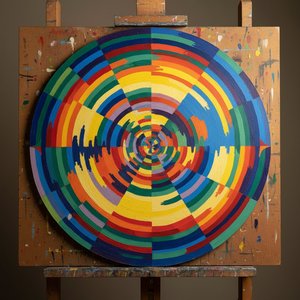
Sonia Delaunay: A Life in Color – Exploring the Rhythms of Abstraction and Synesthesia
Explore the vibrant world of Sonia Delaunay, a pioneer of abstract art and co-founder of Orphism. Discover her revolutionary use of color, geometric forms, and influence on modern design. A deep dive into her life & legacy.
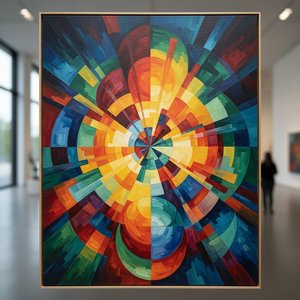
Orphism: A Symphony of Color and Form – Exploring the Abstract Roots of Modern Art
Explore Orphism, the vibrant abstract art movement pioneered by Robert & Sonia Delaunay. Discover its unique color theory, lasting influence on modern art, and how to bring this 'symphony of color' into your home with OriginalUniqueArt.

Orphism Unlocked: The High-Energy Color Revolution That Defined Abstract Art
Dive into the high-energy world of Orphism. Discover how this color revolution broke Cubism's rules to define modern abstraction through light, motion, and pure visual impact. Explore the legacy of the Delaunays and bring bold, vibrant energy to your contemporary space.
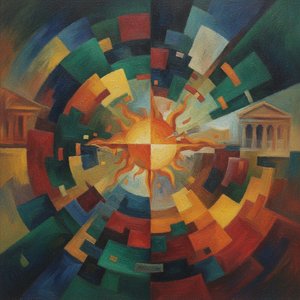
Orphism Unveiled: The Radiant Dance of Color and Light in the Evolution of Abstract Art
Discover the luminous world of Orphism. Explore how masters like Robert and Sonia Delaunay revolutionized art through a radiant dance of color, light, and geometric abstraction in this deep dive into modern art history.

Geometrisen abstraktion mestariteokset: Taidetta kotiin OriginalUniqueArtilta
Tutustu geometrisen abstraktion 10 mestariteokseen! Piet Mondrian, Kandinsky ja muut taiteilijat muovasivat modernin taiteen historiaa. Löydä inspiraatiota kotiisi OriginalUniqueArtilta – laadukkaat taideprintit ja sisustusehdotukset odottavat. Tutki kokoelma verkossa!

