Valikko
Katso seinällä Esikatsele AR-tilassa Vaihda tulosteeseen Siirry digitaaliseen kuvaan Lähetä
Tarkemmat tiedot Opas Lisää suosikkeihin Lataa kuva Samanlaisia kohteita Röntgenkuvaus Diaesitys Tilastot

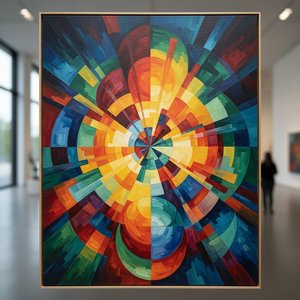
Formes circulaires, soleil (Circular Forms, Sun)

Explore Robert Delaunay's 'Formes circulaires, soleil (Circular Forms, Sun)' – a vibrant abstract masterpiece showcasing dynamic circles and color fields, embodying Orphism’s revolutionary approach to light and form.

Robert Reid oli tunnettu amerikkalainen impressionisti ja kuuluu "Seitsemään amerikkalaiseen maalariin". Hän työskenteli myös seinämaalauksissa sekä kirkkojen lasitöissä, erityisesti Chicagon maailmannäyttelyssä.

Käsinmaalattu öljyvärinen jäljennös

Käsinmaalattu öljyväri kankaalle haluamassasi koossa ja kehyksissä, taiteilijoidemme valmistamana tilauksesta. ( Vaihda tulosteeseen Siirry digitaaliseen kuvaan)

Corner sample of the P118B picture frame: valettu polystyreeni, 5 cm wide and 3 cm thick
P118B €10
Corner sample of the P118H picture frame: valettu polystyreeni, 5 cm wide and 3 cm thick
P118H €10
Corner sample of the P118W picture frame: valettu polystyreeni, 5 cm wide and 3 cm thick
P118W €10
Corner sample of the P438Z picture frame: valettu polystyreeni, 5.5 cm wide and 3.5 cm thick
P438Z €10
Corner sample of the P508JH picture frame: valettu polystyreeni, 7 cm wide and 3.5 cm thick
P508JH €12
Corner sample of the P508YH picture frame: valettu polystyreeni, 7 cm wide and 3.5 cm thick
P508YH €12
Corner sample of the P805H picture frame: valettu polystyreeni, 5 cm wide and 3.5 cm thick
P805H €10
Corner sample of the P805Z picture frame: valettu polystyreeni, 5 cm wide and 3.5 cm thick
P805Z €10
Corner sample of the P919BZ picture frame: valettu polystyreeni, 7 cm wide and 3.5 cm thick
P919BZ €10
Corner sample of the P919G picture frame: valettu polystyreeni, 7 cm wide and 3.5 cm thick
P919G €10
Corner sample of the P919XJ picture frame: valettu polystyreeni, 7 cm wide and 3.5 cm thick
P919XJ €10
Corner sample of the P959ZH picture frame: valettu polystyreeni, 5 cm wide and 3 cm thick
P959ZH €10
Corner sample of the P968JZ picture frame: valettu polystyreeni, 6 cm wide and 4 cm thick
P968JZ €12
Corner sample of the W106C picture frame: massiivipuu, 5 cm wide and 3 cm thick
W106C €8
Corner sample of the W218G picture frame: massiivipuu, 5 cm wide and 3 cm thick
W218G €10
Corner sample of the W218JH picture frame: massiivipuu, 5 cm wide and 3 cm thick
W218JH €8
Corner sample of the W218Y picture frame: massiivipuu, 5 cm wide and 3 cm thick
W218Y €10
Corner sample of the W307PJ picture frame: massiivipuu, 6 cm wide and 3 cm thick
W307PJ €10
Corner sample of the W316G picture frame: massiivipuu, 6 cm wide and 3 cm thick
W316G €10
Corner sample of the W316PJ picture frame: massiivipuu, 6 cm wide and 3 cm thick
W316PJ €8
Corner sample of the W316Y picture frame: massiivipuu, 6 cm wide and 3 cm thick
W316Y €10
Corner sample of the W398PJ picture frame: massiivipuu, 5 cm wide and 3 cm thick
W398PJ €8
Corner sample of the W4111J picture frame: massiivipuu, 6.5 cm wide and 3.5 cm thick
W4111J €10
Corner sample of the W500HY picture frame: massiivipuu, 7 cm wide and 5 cm thick
W500HY €15
Corner sample of the W500JH picture frame: massiivipuu, 7 cm wide and 5 cm thick
W500JH €15
Corner sample of the W692G picture frame: massiivipuu, 8 cm wide and 4 cm thick
W692G €12
Corner sample of the W849H picture frame: massiivipuu, 5 cm wide and 3 cm thick
W849H €8
Corner sample of the W940BG picture frame: massiivipuu, 7.5 cm wide and 4.5 cm thick
W940BG €15
Corner sample of the W953PJ picture frame: massiivipuu, 6 cm wide and 3.5 cm thick
W953PJ €8

Vakiokoko
mittatilaustyö
CM
INCH

Valitse valmiista mitoistamme sellaiset, jotka vastaavat teoksen alkuperäisiä mittasuhteita.

leveys
korkeus

Kirjoita tarvitsemasi leveys ja korkeus, jotta teos sopii kehyskehyksiisi tai seinällesi. Koska kyseessä on käsinmaalattu teos, taiteilija voi maalata hieman enemmän kuvan ympärille tai rajata sitä hieman, jos haluat eri muotoisen koon — valinta on sinun. Lähetämme sinulle digitaalisen mallikuvan hyväksyttäväksi ennen kuin maalaus alkaa. Tällä sivulla näkyvä kuva ei vastaa lopullista tulosta — vain mallikuva näyttää sen.

Esimerkkejä muokattavista asioista: Vaihda kasvot asiakkaan omaan valokuvaan; Lisää lemmikki (esim. korvaa kissa koiralla); Lisää taustalle piilotettu viesti; Muuta taustan maisemaa tai elementtejä.

Tilauksen jälkeen OriginalUniqueArt.com -tiimi lähettää asiakkaalle sähköpostitse ohjeet ja esikatselukuvan.

Maailmanlaajuinen toimitus () 3–4 viikossa tavallisen 5 viikon sijaan. (27 lokakuu). Laadusta ei tingitä.

Ilmainen pikatoimitus ympäri maailman
Korkealaatuinen pellavakangas
Kattava kuljetusvakuutus
Tulliveron palautustakuu
Takuu täydellisestä värien vastaavuudesta
100 päivän palautusoikeus valmistusvirhetapauksissa
100% rahat takaisin -takuu
Määräalennus saatavilla

Kokonaishinta

€ 264

Formes circulaires, soleil (Circular Forms, Sun)

Reproduktiotapa

Replikaatin koko

-

Kokonaishinta

€ 264

Pikaista tietoa

  • Subject or theme: Light and forms
  • Notable elements: Geometric shapes, Prismatic color
  • Title: Formes circulaires, soleil (Circular Forms, Sun)
  • Location: MNAM, Paris
  • Year: 1912-13
  • Influences:
    • Fernand Léger
    • August Macke

Taidevisakysely

Jokaisessa kysymyksessä on vain yksi oikea vastaus.

Kysymys 1:
What is the primary theme explored in Robert Delaunay’s ‘Formes circulaires, soleil (Circular Forms, Sun)’?
Kysymys 2:
The subtitle ‘Sun and Moon’ in the title refers to:
Kysymys 3:
Which artistic movement is ‘Formes circulaires, soleil (Circular Forms, Sun)’ most closely associated with?
Kysymys 4:
The use of layered circles and circle sections in the painting reflects:
Kysymys 5:
Robert Delaunay's work, including ‘Formes circulaires, soleil (Circular Forms, Sun)’, significantly influenced a generation of artists. Which artist is specifically mentioned as being inspired by his color theories?

A Dance of Light and Form: Robert Delaunay’s “Formes Circulaires, Soleil, Lune”

Robert Delaunay's "Formes Circulaires, Soleil, Lune" (Circular Forms, Sun, Moon) is not merely a painting; it’s an immersive experience—a vibrant meditation on the very essence of light and its transformative power. Created in 1912-13 during his pivotal period of experimentation with color theory and abstraction, this work stands as a cornerstone of Orphism, a movement Delaunay co-founded alongside his wife, Sonia, seeking to liberate art from representational constraints and embrace the pure joy of visual sensation. The canvas pulsates with an energy born from the collision of scientific inquiry and artistic intuition, inviting the viewer into a world where color isn’t simply observed but actively felt.

The Language of Color: Delaunay's Theoretical Framework

Delaunay’s approach to painting was deeply rooted in his fascination with optics and the theories of Chevreul, a 19th-century color scientist. He believed that colors didn’t exist independently but were instead created through the simultaneous interaction of complementary hues. This concept—that the effect of one color is altered by its neighbors—became the driving force behind his “Orphism,” characterized by bold, clashing colors arranged in dynamic, non-naturalistic compositions. "Formes Circulaires" exemplifies this perfectly; the fiery yellows and oranges of the sun are juxtaposed against cooler blues and greens, creating a visual tension that is both exhilarating and harmonious. The layering of these colors isn’t simply decorative; it's a deliberate attempt to capture the fleeting, shimmering quality of light itself.

Geometric Harmony: Structure and Symbolism

Despite its vibrant color palette, “Formes Circulaires” is fundamentally structured. The dominant element—a series of concentric circles—creates a sense of rhythm and movement, echoing the patterns found in nature – the sun’s rays, the orbits of planets, or even the ripples on water. These circles aren't static; they are layered with smaller, fragmented shapes, suggesting an underlying dynamism and instability. The inclusion of the titles “Soleil” (Sun) and “Lune” (Moon) isn’t merely descriptive; it imbues the painting with symbolic weight. The sun represents energy, vitality, and illumination, while the moon embodies mystery, reflection, and the subconscious. The interplay between these celestial bodies speaks to a fundamental duality—the conscious and the unconscious, the active and the passive.

A Bridge Between Tradition and Modernity

Delaunay’s work occupies a fascinating space within the transition from early 20th-century art. While influenced by Neoimpressionism's emphasis on color theory, he moved decisively beyond its strict adherence to pointillist techniques. “Formes Circulaires” demonstrates this shift—a move towards abstraction and a focus on pure visual experience. His exploration of color and form resonated deeply with artists like Kandinsky and Mondrian, who would later develop their own distinct approaches to abstract art. Delaunay’s legacy lies not only in his pioneering work within Orphism but also in his willingness to challenge conventional artistic boundaries and explore the limitless possibilities of color and light.

This reproduction captures the essence of Delaunay's vision, offering a window into a world where art becomes a celebration of perception itself. Its bold colors and dynamic composition make it an ideal addition to any space, injecting a dose of energy and visual excitement.

Kysymykset ja vastaukset

Mikä on teoksen Robert Delaunay:n "Formes circulaires, soleil (Circular Forms, Sun)" yleinen tunnelma?

Teoksen Robert Delaunay:n "Formes circulaires, soleil (Circular Forms, Sun)" tunnelmaa kuvataan olevan Elegant. Tämä luokittelu voi auttaa löytämään teokselle sopivan ympäristön.

Kuinka vaalea "Formes circulaires, soleil (Circular Forms, Sun)" on kokonaisuudessaan?

Kokonaisuudessaan teoksen "Formes circulaires, soleil (Circular Forms, Sun)" kirkkaus on kirjattu arvoon shadow. Koettu kirkkaus kuvaa sitä, kuinka vaaleana tai tummana teos vaikuttaa.

Minkälainen teos "Formes circulaires, soleil (Circular Forms, Sun)" on?

Luettelossa teos Robert Delaunay:n "Formes circulaires, soleil (Circular Forms, Sun)" on luokiteltu tyypiksi WallArt. Kategoria auttaa löytämään samankaltaisia teoksia.


Taiteilijan elämäkerta

Robert Delaunay (1885–1941): A Pioneer of Abstract Color

Robert Delaunay, born in Paris in 1885, emerged as a pivotal figure in the radical artistic shifts of the early twentieth century. Though initially drawn to more traditional forms of painting—particularly decorative arts—his journey swiftly propelled him toward an exploration of color and light that would ultimately define his legacy and contribute significantly to the birth of abstract art. Delaunay wasn’t merely interested in *representing* the world; he sought to capture its very essence through a vibrant language of geometric shapes and luminous hues, co-founding the Orphism movement with his wife, Sonia Delaunay, and others who shared their vision. His early life was marked by instability – his parents divorced when he was young, and he was raised by relatives – but this perhaps fostered an independent spirit that would serve him well in challenging artistic conventions. He initially pursued decorative arts, honing his skills in stained glass and textile design before dedicating himself to painting around 1904.

Early Influences and Divisionism

Delaunay’s formative years were steeped in Impressionistic aesthetics, absorbing the techniques of Neo-Impressionism, or Divisionism. Like many artists of his time, he was captivated by Claude Monet’s explorations of light and atmosphere, particularly in his series depicting Rouen Cathedral. However, Delaunay quickly moved beyond simply replicating optical phenomena; he began to investigate the expressive potential of color itself—a pursuit that would become central to his artistic identity. This fascination with color led him to experiment with complementary hues—such as red and green or blue and orange—creating shimmering surfaces reminiscent of Monet’s paintings. A pivotal friendship with Jean Metzinger proved formative during this period, as they collaboratively explored the possibilities of fragmented forms and mosaic-like compositions. These early collaborations laid groundwork for their later involvement in Cubism, though Delaunay would ultimately diverge from its more analytical approach.

Cubism and Beyond: Synthesizing Form and Color

While acknowledging the influence of Pablo Picasso and Georges Braque’s groundbreaking Cubist innovations—particularly their dissection of objects into geometric components—Delaunay resisted a purely analytical interpretation of the movement. He wasn’t interested in dissecting objects into geometric components; rather, he sought to synthesize them into dynamic arrangements of color and light. This decisive shift culminated in the development of Orphism – a term coined by poet Guillaume Apollinaire – which aimed to create a purely abstract art that evoked emotional responses through its chromatic intensity. Unlike Cubism’s focus on intellectual rigor, Orphism prioritized intuition and sensory experience—a radical departure from prevailing artistic conventions. Delaunay believed that color wasn’t merely a descriptive element but an active force capable of shaping our perception of reality.

Simultaneous Contrasts: Exploring Light and Color Dynamics

Perhaps Delaunay’s most iconic work, *Simultaneous Contrasts: Sun and Moon* (1913), exemplifies this approach with breathtaking clarity. The painting depicts the Eiffel Tower—a symbol of Parisian modernity—deconstructed into a network of intersecting planes and vibrant hues. Rather than portraying the tower as it appeared to the eye, Delaunay presented it as a complex interplay of light and color—a visual representation of Apollinaire’s concept of “simultanéité”. The painting's bold use of complementary colors—primarily yellow and blue—creates a dynamic tension that captures the essence of the tower’s architectural grandeur. It is considered one of the seminal works of Orphism, demonstrating Delaunay’s mastery of color theory and his unwavering commitment to expressive abstraction.

Later Years and Legacy: Architectural Inspirations

The outbreak of World War I forced Delaunay and Sonia Delaunay to relocate to Spain and Portugal, where they continued to work and exhibit amidst challenging circumstances. Upon returning to Paris in the 1920s, Delaunay explored a range of subjects—including portraits and figurative scenes—but always remained steadfastly devoted to his core principles of color and abstraction. He undertook ambitious projects such as designing large-scale colored reliefs for the 1937 Paris International Exposition—a testament to his ability to translate his artistic vision into architectural contexts. Robert Delaunay’s untimely death in 1941 marked a profound loss for the art world, but his influence continues to resonate today. His pioneering work laid the foundation for many subsequent developments in abstract art, and his exploration of color remains a source of inspiration for artists across disciplines—a legacy that transcends time and embodies the enduring power of artistic innovation.
Robert Delaunay

Robert Delaunay

1885 - 1941 , Ranska

Tietoa taiteilijasta

  • Artistic Movement Or Style: Orphism, Cubism
  • Artists Or Movements Influenced By This Artist: ['Der Blaue Reiter']
  • Artists Who Influenced This Artist:
    • Jean Metzinger
    • Paul Klee
  • Date Of Birth: 12. huhtikuuta 1885
  • Date Of Death: 25. lokakuuta 1941
  • Full Name: Robert Delaunay
  • Nationality: Ranskalainen
  • Notable Artworks:
    • Eiffel Tower
    • Simultaneous Contrasts
    • Windows Open Simultaneously
  • Place Of Birth: Paris, Ranska
Tutustu teoksiin, jotka on järjestetty aiheiden, tyylien ja ominaisuuksien mukaan.