High Renaissance · 1518
Jacob's Dream (Rafael, 1518)
Rafael (1483–1520) on luonut teoksen Jacob's Dream. Se on peräisin vuodelta 1518. Se kuuluu High Renaissance-liikkeeseen. Se on valmistettu materiaalilla Fresco.
- 1518
- Fresco

 Käsinmaalattu öljymaalaus
 Jaa teos
 Jaa
 Tiedot-arkki


 Lataa kuva
 Samanlaisia kohteita
 Diaesitys
 Kysymykset ja vastaukset

 Tilastot
Jacob's Dream lyhyesti
- Otsikko
- Jacob's Dream
- Taiteilija
- Rafael (1483–1520)
- Taiteilija syntynyt
- Urbino, Italia
- Päivämäärä
- 1518
- Tekniikka
- Fresco
- Tyylisuunta
- High Renaissance
- Aikakausi
- Renaissance
- Aihe
- biblical narrative, dream imagery, religious symbolism, angel ascension, italian renaissance, jacob's vision
Mitä Jacob's Dream esittää?
A Vision of Divine Ascent: The Celestial Majesty of Raphael’s Jacob’s Dream
In the heart of the High Renaissance, amidst the intellectual fervor of Rome, Raphael Sanzio captured a moment of profound spiritual transcendence in his 1518 masterpiece, Jacob’s Dream. Originally conceived for the prestigious Loggia of the Palazzo Nuovo under the patronage of Pope Leo X, this fresco is far more than a mere biblical illustration; it is a breathtaking window into the divine. The scene breathes with the life of Genesis, depicting the patriarch Jacob as he rests upon a stone altar, caught in the liminal space between sleep and revelation. As he lies in contemplative repose, his eyes are drawn upward to witness a celestial procession: angels ascending and descending a heavenly ladder, bridging the gap between the earthly realm and the infinite heavens.
Raphael’s technical mastery is on full display through his sophisticated use of sfumato and linear perspective, techniques that lend the composition an almost palpable atmospheric depth. By subtly blurring edges and layering pigments with remarkable luminosity, he creates an illusionistic space that pulls the viewer into the dreamscape. The movement within the painting is masterfully orchestrated; the dynamic upward trajectory of the angels creates a sense of rhythmic energy, while the presence of birds circling above Jacob’s head serves as a poignant metaphor for divine messengers. Every brushstroke contributes to a sense of weightlessness and grace, making the ethereal quality of the dream feel strikingly real.
Symbolism and the Humanist Spirit
Beyond its visual splendor, Jacob’s Dream is a profound meditation on the human condition and our yearning for spiritual enlightenment. The stone altar upon which Jacob rests serves as a symbol of humility and groundedness, representing the physical world from which all spiritual aspiration begins. The ascending angels embody the movement of grace—the soul's upward climb toward God. This interplay between the heavy, terrestrial elements and the light, celestial figures reflects the core tenets of Renaissance humanism: the belief that through intellect, faith, and beauty, humanity can reach toward the divine. For the discerning collector or interior designer, this piece offers a sophisticated narrative of hope, aspiration, and the eternal search for meaning.
The emotional impact of the work lies in its ability to evoke both awe and tranquility. There is a quietude in Jacob’s slumber that invites introspection, yet the vibrant colors and intricate details of the heavenly figures stir the imagination. It is an artwork that commands presence in any space, offering a focal point of intellectual depth and aesthetic elegance. Whether viewed as a historical relic of the papal court or as a timeless symbol of spiritual journeying, Raphael’s vision remains an enduring testament to the power of art to capture the intangible essence of the soul.
Jacob's Dream korkearesoluutioiset kuvat

Rafael, Jacob's Dream (1518). Tekijänoikeudet vapaat.
Kysymyksiä teoksesta Jacob's Dream, vastaukset
Milloin "Jacob's Dream" on tehty?
"Jacob's Dream" on peräisin vuodelta 1518. Teoksen valmistumisajankohta sijoittaa sen Rafael uran ja aikakauden kontekstiin.
Mitä tekniikkaa Rafael:n "Jacob's Dream" on käytetty?
Teoksen Rafael:n "Jacob's Dream" tekniikka on Fresco. Vedosten tavoitteena on jäljitellä tämän tekniikan ulkoasua.
Mitä aiheita teoksessa Rafael:n "Jacob's Dream" esiintyy?
Teoksen Rafael:n "Jacob's Dream" teemoihin kuuluvat biblical narrative, dream imagery, religious symbolism, angel ascension, italian renaissance, jacob's vision, classical composition. Yhdessä ne tiivistävät teoksen aiheen.
Onko Rafael:n "Jacob's Dream" vapaasti käytettävissä oleva teos?
Tekijänoikeustiedot teokselle Rafael:n "Jacob's Dream": teos on vapaasti käytettävissä – tekijänoikeussuoja on päättynyt. Tämä määrittää, voidaanko kuvasta tehdä vapaasti jäljennöksiä.
Kenen teokseksi "Jacob's Dream" on merkitty?
Teos "Jacob's Dream" on yhdistetty Rafael.
Mihin tyylisuuntaan "Jacob's Dream" kuuluu?
Teoksen Rafael:n "Jacob's Dream" tyylisuunta on High Renaissance. Tämä luokittelu sijoittaa teoksen muiden samankaltaisten taiteilijoiden ja teosten joukkoon.
Mihin kohtaan Rafael uraa teos "Jacob's Dream" sijoittuu?
Rafael'n uralla teos "Jacob's Dream" sijoittuu aikakaudelle Mature Period. Tämä vaihe auttaa vertaamaan sitä taiteilijan muihin teoksiin.
Kuinka vanha Rafael oli tehdessään "Jacob's Dream"?
Rafael oli 35 vuotias luodessaan teoksen "Jacob's Dream" vuonna 1518. Ikä on laskettu taiteilijan syntymävuodesta 1483.
Mikä selittää teoksen Rafael:n "Jacob's Dream" tekijänoikeustilanteen?
Rafaeln teos "Jacob's Dream" on vapaasti käytettävissä – tekijänoikeussuoja on päättynyt. Tekijänoikeusajat lasketaan taiteilijan kuolinvuodesta, ja Rafael kuoli vuonna 1520.
Tietoa taiteilijasta, Rafael

1483–1520, Italia
Rafael
Rafaelin elämä ja identiteetti Rafael, jonka historia tuntee useilla nimillä, kuten Raffaello Sanzio, Raffaello Santi ja Raffaello Sanzio da Urbino, oli italialaisen korkearenessanssin keskeinen hahmo. Hänen elämäänsä leimasi kaksinainen mestaruus sekä maalaustaiteessa että arkkitehtuurissa – monipuolisuus, joka antoi hänelle kyvyn liikkua saumattomasti intiimien muotokuvien mittakaavasta paavillisten rakennushankkeiden monumentaalisiin vaatimuksiin. Hän syntyi Urbion kaupungissa Italiassa 6. huhtikuuta 1483 maailmaan, joka oli täynnä älyllistä ja taiteellista elämää.
Myös Rafael -teoksia
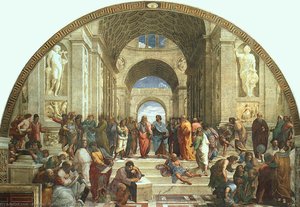 Ateenan koulu1511
 Sistine Madonna1513
 Transfiguratio1520
 Neitsyen Häät1504
Esseitä teoksesta Jacob's Dream
 Masterpieces of Perfection: The Top 25 Greatest Artworks by RaphaelImmerse yourself in the grace of the High Renaissance. Explore 25 iconic masterpieces by Raphael, from divine Madonnas to legendary frescoe…
 High Renaissance vs. Mannerism: Harmony and the Shift to TensionMaster the shift from Renaissance harmony to Mannerist tension with our expert art analysis. Discover the evolution of Italian masterpieces…
 25 Masterpieces by Duccio di Buoninsegna: The Dawn of Sienese ArtJourney through the divine beauty of Duccio di Buoninsegna’s greatest works. From the Sienese School to Byzantine elegance, explore 25 time…