

 Katso seinällä
 Lähetä
 Jaa
Jaa
 Tarkemmat tiedot
 Opas
Opas

 Lataa kuva
 Samanlaisia kohteita
 Röntgenkuvaus
 Diaesitys
 Tilastot
Pentecost


 Lue lisää
Käsinmaalattu öljyvärinen jäljennös
Käsinmaalattu öljyväri kankaalle haluamassasi koossa ja kehyksissä, taiteilijoidemme valmistamana tilauksesta. ( Vaihda tulosteeseen Siirry digitaaliseen kuvaan)




P118B $10

P118H $10

P118W $10

P438Z $10

P508JH $12

P508YH $12

P805H $10

P805Z $10

P919BZ $10

P919G $10

P919XJ $10

P959ZH $10

P968JZ $12

W106C $8

W218G $10

W218JH $8

W218Y $10

W307PJ $10

W316G $10

W316PJ $8

W316Y $10

W398PJ $8

W4111J $10

W500HY $15

W500JH $15

W692G $12

W849H $8

W940BG $15

W953PJ $8




Valitse valmiista mitoistamme sellaiset, jotka vastaavat teoksen alkuperäisiä mittasuhteita.

Voit syöttää omat mitat sopimaan tiettyyn kehykseen tai tilaan. Jos valitsemasi koko ei vastaa alkuperäisen kuvan mittasuhteita, rajaamme taideteoksen tai jatkamme maalausta käsin maalatuilla elementeillä. Digitaalinen esikatselu lähetetään hyväksyttäväksi ennen tuotannon aloittamista.
Huomioithan, että näytöllä oleva esikatselu ei vastaa todellista rajausta tai jatkamista. Vain digitaalinen mallikuva näyttää lopullisen sommittelun tarkasti.
Vaikka mittatilaustyöt ovat mahdollisia, suosittelemme valitsemaan mitan ennalta määritetystä listasta alkuperäisten mittasuhteiden säilyttämiseksi.
Tilauksen jälkeen OriginalUniqueArt.com -tiimi lähettää asiakkaalle sähköpostitse ohjeet ja esikatselukuvan.
Maailmanlaajuinen toimitus () 3–4 viikossa tavallisen 5 viikon sijaan. (25 syyskuu). Laadusta ei tingitä.

Ilmainen pikatoimitus ympäri maailman

Korkealaatuinen pellavakangas

Kattava kuljetusvakuutus

Tulliveron palautustakuu

Takuu täydellisestä värien vastaavuudesta

100 päivän palautusoikeus valmistusvirhetapauksissa

100% rahat takaisin -takuu

Määräalennus saatavilla
 Lasivaihtoehto on saatavilla vain alle 110 cm kokoisille teoksille

Pentecost
Reproduktiotapa
Replikaatin koko
-


Kokonaishinta
$ 300
Taiteilijan elämäkerta
Early Life and Apprenticeship in Rome
Polidoro Caldara, known to history as Polidoro da Caravaggio, emerged from the small town of Caravaggio in Lombardy around 1499, a name he would later bestow upon himself—a foreshadowing of his artistic identity. Unlike many Renaissance masters who benefited from established family patronage or formal guild training, Polidoro’s path to artistry was unconventional. He arrived in Rome as a young man, initially working not with brush and pigment but as a humble laborer, carrying materials for the construction projects at the Vatican. This seemingly menial role proved pivotal; it brought him into contact with the bustling world of Renaissance art and, crucially, to the attention of Maturino da Firenze, a key assistant in Raphael’s expansive workshop. Raphael, already a towering figure, recognized Polidoro's innate talent and welcomed him into his studio around 1517. Within the vibrant atmosphere of Raphael’s workshop, Polidoro absorbed the principles of High Renaissance composition, perspective, and idealized form, contributing to the decoration of the famed Raphael Rooms—a foundational experience that would shape his early style.The Innovation of Roman Facade Paintings
Polidoro quickly distinguished himself not within the confines of panel painting or fresco but in a remarkably innovative arena: the decoration of Roman palace facades. Partnering with Maturino, he pioneered a technique known as *sgraffito*, where layers of contrasting plaster were scratched away to reveal underlying designs—a method that allowed for large-scale narrative scenes and architectural motifs directly onto building exteriors. These weren’t merely decorative embellishments; they were public displays of art, accessible to all who traversed the streets of Rome. Polidoro's skill lay in his ability to translate complex compositions into this challenging medium, creating dynamic friezes that brought classical history and contemporary life vividly to the city’s walls. He became renowned for these monochrome re-creations, transforming ordinary buildings into open-air galleries. Unfortunately, many of these works have vanished over time, known today primarily through surviving etchings and engravings—ghostly reminders of a once-ubiquitous artistic presence.A Style Forged in Collaboration and Disruption
Polidoro’s early work reflects the influence of Raphael's harmonious compositions and classical ideals. However, his partnership with Maturino da Firenze introduced a new energy into his style – a greater emphasis on dramatic movement and expressive figures. This collaborative period saw Polidoro experimenting with bolder forms and more complex narratives. The Sack of Rome in 1527 irrevocably altered the course of his career. The chaos and destruction forced him to flee, first to Naples and then to Messina. This displacement marked a turning point; removed from the stabilizing influence of the Roman art world, Polidoro’s style underwent a profound transformation. In Naples, and particularly in Messina, he developed a more personal and emotionally charged aesthetic.Mature Works: Religious Intensity in Southern Italy
The years spent in Southern Italy witnessed the emergence of Polidoro's most distinctive works—altarpieces characterized by intense religious feeling and a striking use of color. His *Road to Calvary* (Capodimonte, Naples), painted before 1534, exemplifies this mature style. The composition is dynamic, filled with raw emotion and a sense of palpable suffering. Polidoro’s preparatory oil sketches for this work reveal his meticulous approach and his exploration of different emotional states. He wasn't merely replicating established iconographic models; he was imbuing them with a new level of psychological depth and dramatic realism. His *Crucifixion* in Messina further demonstrates this shift, showcasing a powerful depiction of Christ’s sacrifice that resonated deeply with the local populace.Legacy and Historical Significance
Polidoro da Caravaggio's life ended tragically in 1543, reportedly murdered by his assistant for his money—a grim end to a remarkably innovative career. While his fame waned after his death, overshadowed perhaps by more celebrated contemporaries, his contribution to the development of Mannerism is undeniable. He stands as a fascinating figure – an artist who bridged the High Renaissance and the emerging stylistic complexities of the 16th century. His pioneering work in facade painting expanded the boundaries of artistic expression, bringing art directly into the public sphere. Furthermore, his later works in Messina reveal a unique emotional intensity that foreshadowed some of the dramatic tendencies of Baroque art. Though many of his Roman frescoes are lost to time, Polidoro da Caravaggio remains an important and compelling figure in Italian Renaissance history—a testament to the power of artistic innovation and the enduring impact of personal experience on creative expression.
polidoro da caravaggio
1499 - 1543
Tietoa taiteilijasta
- Artistic Movement Or Style: Mannerism
- Artists Who Influenced This Artist:
- Raphael
- Maturino da Firenze
- Perino del Vaga
- Date Of Birth: c. 1499
- Date Of Death: 1543
- Full Name: Polidoro Caldara
- Nationality: Italian
- Notable Artworks:
- Crucifixion
- Deposition of Christ
- Christ carrying the cross
- Place Of Birth: Caravaggio, Italy
Aiheeseen liittyvät artikkelit
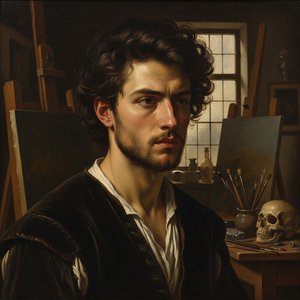
Cecco del Caravaggio: Rediscovering the Shadowy Genius of Francesco Buoneri
Explore the captivating world of Cecco del Caravaggio (Francesco Buoneri), a pivotal Baroque artist. Discover his dramatic realism, mysterious life, and lasting legacy with OriginalUniqueArt's expert analysis.

Leonardo da Vinci: A Renaissance Master’s Synthesis of Art, Science & Human Observation – Reinterpreted for the Collector
Explore Leonardo da Vinci’s timeless masterpieces with OriginalUniqueArt. Discover insights into his art, science, and legacy – trusted expertise for discerning collectors seeking authentic reproductions & investment opportunities.
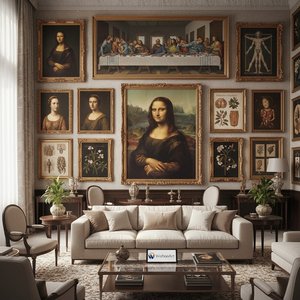
Leonardo da Vincin 25 mestariteosta: Taidetta kotiisi OriginalUniqueArtilta
Tutustu Leonardo da Vincin 25 mestariteokseen! Uppoudu renessanssin maailmaan Mona Lisan, Viimeisen ehtoollisen ja muiden ikonisten maalausten tarinoihin. Löydä inspiraatiota kotiisi OriginalUniqueArtilta – korkealaatuiset taideteoksien reproduktiot ja sisustusehdotukset. Tutki kokoelma verkossa!
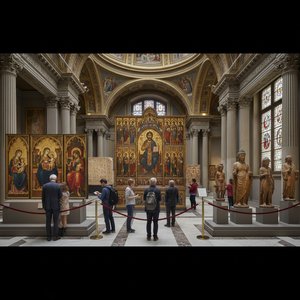
Sacred Narratives Embodied: A Comprehensive Exploration of Religious Iconography in Art History
Explore the rich history of religious iconography in art! Discover symbolism, movements & masterpieces from Byzantine to Renaissance periods. Expert insights for collectors and enthusiasts at OriginalUniqueArt.

Caravaggio's Revolutionary Realism: A Study of Light, Shadow, and the Human Condition
Explore the revolutionary realism of Caravaggio! Discover his mastery of light & shadow (tenebrism), dramatic religious scenes, and lasting influence on Baroque art history. A comprehensive guide for art enthusiasts.