

 Katso seinällä
 Lähetä
 Jaa
Jaa
 Tarkemmat tiedot
 Opas
Opas

 Lataa kuva
 Samanlaisia kohteita
 Röntgenkuvaus
 Diaesitys
 Tilastot
Paying the Hostess
 Oil On Canvas
- WallArt
- Baroque
 1670
1670 95.0 x 111.0 cm
 Metropolitanin museo
 Lue lisää
Giclée- ja taideprintit
Museolaatuisia giclée- tai kankaitaulun tulosteita nopealla tuotannolla ja joustavilla viimeistelyvaihtoehdoilla. ( Tilaa käsinmaalattu jäljennös Siirry digitaaliseen kuvaan)




P118B €10

P118H €10

P118W €10

P438Z €10

P508JH €12

P508YH €12

P805H €10

P805Z €10

P919BZ €10

P919G €10

P919XJ €10

P959ZH €10

P968JZ €12

W106C €8

W218G €10

W218JH €8

W218Y €10

W307PJ €10

W316G €10

W316PJ €8

W316Y €10

W398PJ €8

W4111J €10

W500HY €15

W500JH €15

W692G €12

W849H €8

W940BG €15

W953PJ €8




Valitse valmiista mitoistamme sellaiset, jotka vastaavat teoksen alkuperäisiä mittasuhteita.

Kirjoita tarvitsemasi leveys ja korkeus, jotta tuloste sopii kehyskokoon tai seinällesi. Tulostetta voidaan vain leikata, sitä ei voi koskaan tehdä suuremmaksi kuin alkuperäinen kuva, joten eri muotoinen koko aiheuttaa osan kuvasta katoamisen. Lähetämme sinulle digitaalisen mallikuvan hyväksyttäväksi ennen kuin aloitamme tulostuksen. Tällä sivulla näkyvä kuva ei näytä lopullista leikkausta — vain mallikuva näyttää sen.
Maailmanlaajuinen toimitus () 2 viikossa tavallisen 4–5 viikon sijaan. (23 lokakuu)

Ilmainen pikatoimitus ympäri maailman

Korkealaatuinen pellavakangas

Kattava kuljetusvakuutus

Tulliveron palautustakuu

Takuu täydellisestä värien vastaavuudesta

100 päivän palautusoikeus valmistusvirhetapauksissa

100% rahat takaisin -takuu

Määräalennus saatavilla
 Lasivaihtoehto on saatavilla vain alle 110 cm kokoisille teoksille

Paying the Hostess
Giclée- ja taideprintit
Replikaatin koko
-


Kokonaishinta
€ 70
A Quiet Moment in Delft: Pieter de Hooch’s “Paying the Hostess”
Pieter de Hooch's "Paying the Hostess," painted around 1670, isn’t merely a depiction of a transaction; it’s a masterful distillation of Dutch Golden Age life—a fleeting glimpse into the subtle social dynamics and quiet elegance of a Delft inn. The painting immediately draws the eye with its luminous quality, achieved through de Hooch's signature use of light and shadow, creating an atmosphere both intimate and subtly charged. It’s a scene brimming with unspoken narratives, inviting viewers to become silent observers of this private moment within a bustling world. De Hooch was a pivotal figure in the Delft School of painting, known for his ability to capture the essence of domestic life—not grand portraits or heroic scenes, but rather the everyday rituals and interactions that shaped the lives of the burgeoning middle class. His work stands apart through its remarkable realism, capturing not just appearances but also the nuances of human behavior and the play of light on surfaces.The Composition: A Dance of Observation
The composition itself is a testament to de Hooch’s skill. The scene unfolds within what appears to be a modest inn yard—a space simultaneously public and private. A smartly dressed gentleman, likely a wealthy merchant or official, stands poised before a young woman, presumably the hostess, as she presents him with a bill. Their hands are subtly overlapping, creating an immediate visual tension – a delicate dance of negotiation and perhaps even flirtation. The background is deliberately blurred, populated by other patrons engaged in their own conversations and activities—a lively tableau that hints at the inn’s vibrant atmosphere without distracting from the central drama. Notice how de Hooch uses architectural details—the rough-hewn beams of the barn, the simple wooden furniture, the straw bales – to ground the scene in a tangible reality. The placement of figures within the space is carefully considered, creating depth and guiding the viewer’s eye through the composition.Technique and Style: Light, Shadow, and Texture
De Hooch's technique is characterized by its meticulous attention to detail and his masterful manipulation of light. He employed a technique known as *chiaroscuro*, using strong contrasts between light and shadow to create a sense of volume and drama. The light streams in from the open doorway on the left, illuminating the figures and casting long shadows across the yard, adding depth and atmosphere. The artist’s brushwork is remarkably subtle—a delicate layering of paint that creates a rich texture without sacrificing clarity. You can almost feel the roughness of the wooden surfaces, the warmth of the straw bales, and the softness of the fabrics. This textured approach adds to the painting's realism and invites close inspection. The use of muted colors – browns, grays, and ochres – further enhances the sense of atmosphere and contributes to the painting’s overall mood.Symbolism and Context: A Glimpse into Dutch Society
“Paying the Hostess” offers a fascinating window into 17th-century Dutch society. The scene is not simply about settling an account; it's laden with symbolic meaning. The overlapping hands of the couple suggest a complex interplay of power, attraction, and social expectations. In Dutch art of this period, such interactions often carried connotations of flirtation and even illicit desire – a subtle commentary on the constraints and freedoms of the time. The presence of other guests in the background underscores the importance of social interaction within the community. The inclusion of the delivery boy with sheaves of wheat hints at the economic realities of rural life—the exchange of goods and services that underpinned the prosperity of the region. The painting reflects a shift towards a more secular, bourgeois culture, where commerce and social interactions were increasingly valued alongside religious piety.Emotional Resonance: A Moment Frozen in Time
Ultimately, “Paying the Hostess” is a profoundly evocative work of art. It’s not a grand statement or a dramatic event; it's a quiet moment—a snapshot of everyday life that captures something essential about the human condition. The painting invites us to contemplate the complexities of social interaction, the subtle nuances of human relationships, and the beauty found in the ordinary. It possesses a timeless quality, resonating with viewers across centuries because it speaks to universal themes of connection, negotiation, and the quiet dramas that unfold within our daily lives. It’s a piece that rewards careful observation and invites repeated viewing, revealing new layers of meaning with each encounter.Kysymykset ja vastaukset
Mikä sijoittelu sopii teoksen Pieter de Hooch:n "Paying the Hostess" formaattiin?
Landscape-muotoisena "Paying the Hostess"-teoksen reproduktio sopii erinomaisesti Living Room-tilaan.
Miten teoksen "Paying the Hostess" värit sointuvat yhteen?
Pieter de Hooch:n "Paying the Hostess" esittää Unified Palette väriharmoniaa.
Missä asennossa Pieter de Hooch:n "Paying the Hostess" on?
Teoksella Pieter de Hooch:n "Paying the Hostess" on Landscape -muoto. Muoto kuvaa sommittelun mittasuhteita.
Taiteilijan elämäkerta
nuoruus ja taiteellinen koulutus
Pieter de Hooch, hollanninkultakauden merkittävä hahmo, syntyi 20. joulukuuta 1629 Rotterdamiin, Alankomaihin. Hän oli muurari Hendrick Hendricksz de Hoochin ja kätilö Annetje Pietersin viiden lapsen van vanhin. Hänen varhaisvuosistaan tiedetään vain vähän, mutta uskotaan hänen työskennelleen Rotterdamissa, Delftissä ja Amsterdamissa. De Hoochin taiteellinen koulutus tapahtui Haarlemissa maisema-maalari Nicolaes Berchemin ohjauksessa yhdessä Jacob Ochterveltin kanssa. Tämä ajanjakso loi perustan hänen tulevalle menestykselleen hiljaisten, avoimien oviaukkojen täyttämien kotikohtausten maalaajana.taiteellinen tyyli ja teemat
de Hoochin tuotetta leimaa äärimmäinen yksityiskohtien tarkkuus, naturalismi ja valon mestarillinen käyttö. Hänen maalauksensa vangitsivat usein arkipäivän elämää heijastaen nousevan keskiluokan arvoja ja pyrkimyksia. Erinomainen esimerkki tästä tyylistä on "piemen pihapiiri Delftissä" (1658), joka osoittaa hänen kykynsä vangita arkielämän tavalliset mutta lumoavat yksityiskohdat. Vaikka de Hoochin teoksissa on nähtävissä samankaltaisia teemoja ja sommitelmia kuin Emanuel de Wittellä, hänen keskittymisensä ihmisiin ja heidän välisiin suhteisiinsa erottaa hänet muista mestareista. Tämä näkyy selvästi teoksissa "imettävä nainen" (1658) ja "nainen lapsi sylissään" (1658), jotka ilmentävät hänen syvää kiinnostustaan kotielämän intiimeihin hetkiin.merkittävät teokset ja perintö
jotkut de Hoochin tunnetuimmista teoksista sisältävät:- "iloinen juoja" (n. 1650)
- "kortinpelaajia valoisassa huoneessa" (1658)
- "nainen valmistamassa leipää ja voita pojalle" (1661)
museot ja kokoelmat
de Hoochin teoksia löytyy useista museoista, kuten Belgian Antwerpenin Koninklijk Museum voor Schone Kunsten -museosta, joka kätkee sisäänsä valtavan kokoelman eurooppalaista taidetta 1400-luvulta 1900-luvulle. löydä lisää Pieter de Hoochista ja hänen teoksistaan OriginalUniqueArtsta: [https://OriginalUniqueArt.com/@/pieter-de-hooch](https://OriginalUniqueArt.com/@/pieter-de-hooch) /fi/art/show/art-d3b4kt-fi/ (tutustu Belgian Koninklijk Museum voor Schone Kunsten -museon mestariteoksiin)
Pieter de Hooch
1629 - 1694 , Alankomaat
Tietoa taiteilijasta
- Artistic Movement Or Style: Delftin koulunkuona
- Artists Or Movements Influenced By This Artist: ['Jan Vermeer']
- Artists Who Influenced This Artist:
- Nicolaes Berchem
- Ludolf de Jongh
- Date Of Birth: 20. joulukuuta 1629 Rotterdam
- Date Of Death: n. 1683 Amsterdam
- Full Name: Pieter Hendricksz. de Hooch
- Nationality: Alankomaalainen
- Notable Artworks:
- The Pantry
- Servant and young Boy in a Courtyard
- Man smoking and Woman drinking in a Courtyard
- Place Of Birth: Rotterdam, Alankomaat
Aiheeseen liittyvät artikkelit

Golden Age Reflections: Dutch Baroque Painting & Cultural Innovation
Explore the Dutch Golden Age of painting! Discover key artists like Vermeer & ter Borch, their innovative techniques, and the rich cultural context behind these Baroque masterpieces. Learn about collecting & appreciating this iconic art period.

Francisco Goya: 25 mestariteosta – Taidetta kotiisi OriginalUniqueArtilta
Tutustu Francisco Goyan 25 mestariteokseen! Uppoudu espanjalaisen taiteen historiaan, romanttisiin maalauksiin ja vaikuttaviin muotokuviin. Löydä täydellinen seinätaide kotiisi OriginalUniqueArtilta – korkealaatuiset reproduktiot ja inspiroivat sisustusideat. Tutki kokoelma verkossa!
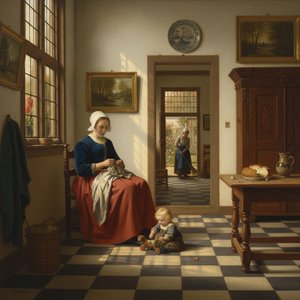
Pieter de Hooch: Illuminating Dutch Domestic Life & Golden Age Charm
Explore the captivating world of Pieter de Hooch, a master of Dutch Golden Age painting. Discover his innovative use of light, intimate domestic scenes, and lasting influence on art history. Learn more at OriginalUniqueArt.

Willem van de Velde the Elder: Master of Maritime Painting & Chronicler of the Dutch Golden Age
Discover the captivating maritime paintings of Willem van de Velde the Elder, a master chronicler of the Dutch Golden Age. Explore his unparalleled realism and lasting influence on naval art history.

Hollantilaisen kultakauden 10 mestariteosta – Taidetta kotiisi OriginalUniqueArt.com
Uppoudu hollantilaisen kultakauden taiteen maailmaan! Tutustu Rembrandtin, Vermeerin ja muiden mestareiden ikonisiin maalauksiin. Löydä inspiraatiota kotiisi OriginalUniqueArt.com:ista – laadukkaat taidevedokset ja sisustustaulut jokaiseen tilaan. Explore the full collection online!


