Valikko

() ·

A painting made for you, by hand

George Weimer

Käsinmaalattu öljyvärinen jäljennös

Käsinmaalattu öljyväri kankaalle haluamassasi koossa ja kehyksissä, taiteilijoidemme valmistamana tilauksesta. ( Vaihda tulosteeseen Siirry digitaaliseen kuvaan)

Keräilykohteen kuvaus

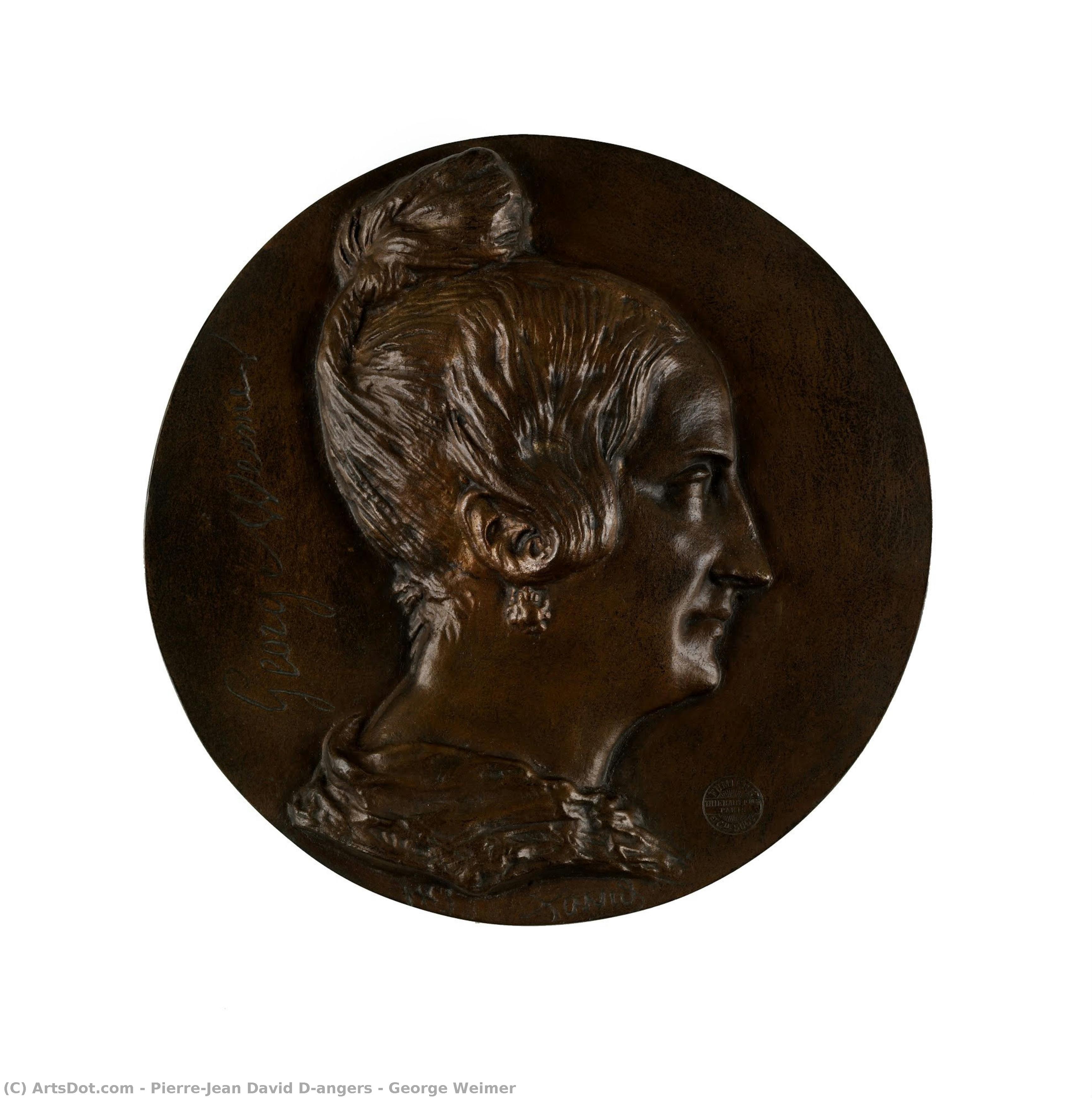
A striking bronze coin portrait of George Weimer, sculpted by Pierre-Jean David d’Angers. This piece captures the dramatic intensity of the French actress's life and legacy.

Taiteilijan elämäkerta

Pierre-Jean David d’Angers (1788–1856): Ranskalainen kuvanveistäjä, joka tunnetaan klassisen aikakauden muotokuvistaan ja monumentaalisesta taiteestaan kuten Pariisin Panthéonin koristeesta. Tutustu hänen työnsä keskeisiin yksityiskohtiin!

from ·

Chapter 1

How large should it be?

Slide to change the size; the picture on the left shows the frame at its real width. The proportions of the original are kept.

Vakiokoko
räätälöity
CM
INCH

Valitse valmiista mitoistamme sellaiset, jotka vastaavat teoksen alkuperäisiä mittasuhteita.

leveys
korkeus

Kirjoita tarvitsemasi leveys ja korkeus, jotta teos sopii kehyksiisi tai seinällesi. Koska kyseessä on käsinmaalattu teos, taiteilija voi maalata hieman enemmän kuvan ympärille tai rajata sitä hieman, jos haluat eri muotoisen koon — valinta on sinun. Lähetämme sinulle digitaalisen mallikuvan hyväksyttäväksi ennen kuin maalaus alkaa. Tällä sivulla näkyvä kuva ei vastaa lopullista tulosta — vain mallikuva näyttää sen.

Chapter 2

How should it arrive?

Choose the edges of the stretched canvas

Choose your frame

Corner sample of the WhiteWrap canvas edge finish, stretched on massiivipuu bars
White €1
Corner sample of the BlurSideWrap canvas edge finish, stretched on massiivipuu bars
Blurside €1
Corner sample of the ExtendedWrap canvas edge finish, stretched on massiivipuu bars
Extended €1
Corner sample of the P118B picture frame: valettu polystyreeni, 5 cm wide and 3 cm thick
P118B €10
Corner sample of the P118H picture frame: valettu polystyreeni, 5 cm wide and 3 cm thick
P118H €10
Corner sample of the P118W picture frame: valettu polystyreeni, 5 cm wide and 3 cm thick
P118W €10
Corner sample of the P438Z picture frame: valettu polystyreeni, 5.5 cm wide and 3.5 cm thick
P438Z €10
Corner sample of the P508JH picture frame: valettu polystyreeni, 7 cm wide and 3.5 cm thick
P508JH €12
Corner sample of the P508YH picture frame: valettu polystyreeni, 7 cm wide and 3.5 cm thick
P508YH €12
Corner sample of the P805H picture frame: valettu polystyreeni, 5 cm wide and 3.5 cm thick
P805H €10
Corner sample of the P805Z picture frame: valettu polystyreeni, 5 cm wide and 3.5 cm thick
P805Z €10
Corner sample of the P919BZ picture frame: valettu polystyreeni, 7 cm wide and 3.5 cm thick
P919BZ €10
Corner sample of the P919G picture frame: valettu polystyreeni, 7 cm wide and 3.5 cm thick
P919G €10
Corner sample of the P919XJ picture frame: valettu polystyreeni, 7 cm wide and 3.5 cm thick
P919XJ €10
Corner sample of the P959ZH picture frame: valettu polystyreeni, 5 cm wide and 3 cm thick
P959ZH €10
Corner sample of the P968JZ picture frame: valettu polystyreeni, 6 cm wide and 4 cm thick
P968JZ €12
Corner sample of the W106C picture frame: massiivipuu, 5 cm wide and 3 cm thick
W106C €8
Corner sample of the W218G picture frame: massiivipuu, 5 cm wide and 3 cm thick
W218G €10
Corner sample of the W218JH picture frame: massiivipuu, 5 cm wide and 3 cm thick
W218JH €8
Corner sample of the W218Y picture frame: massiivipuu, 5 cm wide and 3 cm thick
W218Y €10
Corner sample of the W307PJ picture frame: massiivipuu, 6 cm wide and 3 cm thick
W307PJ €10
Corner sample of the W316G picture frame: massiivipuu, 6 cm wide and 3 cm thick
W316G €10
Corner sample of the W316PJ picture frame: massiivipuu, 6 cm wide and 3 cm thick
W316PJ €8
Corner sample of the W316Y picture frame: massiivipuu, 6 cm wide and 3 cm thick
W316Y €10
Corner sample of the W398PJ picture frame: massiivipuu, 5 cm wide and 3 cm thick
W398PJ €8
Corner sample of the W4111J picture frame: massiivipuu, 6.5 cm wide and 3.5 cm thick
W4111J €10
Corner sample of the W500HY picture frame: massiivipuu, 7 cm wide and 5 cm thick
W500HY €15
Corner sample of the W500JH picture frame: massiivipuu, 7 cm wide and 5 cm thick
W500JH €15
Corner sample of the W692G picture frame: massiivipuu, 8 cm wide and 4 cm thick
W692G €12
Corner sample of the W849H picture frame: massiivipuu, 5 cm wide and 3 cm thick
W849H €8
Corner sample of the W940BG picture frame: massiivipuu, 7.5 cm wide and 4.5 cm thick
W940BG €15
Corner sample of the W953PJ picture frame: massiivipuu, 6 cm wide and 3.5 cm thick
W953PJ €8
Corner sample of the H24-GOLD picture frame: kaiverrettua puuta ja gessoa, 10 cm wide and 6 cm thick
H24-GOLD €30
Corner sample of the H24-SILVER picture frame: kaiverrettua puuta ja gessoa, 10 cm wide and 6 cm thick
H24-SILVER €30
Corner sample of the H36-GOLD picture frame: kaiverrettua puuta ja gessoa, 15 cm wide and 6.5 cm thick
H36-GOLD €45
Corner sample of the H36-SILVER picture frame: kaiverrettua puuta ja gessoa, 15 cm wide and 6.5 cm thick
H36-SILVER €45
Kehyksen esikatselu
Kehystetty

Moulding: . Overall size with the frame: .

Chapter 3

Who paints it, and should anything change?

Examples of what can be changed: Replace face with customer photo; Add pet (e.g., replace cat with dog); Include hidden message in background; Change background landscape or elements.
After order, OriginalUniqueArt.com team will email client for instructions and provide a mockup preview

Maailmanlaajuinen toimitus () 3–4 viikossa tavallisen 5 viikon sijaan. (30 lokakuu). Laadusta ei tingitä.

Chapter 4

The finishing touches

A nameplate, as in a museum?

Kaiverretun pronssilaatan tiedot

This elegant plaque features the artist's name and the title of the artwork, finely engraved for a timeless presentation.

It is made from bronze with a refined, elegant finish. The text is precisely laser-engraved for a sharp and permanent result. Measuring 9x2 cm, the plaque is compact yet easy to read. It's built to be durable and scratch-resistant, offering a professional, museum-quality look. Mounting is simple thanks to the included adhesive backing.

Läpinäkyvän akryylilaatan tiedot

The plaque includes essential engraved details such as the artist's name, the title of the artwork, the date it was created, the type of media used-like oil on canvas or watercolor-a brief description of the piece, and a QR code that links to the complete artwork information.

It is crafted from clear acrylic, offering a sleek, modern appearance. The text is UV-engraved in black to ensure strong visual contrast. With a size of 10x15 cm, it ensures optimal readability. It comes equipped with two metal hooks for secure wall mounting. The plaque is designed to be weather-resistant, making it suitable for various environments, and it includes interactive features that work seamlessly with smartphone scanning.

Mustan akryylilaatan tiedot

This elegant plaque includes engraved information such as the artist's name, the title of the artwork, the date it was created, the type of media used (like oil on canvas or watercolor), a short description of the artwork, and a QR code for quick access to more information.

The plaque itself is made from refined black acrylic with a premium finish. The text is laser-engraved in white for high contrast and readability. Its size is 10x15 cm, designed to be easy to read. It comes with two metal hooks for professional mounting. The design is sleek and fits any interior style. It is also weather-resistant and durable, with built-in digital integration for mobile compatibility.

A protective varnish?

When do you need it?

Chapter 5

Your painting, as you ordered it

George Weimer

Reproduktiotekniikka

Replikaatin koko

-

Kokenut huipputaiteilija

Lisää yksityiskohtia, hienostuneisuutta ja enemmän aikaa tuotantoon

-

Reproduktion kehystysvaihtoehdot

-

-

Teoksille tai reproduktioille, joiden mikä tahansa sivu on suurempi kuin 105 cm (noin 41 tuumaa), kehys toimitetaan osina purettuna sarjana. Tämä menetelmä varmistaa turvallisen toimituksen ja ehkäisee vaurioita kuljetuksen aikana.

Vaatii ammattimaista kokoamista – kyseessä ei ole tee-se-itse-tuote.
Sarja on koottava ja kangas kiristettävä kokeneen kehystysammattilaisen toimesta käyttäen puuliimaa (ei sisälly pakkaukseen), kangaspinnetteitä ja puristimia, jotta kehyksen kulmat pysyvät suorina liiman kuivuessa. Virheellinen kokoaminen tai epätasainen kankaan kiristys voi vaurioittaa teosta pysyvästi, eikä tällaiset vauriot ala takuun piiriin.

  • Kaikki massiivipuupalat sisältyvät, tarkasti mittojen mukaan leikattuina.

  • Kootaan mukana tulevilla ruuveilla sekä kulmaliitoksia varten tarvittavalla puuliimalla, jota ei toimiteta, joten se on hankittava kehystäjältä.

  • Vaatii ammattilaisvälineitä, jotka eivät sisälly pakkaukseen: kankaan venytyspihdit (kiristin) ja puristimet, joilla pidetään kehyksen puut suorassa liiman kuivuessa.

Tärkeää:
Kulmaliitoksissa tarvitaan puuliimaa, kehyksien osat on pidettävä puristimilla, kunnes liima on täysin kuivunut, ja koottuun kehykseen jännitettävän kankaan kiristämiseen tarvitaan kangaspenssipihti. Mikään näistä ei sisälly pakkaukseen. Suosittelemme varmistamaan kokeneen kehystäjän saatavuuden ennen tämän kokoisen kehyksen tilaamista.

Nimilaatta

-

-

Suojalakkaus

Kiiltävä lakka (syventää värejä, suojaa valolta ja kosteudelta)

-

Mukauta taideteokseni

Esimerkkejä muokattavista asioista: Vaihda kasvot asiakkaan omaan valokuvaan; Lisää lemmikki (esim. vaihda kissa koiraan); Lisää taustalle piilotettu viesti; Muuta taustan maisemaa tai elementtejä.

-

Pikatoimitus

Maailmanlaajuinen toimitus () 3–4 viikossa tavallisen 5 viikon sijaan. (30 lokakuu). Laadusta ei tingitä.

-

Pikatoimitus

Maailmanlaajuinen toimitus () 5 viikon kuluessa. (6 marraskuu).

Sisältyy hintaan

Kokonaishinta

€ 265

Kokonaishinta € 265

Lasivaihtoehto on saatavilla vain alle 110 cm kokoisille teoksille

Included with every order

  • Ilmainen pikatoimitus ympäri maailman
  • Korkealaatuinen pellavakangas
  • Kattava kuljetusvakuutus
  • Tulliveron palautustakuu
  • Takuu täydellisestä värien vastaavuudesta
  • 100 päivän palautusoikeus (vain valmistusvirheet)
  • 100% rahat takaisin -takuu
  • Määräalennus tarjolla

A Portrait of Romanticism: George Weimer by Pierre-Jean David d'Angers

The image before you isn’t merely a depiction of a man; it’s a window into the heart of 19th-century France, a poignant study in melancholy and quiet dignity. This captivating portrait of Marguerite-Josephine Weimer, known as Mademoiselle George, is a masterful work by Pierre-Jean David d'Angers, executed around 1833, and now meticulously reproduced for discerning collectors and admirers of Romantic art. David’s skill lies not just in capturing likeness, but in imbuing his subject with an almost palpable sense of introspection – a quiet sorrow that resonates deeply even across the centuries.

The composition itself is deceptively simple. A close-up view focuses on Weimer's face, rendered with exquisite detail. The bronze coin serves as a compelling backdrop, its smooth surface and intricate design offering a subtle contrast to the softness of her features. Her gaze, directed downward, speaks volumes – it’s not a look of defiance or anger, but rather one of quiet resignation, perhaps reflecting the challenges faced by a woman navigating the demanding world of Parisian theatre in an era where female performers often struggled for recognition and respect. The pearl necklace, a symbol of elegance and status, hints at her past successes, while the hat adds a touch of formality, suggesting a life lived within the constraints of societal expectations.

The Artist and His Time

Pierre-Jean David d'Angers (1788-1856) was a pivotal figure in French art during a period of dramatic social and political change. Born in Angers, he initially trained as a woodcarver before being drawn to the burgeoning world of sculpture. His early apprenticeship with Jacques-Louis David, the celebrated neoclassical painter, provided him with a rigorous foundation in artistic technique and a deep understanding of classical ideals. However, David d’Angers quickly developed his own distinctive style, embracing the emotional intensity and dramatic narratives characteristic of the Romantic movement. His work frequently explored themes of heroism, tragedy, and the human condition – subjects that mirrored the turbulent times he inhabited.

The portrait itself was created during a period of intense artistic experimentation and social upheaval. The Napoleonic era had left France profoundly changed, and artists were grappling with questions of identity, national pride, and the role of art in shaping public opinion. David d’Angers's decision to adopt the name “David d’Angers” – a deliberate homage to his master while asserting his own artistic lineage – reflects this complex interplay between tradition and innovation.

Symbolism and Emotional Resonance

Beyond its technical brilliance, the portrait is rich in symbolic meaning. The downward gaze of Weimer suggests introspection and perhaps a sense of isolation—a common theme within Romantic art. The coin, with its intricate details, could represent fleeting beauty or the ephemeral nature of fame. It’s a subtle reminder that even the most celebrated figures are ultimately subject to time and decay. The choice of bronze as the medium further enhances this sense of permanence and timelessness – a material chosen for its durability and ability to capture both form and texture with remarkable fidelity.

The portrait's emotional impact is undeniable. It’s not a celebratory depiction of beauty, but rather a poignant exploration of human vulnerability. Weimer’s expression invites the viewer to contemplate her story – her struggles, her triumphs, and ultimately, her enduring legacy as a captivating performer in a world that often failed to recognize her worth.

A Legacy Reimagined

This meticulously crafted reproduction captures not only the visual details of David d’Angers's original masterpiece but also its profound emotional resonance. Whether adorning a grand salon or a more intimate space, this artwork offers a captivating glimpse into the heart of Romanticism – a testament to the enduring power of art to illuminate the human experience. The quality of the reproduction ensures that every nuance of the original is faithfully preserved, allowing you to appreciate the artist’s skill and the subject's story with unparalleled clarity.

Consider this piece as more than just decoration; it’s an investment in a timeless work of art—a conversation starter, a source of inspiration, and a beautiful addition to any collection.

Kysymykset ja vastaukset

Mitä väripalettia teoksessa Pierre-Jean David d’Angers:n "George Weimer" käytetään?

Teoksen "George Weimer" värit muodostavat Neutrals-väripaletin. Tämä luokitus kuvaa hallitsevia väriperheitä.

Onko teos "George Weimer" yleisvaikutelmaltaan enemmän vaalea vai tumma?

"George Weimer" on kokonaisuutena brilliant, ja sen luminanssi on Luminous.

Mihin huoneeseen "George Weimer" sopisi parhaiten sen väripaletin perusteella?

Pierre-Jean David d’Angers:n "George Weimer"-teoksen Neutrals värit soveltuvat erinomaisesti sen suositeltuun tilaan: Living Room.

More about this painting

Esikatselu Esikatsele AR-tilassa Vaihda tulosteeseen Siirry digitaaliseen kuvaan Jaa teos
Tiedot Opas Lisää suosikkeihin Lataa kuva Samanlaisia kohteita Röntgenkuvaus Diaesitys Q&A Tilastot

In numbers

  • 1833the year it was painted
  • 29frames to choose from
  • standard sizes, in its own proportions
  • 5weeks to paint and deliver it
Pierre-Jean David d’Angers

Pierre-Jean David d’Angers

1788 - 1856, Ranska

Quick facts about Pierre-Jean David d’Angers

  • Artistic Movement Or Style: Neoklassismi
  • Artists Who Influenced This Artist:
    • Jacques-Louis David
    • Philippe-Laurent Roland
  • Date Of Birth: 12. maaliskuuta 1789
  • Date Of Death: 6. tammikuuta 1856
  • Full Name: Pierre-Jean David d’Angers
  • Nationality: Ranskalainen
  • Notable Artworks:
    • Wounded Philopoemen
    • La Douleur
    • Epaminondas
  • Place Of Birth: Angers, Ranska

Taiteilijan elämäkerta

A Legacy Forged in Stone: The Life and Art of Pierre-Jean David d’Angers

Pierre-Jean David d’Angers (1789–1856) oli ranskalainen kuvanveistäjä ja tietoisesti pyrki kunnioittamaan aikansa suurimpia henkilöitä ilmaisunsa kautta, joka olisi sekä houkutellut että inspiroinut laajaa yleisöä. Hän syntyi Angersissa vuonna 1789, hänen puusepän poikansa kouluttajana ja sai ensimmäisen kokemuksensa taiteesta jo nuorena – hänestä tuli Arc de Triomphe du Carrouselin koristeveistäjänä. David oli köyhä mies ja hänellä oli vain 11 frantia mukanaan Pariisiin matkaamaan, jossa hän opiskeli École des Beaux-Arts Philippe-Laurent Rolandin johdolla. Tämä kohtaaminen klassisen perinteen kanssa ja vallankumouksen hengessä oli merkittävä hänen henkilökohtaisen taiteellisen kehityksensä kannalta. Hän sai tunnustusta jo vuonna 1810 työstänsä “Othryades” ja lopulta varmisti Prix de Rome vuodelta 1811 kuvanveistoksesta "Epaminondas".

Early Years and Artistic Training

Davidin koulutus École des Beaux-Artsissa Philippe-Laurent Rolandin valvonnassa oli keskeinen hänen taiteellisen uransa alkuvaiheessa. Roland opetti hänelle klassisia periaatteita ja vaikutti hänen työhönsä, mutta myös rohkaisi häntä tutkimaan romanttista liikettä – tämä kohtaaminen oli erityisen tärkeää Davidin henkilökohtaisen näkökulman kehitykselle. Hän sai ensimmäiset taiteelliset kokemukset työskentelyssä Jacques-Louis Davidin kanssa, jonka hän otti oppiin vuonna 1809. Tämä yhteistyö merkitsi suurta henkilökohtaista kasvua ja vaikutti hänen tyyliinsä – David ei ollut vain mestari, vaan myös henkilökohtainen ihailija Davidille. Hänellä oli vaikeuksia alkuvaiheessa Pariisissa, mutta hän jatkoi työskentelyään päättäväisesti ja sai tunnustusta ensimmäisenä suurena palkintona Prix de Rome vuodelta 1811 kuvanveistoksesta "Epaminondas". Tämä palkinto oli merkittävä tunnustus hänen taiteelliselle lahdalleen ja vahvisti hänen pyrkimyksensä saavuttaa suurta mestaruutta.

Roman Reverie and Neoclassical Influence

Davidin viisi vuotta Italiassa vuosina 1811–1816 olivat hänelle täysin transformaatioaikaa. Hän uppoutui klassisen antiikin maailmaan ja Antonio Canovan kaltaisten mestarien vaikutukseen, mikä kehitti hänen taiteellista näkemystään. Hän omaksui kreikkalaisen kuvanveiston ideat – sen ihanteellisen muodon korostuksen, eeppisen tarinan ja tunteiden pidättelyn – mutta myös yritti tuoda näihin periaatteisiin oman henkilökohtaisen tunnelmansa. Tämä aika ei ollut pelkästään akateemista opiskelua; se oli myös poliittinen herääminen. Bourbonin dynastian paluu Ranskaan varjosti hänen paluutaanan ja hän vieraili lyhyesti Englannissa, jossa hän kohtasi sekä ihailun että kriittisen tarkastelun Jacques-Louis Davidin yhteydessä – joka oli ollut läheisesti sidoksissa vallankumouksen kanssa. Hän palasi Pariisiin vuonna 1816 ja sai välittömästi paljon merkittäviä komentoja vastaan. Hänen ensimmäinen työnsä Pariisissa, *Condé*, hävisi mallin jälkeen Musée des Beaux-Arts Angersissa. Tämä monumentti oli rohkeaa ja innovatiivista klassisen perinteen suhteen sekä osoitti Davidin kykyä saavuttaa suurta mestaruutta aikansa taiteessa. Hänestä tuli yksi Ranskan merkittävimmistä kuvanveistäjästä 1800-luvulla.

Monumental Achievements and Artistic Recognition

Davidin työskentely Pariisissa jatkui hänen elämänsä loppuun asti ja hän sai tunnustusta monesta suuresta projektista – erityisesti Panthéonin pedimentistä, joka oli merkittävä monumentti Ranskan kansalliselle identiteetille. Hän loi myös ikonisen kuvanveiston Gustave Eiffelille ja työskenteli suurella huolella Pariisin suurten rakennusten koristelussa. Hänen työnsä tunnettiin erityisesti henkilökohtaisen ilmaisuvoiman sekä klassisten ihanteiden kunnioituksen vuoksi. Hän oli myös yksi Ranskan tärkeimmistä konservatiiveista ja poliittisesta toimijasta, joka kannusti itseään rohkeuteen ja yksilölliseen ajatteluun. Hänen vaikutuksensa ulottui laajalle – hän inspiroi useita nuoria taiteilijoita ja muutti Ranskan kulttuurin maisemaa. Pierre-Jean David d’Angers jäi historiaan suurten monumenttien tekijänä, joka olinistä henkilökohtaisesta näkökulmastaan sekä klassisen perinteen että romanttisen liikkeen välillä. Hänen työnsä jatkaa resonointiaan katsojien keskuudessa myös tänään.

Pikaista tietoa

  • Influences: Romanticism
  • Movement: Neoclassical
  • Year: 1833
  • Title: George Weimer
  • Artistic style: Portraiture

Taidevisat

Jokaisessa kysymyksessä on vain yksi oikea vastaus.

Kysymys 1:
What is the primary subject depicted in Pierre-Jean David d’Angers’ painting, ‘George Weimer’?
Kysymys 2:
Marguerite-Josephine Weimer, the subject of this artwork, was best known for her role as:
Kysymys 3:
According to the provided text, in what year was the painting ‘George Weimer’ acquired by Henry Walters?
Kysymys 4:
Pierre-Jean David d’Angers is known for his work in which artistic medium besides sculpture?
Kysymys 5:
The bronze coin featured in the artwork depicts:
Tutustu teoksiin, jotka on järjestetty aiheiden, tyylien ja ominaisuuksien mukaan.



































