Vaihda tulosteeseen
 Lue lisää







































 Teoksille tai reproduktioille, joiden mikä tahansa sivu on suurempi kuin 105 cm (noin 41 tuumaa), kehys toimitetaan osina purettuna sarjana. Tämä menetelmä varmistaa turvallisen toimituksen ja ehkäisee vaurioita kuljetuksen aikana.


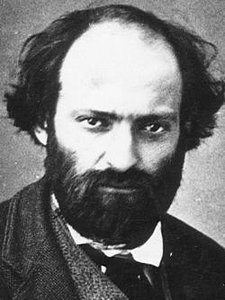
Self-Portrait with Beret: A Glimpse into Cézanne's Introspective World
Paul Cézanne’s “Self-Portrait with Beret” stands as an emblem of artistic innovation and a profound meditation on the human condition. Painted in 1900, this oil on canvas transcends mere representation; it delves into Cézanne’s inner landscape, mirroring his pioneering approach to art – blending Impressionistic luminosity with Cubist fragmentation.
The Artist's Vision
Cézanne, a French Post-Impressionist painter, wasn’t merely documenting his appearance. He sought to capture the essence of being, distilling it into geometric forms and expressive brushstrokes. In “Self-Portrait with Beret,” Cézanne presents himself not as an idealized figure but as a man wrestling with contemplation. His gaze is averted, hinting at inner turmoil yet simultaneously conveying a quiet dignity. The sparse background—a chair and a wall—isn’t merely decorative; it serves as a structural counterpoint to the artist's form, emphasizing solidity and depth.
Artistic Techniques and Influences
Cézanne’s technique is revolutionary. He abandons traditional blending methods in favor of “constructive brushstrokes,” applying pigment in small, deliberate strokes that build up planes of color and create a palpable sense of texture. This approach, heavily influenced by Cézanne's observations of Japanese prints—particularly Hiroshige’s landscapes—challenges the conventions of Western painting. The artist meticulously renders the contours of his face and beret, creating an illusion of three-dimensionality that anticipates Cubism’s geometric abstraction.
Historical Context & Legacy
Cézanne's work initially faced considerable criticism from Parisian art critics who struggled to grasp its radical departure from Impressionism. Figures like Camille Pissarro and Ambroise Vollard recognized Cézanne’s genius early on, championing his vision and securing him a crucial solo exhibition in 1895 at Vollard’s gallery. This event marked a pivotal moment, propelling Cézanne into the spotlight and establishing him as a forerunner of modern art.
His influence extends far beyond his own lifetime. Henri Matisse famously declared Cézanne “the father of us all,” acknowledging his foundational role in shaping Cubism and subsequent avant-garde movements. Pablo Picasso himself cited Cézanne’s work as inspiration for his groundbreaking compositions, demonstrating the enduring power of Cézanne's aesthetic principles.
A Timeless Reflection
"Self-Portrait with Beret" isn't just a depiction of Cézanne; it’s an embodiment of artistic ambition and intellectual curiosity. Its quiet intensity invites viewers to contemplate the complexities of identity and perception, securing its place as one of Cézanne’s most enduring achievements.
For those interested in exploring more of Cézanne's oeuvre, “Self-Portrait with Beret” is available for viewing at the Museum Victoria Art Gallery (Bath, United Kingdom). Additionally, reproductions of Henri Matisse’s “Le Lièvre” and Vincent Van Gogh’s “Pine Trees in Front of the Wall of the Asylum” can be found on OriginalUniqueArt.com.
Kysymykset ja vastaukset
Kuka on luonut teoksen "Itsäinen naispuolinen henkilö" ja mikä sen tyylisuunta on?
"Itsäinen naispuolinen henkilö" on Paul Cézannen luoma Cubism-tyylinen teos. Taiteilija ja tyylisuunta määrittelevät teoksen perinteet.
Voinko esikatsella teosta Paul Cézanne:n "Itsäinen naispuolinen henkilö" ennen tilaamista?
Voit esikatsella teosta Paul Cézanne:n "Itsäinen naispuolinen henkilö" sivulla Esikatselu tilassa.
Millaista väriharmoniaa Paul Cézanne:n "Itsäinen naispuolinen henkilö" edustaa?
Teoksen Paul Cézanne:n "Itsäinen naispuolinen henkilö" värit ilmentävät Vahva väriyhtenäisyys harmoniaa. Harmonia kuvaa sitä, miten värit suhteutuvat toisiinsa.
 Esikatselu
 Jaa teos
 Jaa
Jaa
 Tiedot
 Opas
Opas

 Lataa kuva
 Samanlaisia kohteita
 Röntgenkuvaus
 Diaesitys
 Kysymykset ja vastaukset
 Tilastot