() ·

A painting made for you, by hand

Pietà

Käsinmaalattu öljyvärinen jäljennös

Käsinmaalattu öljyväri kankaalle haluamassasi koossa ja kehyksissä, taiteilijoidemme valmistamana tilauksesta. ( Vaihda tulosteeseen Siirry digitaaliseen kuvaan)

Keräilykohteen kuvaus

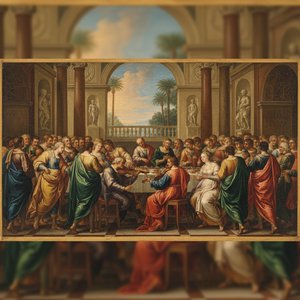
Experience the emotional power of Paolo Veronese’s 'Pietà,' a Baroque masterpiece depicting Mary cradling Jesus. This stunning oil painting, created in 1581, showcases exquisite detail and dramatic light – now available as a handmade reproduction.

Taiteilijan elämäkerta

Paolo Veronese (1528-1588): Venetsialainen renessanssimaalari, tunnettu eloisista väreistään, teatraalisista juhlatilaisuuksista ja ylellisistä maisemista. Tutustu hänen mestariteoksiinsa!

from ·

Chapter 1

How large should it be?

Slide to change the size; the picture on the left shows the frame at its real width. The proportions of the original are kept.

Vakiokoko
räätälöity
CM
INCH

Valitse valmiista mitoistamme sellaiset, jotka vastaavat teoksen alkuperäisiä mittasuhteita.

leveys
korkeus

Kirjoita tarvitsemasi leveys ja korkeus, jotta teos sopii kehyksiisi tai seinällesi. Koska kyseessä on käsinmaalattu teos, taiteilija voi maalata hieman enemmän kuvan ympärille tai rajata sitä hieman, jos haluat eri muotoisen koon — valinta on sinun. Lähetämme sinulle digitaalisen mallikuvan hyväksyttäväksi ennen kuin maalaus alkaa. Tällä sivulla näkyvä kuva ei vastaa lopullista tulosta — vain mallikuva näyttää sen.

Chapter 2

How should it arrive?

Choose the edges of the stretched canvas

Choose your frame

Corner sample of the WhiteWrap canvas edge finish, stretched on massiivipuu bars
White €1
Corner sample of the BlurSideWrap canvas edge finish, stretched on massiivipuu bars
Blurside €1
Corner sample of the ExtendedWrap canvas edge finish, stretched on massiivipuu bars
Extended €1
Corner sample of the P118B picture frame: valettu polystyreeni, 5 cm wide and 3 cm thick
P118B €10
Corner sample of the P118H picture frame: valettu polystyreeni, 5 cm wide and 3 cm thick
P118H €10
Corner sample of the P118W picture frame: valettu polystyreeni, 5 cm wide and 3 cm thick
P118W €10
Corner sample of the P438Z picture frame: valettu polystyreeni, 5.5 cm wide and 3.5 cm thick
P438Z €10
Corner sample of the P508JH picture frame: valettu polystyreeni, 7 cm wide and 3.5 cm thick
P508JH €12
Corner sample of the P508YH picture frame: valettu polystyreeni, 7 cm wide and 3.5 cm thick
P508YH €12
Corner sample of the P805H picture frame: valettu polystyreeni, 5 cm wide and 3.5 cm thick
P805H €10
Corner sample of the P805Z picture frame: valettu polystyreeni, 5 cm wide and 3.5 cm thick
P805Z €10
Corner sample of the P919BZ picture frame: valettu polystyreeni, 7 cm wide and 3.5 cm thick
P919BZ €10
Corner sample of the P919G picture frame: valettu polystyreeni, 7 cm wide and 3.5 cm thick
P919G €10
Corner sample of the P919XJ picture frame: valettu polystyreeni, 7 cm wide and 3.5 cm thick
P919XJ €10
Corner sample of the P959ZH picture frame: valettu polystyreeni, 5 cm wide and 3 cm thick
P959ZH €10
Corner sample of the P968JZ picture frame: valettu polystyreeni, 6 cm wide and 4 cm thick
P968JZ €12
Corner sample of the W106C picture frame: massiivipuu, 5 cm wide and 3 cm thick
W106C €8
Corner sample of the W218G picture frame: massiivipuu, 5 cm wide and 3 cm thick
W218G €10
Corner sample of the W218JH picture frame: massiivipuu, 5 cm wide and 3 cm thick
W218JH €8
Corner sample of the W218Y picture frame: massiivipuu, 5 cm wide and 3 cm thick
W218Y €10
Corner sample of the W307PJ picture frame: massiivipuu, 6 cm wide and 3 cm thick
W307PJ €10
Corner sample of the W316G picture frame: massiivipuu, 6 cm wide and 3 cm thick
W316G €10
Corner sample of the W316PJ picture frame: massiivipuu, 6 cm wide and 3 cm thick
W316PJ €8
Corner sample of the W316Y picture frame: massiivipuu, 6 cm wide and 3 cm thick
W316Y €10
Corner sample of the W398PJ picture frame: massiivipuu, 5 cm wide and 3 cm thick
W398PJ €8
Corner sample of the W4111J picture frame: massiivipuu, 6.5 cm wide and 3.5 cm thick
W4111J €10
Corner sample of the W500HY picture frame: massiivipuu, 7 cm wide and 5 cm thick
W500HY €15
Corner sample of the W500JH picture frame: massiivipuu, 7 cm wide and 5 cm thick
W500JH €15
Corner sample of the W692G picture frame: massiivipuu, 8 cm wide and 4 cm thick
W692G €12
Corner sample of the W849H picture frame: massiivipuu, 5 cm wide and 3 cm thick
W849H €8
Corner sample of the W940BG picture frame: massiivipuu, 7.5 cm wide and 4.5 cm thick
W940BG €15
Corner sample of the W953PJ picture frame: massiivipuu, 6 cm wide and 3.5 cm thick
W953PJ €8
Corner sample of the H24-GOLD picture frame: kaiverrettua puuta ja gessoa, 10 cm wide and 6 cm thick
H24-GOLD €30
Corner sample of the H24-SILVER picture frame: kaiverrettua puuta ja gessoa, 10 cm wide and 6 cm thick
H24-SILVER €30
Corner sample of the H36-GOLD picture frame: kaiverrettua puuta ja gessoa, 15 cm wide and 6.5 cm thick
H36-GOLD €45
Corner sample of the H36-SILVER picture frame: kaiverrettua puuta ja gessoa, 15 cm wide and 6.5 cm thick
H36-SILVER €45
Kehyksen esikatselu
Kehystetty

Moulding: . Overall size with the frame: .

Chapter 3

Who paints it, and should anything change?

Examples of what can be changed: Replace face with customer photo; Add pet (e.g., replace cat with dog); Include hidden message in background; Change background landscape or elements.
After order, OriginalUniqueArt.com team will email client for instructions and provide a mockup preview

Maailmanlaajuinen toimitus () 3–4 viikossa tavallisen 5 viikon sijaan. (2 marraskuu). Laadusta ei tingitä.

Chapter 4

The finishing touches

A nameplate, as in a museum?

Kaiverretun pronssilaatan tiedot

This elegant plaque features the artist's name and the title of the artwork, finely engraved for a timeless presentation.

It is made from bronze with a refined, elegant finish. The text is precisely laser-engraved for a sharp and permanent result. Measuring 9x2 cm, the plaque is compact yet easy to read. It's built to be durable and scratch-resistant, offering a professional, museum-quality look. Mounting is simple thanks to the included adhesive backing.

Läpinäkyvän akryylilaatan tiedot

The plaque includes essential engraved details such as the artist's name, the title of the artwork, the date it was created, the type of media used-like oil on canvas or watercolor-a brief description of the piece, and a QR code that links to the complete artwork information.

It is crafted from clear acrylic, offering a sleek, modern appearance. The text is UV-engraved in black to ensure strong visual contrast. With a size of 10x15 cm, it ensures optimal readability. It comes equipped with two metal hooks for secure wall mounting. The plaque is designed to be weather-resistant, making it suitable for various environments, and it includes interactive features that work seamlessly with smartphone scanning.

Mustan akryylilaatan tiedot

This elegant plaque includes engraved information such as the artist's name, the title of the artwork, the date it was created, the type of media used (like oil on canvas or watercolor), a short description of the artwork, and a QR code for quick access to more information.

The plaque itself is made from refined black acrylic with a premium finish. The text is laser-engraved in white for high contrast and readability. Its size is 10x15 cm, designed to be easy to read. It comes with two metal hooks for professional mounting. The design is sleek and fits any interior style. It is also weather-resistant and durable, with built-in digital integration for mobile compatibility.

A protective varnish?

When do you need it?

Chapter 5

Your painting, as you ordered it

Pietà

Reproduktiotekniikka

Replikaatin koko

-

Kokenut huipputaiteilija

Lisää yksityiskohtia, hienostuneisuutta ja enemmän aikaa tuotantoon

-

Reproduktion kehystysvaihtoehdot

-

-

Teoksille tai reproduktioille, joiden mikä tahansa sivu on suurempi kuin 105 cm (noin 41 tuumaa), kehys toimitetaan osina purettuna sarjana. Tämä menetelmä varmistaa turvallisen toimituksen ja ehkäisee vaurioita kuljetuksen aikana.

Vaatii ammattimaista kokoamista – kyseessä ei ole tee-se-itse-tuote.
Sarja on koottava ja kangas kiristettävä kokeneen kehystysammattilaisen toimesta käyttäen puuliimaa (ei sisälly pakkaukseen), kangaspinnetteitä ja puristimia, jotta kehyksen kulmat pysyvät suorina liiman kuivuessa. Virheellinen kokoaminen tai epätasainen kankaan kiristys voi vaurioittaa teosta pysyvästi, eikä tällaiset vauriot ala takuun piiriin.

  • Kaikki massiivipuupalat sisältyvät, tarkasti mittojen mukaan leikattuina.

  • Kootaan mukana tulevilla ruuveilla sekä kulmaliitoksia varten tarvittavalla puuliimalla, jota ei toimiteta, joten se on hankittava kehystäjältä.

  • Vaatii ammattilaisvälineitä, jotka eivät sisälly pakkaukseen: kankaan venytyspihdit (kiristin) ja puristimet, joilla pidetään kehyksen puut suorassa liiman kuivuessa.

Tärkeää:
Kulmaliitoksissa tarvitaan puuliimaa, kehyksien osat on pidettävä puristimilla, kunnes liima on täysin kuivunut, ja koottuun kehykseen jännitettävän kankaan kiristämiseen tarvitaan kangaspenssipihti. Mikään näistä ei sisälly pakkaukseen. Suosittelemme varmistamaan kokeneen kehystäjän saatavuuden ennen tämän kokoisen kehyksen tilaamista.

Nimilaatta

-

-

Suojalakkaus

Kiiltävä lakka (syventää värejä, suojaa valolta ja kosteudelta)

-

Mukauta taideteokseni

Esimerkkejä muokattavista asioista: Vaihda kasvot asiakkaan omaan valokuvaan; Lisää lemmikki (esim. vaihda kissa koiraan); Lisää taustalle piilotettu viesti; Muuta taustan maisemaa tai elementtejä.

-

Pikatoimitus

Maailmanlaajuinen toimitus () 3–4 viikossa tavallisen 5 viikon sijaan. (2 marraskuu). Laadusta ei tingitä.

-

Pikatoimitus

Maailmanlaajuinen toimitus () 5 viikon kuluessa. (9 marraskuu).

Sisältyy hintaan

Kokonaishinta

€ 267

Kokonaishinta € 267

Lasivaihtoehto on saatavilla vain alle 110 cm kokoisille teoksille

Included with every order

  • Ilmainen pikatoimitus ympäri maailman
  • Korkealaatuinen pellavakangas
  • Kattava kuljetusvakuutus
  • Tulliveron palautustakuu
  • Takuu täydellisestä värien vastaavuudesta
  • 100 päivän palautusoikeus (vain valmistusvirheet)
  • 100% rahat takaisin -takuu
  • Määräalennus tarjolla

A Symphony of Color and Faith: Exploring Paolo Veronese’s Pietà

Paolo Caliari, universally known as Paolo Veronese (1528-1588), stands as a titan amongst Venetian Renaissance artists—a visionary who redefined artistic expression through an unparalleled mastery of color, composition, and theatrical grandeur. Born in Verona amidst the burgeoning humanist fervor of his time, Veronese’s formative years instilled within him a profound appreciation for classical ideals interwoven with the vibrant spirit of his region's artistic heritage. His initial apprenticeship under Antonio Badile and Giovanni Francesco Caroto honed foundational skills in traditional painting methods, yet it was his relocation to Venice in the 1550s that irrevocably propelled him toward unparalleled creative heights. The city itself became Veronese’s unwavering muse—its bustling marketplaces, opulent palaces, and shimmering canals fueling the monumental scale and dramatic narrative power of his oeuvre. He swiftly assimilated the stylistic innovations championed by Titian, whose masterful use of color served as a crucial catalyst for Veronese's distinctive palette – one characterized by luminous hues and subtle gradations that captured the very essence of Venetian light. Simultaneously, he cultivated an independent artistic voice, forging a style distinct from his contemporaries yet firmly rooted in Venetian tradition.

The Baroque Embrace: Style and Technique

Veronese’s Pietà (1581), housed within Basilica dei Santi Giovanni e Paolo in Bologna, exemplifies this masterful blend of influences. Painted during the High Renaissance's waning years and transitioning into the Baroque era, it represents a pivotal moment in Venetian art history. Unlike the serene piety characteristic of earlier devotional paintings, Veronese’s Pietà bursts forth with vibrant color—a deliberate departure from prevailing artistic conventions—demonstrating his embrace of Baroque theatricality. The artist employed oil paint on canvas, utilizing layering techniques and meticulous glazing to achieve an astonishing level of realism and luminosity. Notice the masterful manipulation of light; it cascades across Mary's drapery, illuminating Jesus’s lifeless body with a poignant glow – a technique perfected by Veronese and his followers that would become synonymous with Baroque painting. The artist’s attention to detail extends beyond mere visual representation; he meticulously rendered textures—the folds of Mary’s robe, the smoothness of Jesus’s skin—creating an immersive experience for the viewer.

Historical Context: Venetian Patronage and Artistic Innovation

The Pietà emerged from a period marked by significant artistic patronage within Venice – a city that actively fostered innovation and celebrated artistic achievement. Commissioned by Cardinal Giovanni Battista Castelli, Veronese's undertaking was ambitious in scope—a monumental altarpiece intended to dominate the basilica’s interior space and inspire devotion amongst its worshippers. This commission underscored Venice’s position as Europe’s foremost cultural center and fueled a competitive spirit among artists striving for recognition. Furthermore, Veronese’s work reflects broader intellectual currents of the time – particularly humanist ideals emphasizing human dignity and emotion alongside religious contemplation. He skillfully incorporated classical motifs—such as pyramidal composition—into his narrative scenes, demonstrating an awareness of artistic precedents while simultaneously forging a new visual language.

Symbolism: Grief, Compassion, and Divine Grace

The Pietà transcends mere depiction; it embodies profound symbolic meaning rooted in Christian theology. Mary’s sorrowful posture conveys universal grief – the anguish experienced by mothers upon losing their children—yet her serene countenance speaks to an inner fortitude underpinned by faith and divine grace. Jesus’s lifeless body symbolizes humanity's vulnerability before death, while Mary’s embrace represents compassion and maternal love—a testament to God’s mercy and redemption. The positioning of Mary and Jesus within the pyramidal composition reinforces the centrality of Christ’s sacrifice as the cornerstone of Christian belief. Veronese’s masterful use of color – predominantly blues and reds – further amplifies these symbolic resonances, conveying feelings of solemnity and spiritual intensity.

Emotional Impact: A Moment Frozen in Time

Ultimately, Veronese's Pietà achieves its enduring power through its ability to evoke profound emotional responses from the viewer. The luminous colors, combined with meticulous detail and dramatic lighting, transport us back to the moment of Jesus’s deposition—capturing the palpable grief of Mary and conveying a sense of sublime beauty amidst sorrow. It is a painting that compels contemplation – prompting viewers to grapple with questions of faith, mortality, and compassion. More than simply representing an iconic biblical scene, Veronese's Pietà serves as a timeless meditation on human suffering and divine grace—a masterpiece that continues to inspire awe and reverence centuries after its creation.

Kysymykset ja vastaukset

Miten teoksen "Pietà" tyyli suhteutuu sen tekijän aikakauteen?

Paolo Veronese:n "Pietà" kuuluu Baroque Splendor-suuntaukseen ja sijoittuu tekijänsä Renessanssi aikakaudelle.

Onko "Pietà" yksi Paolo Veronese'n suosituimmista teoksista?

"Pietà" on luokiteltu kategoriaan Iconic.

Kuinka voimakas kontrasti teoksessa Paolo Veronese:n "Pietà" on?

Teoksen "Pietà" valoisuus- ja varjokontrasti on Bold. Kontrasti kuvaa, kuinka voimakkaasti vaaleat ja tummat alueet eroavat toisistaan.

More about this painting

Esikatselu Esikatsele AR-tilassa Vaihda tulosteeseen Siirry digitaaliseen kuvaan Jaa teos
Tiedot Opas Lisää suosikkeihin Lataa kuva Samanlaisia kohteita Röntgenkuvaus Diaesitys Q&A Tilastot

In numbers

  • 1581the year it was painted
  • 29frames to choose from
  • standard sizes, in its own proportions
  • 5weeks to paint and deliver it
Paolo Veronese

Paolo Veronese

1528 - 1588, Italia

Quick facts about Paolo Veronese

  • Artistic Movement Or Style: Renessanssi, Mannerismi
  • Artists Or Movements Influenced By This Artist: ['Raphael']
  • Artists Who Influenced This Artist: ['Titian']
  • Date Of Birth: 1528
  • Date Of Death: 1588
  • Full Name: Paolo Veronese
  • Nationality: Italian
  • Notable Artworks:
    • Kaanaan häät
    • La Case di Levi
  • Place Of Birth: Verona, Italia

Taiteilijan elämäkerta

A Venetian Visionary: The Life and Art of Paolo Veronese

Paolo Caliari, tunnettu maailmalla nimellä Paolo Veronese, nousi 1500-luvun Venetsian taiteelliseen maisemaan mestariksi värien, kompositiotaitojen ja ylellisen esityksen suhteen. Hän syntyi Veronassa vuonna 1528, hänen isänsä kivenhakkaajana, ja varhainen elämänsä oli täynnä ympäristönsä visuaalista rikkautta – klassiset arkkitehtuurit, veistokset ja nousuvalaiset humanistit, jotka olivat tyypillisiä alueelle. Varhaisen koulutuksensa Antonio Badilen ja Giovanni Francesco Caroton johdolla asetti pohjan perinteisille tekniikoille, mutta hänen siirtymisensä Venetsiaan 1550-luvulla sytytti todellakin hänen taiteellinen lahjakkuutensa. Kaupunki itse tuli hänelle museoksi, sen vilkkaat markkinapaikat, upeat palatsit ja hohtavat vesistöt vaikuttivat hänen teostensa mittakaavaan ja draamaan. Hän imi nopeasti olemassa olevien venetsialaisten mestarien, kuten Titianin, vaikutuksia, jonka värien hallinta vaikutti syvästi Veronesen värimaailmaan, mutta hän loi oman tyylinsä, joka oli ennennäkemätön teatraalisuuden ja ylellisyydessä.

Maalaaja juhlista ja suuria tarinoita

Veronesen maine perustuu monumentaalisiin maalauksiinsa, erityisesti ylellisimpiin juhliin ja Raamatunkohtauksiin, jotka on muotoiltu loistokkaisiin venetsialaisten elämän esityksiksi. Kanaanin häät, joka valmistui vuonna 1563 Benedictiiniläisluostarin San Giorgio Maggoren luostarille Venetsian ulkopuolella, on todiste hänen taidoistaan. Tämä valtava kangas ei ole vain tapahtuman kuvaus; se on eläväinen maisema 1500-luvun yhteiskunnasta, täynnä elegantteja hahmoja, muusikoita ja arkkitehtonisia yksityiskohtia, jotka on maalattu huomiota herättävällä tarkkuudella. Maalaus ei ole vain Kanaanin tapahtumista, vaan *miten* se olisi näyttänyt Venetsiassa Veronesen aikana. Samoin Levi talon juhla, alun perin nimeltään Jeesuksen viimeinen ateria, aiheutti Paavin valtakunnan inkuisaationneenäytöksen, koska siinä oli nykyajan hahmoja ja epäreilu tunnelma. Veronese puolusti taiteellista vapauttaan ja väitti, että maalareilla on sama oikeus luovuuteen kuin runoilijoilla ja näytelmässäilmoilla. Nämä teokset eivät olleet vain uskonnollisia kuvauksia; ne olivat juhlia elämää, varallisuutta ja Venetsian loistoa itsessään. Hän ei ollut kiinnostunut auliista hengellisyyttä, vaan maalaamaan olemassaolon iloa ja runsautta. Hänen mestariteoksissaan oli sekä uskonnollisia että ihmisiä kuvaavia elementtejä.

Vaikutukset ja taiteellinen kehitys

Vaikka Titianin vaikutus Veronesen värien hallintaan on kiistaton, hänen taiteellinen kehityksensä oli monimutkainen vuorovaikutus useiden vaikutusten kanssa. Hänen kompositiotaitonsa pohjansa klassisesta perinteestä, joka oli Veronan varhaisessa elämässään, erityisesti arkkitehtien, kuten Michele Sanmichelin, töissä. Hän imi myös elementtejä keskiaitalaisista maistereista, kuten Rafaelista ja Parmigianinosta, jotka näkyvät hänen maalauksissaan tyylikkäiden linjojen ja harmonisten järjestelyjen kautta. Kuitenkin Veronese ei vain kopioinut näitä vaikutuksia; hän synteesoi ne ainutlaatuiseksi venetsialaiseksi tyyliksi, joka oli tunnettu dramaattisesta valaistuksestaan, eloisista väripaleteistaan ja huomiota herättävistä yksityiskohdista. Hän erikoistui luomaan illuusion tilasta ja syvyydestä käyttämällä perspektiivitekniikoita, jotka houkuttelivat katsojat teoksensa sydämeen. Hänen öljymaalaustaitonsa mahdollistivat hänen saavuttaa ennennäkemätöntä kirkkautta ja tekstuurin rikkautta. Hän myös hallitsi suurta työpajaa, jossa työskenteli veljensä Benedetto ja poikansa Gabriele ja Carlo ('Carletto'), varmistaen että hänen tyylinsä kukoisti jopa kuoleman jälkeen vuonna 1588.

Perintö ja historiallinen merkitys

Paolo Veronesen vaikutus ulottuu taiteen rajojen yli. Hänen teoksiaan on inspiroinut taiteilijoita eri aikakausina. Hänen dramaattiset kompositiotensa ja eloisat väripaletinsa ovat vaikuttaneet kaikenlaisista taiteenaloista – jopa spaghetti-westernien visuaalisiin estetiikoihin. Hän oli osa "suurta kolmikkoa" venetsialaisten maistereita – Titianin, Tintoretto'n ja Giorgionen kanssaan – jokainen johti kaupungin taiteelliseen perintöön omalla tavallaan, mutta Veronese erottui usein hänen ylpeydestään ja elämän iloista. Hänen maalauksensa vangitsevat edelleen katsojien huomion loistollaan ja esityksellisyyttään, tarjoamalla näkymän 1500-luvun Venetsian maailmaan.
  • Hän uudensi historiallista maalausta antamalla sille nykyajan elämää.
  • Värien käyttö on edelleen vaikuttavaa taiteilijoille tänään.
  • Hänen työnsä heijastaa renessanssin humanismin henkeä ja maan päälläisen kauneuden juhlaa.

Pikaista tietoa

  • Artist: Paolo Veronese
  • Movement: Baroque
  • Notable elements or techniques: Dramatic lighting; opulent drapery
  • Title: Pietà
  • Dimensions: 112 x 147 cm
  • Location: San Paolo Maggiore

Taidevisat

Jokaisessa kysymyksessä on vain yksi oikea vastaus.

Kysymys 1:
What artistic movement is Paolo Veronese’s ‘Pietà’ primarily associated with?
Kysymys 2:
The painting depicts Mary holding Jesus after his crucifixion. What is the significance of this depiction within Christian iconography?
Kysymys 3:
Veronese employed a technique known as chiaroscuro, which emphasizes dramatic contrasts between light and dark. What is the purpose of this technique in creating an emotional impact?
Kysymys 4:
The image description mentions a chair placed near the center of the scene. Why is this detail important?
Kysymys 5:
Paolo Veronese's 'Pietà' is considered a masterpiece due to its masterful use of color. What characteristic of Veronese’s palette contributes to the painting’s luminous quality?