
 Esikatselu
 Jaa teos
 Jaa
Jaa
 Tiedot
 Opas
Opas

 Lataa kuva
 Samanlaisia kohteita
 Röntgenkuvaus
 Diaesitys
 Kysymykset ja vastaukset
 Tilastot
Peasant and his son

- 75.0 x 56.0 cm


 Lue lisää
Giclée- ja taideprintit
Museolaatuisia giclée- tai kankaitaulun tulosteita nopealla tuotannolla ja joustavilla viimeistelyvaihtoehdoilla. ( Osta käsinmaalattu taideteos Siirry digitaaliseen kuvaan)




P118B €10

P118H €10

P118W €10

P438Z €10

P508JH €12

P508YH €12

P805H €10

P805Z €10

P919BZ €10

P919G €10

P919XJ €10

P959ZH €10

P968JZ €12

W106C €8

W218G €10

W218JH €8

W218Y €10

W307PJ €10

W316G €10

W316PJ €8

W316Y €10

W398PJ €8

W4111J €10

W500HY €15

W500JH €15

W692G €12

W849H €8

W940BG €15

W953PJ €8




Valitse valmiista mitoistamme sellaiset, jotka vastaavat teoksen alkuperäisiä mittasuhteita.

Syötä tarvitsemasi leveys ja korkeus, jotta tuloste sopii kehyksiisi tai seinällesi. Tulostetta voidaan vain leikata, sitä ei voida koskaan suurentaa alkuperäistä kuvaa suuremmaksi, joten eri muotoinen koko aiheuttaa osan kuvasta katoamisen. Lähetämme sinulle digitaalisen mallikuvan hyväksyttäväksi ennen kuin aloitamme tulostuksen. Tällä sivulla näkyvä kuva ei näytä lopullista rajausta — vain mallikuva näyttää sen.
Maailmanlaajuinen toimitus () 2 viikossa tavallisen 4–5 viikon sijaan. (4 marraskuu)

Ilmainen pikatoimitus ympäri maailman

Korkealaatuinen pellavakangas

Kattava kuljetusvakuutus

Tulliveron palautustakuu

Takuu täydellisestä värien vastaavuudesta

100 päivän palautusoikeus (vain valmistusvirheet)

100% rahat takaisin -takuu

Määräalennus tarjolla
 Lasivaihtoehto on saatavilla vain alle 110 cm kokoisille teoksille

Peasant and his son
Giclée- ja taideprintit
Replikaatin koko
-


Kokonaishinta
€ 72
A Glimpse into Georgian Rural Life: Niko Pirosmani's "Peasant and his Son"
Niko Pirosmani’s “Peasant and his son,” painted in 1908, offers a poignant window into the soul of rural Georgia at the turn of the twentieth century. This vertical oil painting isn't merely a depiction of two figures; it is an embodiment of generational connection, quiet dignity, and the timeless rhythms of agricultural life. The scene unfolds outdoors, suggested by the tall stalks that rise in the background—resembling reeds or corn—creating a backdrop evocative of the Georgian countryside. An elderly man dominates the left side of the composition, his presence weighty and grounded, while his young son stands to the right, presenting something unseen to his father. This simple act forms the heart of the painting’s narrative, hinting at respect, inheritance, or perhaps the passing down of knowledge—a symbolic exchange that resonates across time and cultures. The overall impression is one of profound stillness, a moment captured in amber, inviting contemplation on themes of family, tradition, and the enduring strength of human bonds.The Language of Primitivism: Style and Technique
Pirosmani’s artistic style defies easy categorization, often described as primitivist or naive. He wasn't formally trained; his skill blossomed from a deep observation of the world around him and an innate ability to translate that vision onto canvas. This lack of formal training is evident in the painting’s deliberate simplicity—a flattened perspective characteristic of folk art traditions, where illusionistic space takes a backseat to emotional impact. The artist employs visible brushstrokes, layering oil paints to create texture, particularly noticeable in the man's beard and robes, lending them a tactile quality that draws the viewer closer. Lines are used purposefully to define forms – both figures and surrounding vegetation—creating a sense of solidity and depth despite the overall flatness. The palette is predominantly dark: browns, blacks, and muted reds dominate, contributing to a somber yet contemplative mood. This restrained use of color amplifies the painting’s emotional weight, focusing attention on the subjects' faces and their interaction. Pirosmani often worked on oilcloth rather than traditional canvas, a testament to his resourcefulness and perhaps adding another layer of rustic authenticity to his work.A Georgian Visionary: Context and Legacy
To fully appreciate “Peasant and his son,” it’s essential to understand the context in which it was created. Niko Pirosmani lived a life largely outside the mainstream art world, working various odd jobs while pursuing his passion for painting. He was a self-taught artist who captured the essence of Georgian culture with remarkable honesty and sensitivity. His work gained recognition later in his life thanks to the support of Russian poets and artists like Mikhail Le-Dantyu and Kirill Zdanevich, who championed his unique vision. Pirosmani’s style resonated with the burgeoning primitivist movement, which celebrated art created outside established academic traditions. He became a pivotal figure in 20th-century Georgian art, influencing generations of artists with his distinctive approach to subject matter and technique. His paintings offer invaluable insights into the social fabric and daily life of Georgia during a period of significant change and transition.Emotional Resonance: A Timeless Portrait
Beyond its historical significance and artistic merit, “Peasant and his son” possesses an undeniable emotional power. The painting evokes a sense of quiet dignity and timelessness—a feeling that transcends the specific time and place depicted. The connection between father and son is palpable, conveyed through their posture and gaze. There's a profound tenderness in the boy’s offering, and a gentle acceptance in the man’s response. This isn’t a grand narrative of triumph or tragedy; it’s a simple moment of human interaction elevated to something extraordinary by Pirosmani’s masterful touch. The painting invites viewers to reflect on their own relationships with family, tradition, and the enduring values that shape our lives—making it a work of art that continues to resonate deeply with audiences today.Kysymykset ja vastaukset
Mitkä värit hallitsevat teosta Нико Пиросманьвилли:n "Peasant and his son"?
Нико Пиросманьвилли:n "Peasant and his son"-teoksen väri-identiteetti: Earthy paletti, jota hallitsee Black (#150d12).
Mikä painokoko on suositeltava teokselle Нико Пиросманьвилли:n "Peasant and his son"?
Suositeltu tulostuskoko teokselle Нико Пиросманьвилли:n "Peasant and his son" on Medium.
Kuinka kylläisiä Нико Пиросманьвилли:n "Peasant and his son" -teoksen värit ovat?
Teoksen Нико Пиросманьвилли:n "Peasant and his son" värikylläisyys on Muted.
Taiteilijan elämäkerta
nuoruus ja uran alku
Niko Pirosmani, georgialainen primitivistinen maalaaja, syntyi vuonna 1862 Mirzaanin kylässä, Kakhetin maakunnassa. Hänen vanhempansa, Aslan Pirosmanashvili ja Tekle Toklikishvilli, olivat maanviljelijöitä, jotka omistivat pienen viinitarhan. Jäätyään orvoksi jo nuorena, Pirosmani jäi kahden vanhemman siskonsa huomaan.taiteellinen tyyli ja teemat
Pirosmanin taiteellista tyyliä leimaa sen naiivi ja primitivistinen luonne, joka vangitsee usein georgialaisen arjen sydämelliset hetket. Hänen maalauksensa, jotka on pääosin toteutettu öljykankaalle, ilmentävät ainutlaatuista sommittelua ja hahmojen suoraa, etualalle sijoitettua asettelua. Pirosmani rakasti luontoa ja maaseudun rauhaa, ja hän harvoin toi teoksiinsa kaupunkimaisemia.merkittävät teokset ja näyttelyt
Jotkut Pirosmanin tunnetuimmista teoksista sisältävät:- Musha viinitaskun kanssa, maalaus, joka osoittaa hänen kykynsä tavoittaa georgialaisen kulttuurin olemus.
- Georgialainen häät, kuvaus perinteisistä georgialaisista hääseremonioista.
- Zhdanevichin muotokuva, venäläisen runoilija Mikhail Le-Dantyun muotokuva, joka herätti Kirill Zhdanevichin ja hänen veljensä Ilia Zhdanevichin ihastuksen.
perintö ja jälkikuoleman aikainen tunnustus
Pirosmanin elämää leimasi köyhyys, mutta hänen jälkikuolemansa aikainen tunnustuksensa on ollut merkittävää. Hänen työtään on juhlittu useissa näyttelyissä, mukaan lukien ensimmäisessä suuressa georgialaisten maalaajien näyttelyssä vuonna 1918. Nykyään hänen maalauksiaan esitellään Georgian taidemuseossa ja Sighnaghin historiallisessa etnografisessa museossa, joissa ne ovat tavoittaneet yli 350 000 katsojaa.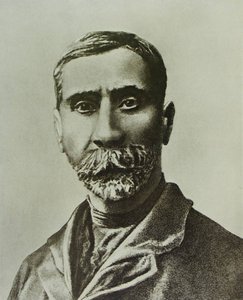
Нико Пиросманьвилли
1862 - 1918 , Γεωργία
Pähkinänkuoressa
- Artistic Movement Or Style: Naivismi
- Artists Who Influenced This Artist: ['Vladimir Lado Gudiashvili']
- Date Of Birth: 5 toukokuuta 1862
- Date Of Death: 9 huhtikuuta 1918
- Full Name: Nikoláy Aslánovich Pirosmanashvíli
- Nationality: Georgialainen
- Notable Artworks:
- Musha with a Wineskin
- Georgian Wedding
- Portrait of Zhdanevich
- Place Of Birth: Mirzaani, Kakheti Prov.
Aiheeseen liittyvät artikkelit
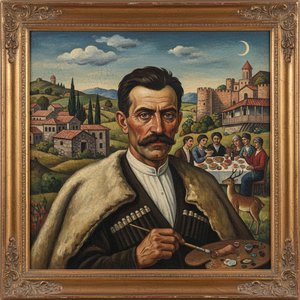
Niko Pirosmani: A Georgian Visionary – Life, Legacy, and the Poetics of Outsider Art
Discover the captivating life & art of Niko Pirosmani, Georgia’s celebrated primitivist painter. Explore his unique oilcloth paintings, lasting influence, and enduring legacy with OriginalUniqueArt.
Cultivating Visions: Rural Life & Social Commentary in Art History
Explore the rich history of rural life in art! Discover masterpieces from Dutch Masters to Van Gogh & Courbet. Uncover artistic movements, social significance & expert collecting insights at OriginalUniqueArt.
Cultivating Visions: A Historical Exploration of Rural Life in Painting
Explore the rich history of rural life in painting! Discover masterpieces from Dutch Masters to Courbet & Watteau. Uncover the artistic and social significance of idyllic landscapes and peasant scenes.

Echoes of Rural Life: Nostalgia, Labor & Identity in Art History
Explore the rich history of rural life in art! Discover how Realism captured labor & identity through masterpieces by Van Gogh, Millet & more. Expert analysis for collectors and enthusiasts.

Echoes of Rural Life: Art's Enduring Representations of the Countryside
Explore the rich history of rural life in art! Discover masterpieces from Millet to Mauve & beyond. Learn about Realism, Barbizon School & find inspiration for your home with OriginalUniqueArt.
