
 Esikatselu
 Jaa teos
 Jaa
Jaa
 Tiedot
 Opas
Opas

 Lataa kuva
 Samanlaisia kohteita
 Röntgenkuvaus
 Diaesitys
 Kysymykset ja vastaukset
 Tilastot
Bear hunting

- 107.0 x 57.0 cm


 Lue lisää
Giclée- ja taideprintit
Museolaatuisia giclée- tai kankaitaulun tulosteita nopealla tuotannolla ja joustavilla viimeistelyvaihtoehdoilla. ( Osta käsinmaalattu taideteos Siirry digitaaliseen kuvaan)




P118B €10

P118H €10

P118W €10

P438Z €10

P508JH €12

P508YH €12

P805H €10

P805Z €10

P919BZ €10

P919G €10

P919XJ €10

P959ZH €10

P968JZ €12

W106C €8

W218G €10

W218JH €8

W218Y €10

W307PJ €10

W316G €10

W316PJ €8

W316Y €10

W398PJ €8

W4111J €10

W500HY €15

W500JH €15

W692G €12

W849H €8

W940BG €15

W953PJ €8




Valitse valmiista mitoistamme sellaiset, jotka vastaavat teoksen alkuperäisiä mittasuhteita.

Syötä tarvitsemasi leveys ja korkeus, jotta tuloste sopii kehyksiisi tai seinällesi. Tulostetta voidaan vain leikata, sitä ei voida koskaan suurentaa alkuperäistä kuvaa suuremmaksi, joten eri muotoinen koko aiheuttaa osan kuvasta katoamisen. Lähetämme sinulle digitaalisen mallikuvan hyväksyttäväksi ennen kuin aloitamme tulostuksen. Tällä sivulla näkyvä kuva ei näytä lopullista rajausta — vain mallikuva näyttää sen.
Maailmanlaajuinen toimitus () 2 viikossa tavallisen 4–5 viikon sijaan. (4 marraskuu)

Ilmainen pikatoimitus ympäri maailman

Korkealaatuinen pellavakangas

Kattava kuljetusvakuutus

Tulliveron palautustakuu

Takuu täydellisestä värien vastaavuudesta

100 päivän palautusoikeus (vain valmistusvirheet)

100% rahat takaisin -takuu

Määräalennus tarjolla
 Lasivaihtoehto on saatavilla vain alle 110 cm kokoisille teoksille

Bear hunting
Giclée- ja taideprintit
Replikaatin koko
-


Kokonaishinta
€ 72
A Savage Symphony in Oilcloth: Niko Pirosmani’s “Bear Hunting”
Niko Pirosmani, a largely forgotten titan of Georgian art, possessed an extraordinary ability to distill the essence of rural life and primal emotion onto humble oilcloth canvases. His work, often dismissed as naive or primitive during his lifetime, now stands as a testament to raw honesty and a uniquely captivating vision. “Bear Hunting,” painted in the 1890s, is arguably Pirosmani’s most dramatic and compelling piece – a visceral depiction of a hunting expedition that transcends mere representation, plunging the viewer directly into the heart of Georgian wilderness and the brutal beauty of its traditions.
The scene unfolds within a dense, almost claustrophobic forest. A group of French chasseurs, clad in meticulously rendered uniforms of dark blue and brown, pursue a colossal bison – an animal rendered with astonishing power and scale. The composition is deliberately chaotic; figures are crammed together, limbs tangle, and the bison dominates the frame, its immense form dwarfing the hunters below. Pirosmani eschews traditional perspective, favoring instead a flattened, frontal approach that intensifies the drama and immediacy of the action. Lines are bold and directional, guiding the eye relentlessly across the canvas, mirroring the hunters’ desperate pursuit.
The Primitivist Palette: Color and Texture
Pirosmani's distinctive style is immediately recognizable through his masterful use of color and texture. He employs a restricted palette dominated by deep greens, earthy browns, and muted blues – colors that evoke the dampness and shadow of the forest floor. These somber tones are punctuated by flashes of brighter hues—the crimson of blood (implied), the ochre of the bison’s hide, and the occasional splash of yellow or white to highlight key figures. Crucially, Pirosmani worked on oilcloth, a readily available and inexpensive material in Georgia, which lends his paintings a unique tactile quality. The thick, impasto brushstrokes are visible throughout the composition, creating a palpable sense of physicality – you can almost feel the roughness of the bark beneath your fingers and the weight of the hunters’ clothing.
The technique itself is deliberately rough-hewn, reflecting Pirosmani's lack of formal training. He eschewed meticulous detail in favor of capturing the *feeling* of the scene – the tension, the urgency, the raw energy of the hunt. This approach aligns perfectly with the principles of Primitivism, a movement that sought to strip away academic conventions and return to a more direct, emotionally charged form of expression.
Symbolism of the Hunt: Power, Tradition, and Mortality
“Bear Hunting” is far more than just a depiction of a hunting scene; it’s laden with symbolic meaning. The hunt itself represents power, control, and the enduring traditions of Georgian rural life. For centuries, hunting had been a vital part of the region's economy and culture, providing sustenance and reinforcing social hierarchies. However, Pirosmani doesn’t glorify this activity. Instead, he presents it with a stark realism that acknowledges its inherent violence and potential for destruction.
The massive bison, a symbol of strength and wildness, embodies the forces of nature that the hunters seek to subdue. The implied bloodshed – hinted at through subtle color choices—underscores the cost of this conquest. Furthermore, Pirosmani’s unflinching portrayal of human figures engaged in such a brutal act raises questions about humanity's relationship with the natural world and the consequences of unchecked ambition. The painting subtly evokes themes of mortality and the fleeting nature of life, mirroring the precariousness of both hunter and hunted.
A Window into Georgian Soul: Pirosmani’s Legacy
Niko Pirosmani's work offers a rare glimpse into the soul of Georgia in the late 19th century. His paintings are not merely aesthetically pleasing; they are windows into a world of hardship, resilience, and profound connection to the land. Rediscovered in the mid-20th century, Pirosmani’s art has since gained international recognition as a cornerstone of Georgian primitivism and a powerful example of outsider art. Reproductions of “Bear Hunting” – available through OriginalUniqueArt – allow us to experience this extraordinary vision firsthand, inviting us to contemplate the enduring power of raw emotion and the timeless beauty of the Georgian landscape.
Kysymykset ja vastaukset
Mikä on teoksen Нико Пиросманьвилли:n "Bear hunting" tekniikka ja mitat?
"Bear hunting" on valmistettu tekniikalla Oil On Canvas, ja sen alkuperäinen koko on 107 x 57 cm.
Minkä kokoisena minun kannattaisi tulostaa "Bear hunting" huoneeseeni?
Suositeltu tulostuskoko teokselle Нико Пиросманьвилли:n "Bear hunting" tilaan Living Room on Large.
Miten "Bear hunting" asettuu osaksi Нико Пиросманьвилли'n muuta tuotantoa?
"Bear hunting" jakaa Нико Пиросманьвилли'n muiden teosten kanssa Primitivism-tyylin sekä toistuvat teemat: european realism influence, georgian rural life depiction, power & nature conflict, hunter's instincts shown, pirosmani's primitive style, iconic georgian portraiture, early 20th century vision, unique artistic voice.
Taiteilijan elämäkerta
nuoruus ja uran alku
Niko Pirosmani, georgialainen primitivistinen maalaaja, syntyi vuonna 1862 Mirzaanin kylässä, Kakhetin maakunnassa. Hänen vanhempansa, Aslan Pirosmanashvili ja Tekle Toklikishvilli, olivat maanviljelijöitä, jotka omistivat pienen viinitarhan. Jäätyään orvoksi jo nuorena, Pirosmani jäi kahden vanhemman siskonsa huomaan.taiteellinen tyyli ja teemat
Pirosmanin taiteellista tyyliä leimaa sen naiivi ja primitivistinen luonne, joka vangitsee usein georgialaisen arjen sydämelliset hetket. Hänen maalauksensa, jotka on pääosin toteutettu öljykankaalle, ilmentävät ainutlaatuista sommittelua ja hahmojen suoraa, etualalle sijoitettua asettelua. Pirosmani rakasti luontoa ja maaseudun rauhaa, ja hän harvoin toi teoksiinsa kaupunkimaisemia.merkittävät teokset ja näyttelyt
Jotkut Pirosmanin tunnetuimmista teoksista sisältävät:- Musha viinitaskun kanssa, maalaus, joka osoittaa hänen kykynsä tavoittaa georgialaisen kulttuurin olemus.
- Georgialainen häät, kuvaus perinteisistä georgialaisista hääseremonioista.
- Zhdanevichin muotokuva, venäläisen runoilija Mikhail Le-Dantyun muotokuva, joka herätti Kirill Zhdanevichin ja hänen veljensä Ilia Zhdanevichin ihastuksen.
perintö ja jälkikuoleman aikainen tunnustus
Pirosmanin elämää leimasi köyhyys, mutta hänen jälkikuolemansa aikainen tunnustuksensa on ollut merkittävää. Hänen työtään on juhlittu useissa näyttelyissä, mukaan lukien ensimmäisessä suuressa georgialaisten maalaajien näyttelyssä vuonna 1918. Nykyään hänen maalauksiaan esitellään Georgian taidemuseossa ja Sighnaghin historiallisessa etnografisessa museossa, joissa ne ovat tavoittaneet yli 350 000 katsojaa.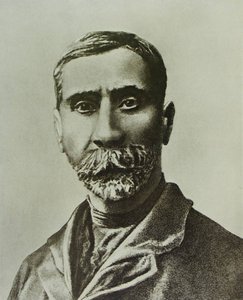
Нико Пиросманьвилли
1862 - 1918 , Γεωργία
Pähkinänkuoressa
- Artistic Movement Or Style: Naivismi
- Artists Who Influenced This Artist: ['Vladimir Lado Gudiashvili']
- Date Of Birth: 5 toukokuuta 1862
- Date Of Death: 9 huhtikuuta 1918
- Full Name: Nikoláy Aslánovich Pirosmanashvíli
- Nationality: Georgialainen
- Notable Artworks:
- Musha with a Wineskin
- Georgian Wedding
- Portrait of Zhdanevich
- Place Of Birth: Mirzaani, Kakheti Prov.
Aiheeseen liittyvät artikkelit

The Enduring Legacy of Oil on Canvas: Technique, History & Aesthetic Impact
Explore the rich history & techniques of oil painting – from Renaissance masters to Impressionism. Discover pigments, layering methods, and why this timeless medium endures. Expert insights for artists & art enthusiasts.

The Enduring Power of Painting: A Historical & Contemporary Exploration of Form and Emotion
Explore the rich history & enduring techniques of oil painting with OriginalUniqueArt. Discover masterpieces, learn about art collecting, and find authentic handmade reproductions crafted by skilled artists.

Oil on Canvas: A Historical & Technical Exploration of a Timeless Artistic Medium
Explore the rich history & enduring techniques of oil painting on canvas. Discover the science behind its longevity, conservation practices, and contemporary relevance. Expert insights for art enthusiasts.
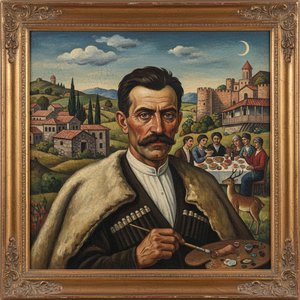
Niko Pirosmani: A Georgian Visionary – Life, Legacy, and the Poetics of Outsider Art
Discover the captivating life & art of Niko Pirosmani, Georgia’s celebrated primitivist painter. Explore his unique oilcloth paintings, lasting influence, and enduring legacy with OriginalUniqueArt.

Öljyvärimaalauksen kestävä perintö: tekniikka, historia ja nykyaikainen käytäntö
Tutustu öljyvärimaalauksen rikkaaseen historiaan, tekniikoihin ja merkittäviin mestareihin. Opi säilyttämään ja restauroimaan taidetta sekä löydä uudet innovaatiot tässä ajattomassa taidemuodossa.
