

 Esikatselu
 Jaa teos
 Jaa
Jaa
 Tiedot
 Opas
Opas

 Lataa kuva
 Samanlaisia kohteita
 Röntgenkuvaus
 Diaesitys
 Tilastot
Polykrates


 Lue lisää
Saat tulostusvalmiin tiedoston, jonka laatu ylittää verkkonäkymän huomattavasti. Jokainen myymämme digitaalinen kuva on peräisin arkistomme korkearesoluutioisesta mestariteoksesta — yleensä 5 000–15 000 pikselin levyisenä — joten voit tulostaa suuria kokoja, rajata tiukasti tai toistaa hienovaraiset yksityiskohdat luottavaisin mielin.
Mikään tiedosto ei lähde studiostamme muuttamatta. Digitaalinen asiantuntija vertaa värejä alkuperäiseen maalaukseen ja korjaa niitä tarvittaessa, minkä jälkeen hän parantaa kuvan selkeyttä ja yksityiskohtia ammattimaisilla retusointityökaluilla — säilyttäen aina uskollisena taiteilijan siveltimenjäljen ja tyylin. Lopputuloksena on kuva, joka näyttää maalauselta, eikä suodatetulta skannaukselta.
Hyväksyt työn ennen valmistumistaan: asiantuntijamme lähettää kuvan tarkistettavaksi sähköpostitse 72 tunnin kuluessa. Etkö ole tyytyväinen? Pyydä parannuksia tai korjauksia, tai pyydä hyvitystä, mikäli laatu ei vastaa odotuksia.
Tämä on laatua, johon kustantamot, design-studiot, galleriat ja painotalot luottavat.
Digitaalinen kuva
Lataa korkearesoluutioinen tiedosto henkilökohtaiseen näyttelyyn, tulostamiseen ja luoviin projekteihin. ( Vaihda tulosteeseen Osta käsinmaalattu taideteos)
Sisältyy jokaiseen digitaalisen kuvan tilaukseen
Asiantunteva digitaalinen toimitus, laatu taattu
Kun valitset OriginalUniqueArt.com-palvelun, et saa vain kuvaa – saat ammattimaisesti viimeistellyn digitaalisen taideteoksen, joka on luotu tarkkuudella ja jonka takaa tulee tyytyväisyystakuu. Tässä on kaikki, mitä tilauksesi sisältää, automaattisesti:

Nopea sähköpostitoimitus
Saat korkearesoluutioisen digitaalisen kuvatiedostosi sähköpostiisi 72 tunnin kuluessa tilauksesta – valmiina käytettäväksi välittömästi.

Tekoälyllä parannettu digitaalinen tiedosto
Teoksesi on optimoitu ammattimaisesti edistyneiden tekoälytyökalujen ja manuaalisen jälkikäsittelyn avulla, mikä takaa maksimaalisen yksityiskohtaisuuden, selkeyden ja väritarkkuuden.

Ilmainen uudelleenlähetys elinikäisesti
Oletko vahingossa poistanut tai kadottanut tiedostosi? Ei hätää – lähetämme sen sinulle uudelleen milloin tahansa täysin maksutta.

Ei tuontimaksuja – koskaan
Nauti taiteestasi välittömästi ilman tullimaksuja, veroja tai toimituskuluja – digitaaliset lataukset ovat aina verovapaita.

Värintoiston tarkkuustakuu
Varmistamme, että digitaalinen kuvasi vastaa alkuperäisiä värejä mahdollisimman tarkasti käyttämällä ammattilaistason työkaluja ja värinhallintaa.

100 päivän tyytyväisyystakuu
Jos et ole tyytyväinen digitaaliseen kuvaasi, muokkaamme sitä tai palautamme 100% hinnan 100 päivän kuluessa – kysymystä ei esitetä.

100% Rahat takaisin -takuu
Et ole tyytyväinen? Saat täyden hyvityksen 100 päivän kuluessa digitaalisen tiedostosi vastaanottamisesta – kysymystä ei esitetä.

Määräalennukset
Osta 3 kuvaa, säästä 10% - Osta 5, säästä 15% - Osta 10+, säästä 20%. Erinomainen valinta luoviin projekteihin, gallerioille ja toimistoille.
Polycrates – A Titan’s Struggle Embodied in Marble
Mikhail Ivanovich Kozlovsky’s sculpture *Polycrates*, created in 1790, stands as a testament to the Romantic spirit of its time—a period obsessed with heroic narratives and dramatic emotion. The artwork depicts a nude male figure caught in a moment of profound exertion, reaching upwards with one arm while his torso twists downwards, draped in fabric that emphasizes the vulnerability beneath the monumental form. This dynamic pose immediately conveys a sense of struggle, mirroring the turbulent political landscape of Russia during Kozlovsky’s era – a nation grappling with Napoleonic ambitions and yearning for artistic grandeur.- Subject Matter: The sculpture portrays Polycrates, King of Samos, a figure celebrated for his defiance against Persian rule. Herodotus recounts tales of Polycrates' cunning diplomacy and military prowess, portraying him as both a ruler admired for intellect and a warrior feared for brutality.
- Style: Kozlovsky’s work firmly establishes itself within the Neoclassical tradition—a reaction against Baroque excess and an embrace of idealized human form inspired by ancient Greek sculpture. The sculptor skillfully avoids overtly sentimental expression, prioritizing anatomical accuracy and conveying a palpable sense of physical strain.
- Technique: Executed in gypsum (likely cast from a marble prototype), *Polycrates* exemplifies Kozlovsky’s meticulous craftsmanship. The surface is polished to achieve a luminous sheen, highlighting the subtle contours of muscle and drapery—a technique that reflects the influence of Roman sculpture masters like Michelangelo Buonarroti.
Composition & Lighting – Dramatic Tension
The sculpture's vertical orientation directs the viewer’s gaze upwards, mirroring Polycrates’ desperate attempt to overcome his adversaries. Strong directional lighting casts dramatic shadows across the figure’s torso and limbs, intensifying the sense of movement and emphasizing the musculature—a deliberate stylistic choice that underscores Kozlovsky’s commitment to conveying emotional intensity. The stark contrast between light and shadow contributes significantly to the sculpture's theatrical quality, inviting contemplation on themes of resilience and defiance.- Perspective: Minimal perspective reinforces the sculpture’s sculptural character, prioritizing volume and form over spatial illusion. This approach aligns with Neoclassical ideals—where beauty resides in idealized representation rather than realistic depiction.
- Lighting: The sculptor skillfully utilizes chiaroscuro – the interplay of light and dark – to sculpt the figure's musculature and drapery, creating a palpable sense of depth and texture.
Symbolism & Emotional Resonance – A Portrait of Heroic Resolve
Beyond its formal qualities, *Polycrates* resonates with profound symbolic meaning. The upward reach embodies Polycrates’ unwavering determination to resist oppression—a gesture that speaks to the broader anxieties of the Romantic era regarding political upheaval and moral courage. The sculpture's depiction of a nude figure underscores themes of vulnerability alongside strength—suggesting that true heroism lies not merely in physical prowess but also in maintaining dignity amidst adversity.- Gesture: Polycrates’ outstretched arm symbolizes aspiration, defiance, and the pursuit of noble ideals.
- Posture: The twisting torso conveys a sense of struggle and vulnerability—a poignant reminder that even the most formidable figures are susceptible to physical and emotional strain.
Historical Context – Reflections of Napoleonic Era
Created during Napoleon’s invasion of Russia, *Polycrates* embodies the artistic fervor of its time—a desire to recapture the grandeur of antiquity and express patriotic sentiment. Kozlovsky's work reflects the Romantic preoccupation with heroic narratives and dramatic emotion—themes that found expression in literature, music, and visual art throughout Europe. The sculpture serves as a powerful reminder of Russia’s engagement with classical ideals during a period marked by political instability and cultural renewal.A reproduction of *Polycrates* offers an opportunity to appreciate Kozlovsky's masterful technique and the enduring power of Neoclassical sculpture—a timeless testament to human resilience and artistic excellence.
Kysymykset ja vastaukset
Kuka on teoksen "Polykrates" taiteilija?
"Polykrates" on Mihail Ivanovitš Kozlovski:n luoma teos. Tällä sivulla olevat tiedot kuvaavat Mihail Ivanovitš Kozlovski:n alkuperäistä työtä.
Mitä tunnetta Mihail Ivanovitš Kozlovski:n "Polykrates" välittää?
Teoksessa "Polykrates" Dramaattinen-tunnelma kohtaa Dramaattinen-tunteen.
Kuinka paljon valoa "Polykrates" värit näyttävät heijastavan?
Teoksen Mihail Ivanovitš Kozlovski:n "Polykrates" luminanssi on Tumma.
Taiteilijan esittely
The Sculptor of Enlightenment Ideals
Mikhail Ivanovich Kozlovsky stands as a preeminent figure in the landscape of Russian Neoclassical sculpture, a master whose hands shaped the very essence of the Age of Enlightenment. Born in Saint Petersburg, Russia, his artistic journey began within the prestigious halls of the Imperial Academy of Arts. Under the tutelage of Anton Losenko, Kozlovsky embarked on a path that would eventually lead him far beyond the borders of his homeland, seeking inspiration in the great art capitals of Europe. His travels to Rome and Paris were not merely educational excursions but transformative odysseys that allowed him to absorb the burgeoning Neoclassical spirit sweeping through the continent.
The evolution of Kozlovsky’s style is a fascinating study in artistic maturation. His earliest endeavors retained a lingering connection to the dramatic, emotive sensibilities of the Baroque period. However, as he matured, his work underwent a profound metamorphosis, shedding ornamental excess in favor of Neoclassical monumentality and clarity. This transition saw him embracing the ideals of reason, order, and anatomical precision, mirroring the intellectual shifts of his era. By the time he returned to Paris in 1788 to supervise Russian students abroad, he had emerged as a sculptor capable of translating complex mythological narratives into enduring, dignified forms.
Mastery of Form and Mythological Narrative
Kozlovsky’s oeuvre is characterized by an extraordinary ability to breathe life into bronze and marble, capturing both the physical prowess of heroes and the ethereal grace of the divine. His works often serve as profound emblems of classical mythology, utilized to convey contemporary values of strength and wisdom. In pieces such as Hercules on Horseback, one observes a masterclass in realism; the meticulous rendering of equine and human musculature creates a sense of dynamic vitality that draws the viewer into the heart of the legend. His use of composition, often employing powerful diagonal thrusts, directs the eye through scenes of intense action and heroic struggle.
Beyond the depiction of raw power, Kozlovsky possessed a delicate touch for allegorical subjects. His sculpture Minerva and the Genius of the Arts, commissioned during the reign of Catherine II, exemplifies his ability to embody Enlightenment thought. Through the figures of the Roman goddess of wisdom and her artistic companion, he sculpted more than just myth; he captured the very aspiration of human intellect toward higher truth and order. His technical repertoire was equally diverse, ranging from the dramatic, gilded bronze of Samson Rending the Lion's Jaws—a centerpiece for the Grand Cascade at Peterhof Palace—to the expressive, martial character of the Suvorov Monument.
Legacy and Artistic Significance
The historical significance of Mikhail Kozlovsky lies in his role as a bridge between eras and a foundational pillar of Russian sculptural tradition. As a professor at the Academy of Arts, he played a crucial role in shaping the next generation of sculptors, ensuring that the principles of Neoclassicism would flourish in Saint Petersburg long after his passing. His contributions to the decorative splendor of imperial sites like Pavlovsk and Peterhof helped define the visual identity of the Russian Empire during a period of immense cultural growth.
His life's work remains a testament to the power of classical influence when wedded to technical mastery. Through his ability to adapt his manner from Baroque sensibility to Neoclassical grandeur, Kozlovsky achieved a level of permanence that transcends time. His sculptures continue to be celebrated for their:
- Anatomical Precision: A remarkable skill in rendering the complexities of human and animal forms with photographic realism.
- Symbolic Depth: The use of mythological figures to represent the enduring ideals of heroism, wisdom, and national triumph.
- Technical Versatility: An expert command over diverse media, including bronze casting and marble carving.
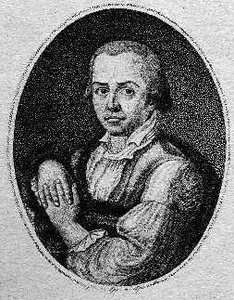
Mihail Ivanovitš Kozlovski
1753 - 1802 , Venäjä