

 Katso seinällä
 Lähetä
 Jaa
Jaa
 Tarkemmat tiedot
 Opas
Opas

 Lataa kuva
 Samanlaisia kohteita
 Röntgenkuvaus
 Diaesitys
 Tilastot
Self-Portrait with Trumpet
 Oil On Canvas
- WallArt
- Expressionist Portraiture
 1938
1938- Modern
 101.0 x 110.0 cm
 Lue lisää
Käsinmaalattu öljyvärinen jäljennös
Käsinmaalattu öljyväri kankaalle haluamassasi koossa ja kehyksissä, taiteilijoidemme valmistamana tilauksesta. ( Vaihda tulosteeseen Siirry digitaaliseen kuvaan)




P118B €10

P118H €10

P118W €10

P438Z €10

P508JH €12

P508YH €12

P805H €10

P805Z €10

P919BZ €10

P919G €10

P919XJ €10

P959ZH €10

P968JZ €12

W106C €8

W218G €10

W218JH €8

W218Y €10

W307PJ €10

W316G €10

W316PJ €8

W316Y €10

W398PJ €8

W4111J €10

W500HY €15

W500JH €15

W692G €12

W849H €8

W940BG €15

W953PJ €8




Valitse valmiista mitoistamme sellaiset, jotka vastaavat teoksen alkuperäisiä mittasuhteita.

Kirjoita tarvitsemasi leveys ja korkeus, jotta teos sopii kehyskehyksiisi tai seinällesi. Koska kyseessä on käsinmaalattu teos, taiteilija voi maalata hieman enemmän kuvan ympärille tai rajata sitä hieman, jos haluat eri muotoisen koon — valinta on sinun. Lähetämme sinulle digitaalisen mallikuvan hyväksyttäväksi ennen kuin maalaus alkaa. Tällä sivulla näkyvä kuva ei vastaa lopullista tulosta — vain mallikuva näyttää sen.
Tilauksen jälkeen OriginalUniqueArt.com -tiimi lähettää asiakkaalle sähköpostitse ohjeet ja esikatselukuvan.
Maailmanlaajuinen toimitus () 3–4 viikossa tavallisen 5 viikon sijaan. (25 lokakuu). Laadusta ei tingitä.

Ilmainen pikatoimitus ympäri maailman

Korkealaatuinen pellavakangas

Kattava kuljetusvakuutus

Tulliveron palautustakuu

Takuu täydellisestä värien vastaavuudesta

100 päivän palautusoikeus valmistusvirhetapauksissa

100% rahat takaisin -takuu

Määräalennus saatavilla
 Lasivaihtoehto on saatavilla vain alle 110 cm kokoisille teoksille

Self-Portrait with Trumpet
Reproduktiotapa
Replikaatin koko
-


Kokonaishinta
€ 263
Max Beckmann's 'Self-Portrait with Trumpet': A Study in Disquiet
Max Beckmann’s 1938 ‘Self-Portrait with Trumpet’ is not merely a representation of the artist; it’s a raw, unsettling exploration of identity and disillusionment rendered with the characteristic intensity of his expressionist style. Completed during a period of profound personal and artistic transformation, this oil on canvas offers a glimpse into Beckmann's evolving worldview – one shaped by the trauma of World War I and a growing sense of alienation from the societal norms of his time. The painting’s immediate impact lies in its unsettling composition: a man, clad in a striking red garment, stares directly at the viewer with an almost accusatory gaze. His posture is rigid, conveying a palpable tension, while the trumpet he holds to his lips suggests both aspiration and perhaps a desperate attempt to find solace or expression within a world seemingly devoid of meaning.
- Subject & Composition: The central figure dominates the canvas, immediately drawing the viewer into a confrontation. The inclusion of the bottle and cup adds layers of complexity, hinting at themes of indulgence, contemplation, and perhaps even self-medication – common anxieties reflected in Beckmann’s oeuvre.
- Technique & Materials: Executed in oil on canvas, the painting showcases Beckmann's masterful control over texture and color. Thick impasto strokes build a sense of physicality, while his use of muted reds, browns, and blues creates an atmosphere of brooding melancholy. The deliberate distortion of perspective further amplifies the emotional impact.
Echoes of Medieval Iconography & Artistic Influences
Beckmann’s artistic development was profoundly influenced by a deep engagement with medieval art, particularly stained glass and late Gothic painting. This fascination is evident in the flattened perspectives, symbolic imagery, and almost ritualistic quality of ‘Self-Portrait with Trumpet.’ He drew heavily from artists like Rembrandt, whose use of chiaroscuro – the dramatic interplay of light and shadow – resonates powerfully within this work, as well as the Northern European masters Bosch and Grünewald, known for their unsettling depictions of human folly and spiritual struggle. Cézanne’s influence is also discernible in Beckmann's exploration of form and space, while Van Gogh’s emotional intensity undoubtedly contributed to his own expressive approach.
Historical Context & The Artist's Psyche
Painted in 1938, a year marked by rising political tensions in Germany, the painting reflects the anxieties of the era. Beckmann’s experiences as a medical orderly during World War I left an indelible mark on his psyche, contributing to his later artistic preoccupation with themes of suffering, loss, and the dehumanizing effects of conflict. The self-portrait can be interpreted as a deeply personal statement – a struggle to reconcile his own identity with the fractured realities of the modern world. It’s a testament to Beckmann's courage in confronting difficult truths about himself and humanity.
A Timeless Expression of Human Condition
'Self-Portrait with Trumpet' transcends its historical context, offering a timeless meditation on the human condition. Its raw emotional power and unsettling imagery continue to resonate with viewers today, solidifying Beckmann’s place as one of the most significant artists of the 20th century. This meticulously crafted reproduction captures not just an image but the very essence of Beckmann's artistic vision – a poignant reminder of our shared vulnerability and the enduring search for meaning in a chaotic world.
Kysymykset ja vastaukset
Minä vuonna ja mihin tyylisuuntaan "Self-Portrait with Trumpet" on tehty?
"Self-Portrait with Trumpet" on tehty vuonna 1938 Expressionist Portraiture-suuntauksen piirissä.
Mistä voin ostaa digitaalisen kuvan teoksesta Max Beckmann:n "Self-Portrait with Trumpet"?
Teoksen Max Beckmann:n "Self-Portrait with Trumpet" digitaalisen kuvan voi ostaa sen Digitaalinen kuva -sivulta: korkearesoluutioinen digitaalinen kuvalataus.
Mikä on teoksen Max Beckmann:n "Self-Portrait with Trumpet" luminanssi?
Teoksen "Self-Portrait with Trumpet" värit heijastavat Dark luminanssia.
Taiteilijan elämäkerta
early life and artistic development
Max Carl Friedrich Beckmann, a german painter, draftsman, printmaker, sculptor, and writer, was born on february 12, 1884, in leipzig, saxony. His artistic journey began with academically correct depictions—a reflection of the prevailing artistic sensibilities of his time—which later transformed into distorted figures and spaces. This dramatic shift wasn’t merely stylistic; it mirrored Beckmann's profound psychological reckoning following his service as a medical orderly during world war i, an experience that indelibly scarred him and fundamentally altered his perception of humanity. The trauma of the conflict fueled a desire to express the darker aspects of human existence—a preoccupation that would characterize much of his oeuvre.artistic style and influences
Beckmann’s distinctive artistic style emerged from a deep engagement with medieval stained glass imagery, absorbing its symbolic richness and expressive power. However, he wasn't solely bound by tradition; he actively sought inspiration from prominent artists who had shaped the visual landscape of his era. Georges Seurat’s meticulous observation of light and color served as a counterpoint to Vincent van Gogh’s emotionally charged brushstrokes—a dialogue between precision and passion that informed Beckmann’s artistic vision. Furthermore, he drew heavily from the works of Rembrandt, Bosch, Bruegel, and Rubens, artists who excelled in portraying human suffering and spiritual contemplation. These influences instilled in him a commitment to conveying complex emotions through visual language.notable works and exhibitions
Beckmann's artistic output is marked by several seminal pieces that exemplify his stylistic innovations and thematic concerns. “The Bark,” acquired by the national gallery in berlin, stands as a testament to his ability to capture the desolate beauty of nature—a motif recurring throughout his paintings. Equally compelling is “Self-Portrait in Tuxedo,” purchased in 1928, which offers an intimate glimpse into Beckmann’s inner life and artistic introspection. His retrospectives at the städtische kunsthalle mannheim (1928) and in basle and zurich (1930) cemented his reputation as a leading figure of German Expressionism and showcased the breadth of his artistic exploration.later life and exile
Beckmann’s personal trajectory took an abrupt turn with the ascendancy of Adolf Hitler, resulting in his dismissal from the art school in frankfurt—a devastating blow to his ambitions—and the confiscation of over 500 of his artworks by the nazis. Forced into self-imposed exile in amsterdam for ten years, Beckmann wrestled tirelessly for a visa to emigrate to the united states, a pursuit that ultimately proved unsuccessful. Despite these hardships, he continued to produce significant works during his exile period, demonstrating unwavering artistic dedication.legacy
Beckmann’s influence extends beyond his own lifetime, shaping subsequent generations of artists and contributing to the ongoing dialogue about art's role in confronting existential anxieties. He taught at the art schools of washington university in st. louis and the brooklyn museum—passing on his knowledge and fostering a new cohort of talent. His first retrospective in the united states took place in 1948 at the city art museum, saint louis—a pivotal moment recognizing his enduring artistic legacy. Max-slevogt galerie, germany continues to champion Beckmann’s oeuvre, ensuring that his powerful imagery remains accessible to audiences worldwide.
Max Beckmann
1884 - 1950 , Saksa
Tietoa taiteilijasta
- Artistic Movement Or Style: Expressionismi
- Artists Or Movements Influenced By This Artist: ['Rembrandt']
- Artists Who Influenced This Artist:
- Georges Seurat
- Vincent van Gogh
- Date Of Birth: Helmikuu 12, 1884
- Date Of Death: Joulukuu 27, 1950
- Full Name: Max Carl Friedrich Beckmann
- Nationality: Saksa
- Notable Artworks:
- The Bark
- Itselättö
- Place Of Birth: Leipzig, Saksa
Aiheeseen liittyvät artikkelit

Giclée Prints: Archival Quality & Aesthetic Nuances for the Discerning Collector
Explore the world of giclée prints with OriginalUniqueArt. Learn about archival quality, aesthetic nuances & investment potential. Expert guidance for discerning art collectors seeking museum-quality reproductions and lasting value.
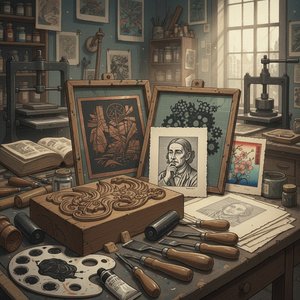
The Enduring Legacy of Printmaking: Techniques, Themes & Artistic Innovation Across Centuries
Explore the rich history of printmaking with OriginalUniqueArt. Discover techniques from intaglio to lithography, learn about collecting valuable prints & find museum-quality reproductions. Expert insights for art enthusiasts and collectors.

Crimson Threads of Narrative: Exploring Symbolism & Representation in Artworks Featuring the Red Dress
Explore the rich symbolism of the red dress in art history! From ancient power displays to iconic portraits like Cézanne’s 'Madame Cezanne', discover the cultural and artistic significance behind this captivating color. Expert analysis & insights.

The Enduring Legacy of Fine Art Prints: Technique, History & Aesthetic Impact
Explore the rich history & techniques of fine art prints. Discover investment potential, assess authenticity, and learn how to preserve your collection with expert guidance. Trusted insights for discerning collectors.

Echoes of Time: Exploring the Enduring Appeal & Historical Context of Vintage Art Prints
Explore the captivating world of vintage art prints! Discover their history, collecting tips & enduring appeal. Expert insights on chromolithography and building a legacy collection with OriginalUniqueArt.


