() ·

A painting made for you, by hand

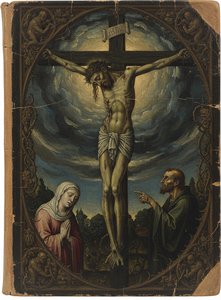
Crucifixion

Käsinmaalattu öljyvärinen jäljennös

Käsinmaalattu öljyväri kankaalle haluamassasi koossa ja kehyksissä, taiteilijoidemme valmistamana tilauksesta. ( Vaihda tulosteeseen Siirry digitaaliseen kuvaan)

Keräilykohteen kuvaus

Experience Matthias Grünewald's powerful 'Crucifixion' (1501), a stark black & white drawing from the Isenheim Altarpiece, showcasing intense emotion and masterful realism of Christ’s suffering.

Taiteilijan elämäkerta

Matthias Grünewald oli merkittävä saksalainen renessanssimaalari, tunnetuin Isenheim Altarpiece -teoksestaan. Hänen tyylinsä on dramaattinen ja tunteiden voimakas ilmaisu, joka yhdistää myöhäisgoottilaisen perinteen ja renessanssin.

from ·

Chapter 1

How large should it be?

Slide to change the size; the picture on the left shows the frame at its real width. The proportions of the original are kept.

Vakiokoko
räätälöity
CM
INCH

Valitse valmiista mitoistamme sellaiset, jotka vastaavat teoksen alkuperäisiä mittasuhteita.

leveys
korkeus

Kirjoita tarvitsemasi leveys ja korkeus, jotta teos sopii kehyksiisi tai seinällesi. Koska kyseessä on käsinmaalattu teos, taiteilija voi maalata hieman enemmän kuvan ympärille tai rajata sitä hieman, jos haluat eri muotoisen koon — valinta on sinun. Lähetämme sinulle digitaalisen mallikuvan hyväksyttäväksi ennen kuin maalaus alkaa. Tällä sivulla näkyvä kuva ei vastaa lopullista tulosta — vain mallikuva näyttää sen.

Chapter 2

How should it arrive?

Choose the edges of the stretched canvas

Choose your frame

Corner sample of the WhiteWrap canvas edge finish, stretched on massiivipuu bars
White €1
Corner sample of the BlurSideWrap canvas edge finish, stretched on massiivipuu bars
Blurside €1
Corner sample of the ExtendedWrap canvas edge finish, stretched on massiivipuu bars
Extended €1
Corner sample of the P118B picture frame: valettu polystyreeni, 5 cm wide and 3 cm thick
P118B €10
Corner sample of the P118H picture frame: valettu polystyreeni, 5 cm wide and 3 cm thick
P118H €10
Corner sample of the P118W picture frame: valettu polystyreeni, 5 cm wide and 3 cm thick
P118W €10
Corner sample of the P438Z picture frame: valettu polystyreeni, 5.5 cm wide and 3.5 cm thick
P438Z €10
Corner sample of the P508JH picture frame: valettu polystyreeni, 7 cm wide and 3.5 cm thick
P508JH €12
Corner sample of the P508YH picture frame: valettu polystyreeni, 7 cm wide and 3.5 cm thick
P508YH €12
Corner sample of the P805H picture frame: valettu polystyreeni, 5 cm wide and 3.5 cm thick
P805H €10
Corner sample of the P805Z picture frame: valettu polystyreeni, 5 cm wide and 3.5 cm thick
P805Z €10
Corner sample of the P919BZ picture frame: valettu polystyreeni, 7 cm wide and 3.5 cm thick
P919BZ €10
Corner sample of the P919G picture frame: valettu polystyreeni, 7 cm wide and 3.5 cm thick
P919G €10
Corner sample of the P919XJ picture frame: valettu polystyreeni, 7 cm wide and 3.5 cm thick
P919XJ €10
Corner sample of the P959ZH picture frame: valettu polystyreeni, 5 cm wide and 3 cm thick
P959ZH €10
Corner sample of the P968JZ picture frame: valettu polystyreeni, 6 cm wide and 4 cm thick
P968JZ €12
Corner sample of the W106C picture frame: massiivipuu, 5 cm wide and 3 cm thick
W106C €8
Corner sample of the W218G picture frame: massiivipuu, 5 cm wide and 3 cm thick
W218G €10
Corner sample of the W218JH picture frame: massiivipuu, 5 cm wide and 3 cm thick
W218JH €8
Corner sample of the W218Y picture frame: massiivipuu, 5 cm wide and 3 cm thick
W218Y €10
Corner sample of the W307PJ picture frame: massiivipuu, 6 cm wide and 3 cm thick
W307PJ €10
Corner sample of the W316G picture frame: massiivipuu, 6 cm wide and 3 cm thick
W316G €10
Corner sample of the W316PJ picture frame: massiivipuu, 6 cm wide and 3 cm thick
W316PJ €8
Corner sample of the W316Y picture frame: massiivipuu, 6 cm wide and 3 cm thick
W316Y €10
Corner sample of the W398PJ picture frame: massiivipuu, 5 cm wide and 3 cm thick
W398PJ €8
Corner sample of the W4111J picture frame: massiivipuu, 6.5 cm wide and 3.5 cm thick
W4111J €10
Corner sample of the W500HY picture frame: massiivipuu, 7 cm wide and 5 cm thick
W500HY €15
Corner sample of the W500JH picture frame: massiivipuu, 7 cm wide and 5 cm thick
W500JH €15
Corner sample of the W692G picture frame: massiivipuu, 8 cm wide and 4 cm thick
W692G €12
Corner sample of the W849H picture frame: massiivipuu, 5 cm wide and 3 cm thick
W849H €8
Corner sample of the W940BG picture frame: massiivipuu, 7.5 cm wide and 4.5 cm thick
W940BG €15
Corner sample of the W953PJ picture frame: massiivipuu, 6 cm wide and 3.5 cm thick
W953PJ €8
Corner sample of the H24-GOLD picture frame: kaiverrettua puuta ja gessoa, 10 cm wide and 6 cm thick
H24-GOLD €30
Corner sample of the H24-SILVER picture frame: kaiverrettua puuta ja gessoa, 10 cm wide and 6 cm thick
H24-SILVER €30
Corner sample of the H36-GOLD picture frame: kaiverrettua puuta ja gessoa, 15 cm wide and 6.5 cm thick
H36-GOLD €45
Corner sample of the H36-SILVER picture frame: kaiverrettua puuta ja gessoa, 15 cm wide and 6.5 cm thick
H36-SILVER €45
Kehyksen esikatselu
Kehystetty

Moulding: . Overall size with the frame: .

Chapter 3

Who paints it, and should anything change?

Examples of what can be changed: Replace face with customer photo; Add pet (e.g., replace cat with dog); Include hidden message in background; Change background landscape or elements.
After order, OriginalUniqueArt.com team will email client for instructions and provide a mockup preview

Maailmanlaajuinen toimitus () 3–4 viikossa tavallisen 5 viikon sijaan. (2 marraskuu). Laadusta ei tingitä.

Chapter 4

The finishing touches

A nameplate, as in a museum?

Kaiverretun pronssilaatan tiedot

This elegant plaque features the artist's name and the title of the artwork, finely engraved for a timeless presentation.

It is made from bronze with a refined, elegant finish. The text is precisely laser-engraved for a sharp and permanent result. Measuring 9x2 cm, the plaque is compact yet easy to read. It's built to be durable and scratch-resistant, offering a professional, museum-quality look. Mounting is simple thanks to the included adhesive backing.

Läpinäkyvän akryylilaatan tiedot

The plaque includes essential engraved details such as the artist's name, the title of the artwork, the date it was created, the type of media used-like oil on canvas or watercolor-a brief description of the piece, and a QR code that links to the complete artwork information.

It is crafted from clear acrylic, offering a sleek, modern appearance. The text is UV-engraved in black to ensure strong visual contrast. With a size of 10x15 cm, it ensures optimal readability. It comes equipped with two metal hooks for secure wall mounting. The plaque is designed to be weather-resistant, making it suitable for various environments, and it includes interactive features that work seamlessly with smartphone scanning.

Mustan akryylilaatan tiedot

This elegant plaque includes engraved information such as the artist's name, the title of the artwork, the date it was created, the type of media used (like oil on canvas or watercolor), a short description of the artwork, and a QR code for quick access to more information.

The plaque itself is made from refined black acrylic with a premium finish. The text is laser-engraved in white for high contrast and readability. Its size is 10x15 cm, designed to be easy to read. It comes with two metal hooks for professional mounting. The design is sleek and fits any interior style. It is also weather-resistant and durable, with built-in digital integration for mobile compatibility.

A protective varnish?

When do you need it?

Chapter 5

Your painting, as you ordered it

Crucifixion

Reproduktiotekniikka

Replikaatin koko

-

Kokenut huipputaiteilija

Lisää yksityiskohtia, hienostuneisuutta ja enemmän aikaa tuotantoon

-

Reproduktion kehystysvaihtoehdot

-

-

Teoksille tai reproduktioille, joiden mikä tahansa sivu on suurempi kuin 105 cm (noin 41 tuumaa), kehys toimitetaan osina purettuna sarjana. Tämä menetelmä varmistaa turvallisen toimituksen ja ehkäisee vaurioita kuljetuksen aikana.

Vaatii ammattimaista kokoamista – kyseessä ei ole tee-se-itse-tuote.
Sarja on koottava ja kangas kiristettävä kokeneen kehystysammattilaisen toimesta käyttäen puuliimaa (ei sisälly pakkaukseen), kangaspinnetteitä ja puristimia, jotta kehyksen kulmat pysyvät suorina liiman kuivuessa. Virheellinen kokoaminen tai epätasainen kankaan kiristys voi vaurioittaa teosta pysyvästi, eikä tällaiset vauriot ala takuun piiriin.

  • Kaikki massiivipuupalat sisältyvät, tarkasti mittojen mukaan leikattuina.

  • Kootaan mukana tulevilla ruuveilla sekä kulmaliitoksia varten tarvittavalla puuliimalla, jota ei toimiteta, joten se on hankittava kehystäjältä.

  • Vaatii ammattilaisvälineitä, jotka eivät sisälly pakkaukseen: kankaan venytyspihdit (kiristin) ja puristimet, joilla pidetään kehyksen puut suorassa liiman kuivuessa.

Tärkeää:
Kulmaliitoksissa tarvitaan puuliimaa, kehyksien osat on pidettävä puristimilla, kunnes liima on täysin kuivunut, ja koottuun kehykseen jännitettävän kankaan kiristämiseen tarvitaan kangaspenssipihti. Mikään näistä ei sisälly pakkaukseen. Suosittelemme varmistamaan kokeneen kehystäjän saatavuuden ennen tämän kokoisen kehyksen tilaamista.

Nimilaatta

-

-

Suojalakkaus

Kiiltävä lakka (syventää värejä, suojaa valolta ja kosteudelta)

-

Mukauta taideteokseni

Esimerkkejä muokattavista asioista: Vaihda kasvot asiakkaan omaan valokuvaan; Lisää lemmikki (esim. vaihda kissa koiraan); Lisää taustalle piilotettu viesti; Muuta taustan maisemaa tai elementtejä.

-

Pikatoimitus

Maailmanlaajuinen toimitus () 3–4 viikossa tavallisen 5 viikon sijaan. (2 marraskuu). Laadusta ei tingitä.

-

Pikatoimitus

Maailmanlaajuinen toimitus () 5 viikon kuluessa. (9 marraskuu).

Sisältyy hintaan

Kokonaishinta

€ 267

Kokonaishinta € 267

Lasivaihtoehto on saatavilla vain alle 110 cm kokoisille teoksille

Included with every order

  • Ilmainen pikatoimitus ympäri maailman
  • Korkealaatuinen pellavakangas
  • Kattava kuljetusvakuutus
  • Tulliveron palautustakuu
  • Takuu täydellisestä värien vastaavuudesta
  • 100 päivän palautusoikeus (vain valmistusvirheet)
  • 100% rahat takaisin -takuu
  • Määräalennus tarjolla

A Glimpse into the Soul of a Master: The Crucifixion by Matthias Grünewald

Matthias Grünewald’s “Crucifixion,” painted around 1501, isn't merely a depiction of a pivotal moment in Christian history; it’s an immersive experience—a visceral plunge into the depths of human suffering and profound spiritual contemplation. Born in Würzburg around 1470, Grünewald stood as a bridge between the vibrant hues and dynamic compositions of the late medieval period and the burgeoning realism of the early Renaissance. Unlike his Italian contemporaries who embraced classical ideals, Grünewald remained firmly rooted in the traditions of Northern Europe, imbuing his work with an intensely emotional quality that continues to resonate centuries later. This particular “Crucifixion” – a panel from the Isenheim Altarpiece – is a testament to this devotion, a stark and unforgettable image born not of idealized beauty but of raw, unvarnished truth.

The painting immediately commands attention with its deliberate monochrome palette. Shades of grey—ranging from near-white highlights on Christ’s body to deep, impenetrable blacks in the shadows—create an atmosphere of profound solemnity and dramatic intensity. This restricted color scheme isn't a limitation; it’s a strategic choice that amplifies the emotional impact, stripping away any distractions and forcing the viewer to confront the brutal reality of the scene. The composition itself is powerfully vertical, emphasizing the height of the cross—a symbol of both Christ’s sacrifice and humanity’s fall. Christ's torso and limbs are centrally positioned, drawing the eye directly to his suffering, while the truncated base of the cross subtly suggests a sense of confinement and vulnerability.

The Language of Line and Texture: Technique and Craftsmanship

Grünewald’s mastery lies not just in his understanding of color and composition but also in his meticulous technique. The painting is executed primarily through hatching and cross-hatching—a method of creating tonal variations by layering lines of differing densities. This painstaking process generates a remarkable sense of texture, allowing the artist to convincingly simulate the rough grain of the wooden cross, the folds of Christ’s loincloth, and even the thorny crown piercing his head. The musculature of Christ's body is rendered with astonishing anatomical accuracy, reflecting Grünewald’s deep observation of human form—a hallmark of Northern Renaissance art. The strong, defined lines delineate every contour, creating a sense of both vulnerability and immense strength.

Furthermore, the artist employs subtle shifts in value to create depth and volume. The highlights on Christ's body draw attention to his wounds, while the shadows accentuate the contours of his form, lending him an almost sculptural quality. The overall effect is one of intense realism—a deliberate departure from the idealized representations common in Italian Renaissance art. This commitment to portraying suffering with unflinching honesty speaks volumes about Grünewald’s artistic vision and his profound engagement with the subject matter.

Symbolism, Suffering, and Spiritual Resonance

Beyond its technical brilliance, “The Crucifixion” is rich in symbolic meaning. The starkness of the image—the absence of color, the brutal depiction of Christ’s suffering—serves to heighten the emotional impact and underscore the profound spiritual weight of the scene. Christ's emaciated body, riddled with wounds and pierced by nails, embodies the ultimate sacrifice for humanity’s sins. The surrounding figures – Saint Sebastian, Saint Anthony, Mary Magdalene, and John the Baptist – each contribute to the narrative, representing themes of martyrdom, compassion, repentance, and divine grace. The inclusion of John the Baptist pointing towards Christ is a clear reference to the Gospel accounts, emphasizing the significance of his sacrifice as the fulfillment of prophecy.

The painting’s origins within the Isenheim Altarpiece—a work designed for a hospital dedicated to treating plague sufferers—add another layer of meaning. Grünewald's choice of monochrome and his unflinching portrayal of suffering were intended to provide comfort and solace to those afflicted with illness, reminding them that Christ shared in their pain and offered hope amidst despair. “The Crucifixion” is therefore not simply a historical depiction but a powerful meditation on faith, suffering, and redemption—a timeless masterpiece that continues to move viewers centuries after its creation.

Further Research: For more detailed information, consider visiting the National Gallery of Art’s website for a high-resolution image and accompanying text. You can also explore Wikipedia’s entry on Matthias Grünewald for biographical details and historical context, or delve into articles like “Crucifixion, by Matthias Grünewald” on Christian Century.

Kysymykset ja vastaukset

Mistä voin löytää teoksia, jotka muistuttavat teosta Matthias Grünewald:n "Crucifixion"?

Teokset, jotka muistuttavat teosta Matthias Grünewald:n "Crucifixion", on koottu sen Samankaltaisia teoksia -sivulle.

Mitä tekniikkaa teoksessa "Crucifixion" on käytetty ja milloin se on luotu?

"Crucifixion" on valmistettu vuonna 1502 käyttäen Acrylic On Canvas-tekniikkaa. Materiaali ja päivämäärä kertovat, miten ja milloin alkuperäisteos on tehty.

Sallitaanko Matthias Grünewald:n "Crucifixion" -teoksen tekijänoikeuksien perusteella sen jäljentäminen?

Matthias Grünewald:n "Crucifixion", joka on Staatliche Kunsthalle Karlsruhe kokoelmissa, on vapaasti käytettävissä – tekijänoikeussuoja on päättynyt. Tämä tila määrittää, voidaanko kuvasta tehdä jäljennöksiä.

More about this painting

Esikatselu Esikatsele AR-tilassa Vaihda tulosteeseen Siirry digitaaliseen kuvaan Jaa teos
Tiedot Opas Lisää suosikkeihin Lataa kuva Samanlaisia kohteita Röntgenkuvaus Diaesitys Q&A Tilastot

In numbers

  • 1502the year it was painted
  • 29frames to choose from
  • standard sizes, in its own proportions
  • 5weeks to paint and deliver it
Matthias Grünewald

Matthias Grünewald

1480 - 1528, Saksa

Quick facts about Matthias Grünewald

  • Artistic Movement Or Style: Late Medieval German Art / Northern Renaissance
  • Artists Or Movements Influenced By This Artist: ['Albrecht Dürer']
  • Artists Who Influenced This Artist:
    • Albrecht Dürer
    • Martin Schongauer
  • Date Of Birth: c. 1475/1480
  • Date Of Death: 31 August 1528
  • Full Name: Matthias Grünewald
  • Nationality: German
  • Notable Artworks:
    • The Isenheim Altarpiece
    • The Crucifixion
  • Place Of Birth: Würzburg, Germany

Taiteilijan elämäkerta

Matthias Grünewald – Elämä ja Taide

Matthias Grünewald oli yksi merkittävimmistä saksalaisista renessanssimaalarista, joka tunnetaan erityisesti Issenheimin luostarikirkkoon maalattuun Kristuksen ristiinnaulittuun alttaritauluun. Hän oli kuitenkin myös monien muiden vaikuttavien työnsä ansiosta keskeinen henkilö keskiajan ja renessanssin väliin siirtyvän taiteen kehityksessä Saksassa. Grünewaldin elämästä tiedetään verrattain vähän, mutta hänen koulutuksensa tapahtui paikallisissa työskennellessä, mikä kertoo hänestä nuorena mestarinaan. Hän oli erityisen tarkka yksityiskohtiin ja henkilökohtaiseen ilmaisuun keskittyvä taiteilija, joka pyrki vangitsemaan sekä fyysisen että hengellisen maailman monimutkaisuuden maalauksissaan.
  • Synty ja Nuoruus: Grünewald syntyi noin vuonna 1475 Würzburgissa Saksassa. Hän oli koulutettu mestarinaan paikallisessa työskennellä, mikä kertoo hänestä nuorena mestarinaan. Tietoja hänen henkilökohtaisesta elämästään on kuitenkin vähän.
  • Taiteellinen Kehitys ja Vaikuttajat: Grünewaldin taiteellinen kehitys oli vahvasti vaikutettu keskiajan pohjoismaalausten perinteisiin, jotka korostivat realismia, tunteiden voimakkuutta ja tarkkaa havaintoa. Hän sai koulutusta Albrecht Dürerin ja Martin Schongauerin työskennellä, mutta hän loi oman polkunsa henkilökohtaisen hengellisen ilmaisun kautta.

Issenheimin Luostarikirkon Alttaritaulu – Grünewaldin Mestariteos

Issenheimin luostarikirkkoon maalattu Kristuksen ristiinnaulittu alttaritaulu on Grünewaldin tunnetuin ja merkittävin työ. Tämä monumentaalinen teos kuvastaa Kristuksen kärsimystä äärimmäisen realistisesti, keskittyen erityisesti kärsintään ja pelastukseen. Alttaritaulu ei ole vain teknisesti huomattava saavutus; se on myös syvästi tunteellinen kokemus, joka ilmaisee Grünewaldin henkilökohtaisen hengellisen näkemyksen. Hän käytti tässä maalauksessa rohkeaa väripalettia ja liikkeen dynamiikkaa korostaakseen Kristuksen kärsimystä ja pelastusta. Alttaritaulun yksityiskohtainen anatomian tarkkuus sekä henkilökohtaisen tunteen voimakkuuden ilmaisu ovat erityisen vaikuttavia. Grünewaldin työ on yksi keskiajan ja renessanssin väliin siirtyvän taiteen keskeisistä monumenteista.

Grünewaldin Tyyli ja Teknikka

Grünewaldin tyylille ovat ominaisia seuraavat piirteet:
  • Dramaattinen Kompositio: Hän käytti liikkeen dynamiikkaa korostaakseen tunteellista vaikutusta.
  • Vivid Väripaletti: Hän loi vahvan visuaalisen kokemuksen käyttämällä voimakkaan kontrastin värejä.
  • Realistinen Kuvaus Kärsimyksestä: Grünewald ei pelästellä kärsimystä fyysisesti ja emotionaalisesti sekä Kristuksen kärsimystä kuvattaessa.
  • Ilmaisevat Figuurit: Hänen henkilönsä ovat täynnä tunteita ja psykologista syvyyttä.
Hän oli erityisen tarkka yksityiskohtiin ja henkilökohtaisen ilmaisuun keskittyvä taiteilija, joka pyrki vangitsemaan sekä fyysisen että hengellisen maailman monimutkaisuuden maalauksissaan. Grünewaldin työ on yksi keskiajan ja renessanssin väliin siirtyvän taiteen keskeisistä monumenteista.

Historiallinen Merkitys ja Perintö

Grünewaldin työ todistaa keskiajan taideperinteiden pysyvyyden vaikutuksen Saksassa renessanssin aikana. Hän oli yksi henkilöistä, joka yhdisti keskiajan ja renessanssin yksilöllisenä taiteilijana, luoden oman visuaalisen kielen, joka resonoi hänen aikansa ihmisten kanssa. Hänen vaikutuksensa näkyy myöhemmissä saksalaisissa taiteilijoissa, jotka jatkoivat henkilökohtaisen hengellisen ilmaisun tutkimista ja tunteiden voimakkuuden ilmaisu keskiajan jälkeen. Grünewaldin työ on yksi renessanssin keskeisistä monumenteista ja hänestä tuli yksi merkittävimmistä saksalaisista taiteilijoista 1800-luvulla. Hänen maalauksensa jatkaa tunteellisen syvyyden ja teknisen huomion keskittyvää ilmaisu keskiajan jälkeen."

Pikaista tietoa

  • Medium: Drawing/Engraving
  • Notable elements: Dramatic shading, realism
  • Artistic style: Expressionism, detailed
  • Dimensions: 531 x 320 cm
  • Location: Museums (various)
  • Title: Crucifixion

Taidevisat

Jokaisessa kysymyksessä on vain yksi oikea vastaus.

Kysymys 1:
What is the primary subject matter of Matthias Grünewald’s ‘Crucifixion’?
Kysymys 2:
What artistic tradition heavily influenced Matthias Grünewald’s style, as evidenced in ‘Crucifixion’?
Kysymys 3:
The monochrome color palette of ‘Crucifixion’ primarily serves to:
Kysymys 4:
What is the significance of the use of hatching and cross-hatching in ‘Crucifixion’?
Kysymys 5:
Considering the historical context of the Isenheim Altarpiece, what was a primary purpose of Grünewald’s work?