

 Katso seinällä
 Lähetä
 Jaa
Jaa
 Tarkemmat tiedot
 Opas
Opas

 Lataa kuva
 Samanlaisia kohteita
 Röntgenkuvaus
 Diaesitys
 Tilastot
Madonna with Child and Angels
 Acrylic On Canvas
- WallArt
- Early Renaissance Realism
 1426
1426 136.0 x 73.0 cm
 National Gallery
 Lue lisää
Giclée- ja taideprintit
Museolaatuisia giclée- tai kankaitaulun tulosteita nopealla tuotannolla ja joustavilla viimeistelyvaihtoehdoilla. ( Tilaa käsinmaalattu jäljennös Siirry digitaaliseen kuvaan)




P118B $10

P118H $10

P118W $10

P438Z $10

P508JH $12

P508YH $12

P805H $10

P805Z $10

P919BZ $10

P919G $10

P919XJ $10

P959ZH $10

P968JZ $12

W106C $8

W218G $10

W218JH $8

W218Y $10

W307PJ $10

W316G $10

W316PJ $8

W316Y $10

W398PJ $8

W4111J $10

W500HY $15

W500JH $15

W692G $12

W849H $8

W940BG $15

W953PJ $8




Valitse valmiista mitoistamme sellaiset, jotka vastaavat teoksen alkuperäisiä mittasuhteita.

Voit syöttää omat mitat sopiaksesi tiettyyn kehykseen tai tilaan. Jos valittu koko ei vastaa alkuperäisen kuvan mittasuhteita, rajaamme teosta tai laajennamme kuvaa peilatulla tai yhtenäisellä reunalla. Digitaalinen mallikuva lähetetään hyväksyttäväksi ennen tuotannon aloittamista.
Huomaathan, että näytöllä näkyvä esikatselu ei vastaa lopullista rajausta tai laajennusta. Vain mallikuva näyttää lopullisen sommittelun tarkasti.
Vaikka räätälöityjä kokoja on saatavilla, suosittelemme valitsemaan mitat valmiista listasta alkuperäisten mittasuhteiden säilyttämiseksi.
Maailmanlaajuinen toimitus () 2 viikossa tavallisen 4–5 viikon sijaan. (27 syyskuu)

Ilmainen pikatoimitus ympäri maailman

Korkealaatuinen pellavakangas

Kattava kuljetusvakuutus

Tulliveron palautustakuu

Takuu täydellisestä värien vastaavuudesta

100 päivän palautusoikeus valmistusvirhetapauksissa

100% rahat takaisin -takuu

Määräalennus saatavilla
 Lasivaihtoehto on saatavilla vain alle 110 cm kokoisille teoksille

Madonna with Child and Angels
Giclée- ja taideprintit
Replikaatin koko
-


Kokonaishinta
$ 80
The Dawn of Realism: Masaccio’s “Madonna with Child and Angels”
Masaccio's "Madonna with Child and Angels," painted in 1426, stands as a monumental work—a pivotal moment in the burgeoning Renaissance. More than simply a depiction of the Virgin Mary cradling her infant son, this painting represents a radical shift in artistic approach, embodying the nascent principles of realism and perspective that would define the era. Commissioned during a period of intense intellectual and artistic ferment in Florence, it reflects the city’s growing confidence in human observation and its desire to capture the world with unprecedented accuracy. The work's placement within a church setting—a large golden frame enveloping the scene—immediately establishes a sacred context, inviting contemplation and reverence.
The painting immediately draws the eye to Mary, seated gracefully on a simple chair, her pose radiating serenity and maternal devotion. Her clothing, rendered with meticulous detail – the folds of the fabric, the subtle variations in color – demonstrates Masaccio’s commitment to naturalistic representation. Crucially, he employs *chiaroscuro*, the masterful use of light and shadow, to sculpt the figures and imbue them with a palpable sense of volume and depth. This technique, borrowed from early Renaissance artists like Andrea del Verrocchio, creates an illusion of three-dimensionality that was revolutionary at the time. The baby Jesus, nestled in her lap, is depicted with astonishing realism – his tiny hands and feet rendered with delicate precision.
A Heavenly Chorus: Angels and Composition
Surrounding Mary are a group of angels, each imbued with individual character and movement. Masaccio’s depiction of these celestial beings moves beyond the stylized representations of previous eras. These aren't ethereal, indistinct forms; they possess recognizable human features—delicate hands, expressive faces—suggesting a connection to the earthly realm. The composition itself is remarkably balanced, utilizing geometric principles to create a sense of harmony and stability. Note the careful arrangement of figures, the use of receding planes to draw the viewer’s eye into the scene, and the subtle interplay of light and shadow that defines each form. The inclusion of musical instruments – a violin and a guitar – adds an intriguing layer of symbolism, perhaps alluding to religious music or hymns that would have accompanied devotional practices within the church.
Interestingly, Masaccio’s approach was influenced by contemporary developments in mathematics and optics. He meticulously studied linear perspective—the technique of creating the illusion of depth on a flat surface—and applied it with remarkable skill to this painting. The architectural elements of the background, particularly the arches and columns, converge towards a single vanishing point, reinforcing the sense of spatial realism. This demonstrates Masaccio’s intellectual curiosity and his desire to represent the world as accurately as possible.
Symbolism and Spiritual Resonance
Beyond its technical innovations, “Madonna with Child and Angels” is rich in symbolic meaning. The Virgin Mary represents purity, grace, and divine motherhood—central tenets of Christian theology. The infant Jesus embodies sacrifice, redemption, and the promise of salvation. The angels, as messengers of God, symbolize divine guidance and protection. The overall atmosphere of peace and serenity reflects the spiritual ideals of the Renaissance, a period marked by a renewed interest in classical learning and a profound sense of human potential.
Masaccio’s untimely death at the age of 28 cut short his promising career, but his legacy endures as one of the most influential artists of the Early Renaissance. “Madonna with Child and Angels” stands as a testament to his genius—a masterpiece that not only revolutionized painting techniques but also profoundly shaped our understanding of art and its ability to capture the beauty and complexity of the human experience. A reproduction of this iconic work offers a unique opportunity to bring this pivotal moment in art history into your home, allowing you to appreciate the enduring power of Masaccio’s vision.
Taiteilijan elämäkerta
Masaccio (1401-1428): The Dawn of Renaissance Realism
Tommaso di Ser Giovanni di Simone Cassai, better known as Masaccio (meaning "clumsy Tom"), was a pivotal figure in the Early Italian Renaissance. Born on December 21, 1401, in San Giovanni Valdarno, Italy, and dying tragically young in 1428, his brief career revolutionized painting with groundbreaking realism, perspective, and chiaroscuro (the use of strong contrasts between light and dark). Despite his short life, Masaccio’s impact on subsequent generations of artists was profound, establishing a new standard for naturalism and influencing the course of Western art.Early Life and Training
Masaccio's origins were humble; he descended from Ser Giovanni di Mone Cassai, a notary, and Jacopa di Martinozzo di Dino. His family name, Cassai, derived from his paternal grandfather’s trade as a cabinet maker – a craft that would subtly inform Masaccio’s meticulous attention to detail in his artwork. Orphaned at age five when his father succumbed to illness, Masaccio was cared for by his brother Giovanni (Lo Scheggia), who also pursued a vocation in art. The specifics of Masaccio's artistic training remain shrouded in mystery – an unusual circumstance considering the prevailing practices of Renaissance artists. Scholars believe he likely apprenticed around the age of 12, but definitive documentation regarding his master has proven elusive. This lack of verifiable mentorship contributes to the enduring fascination surrounding his rapid ascent to mastery and the astonishing innovation of his techniques. He joined the painters’ guild (Arte de’ Medici e Speziali) in Florence on January 7, 1422, marking his emergence as an independent artist and signaling a decisive step away from the patronage system that dominated artistic life at the time.Artistic Development and Major Works
Masaccio's artistic journey began under the influence of Giotto di Bondone – a predecessor who championed naturalism and imbued his frescoes with palpable emotion. However, Masaccio swiftly surpassed Giotto’s achievements in mastering perspective and anatomical accuracy. He was particularly captivated by Filippo Brunelleschi’s rediscovery of linear perspective, recognizing its transformative potential for representing three-dimensional space on a flat surface. This intellectual breakthrough fueled his artistic experimentation and propelled him to develop techniques that would redefine the visual language of painting. Masaccio pioneered several groundbreaking innovations:- Linear Perspective: Employed vanishing points with mathematical precision to create an illusion of depth, fundamentally altering how artists depicted reality.
- Chiaroscuro: Masterfully utilized light and shadow to sculpt forms, generating a sense of volume and realism previously unattainable in Medieval art.
- Naturalism: Depicted figures with anatomical detail and expressive gestures, mirroring the humanist ideals that were gaining traction during his time – a departure from stylized representations prevalent earlier in the century.
Historical Significance and Legacy
Masaccio’s legacy extends far beyond the confines of Florence and the Brancacci Chapel. Giorgio Vasari, a prominent Renaissance biographer, eloquently captured Masaccio’s genius, proclaiming him “the best painter of his generation” due to his unwavering commitment to imitating nature and conveying human emotion with breathtaking realism. His groundbreaking techniques irrevocably altered artistic conventions, establishing a new standard for naturalism that resonated throughout Europe. He served as an inspiration for artists like Leonardo da Vinci and Michelangelo—who diligently studied Masaccio’s frescoes—and cemented his place as one of the foundational figures of Western art history. Despite his untimely demise at the age of 26 – circumstances surrounding which remain obscure – Masaccio's brief but brilliant life ensured that his artistic innovations would endure for centuries to come, shaping the trajectory of Renaissance painting and profoundly impacting the visual culture of Europe.
Masaccio
1401 - 1429 , Italia
Tietoa taiteilijasta
- Artistic Movement Or Style: Early Renaissance
- Artists Who Influenced This Artist:
- Giotto
- Filippo Brunelleschi
- Date Of Birth: 21. joulukuuta 1401
- Full Name: Tommaso di Ser Giovanni di Simone Guidi Cassai
- Nationality: Italian
- Notable Artworks:
- Brancacci Chapel fresk.
- Pyhä Johannes
- Kristuksen Poika ja Pyhä Anna
- Place Of Birth: San Giovanni Valdarno, Italia
Aiheeseen liittyvät artikkelit
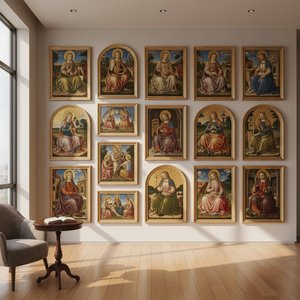
Fra Angelicon 25 mestariteosta: Taidetta ja hengellisyyttä kotiisi – OriginalUniqueArt.com
Tutustu Fra Angelicon 25 mestariteokseen – varhaisen renessanssin lumoavia freskoja ja alttaritauluja. Uppoudu italialaisen taidemaalarin hengelliseen maailmaan OriginalUniqueArt.comissa! Taidekopiokuvia ja sisustusideoita.
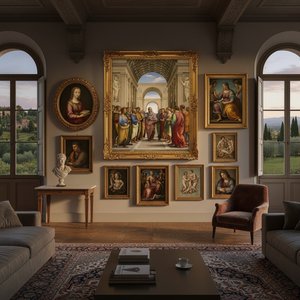
Rafaelin 25 mestariteosta: Taidetta kotiisi OriginalUniqueArtilta
Tutustu Rafaelin 25 upeimpaan mestariteokseen! Uppoudu renessanssitaiteen maailmaan, opi maalauksien tarinat ja löydä inspiraatiota kotiisi. Laadukkaat taideprintit OriginalUniqueArtilta – tutki kokoelma verkossa!
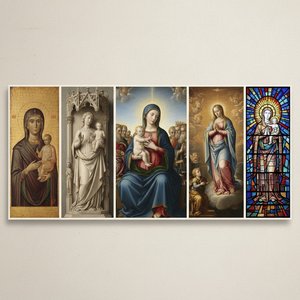
Divine Grace: A Journey Through the Most Iconic Depictions of the Virgin Mary in Art History
Embark on a profound journey through art history with our exploration of the most iconic depictions of the Virgin Mary. Discover the divine grace, symbolism, and masterful techniques found in Renaissance masterpieces and sacred iconography.

Celestial Messengers: A Comprehensive Exploration of Angelic Representation in Art History
Explore the captivating history of angels in art! Discover symbolism, iconic Renaissance masterpieces & renowned artists. Expert insights for art lovers & collectors at OriginalUniqueArt.

Celestial Messengers: Angels in Painting – A Historical & Artistic Exploration
Explore the captivating history of angels in painting! Discover symbolism, iconic Renaissance & Byzantine masterpieces, and renowned artists. Expert insights for art lovers & collectors at OriginalUniqueArt.


