
 Esikatselu
 Jaa teos
 Jaa
Jaa
 Tiedot
 Opas
Opas

 Lataa kuva
 Samanlaisia kohteita
 Röntgenkuvaus
 Diaesitys
 Kysymykset ja vastaukset
 Tilastot
Oh, Oh, Oh, Not Again


 Lue lisää
Tällä sivulla esitettyä taideteosta suojaa tekijänoikeuslaki, mikä tarkoittaa, ettemme voi laillisesti luoda tai myydä täsmälleen samanlaista jäljennöstä. Tämä suoja toteutetaan kansainvälisten sopimusten, kuten esimerkiksi Berne-konventio ja kansallisilla laeilla, mukaan lukien niillä määritellyt Yhdysvaltain tekijänoikeuslaki – Luku 17. Kaikki oikeudet pidätetään. Luvaton kopiointi tai jäljittely on kielletty.
Tämä menetelmä noudattaa täysin tekijänoikeussäännöksiä, sillä se ei sisällä suojatun taideteoksen kopioimista tai jäljentämistä. Sen sijaan kyseessä on luova uudelleentulkinta – uusi maalaus, joka ammentaa vaikutteita alkuperäisestä, mutta ei ole sen identtinen kopio.
Giclée- ja taideprintit
Museolaatuisia giclée- tai kankaitaulun tulosteita nopealla tuotannolla ja joustavilla viimeistelyvaihtoehdoilla. ( Osta käsinmaalattu taideteos Siirry digitaaliseen kuvaan)




P118B €10

P118H €10

P118W €10

P438Z €10

P508JH €12

P508YH €12

P805H €10

P805Z €10

P919BZ €10

P919G €10

P919XJ €10

P959ZH €10

P968JZ €12

W106C €8

W218G €10

W218JH €8

W218Y €10

W307PJ €10

W316G €10

W316PJ €8

W316Y €10

W398PJ €8

W4111J €10

W500HY €15

W500JH €15

W692G €12

W849H €8

W940BG €15

W953PJ €8




Valitse valmiista mitoistamme sellaiset, jotka vastaavat teoksen alkuperäisiä mittasuhteita.

Syötä tarvitsemasi leveys ja korkeus, jotta tuloste sopii kehyksiisi tai seinällesi. Tulostetta voidaan vain leikata, sitä ei voida koskaan suurentaa alkuperäistä kuvaa suuremmaksi, joten eri muotoinen koko aiheuttaa osan kuvasta katoamisen. Lähetämme sinulle digitaalisen mallikuvan hyväksyttäväksi ennen kuin aloitamme tulostuksen. Tällä sivulla näkyvä kuva ei näytä lopullista rajausta — vain mallikuva näyttää sen.
Maailmanlaajuinen toimitus () 2 viikossa tavallisen 4–5 viikon sijaan. (3 marraskuu)

Ilmainen pikatoimitus ympäri maailman

Korkealaatuinen pellavakangas

Kattava kuljetusvakuutus

Tulliveron palautustakuu

Takuu täydellisestä värien vastaavuudesta

100 päivän palautusoikeus (vain valmistusvirheet)

100% rahat takaisin -takuu

Määräalennus tarjolla
 Lasivaihtoehto on saatavilla vain alle 110 cm kokoisille teoksille

Oh, Oh, Oh, Not Again
Giclée- ja taideprintit
Replikaatin koko
-


Kokonaishinta
€ 72
Oh, Oh, Oh, Not Again – A Portrait of Vulnerability
The artwork “Oh, Oh, Oh, Not Again,” created by Marlene Dumas in 1996, is a striking watercolor portrait that transcends mere representation to delve into the depths of human emotion. Presented as a close-up depiction of a child’s face—a figure deliberately devoid of context—the piece immediately confronts viewers with an unsettling stillness punctuated by subtle gestures that speak volumes about psychological state. Dumas's masterful use of wet-on-wet watercolor technique contributes significantly to its evocative atmosphere, fostering a sense of immediacy and capturing the ephemeral quality of human experience.Style and Technique: Expressionist Minimalism
Dumas’s artistic approach aligns firmly with expressionism, prioritizing emotional resonance over photographic accuracy. Unlike traditional portraiture aimed at capturing likeness, “Oh, Oh, Oh, Not Again” eschews detailed rendering in favor of loose brushstrokes and diluted colors—a deliberate decision that amplifies the painting's melancholic undertones. The artist employs a technique characterized by layering washes of pigment onto paper, allowing for soft edges and blurred contours. This method creates an illusion of depth while simultaneously emphasizing the vulnerability inherent in the subject matter. Texture is predominantly smooth due to the watercolor medium, though slight variations emerge from subsequent paint applications—a testament to Dumas’s intuitive understanding of material properties.Historical Context: Apartheid's Shadow
Born in Cape Town during the era of apartheid in South Africa, Marlene Dumas’s artistic vision was profoundly shaped by the pervasive injustices and divisions of that time. Her upbringing amidst a landscape scarred by racial segregation instilled within her a deep empathy for marginalized voices and fueled her exploration of themes related to identity and social consciousness. This formative experience informs her oeuvre, particularly evident in “Oh, Oh, Oh, Not Again,” where the child’s face embodies both innocence and unspoken sorrow—a poignant reflection of the broader societal anxieties surrounding race relations during Dumas's lifetime.Symbolism: Silence Speaks Volumes
The composition itself is laden with symbolic significance. The open mouth and downturned eyes convey a palpable sense of distress, hinting at hidden emotions beneath the surface calm. More broadly, “Oh, Oh, Oh, Not Again” operates as an emblem of vulnerability—a depiction that invites contemplation on themes of loss, isolation, and the fragility of human existence. Dumas’s muted color palette—primarily grayed-out hues—further enhances this emotional impact, mirroring the somber mood and reinforcing the painting's overarching message about confronting uncomfortable truths. The artist’s signature “M. Dumas 1996” is discreetly positioned in the lower right corner, grounding the artwork within its historical context and acknowledging Dumas’s artistic legacy.Emotional Resonance: A Window into Inner Turmoil
Ultimately, “Oh, Oh, Oh, Not Again” succeeds in capturing a profound emotional state—one that resonates with viewers long after initial observation. It's not merely a portrait; it’s an invitation to consider the complexities of human psychology and the enduring power of unspoken feelings. The artwork stands as a testament to Dumas’s ability to distill emotion into visual form, creating a piece that lingers in the imagination and prompts reflection on universal themes of vulnerability and resilience.Kysymykset ja vastaukset
Mikä on suositeltu tulostuskoko ja -suunta teokselle "Oh, Oh, Oh, Not Again"?
Teokselle "Oh, Oh, Oh, Not Again" suositeltu tulostusasetus on koko Medium ja Portrait-suuntainen asettelu.
Mihin huoneeseen "Oh, Oh, Oh, Not Again" sopisi parhaiten sen väripaletin perusteella?
Neutrals väripalettinsa ansiosta Marlene Dumas:n "Oh, Oh, Oh, Not Again" on suositeltava Living Room-tilaan. Värit ovat yksi tämän suosituksen perusteista.
Mihin tarkoitukseen ja mihin tilaan "Oh, Oh, Oh, Not Again" suositellaan?
Marlene Dumas:n "Oh, Oh, Oh, Not Again" on suositeltava Accent, mieluiten Living Room-tilassa. Käyttötarkoitus ja tila auttavat päättämään, mihin reproduktio sopii parhaiten.
Taiteilijan elämäkerta
A Life Shaped by Landscape and Sociopolitical Currents
Marlene Dumas, born in 1953 in Cape Town, South Africa, is a painter whose work resonates with an emotional depth rarely encountered in contemporary art. Her upbringing amidst the stark realities of apartheid profoundly shaped her artistic vision, instilling within her a keen awareness of social injustice and the complexities of human identity. Growing up on her father’s vineyard in Kuils River, she witnessed firsthand the divisions and inequalities that defined South African society during those years—a landscape both beautiful and burdened by history. This early exposure to a fractured world would become a recurring theme throughout her career, informing her exploration of race, sexuality, and the psychological weight of existence. Dumas’s formal artistic journey began at the University of Cape Town in 1972, where she pursued a Bachelor of Fine Arts degree alongside studies in ethics. This combination proved crucial, laying the groundwork for an art practice deeply concerned with moral questions and the human condition. She later continued her education at Ateliers ‘63 in Haarlem, Netherlands, relocating to Amsterdam in 1976—a move that marked a significant shift in both her geographical location and artistic perspective. Further academic pursuits in psychology at the University of Amsterdam between 1979-1980 would further refine her ability to portray inner states with remarkable sensitivity.Early Life and Education
Dumas’s formative years were indelibly shaped by the pervasive influence of apartheid—a system of racial segregation that dominated South African life for decades. Her father, Petrus Johannes Dumas, cultivated a vineyard in Kuils River, providing her with a tangible connection to the land and its history. However, this idyllic setting existed alongside the harsh realities of discrimination and oppression, fostering within Dumas a profound understanding of social injustice. Witnessing firsthand the disparities between white and black communities instilled in her a moral compass that would guide her artistic endeavors throughout her life. She enrolled at the University of Cape Town in 1972, earning a Bachelor of Fine Arts degree alongside studies in ethics—a dual focus that underscored her commitment to intellectual rigor and moral contemplation. This grounding in philosophical inquiry proved invaluable as she embarked on her artistic path.The Evolution of a Distinctive Style
Dumas’s artistic development has been characterized by an unwavering questioning of representation and a willingness to confront uncomfortable truths. Initially, her work directly confronted the political climate of apartheid, reflecting her identity as a white woman grappling with the ethical dilemmas inherent in living within such a system. However, she swiftly transcended purely political statements, delving into more universal themes—the vulnerability of human existence, the allure of desire, and the sorrow of loss. Influenced by the expressive traditions of Romanticism—particularly artists like Édouard Manet and Rembrandt—Dumas developed a distinctive style marked by loose brushstrokes, distorted figures, and an evocative use of color. She often begins her paintings with reference material drawn from diverse sources: Polaroid photographs of her friends and lovers, magazine clippings featuring erotic imagery, and even fragments of pornographic films. These images serve not merely as subjects but as catalysts for exploring emotional states—the anxieties of intimacy, the complexities of identity, and the yearning for connection. Her technique is notable for its layering—a wet-on-wet approach that builds depth and texture through the interplay of thin and thick paint—creating a sense of fluidity and ambiguity mirroring the psychological landscapes she seeks to depict.Themes of Identity, Sexuality, and Vulnerability
At the core of Dumas’s artistic vision lies an exploration of human subjectivity—a relentless pursuit of understanding the inner lives of her subjects. Her portraits are not idealized representations but rather glimpses into moments of profound vulnerability—expressions of longing, fear, and tenderness. She eschews conventional notions of beauty, favoring instead images that capture the raw essence of emotion. Dumas’s fascination with sexuality stems from a desire to interrogate societal norms surrounding intimacy and desire—to challenge assumptions about gender roles and explore the psychological dimensions of erotic experience. Her paintings often depict figures engaged in acts of transgression or vulnerability—a deliberate provocation designed to disrupt established visual conventions. Through her art, Dumas confronts us with uncomfortable truths about human nature—the capacity for cruelty alongside compassion, the illusion of control alongside surrender. She acknowledges the inherent limitations of representation, recognizing that no image can ever fully capture the richness and complexity of lived experience.Recognition and Lasting Impact
Marlene Dumas’s contributions to contemporary art have garnered widespread acclaim and cemented her position as one of the most influential painters working today. Her debut exhibition at Centraal Museum in Utrecht in 1984—titled *Ons land licht lager dan de zee*—established her reputation as a bold innovator, showcasing her pioneering use of Polaroid photographs and her exploration of psychological themes. Subsequent exhibitions throughout Europe and North America solidified her international presence and garnered critical acclaim. Her market success reached unprecedented heights in 2004 when *Jule-die Vrou* sold for over $1 million at Christie’s—a landmark achievement that underscored her artistic significance. More recently, *The Schoolboys* (1986–87) achieved an astounding $9 million at Art Basel Miami Beach in 2023—marking a new record for a living female artist and reaffirming Dumas's enduring legacy as a visionary voice within the art world. Represented by David Zwirner Gallery since 2008, Dumas continues to inspire artists globally and engages in ongoing dialogue about the role of art in confronting societal challenges. Her work stands as a testament to the transformative power of artistic expression—a reminder that beauty can coexist with discomfort and that profound insight can emerge from seemingly simple images.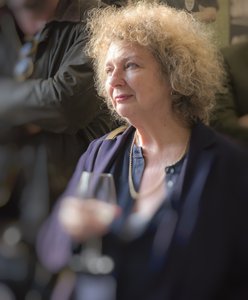
Marlene Dumas
1953 - , Etelä Afrikka
Pähkinänkuoressa
- Artistic Movement Or Style: Romantiikka
- Artists Or Movements Influenced By This Artist: ['Contemporary maalarit']
- Artists Who Influenced This Artist:
- Egon Schiele
- Francis Bacon
- Date Of Birth: 3 elokuuta 1953
- Full Name: Marlene Dumas
- Nationality: Etelä Afrikkalainen
- Notable Artworks:
- Viimeinen ehtoolla
- Nimetön (681)
- Nimetön (830)
- Jule-die Vrou
- Koulupoika
- Place Of Birth: Kapkaupunki, Etelä Afrikka
Aiheeseen liittyvät artikkelit

Ephemeral Visions: Exploring the Artistic Legacy & Contemporary Practice of Watercolor Painting
Explore the captivating world of watercolor painting! Discover its rich history, essential techniques, influential artists & collecting tips. A comprehensive guide for art enthusiasts from OriginalUniqueArt.

Ephemeral Visions: Exploring the History & Emotional Resonance of Watercolor Painting
Explore the captivating history of watercolor painting, from ancient techniques to modern masters like Kandinsky & Blake. Discover essential artists, collecting tips & the emotional power of this luminous medium. Expert insights for art enthusiasts.

Vesivärimaalauksen lumo: Historiaa, tekniikoita ja nykypäivän ilmaisua
Tutustu vesivärimaalauksen kiehtovaan maailmaan! Historiaa, tekniikoita ja inspiraatiota nykypäivään. Löydä upeita akvarelleja in valikoimasta.

Ephemeral Visions: Exploring the Artistic Legacy & Nuances of Watercolor Painting
Explore the captivating world of watercolor painting! Discover its rich history, essential techniques, influential artists & collecting tips from art experts. A comprehensive guide for enthusiasts.

10 Vesivärimaalausta, Jotka Muuttivat Taiteen – Inspiroi Sisustuksesi OriginalUniqueArtilla
Tutustu 10 legendaariseen vesivärimaalaukseen, jotka muuttivat taiteen historiaa! Inspiroiva tarina Turnerista Monetiin. Löydä upeita akvarelleja ja sisustusideoita OriginalUniqueArtilla. Tutki kokoelma verkossa!