

 Lähetä
 Jaa
Jaa
 Tarkemmat tiedot
 Opas
Opas

 Lataa kuva
 Samanlaisia kohteita
 Diaesitys
 Tilastot
Teagown


 Lue lisää
Giclée- ja taideprintit
Museolaatuisia giclée- tai kankaitaulun tulosteita nopealla tuotannolla ja joustavilla viimeistelyvaihtoehdoilla. ( Tilaa käsinmaalattu jäljennös Siirry digitaaliseen kuvaan)




































Valitse valmiista mitoistamme sellaiset, jotka vastaavat teoksen alkuperäisiä mittasuhteita.

Kirjoita tarvitsemasi leveys ja korkeus, jotta tuloste sopii kehyskokoon tai seinällesi. Tulostetta voidaan vain leikata, sitä ei voi koskaan tehdä suuremmaksi kuin alkuperäinen kuva, joten eri muotoinen koko aiheuttaa osan kuvasta katoamisen. Lähetämme sinulle digitaalisen mallikuvan hyväksyttäväksi ennen kuin aloitamme tulostuksen. Tällä sivulla näkyvä kuva ei näytä lopullista leikkausta — vain mallikuva näyttää sen.
Maailmanlaajuinen toimitus () 2 viikossa tavallisen 4–5 viikon sijaan. (27 lokakuu)

Ilmainen pikatoimitus ympäri maailman

Korkealaatuinen pellavakangas

Kattava kuljetusvakuutus

Tulliveron palautustakuu

Takuu täydellisestä värien vastaavuudesta

100 päivän palautusoikeus valmistusvirhetapauksissa

100% rahat takaisin -takuu

Määräalennus saatavilla
 Lasivaihtoehto on saatavilla vain alle 110 cm kokoisille teoksille

Teagown
Giclée- ja taideprintit
Replikaatin koko
-


Kokonaishinta
€ 70
A Venetian Echo of Grecian Elegance
In the pantheon of textile masterpieces, few works possess the ethereal magnetism of Mariano Fortuny’s “Teagown,” completed in 1920. This is not merely a garment; it is a profound dialogue between the opulent textures of the Venetian Belle Époque and the austere, idealized beauty of classical antiquity. As one gazes upon this stunning silk velvet creation, the fabric seems to breathe with the weight of history, acting as a meticulously crafted homage to the ancient Greek chiton. Fortuny, a true polymath of the decorative arts, managed to weave the spirit of a bygone era into every thread, transforming a functional piece of couture into a sculptural relic of grace and sophistication.
The visual impact of the Teagown is rooted in its masterful interplay of light and shadow. Utilizing his unparalleled expertise in textile manipulation, Fortuny employed stenciled gold detailing that catches the light with a subtle, rhythmic shimmer, reminiscent of the sun-drenched surfaces of Delphic bronze sculptures. The velvet itself serves as a lush canvas for an organic narrative; undulating stems and large, sweeping leaves—hallmarks of the celebrated Venetian style—emerge from the deep, mottled tones of the fabric. This technique creates a rich, tactile depth that invites the eye to wander through a landscape of forest greens, earthy browns, and gilded accents, making the dress feel less like a static object and more like a living, breathing piece of art.
Symbolism and the Spirit of an Era
Beyond its physical splendor, the Teagown is steeped in profound symbolism. By drawing direct inspiration from the Greek tunic, Fortuny invoked the classical virtues of innocence, purity, and idealized femininity. This deliberate nod to antiquity was a hallmark of the early 20th-century artistic revival, a period when intellectuals and aesthetes sought refuge in the timeless ideals of the past to escape the rapid industrialization of the modern world. The gold accents do more than provide luster; they serve as emblems of prestige and the lavish tastes of the aristocracy, bridging the gap between the humble simplicity of ancient Greece and the decadent luxury of 1920s high society.
For the discerning collector or interior designer, a reproduction of this masterpiece offers much more than mere decoration. It brings an atmosphere of quiet sophistication and romantic nostalgia into a space. The muted, complex color palette provides a neutral yet deeply textured anchor for sophisticated interiors, evoking feelings of serenity and mystery. Whether showcased as a focal point in a curated gallery or used to inspire the mood of a luxurious living space, the Teagown remains an enduring symbol of aesthetic perfection—a timeless fragment of a dream where art, fashion, and history are inextricably entwined.
Kysymykset ja vastaukset
Mihin huoneeseen Mariano Fortuny:n "Teagown" suositellaan sijoitettavaksi sen värien perusteella?
Mariano Fortuny:n "Teagown" -teoksen Earthy värit soveltuvat erinomaisesti sen suositeltuun tilaan: Living Room.
Miten teoksen Mariano Fortuny:n "Teagown" värikompositio on rakennettu?
Mariano Fortuny:n "Teagown" teoksen väriyhdistelmä yhdistää Bold kontrastin ja Unified Palette harmonian.
Minkä väripaletin ja minkä tunteen "Teagown" yhdistää?
Mariano Fortuny:n "Teagown" -teoksen Earthy väripaletti ja sen Romantic tunnelma sointuvat yhteen. Väri on yksi tavoista, joilla teos välittää tunnetta.
Taiteilijan elämäkerta
Early Life and Inspiration
Mariano Fortuny, a name synonymous with theatrical innovation and exquisite textiles, was born in Granada, Spain, on May 11, 1871. His early life was marked by profound loss – his father, Mariano Fortuny y Marsal, a respected genre painter, tragically died when the young boy was just three years old. This event spurred his family’s relocation to Paris, France, where his mother, Cecilia de Madrazo, exposed him to the world of textiles and fabrics, laying the foundation for his future artistic endeavors. From a remarkably young age, Fortuny demonstrated an extraordinary talent across various disciplines: painting, photography, sculpting, architecture, etching, and even theatrical stage lighting design. His innate curiosity and inventive spirit quickly became apparent, leading to a series of groundbreaking inventions that would revolutionize the world of theatre.Artistic Talents and Revolutionary Inventions
Fortuny’s artistic journey began with a clear display of skill in multiple mediums. He honed his painting abilities early on, absorbing influences from the burgeoning artistic movements of the time. However, it was his inventive mind that truly set him apart. Between 1901 and 1934, he patented over twenty remarkable inventions – a testament to his relentless pursuit of innovation. Perhaps his most significant contribution was the “fortuny cyclorama dome,” a quarter-dome structure crafted from plaster or cloth designed to create seamless transitions between scenes in theatrical productions. This ingenious device utilized indirect lighting, dramatically altering colors and intensities, and fundamentally changing how stage sets were illuminated. Fortuny’s meticulous treatise, "Eclairage Scenique" (1904), meticulously documented his discoveries regarding reflecting light – a technique that allowed for unprecedented control over the visual experience of a performance. His work wasn't limited to lighting; he also developed innovative methods for creating durable and vibrant dyes, further solidifying his reputation as a true visionary.Collaborations and Recognition
Fortuny’s unique approach quickly garnered widespread recognition in the 1920s. He forged significant collaborations with prominent figures, including the celebrated German composer Richard Wagner, whose operas deeply inspired Fortuny's artistic interpretations of stage design. His work at La Scala opera house in Milan was particularly noteworthy; he adapted his dome for the theater’s vast space and even invented a suction fan to maintain its taut structure – a remarkable feat of engineering for the time. Beyond music, Fortuny’s influence extended to fashion. He worked closely with the influential designer Elsie McNeill Lee, who became his sole distributor in America, introducing his luxurious fabrics and designs to a global audience. His creations, particularly the iconic “Delphos” gown – a flowing, pleated silk garment – became coveted symbols of elegance and sophistication, worn by celebrated figures like Eleonora Duse, Isadora Duncan, and Oona Chaplin.Legacy and Enduring Influence
Mariano Fortuny passed away on May 3, 1949, in Venice, Italy, leaving behind a legacy that continues to resonate today. His work profoundly influenced the French novelist Marcel Proust, who famously described Fortuny’s fabrics as “the tempting phantom of that invisible Venice.” His inventive spirit and artistic vision remain deeply embedded within the world of theatrical design, inspiring generations of stage technicians and designers. The Museo Mariano Fortuny y Madrazo in Venice serves as a testament to his life's work, showcasing his paintings, textiles, and inventions – offering visitors a unique glimpse into the mind of this extraordinary polymath. Fortuny’s story is one of artistic brilliance, technological innovation, and an unwavering dedication to creating immersive and unforgettable experiences for audiences around the world.
Mariano Fortuny
1871 - 1949 , Espanja
Tietoa taiteilijasta
- Artistic Movement Or Style: Orientalismi taide
- Artists Or Movements Influenced By This Artist: ['Marcel Proust']
- Artists Who Influenced This Artist: ['Richard Wagner']
- Date Of Birth: 11 toukokuuta 1871
- Date Of Death: 3 toukokuuta 1949
- Full Name: Mariano Fortuny y Marsal
- Nationality: Espanjalainen
- Notable Artworks:
- Teagown
- Virkailija
- Place Of Birth: Granada, Espanja
Aiheeseen liittyvät artikkelit

Crimson Threads of Narrative: Exploring Symbolism & Representation in Artworks Featuring the Red Dress
Explore the rich symbolism of the red dress in art history! From ancient power displays to iconic portraits like Cézanne’s 'Madame Cezanne', discover the cultural and artistic significance behind this captivating color. Expert analysis & insights.
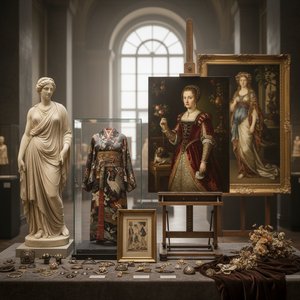
Draped Narratives: Fashion as Symbol & Subject in Historical Art
Explore the fascinating history of fashion as a symbol of power & status in art! Discover masterpieces from Gainsborough to Tissot and learn how clothing shaped societal narratives. Find museum-quality reproductions at OriginalUniqueArt.

Mariano Fortuny: A Fusion of Art, Fashion & Design – Exploring a Venetian Innovator's Legacy
Explore the captivating world of Mariano Fortuny – artist, designer & innovator. Discover his revolutionary textiles, iconic Delphos gown, and lasting influence on art, fashion & interiors. A collector's guide to a Venetian master.

Cristóbal Balenciaga: Deconstructing Haute Couture's Architectural Legacy
Explore the revolutionary world of Cristóbal Balenciaga, the 'couturier's couturier'. Discover his architectural designs, lasting influence on haute couture, and guide to collecting rare pieces. A connoisseur’s resource.
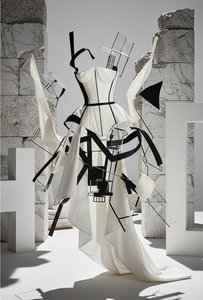
Gianfranco Ferré: Deconstructing Haute Couture – A Legacy of Architectural Form
Explore the revolutionary world of Gianfranco Ferré, 'the architect of fashion.' Discover his architectural approach to haute couture, iconic Dior designs, and lasting influence on luxury style. A deep dive for collectors & enthusiasts.
