

 Esikatselu
 Jaa
Jaa Jaa
Jaa
 Tarkemmat tiedot

 Lataa
Lataa
 Samanlaisia
 Röntgenkuva
 Diaesitys
Matrix for printing textiles
 Acrylic On Canvas
- WallArt
- Modernism
 1910
1910 69.0 x 42.0 cm
 Palazzo Fortuny
 Näytä lisää
Käsinmaalattu öljykopio
Käsinmaalattu öljyväri kankaalle haluamassasi koossa ja kehyksissä, taiteilijoidemme valmistamana tilauksesta. ( Osta printti Osta kuva)




P118B $10

P118H $10

P118W $10

P438Z $10

P508JH $12

P508YH $12

P805H $10

P805Z $10

P919BZ $10

P919G $10

P919XJ $10

P959ZH $10

P968JZ $12

W106C $8

W218G $10

W218JH $8

W218Y $10

W307PJ $10

W316G $10

W316PJ $8

W316Y $10

W398PJ $8

W4111J $10

W500HY $15

W500JH $15

W692G $12

W849H $8

W940BG $15

W953PJ $8




Valitse valmiista mitoistamme sellaiset, jotka vastaavat teoksen alkuperäisiä mittasuhteita.

Voit syöttää omat mitat sopimaan tiettyyn kehykseen tai tilaan. Jos valitsemasi koko ei vastaa alkuperäisen kuvan mittasuhteita, rajaamme taideteoksen tai jatkamme maalausta käsin maalatuilla elementeillä. Digitaalinen esikatselu lähetetään hyväksyttäväksi ennen tuotannon aloittamista.
Huomioithan, että näytöllä oleva esikatselu ei vastaa todellista rajausta tai jatkamista. Vain digitaalinen mallikuva näyttää lopullisen sommittelun tarkasti.
Vaikka mittatilaustyöt ovat mahdollisia, suosittelemme valitsemaan mitan ennalta määritetystä listasta alkuperäisten mittasuhteiden säilyttämiseksi.
Tilauksen jälkeen OriginalUniqueArt.com -tiimi lähettää asiakkaalle ohjeet ja esikatselukuvan.
Maailmanlaajuinen toimitus () 3–4 viikossa tavallisen 5 viikon sijaan. (21 elokuu). Laadusta ei tingitä.

Ilmainen pikatoimitus ympäri maailman

Korkealaatuinen pellavakangas

Kattava kuljetusvakuutus

Tulliveron palautustakuu

Täydellinen värien vastaavuustakuu

60 päivän palautusoikeus (vain valmistusvirheet)

100% rahat takaisin -takuu

Määräalennus tarjous
 Lasivaihtoehto on saatavilla vain alle 110 cm kokoisina teoksina

Matrix for printing textiles
Reproduktiotekniikka
Replikaatin koko
-


Kokonaishinta
$ 300
Teoksen kuvaus
Mariano Fortuny’s Textile Vision: Decoding “Matrix for Printing Textiles”
Mariano Fortuny y Madrazo (1871-1949), a Spanish artist and designer whose influence extended far beyond the realm of fashion, remains an icon of Art Nouveau and early Modernism. His oeuvre is characterized by a masterful blend of artistic innovation and meticulous craftsmanship—a combination perfectly embodied in “Matrix for Printing Textiles,” created in 1910.
This striking monochrome pencil drawing delves into the decorative potential of geometric forms, specifically circles and undulating waves, reflecting Fortuny’s fascination with natural motifs filtered through an aesthetic sensibility rooted in scientific observation. The piece isn't merely a visual pattern; it represents a pivotal moment in textile design history—a testament to Fortuny’s pioneering approach to illumination and his dedication to elevating the craft of printing.
Composition & Technique: A Symphony of Line
- Vertically oriented, the composition prioritizes visual flow from top to bottom, emphasizing the rhythmic repetition of geometric shapes.
- Fortuny’s technique is defined by painstaking pencil drawing—a deliberate choice that allows for exceptional control over line weight and shading density. The extensive use of hatching and cross-hatching contributes significantly to creating tonal variations and simulating texture.
- Detailed observation informs every stroke, resulting in a surface imbued with palpable depth and form – an illusion achieved through layering patterns and manipulating light.
Historical Context & Artistic Influences: Embracing Art Nouveau’s Organic Spirit
“Matrix for Printing Textiles” firmly establishes Fortuny within the broader context of Art Nouveau, a movement that championed organic forms inspired by botanical studies and sought to fuse art and craftsmanship. His groundbreaking work on stage lighting—particularly his invention of the fortuny cyclorama dome—demonstrated an unwavering commitment to pushing artistic boundaries and redefining theatrical presentation.
Fortuny’s meticulous attention to detail reflects a broader intellectual curiosity, mirroring the scientific advancements of the era. He meticulously documented his experiments with reflected light, anticipating developments in illumination technology that would transform the visual experience of audiences worldwide.
Symbolism & Emotional Resonance: Order Amidst Complexity
Beyond its functional purpose as a textile design template, “Matrix for Printing Textiles” speaks to deeper themes of order and precision—values central to Fortuny’s artistic vision. The repetition of circular forms evokes notions of cyclical time and harmonious balance, while the undulating waves symbolize fluidity and dynamism.
Ultimately, this artwork transcends mere decoration; it embodies a celebration of craftsmanship and an aspiration for beauty rooted in scientific understanding. It serves as a poignant reminder of Fortuny’s enduring legacy—a testament to his ability to transform observation into artistic expression and elevate the art of printing to new heights.
Taiteilijan elämäkerta
Early Life and Inspiration
Mariano Fortuny, a name synonymous with theatrical innovation and exquisite textiles, was born in Granada, Spain, on May 11, 1871. His early life was marked by profound loss – his father, Mariano Fortuny y Marsal, a respected genre painter, tragically died when the young boy was just three years old. This event spurred his family’s relocation to Paris, France, where his mother, Cecilia de Madrazo, exposed him to the world of textiles and fabrics, laying the foundation for his future artistic endeavors. From a remarkably young age, Fortuny demonstrated an extraordinary talent across various disciplines: painting, photography, sculpting, architecture, etching, and even theatrical stage lighting design. His innate curiosity and inventive spirit quickly became apparent, leading to a series of groundbreaking inventions that would revolutionize the world of theatre.Artistic Talents and Revolutionary Inventions
Fortuny’s artistic journey began with a clear display of skill in multiple mediums. He honed his painting abilities early on, absorbing influences from the burgeoning artistic movements of the time. However, it was his inventive mind that truly set him apart. Between 1901 and 1934, he patented over twenty remarkable inventions – a testament to his relentless pursuit of innovation. Perhaps his most significant contribution was the “fortuny cyclorama dome,” a quarter-dome structure crafted from plaster or cloth designed to create seamless transitions between scenes in theatrical productions. This ingenious device utilized indirect lighting, dramatically altering colors and intensities, and fundamentally changing how stage sets were illuminated. Fortuny’s meticulous treatise, "Eclairage Scenique" (1904), meticulously documented his discoveries regarding reflecting light – a technique that allowed for unprecedented control over the visual experience of a performance. His work wasn't limited to lighting; he also developed innovative methods for creating durable and vibrant dyes, further solidifying his reputation as a true visionary.Collaborations and Recognition
Fortuny’s unique approach quickly garnered widespread recognition in the 1920s. He forged significant collaborations with prominent figures, including the celebrated German composer Richard Wagner, whose operas deeply inspired Fortuny's artistic interpretations of stage design. His work at La Scala opera house in Milan was particularly noteworthy; he adapted his dome for the theater’s vast space and even invented a suction fan to maintain its taut structure – a remarkable feat of engineering for the time. Beyond music, Fortuny’s influence extended to fashion. He worked closely with the influential designer Elsie McNeill Lee, who became his sole distributor in America, introducing his luxurious fabrics and designs to a global audience. His creations, particularly the iconic “Delphos” gown – a flowing, pleated silk garment – became coveted symbols of elegance and sophistication, worn by celebrated figures like Eleonora Duse, Isadora Duncan, and Oona Chaplin.Legacy and Enduring Influence
Mariano Fortuny passed away on May 3, 1949, in Venice, Italy, leaving behind a legacy that continues to resonate today. His work profoundly influenced the French novelist Marcel Proust, who famously described Fortuny’s fabrics as “the tempting phantom of that invisible Venice.” His inventive spirit and artistic vision remain deeply embedded within the world of theatrical design, inspiring generations of stage technicians and designers. The Museo Mariano Fortuny y Madrazo in Venice serves as a testament to his life's work, showcasing his paintings, textiles, and inventions – offering visitors a unique glimpse into the mind of this extraordinary polymath. Fortuny’s story is one of artistic brilliance, technological innovation, and an unwavering dedication to creating immersive and unforgettable experiences for audiences around the world.
Mariano Fortuny
1871 - 1949 , Espanja
Pikatiedot
- Artistic Movement Or Style: Orientalismi taide
- Artists Or Movements Influenced By This Artist: ['Marcel Proust']
- Artists Who Influenced This Artist: ['Richard Wagner']
- Date Of Birth: 11 toukokuuta 1871
- Date Of Death: 3 toukokuuta 1949
- Full Name: Mariano Fortuny y Marsal
- Nationality: Espanjalainen
- Notable Artworks:
- Teagown
- Virkailija
- Place Of Birth: Granada, Espanja
Liittyvät artikkelit

Mariano Fortuny: A Fusion of Art, Fashion & Design – Exploring a Venetian Innovator's Legacy
Explore the captivating world of Mariano Fortuny – artist, designer & innovator. Discover his revolutionary textiles, iconic Delphos gown, and lasting influence on art, fashion & interiors. A collector's guide to a Venetian master.

Mustan sävyt taiteessa: 10 kuuluisinta mestariteosta ja niiden tarinat
Tutustu 10 kuuluisimpaan mustasävyiseen mestariteokseen! Rembrandtista Manetiin, syvenny taiteen historiaan ja synkkiin tunnetiloihin. Laadukkaat taidevedokset sisustukseesi OriginalUniqueArt.com:ssa. Tutustu kokoelmaamme verkossa!
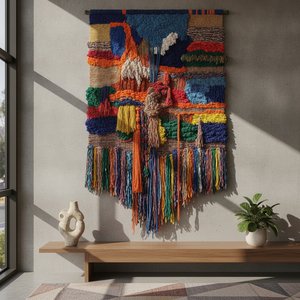
Bold Threads: The Ultimate Trend Forecast for High-Impact Textile Art in Modern Interiors
Level up your space with the texture revolution. Explore our trend forecast on high-impact textile art—from bold geometric patterns to woven narratives. Discover how to move beyond flat canvas and create a high-energy, 3D aesthetic for modern, design-conscious interiors.

The Enduring Appeal of Geometric Patterns in Art: A Historical & Contemporary Exploration
Explore the captivating history of geometric abstraction in art, from ancient roots to contemporary masters. Expert insights for collectors & enthusiasts. Discover key artists, movements & investment potential.

Geometrisen abstraktion mestariteokset: Taidetta kotiin OriginalUniqueArtilta
Tutustu geometrisen abstraktion 10 mestariteokseen! Piet Mondrian, Kandinsky ja muut taiteilijat muovasivat modernin taiteen historiaa. Löydä inspiraatiota kotiisi OriginalUniqueArtilta – laadukkaat taideprintit ja sisustusehdotukset odottavat. Tutki kokoelma verkossa!


