Esikatselu
 Jaa
Jaa Jaa
Jaa
 Tarkemmat tiedot

 Lataa
Lataa
 Samanlaisia
 Röntgenkuva
 Diaesitys
 Tilastot
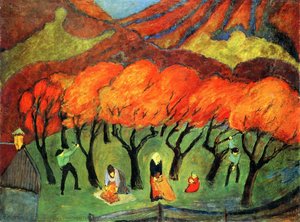
The Monk
 1932
1932 110.0 x 80.0 cm
 Museo Comunale D'arte Moderna
 Näytä lisää
Giclée-printit ja taideprintit
Museolaatuisia giclée- tai kankaitaulun tulosteita nopealla tuotannolla ja joustavilla viimeistelyvaihtoehdoilla. ( Osta käsintehty maalaus Siirry digitaaliseen kuvaan)




































Valitse valmiista mitoistamme sellaiset, jotka vastaavat teoksen alkuperäisiä mittasuhteita.

Voit syöttää omat mitat sopiaksesi tiettyyn kehykseen tai tilaan. Jos valittu koko ei vastaa alkuperäisen kuvan mittasuhteita, rajaamme teosta tai laajennamme kuvaa peilatulla tai yhtenäisellä reunalla. Digitaalinen mallikuva lähetetään hyväksyttäväksi ennen tuotannon aloittamista.
Huomaathan, että näytöllä näkyvä esikatselu ei vastaa lopullista rajausta tai laajennusta. Vain mallikuva näyttää lopullisen sommittelun tarkasti.
Vaikka räätälöityjä kokoja on saatavilla, suosittelemme valitsemaan mitat valmiista listasta alkuperäisten mittasuhteiden säilyttämiseksi.
Toimitus maailmanlaajuisesti () kahdessa viikossa tavallisen 4–5 viikon sijaan. (17 syyskuu)

Ilmainen pikatoimitus ympäri maailman

Korkealaatuinen pellavakangas

Kattava kuljetusvakuutus

Tulliveron palautustakuu

Täydellinen värien vastaavuustakuu

100 päivän palautusoikeus (vain valmistusvirheet)

100% rahat takaisin -takuu

Määräalennus tarjous
 Lasivaihtoehto on saatavilla vain alle 110 cm kokoisina teoksina

The Monk
Giclée-printit ja taideprintit
Replikaatin koko
-


Kokonaishinta
$ 80
Taiteilijan elämäkerta
Marianne von Werefkin – A Pioneer of Expressionism: The Life and Art of Marianne von Werefkin
Marianne von Werefkin, born Marianna Wladimirowna Werjowkina in Tula, Russia, in 1860, stands as a pivotal yet often overlooked figure in the genesis of Expressionism. Her journey was one of relentless artistic exploration, personal sacrifice, and unwavering dedication to her craft, unfolding against the backdrop of immense social and political change. Born into a family steeped in military tradition – her father, General Vladimir Werefkin, and her mother, Yelizaveta Daragan, an amateur painter herself – young Marianna displayed an early inclination towards art, beginning to paint at the age of fourteen following a period of illness. These initial works were not mere depictions of the visible world but rather visualizations of inner visions, hinting at the deeply personal and emotive core that would define her later artistic output. Formal training followed, most notably under the tutelage of Ilya Repin in St. Petersburg, where her talent was immediately recognized. Repin’s influence instilled within her a foundation in Russian Realism, a style she initially embraced, focusing on portraiture and scenes from contemporary life.Early Years and Artistic Beginnings
Marianna Werjowkina's formative years were marked by both privilege and hardship. Her father’s position as a decorated military officer provided stability, yet the illness that gripped her youth profoundly impacted her artistic development. Despite overcoming significant physical challenges – namely a devastating hunting accident in 1888 which severely damaged her right hand – she persevered with unwavering determination, adapting her technique to work effectively with her left. This deliberate act of resilience would ultimately propel her toward groundbreaking stylistic innovations. Recognizing her exceptional aptitude, Repin championed her ambition to pursue artistic education, securing her acceptance into St. Petersburg’s Imperial Academy of Arts. There, she honed her skills in realism and portraiture, absorbing the lessons of masters like Ilya Repin himself, establishing a solid grounding for her future explorations.From Realism to Expressionist Breakthrough
A dramatic turning point arrived in 1888 with a hunting accident that severely damaged Werefkin’s right hand. Forced to adapt and paint with her left, this physical challenge inadvertently propelled her towards new artistic horizons. While undergoing medical treatment in Germany, she encountered the burgeoning avant-garde movements of Western Europe, sparking a shift away from the constraints of Realism. This period marked the beginning of a profound stylistic evolution, as Werefkin began to explore Symbolist and ultimately Expressionist modes of expression. The influence of artists like Paul Gauguin and Louis Anquetin, with their emphasis on flattened forms and bold color, became increasingly apparent in her work. Simultaneously, she found resonance in the emotionally charged paintings of Edvard Munch, whose explorations of anxiety and alienation mirrored her own burgeoning artistic concerns. It was in Munich that Werefkin truly came into her own, becoming a central figure in a vibrant circle of artists including Wassily Kandinsky, Alexej von Jawlensky, Gabriele Münter, and Franz Marc – individuals who would collectively shape the landscape of early Expressionism.The Neue Künstlervereinigung München and Artistic Collaboration
Werefkin’s artistic vision was characterized by an intense focus on the human condition, particularly the experiences of women. Her paintings often depict figures – frequently female – set within evocative landscapes, imbued with a sense of psychological depth and emotional resonance. Social commentary frequently underpinned her work, reflecting her keen awareness of societal inequalities and injustices. However, her explorations extended beyond the purely social; Werefkin was deeply interested in spirituality and the search for meaning in a rapidly changing world. This is evident in works like “Fantastic Night,” where dreamlike imagery and dramatic composition create an atmosphere of mystery and introspection. Her later style, developed during her years in Ascona, Switzerland (where she settled after the outbreak of World War I), became increasingly bold and simplified, characterized by vibrant colors and flattened forms. In 1909, she co-founded the Neue Künstlervereinigung München (NKVM), a group that served as a crucial precursor to the more famous Blue Rider collective. This collaborative endeavor fostered artistic exchange and solidified Werefkin’s position at the forefront of German Expressionism.Legacy and Recognition
For many years, Marianne von Werefkin’s contributions were overshadowed by those of her male contemporaries. Her complex relationship with Alexej von Jawlensky – marked by both artistic collaboration and personal hardship – often relegated her to the role of a supporting figure in his narrative. However, in recent decades, there has been a growing recognition of her unique artistic voice and pivotal role in the development of Expressionism. She was not merely an associate of Kandinsky and Jawlensky; she was a driving force behind the movement’s intellectual and aesthetic innovations, a pioneering theorist who fostered artistic exchange through her influential salon in Munich. Her bold use of color, expressive brushwork, and unflinching exploration of human emotion have resonated with subsequent generations of artists exploring abstraction and emotional intensity. Werefkin's legacy extends beyond her paintings; she stands as an inspiring example of a woman artist who overcame significant obstacles to pursue her creative vision, paving the way for future generations of female painters to claim their rightful place in art history. Her work continues to captivate and challenge viewers, reminding us of the power of art to illuminate the complexities of the human experience. ## Key Works- Self-Portrait in a Sailor's Blouse (1893): An early example showcasing her realist skills and strong personality.
- Fantastic Night (circa 1906-1907): A tempera painting that blends reality with fantasy, demonstrating her move towards Expressionism.
- The Living and the Dead (1915): Reflects themes of mortality and spirituality during a turbulent period.
- Meeting (1916): A work that exemplifies her simplified forms and vibrant color palette.

Marianna Werjowkina
1860 - 1938 , Россия
Pikatiedot
- Artistic Movement Or Style: Expressionismi
- Artists Or Movements Influenced By This Artist: ['Edvard Munch']
- Artists Who Influenced This Artist:
- Ilya Repin
- Paul Gauguin
- Date Of Birth: 29 elokuuta 1860
- Full Name: Marianne Vladimirovna Werefkin
- Nationality: Venäjän kansalainen
- Notable Artworks:
- Ave Maria
- Fantastinen yö
- Place Of Birth: Tula, Venäjä