

 Esikatselu
 Jaa
Jaa Jaa
Jaa
 Tarkemmat tiedot

 Lataa
Lataa
 Samanlaisia
 Röntgenkuva
 Diaesitys
Play


 Näytä lisää
Osta korkearesoluutioinen, parannettu digitaalikuva, joka on laadultaan huomattavasti parempi kuin verkkosivuston esikatselu.
Jokainen tiedosto valmistellaan huolellisesti omien asiantuntijoidemme toimesta käyttäen edistyneitä työkaluja ja ammattitaitoista manuaalista retusointia. Varmistamme, että jokaisessa kuvassa on poikkeuksellinen selkeys, tarkka värintoisto ja hienovaraiset yksityiskohdat.
Lopputiedosto toimitetaan sähköpostitse 72 tunnin kuluessa, ja se on optimoitu välittömään käyttöön ammattimaisissa, toimituksellisissa ja painoympäristöissä. Laatu on sama, johon huipputason suunnittelustudiot, kustantajat ja galleriat luottavat.
Digitaalinen kuva
Lataa korkearesoluutioinen tiedosto henkilökohtaiseen näyttelyyn, tulostamiseen ja luoviin projekteihin. ( Osta printti Osta käsintehty maalaus)
Sisältyy jokaiseen digitaalisen kuvan tilaukseen
Asiantunteva digitaalinen toimitus, taattuun laatuun
Kun valitset OriginalUniqueArt.com-palvelun, et saa vain kuvaa – saat ammattimaisesti parannetun digitaalisen taideteoksen, joka on luotu tarkkuudella ja jonka takaa tulee tyytyväisyystakuu. Tässä on kaikki, mitä tilauksesi sisältää, automaattisesti:

Nopea digitaalinen toimitus
Korkearesoluutioinen digitaalinen kuvatiedostosi lähetetään sähköpostiisi 72 tunnin kuluessa tilauksesta – valmiina käytettäväksi välittömästi.

Tekoälyllä parannettu digitaalinen tiedosto
Taiteilijasi teos on optimoitu ammattimaisesti edistyneiden tekoälytyökalujen ja manuaalisen muokkauksen avulla, mikä takaa maksimaalisen yksityiskohtaisuuden, selkeyden ja väritarkkuuden.

Ilmainen elinikäinen uudelleenlähetyspalvelu
Oletko vahingossa poistanut tai kadottanut tiedostosi? Ei hätää – lähetämme sen sinulle uudelleen milloin tahansa täysin maksutta.

Ei tuontimaksuja – koskaan
Nauti taiteestasi välittömästi ilman tulleja, veroja tai toimitusmaksuja – digitaaliset lataukset ovat aina verovapaita.

Värintoiston tarkkuustakuu
Varmistamme, että digitaalinen kuvasi vastaa alkuperäisiä värejä mahdollisimman tarkasti käyttämällä ammattilaistason työkaluja ja värinhallintaa.

60 päivän tyytyväisyystakuu
Jos et ole tyytyväinen digitaaliseen kuvaasi, muokkaamme sitä tai palautamme 100% takaisin 60 päivän kuluessa – ilman kysymyksiä.

100% Rahat takaisin -takuu
Etkö ole tyytyväinen? Saat täyden hyvityksen 60 päivän kuluessa digitaalisen tiedostosi vastaanottamisesta – ilman kyselyitä.

Suurtilaaja-alennukset
Osta 3 kuvaa, säästä 10% - Osta 5, säästä 15% - Osta 10+, säästä 20%. Erinomainen valinta luoviin projekteihin, gallerioille ja toimistoille.
A Moment of Controlled Chaos: Marcel Duchamp’s “Play” (1902)
Marcel Duchamp's "Play," painted in 1902, is more than just a depiction of a woman playing tennis; it’s a carefully constructed meditation on the very nature of artistic creation and perception. This seemingly straightforward scene – a female figure poised mid-swing with a tennis racket – immediately reveals itself to be a pivotal work within Duchamp's burgeoning rebellion against traditional artistic conventions. The painting, imbued with a distinctly vintage aesthetic, speaks volumes about the artist’s evolving approach, moving beyond mere representation towards a conceptual engagement with the subject matter.
The Birth of Conceptual Art
Created during a period of intense experimentation within the European art world – encompassing Impressionism, Post-Impressionism, and the nascent movements of Cubism – “Play” anticipates Duchamp’s later embrace of Dada and his groundbreaking role as one of the first conceptual artists. Duchamp's decision to paint this scene, rather than meticulously rendering it with traditional techniques, signals a deliberate shift in focus. He isn’t interested in capturing an objective reality; instead, he is exploring the *idea* of tennis, the act of play itself, and the viewer’s interpretation of that action.
- Subject Matter: The central figure embodies both grace and tension, a visual paradox that invites contemplation.
- Composition: The carefully arranged balls – one strategically placed near the top left corner, another towards the bottom right – disrupt any sense of naturalistic perspective, further emphasizing the artwork’s conceptual intent.
Technique and Style – A Calculated Simplicity
Duchamp's technique in “Play” is characterized by a remarkable restraint. The brushstrokes are loose and confident, suggesting a deliberate avoidance of excessive detail. This simplicity isn’t a sign of carelessness; rather, it’s a calculated choice that amplifies the painting’s impact. The muted color palette – predominantly earthy tones with subtle hints of white – contributes to the vintage feel and adds to the overall sense of quiet contemplation. The artist's skill lies not in technical virtuosity but in his ability to distill an idea into its purest form.
Symbolism and Emotional Resonance
Beyond the literal depiction of a tennis game, “Play” carries significant symbolic weight. The act of play itself represents a release from constraint, a moment of unburdened joy and spontaneity – qualities that Duchamp increasingly sought to explore in his work. The woman’s posture suggests both power and vulnerability, inviting viewers to consider the complexities of human experience. It's a scene frozen in time, capturing an ephemeral moment of intense concentration and potential victory.
A Legacy of Innovation
"Play" stands as a crucial early work by Marcel Duchamp, demonstrating his nascent desire to challenge established artistic norms. Its influence can be seen throughout the 20th century, paving the way for movements like Dada and Surrealism. Today, this painting remains a powerful testament to Duchamp’s revolutionary spirit – a reminder that art can be found not just in what is created, but also in what is questioned.
Taiteilijan elämäkerta
Marcel Duchamp: A Revolutionary Spirit
Marcel Duchamp, born Henri-Robert-Marcel Duchamp in 1887 in Blainville-Crevon, Normandy, was more than an artist; he was a philosophical provocateur who fundamentally altered the course of modern art. His early life, though seemingly conventional – nurtured within a family that appreciated artistic expression with both brothers pursuing successful careers as artists – hinted at the iconoclasm to come. Duchamp initially pursued formal training, mastering traditional techniques and experimenting with post-impressionist styles. However, this academic foundation served not as an end in itself, but as a springboard for questioning the very nature of art, its purpose, and its definition. He wasn’t content merely to depict the world; he sought to challenge how we perceive it, and what constitutes artistic value. This restless intellectual curiosity would become the defining characteristic of his prolific career.Early Artistic Explorations: Cubism and Impressionism
Duchamp's initial foray into art began with a fascination for Impressionism, absorbing influences from artists like Monet and Sisley. He diligently honed his painting skills, capturing fleeting moments of light and color with meticulous detail – a technique that would later inform his approach to more conceptual endeavors. Yet, he quickly recognized the limitations of representational art, perceiving it as an attempt to impose order onto a chaotic reality. This realization propelled him toward Cubism, spearheaded by Picasso and Braque, where he embraced fragmented forms and multiple perspectives. *Portrait of Chess Players* (1911) exemplifies this stylistic shift, demonstrating Duchamp’s willingness to experiment with innovative visual strategies. The influence of Cézanne's geometric simplification further solidified his commitment to exploring new artistic possibilities.The Dadaist Rebellion: Challenging Artistic Conventions
The horrors of World War I profoundly impacted Duchamp’s worldview, fueling a deep disillusionment with societal values and artistic traditions. He abandoned academic pursuits altogether, joining the ranks of Dadaists – artists who vehemently rejected logic, reason, and bourgeois morality. This movement sought to dismantle established norms and expose the absurdity of cultural pretensions. Within Dadaism, Duchamp unleashed his subversive genius, rejecting beauty as an aesthetic criterion and prioritizing conceptual provocation. His aim wasn’t to create aesthetically pleasing objects; it was to disrupt viewers' perceptions and incite critical reflection. The infamous *Fountain* (1917), a porcelain urinal signed “R. Mutt,” epitomized this radical stance—a deliberate affront to artistic conventions that sparked considerable controversy and cemented Duchamp’s place in art history.The Birth of Conceptual Art: Beyond Representation
Duchamp's groundbreaking contribution to the art world was arguably his pioneering role in establishing Conceptual Art. He dismantled the traditional distinction between artwork and object, arguing that the artist’s idea—the concept behind the work—was paramount. This perspective fundamentally shifted artistic priorities away from visual appearance toward intellectual inquiry and philosophical exploration. Works like *The Large Glass* (1915–1923), a monumental assemblage incorporating glass panels, mirrors, and enamel paint, exemplify this preoccupation with complex symbolism and intricate craftsmanship. The meticulous construction of the Glass underscored Duchamp’s belief in the transformative power of artistic process—a deliberate rejection of spontaneous creativity in favor of carefully considered conceptual frameworks.Legacy and Enduring Influence
Marcel Duchamp's impact on subsequent generations of artists is undeniable. He irrevocably altered our understanding of art, advocating for a shift from visual representation to intellectual contemplation. His unwavering conviction that art should reside in the mind—not merely in the eye—continues to inspire artists today.- Cubism: Early exploration of fractured forms and spatial representation.
- Dadaism: Rejection of logic, reason, and traditional artistic values in response to World War I.
- Conceptual Art: Emphasis on the idea behind the artwork rather than its aesthetic qualities.
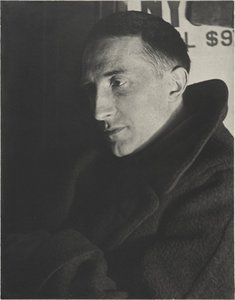
Marcel Duchamp
1887 - 1968 , Ranska
Lyhyesti esiteltynä
- Artistic Movement Or Style:
- Kubismi
- Dadaismi
- Artists Or Movements Influenced By This Artist: ['Kubismi']
- Date Of Birth: 28 heinäkuuta 1887
- Date Of Death: 2 oktoberia 1968
- Full Name: Marcel Duchamp
- Nationality: Ranskalainen-Amerikkalainen
- Notable Artworks:
- Fontana
- L.H.O.O.Q.
- Suuri lasi
- Place Of Birth: Blainville, Ranska

