

 Katso seinällä
 Lähetä
 Jaa
Jaa
 Tarkemmat tiedot
 Opas
Opas

 Lataa kuva
 Samanlaisia kohteita
 Röntgenkuvaus
 Diaesitys
 Tilastot
Nainen alas portaikkoa
 Öljyväri kankaalle
- Seinätaide
- Cubist Revolution
 1912
1912- Modernismi
 89.0 x 147.0 cm
 Philadelphia Art Museum
 Lue lisää
Tällä sivulla esitettyä taideteosta suojaa tekijänoikeuslaki, mikä tarkoittaa, ettemme voi laillisesti luoda tai myydä täsmälleen samanlaista jäljennöstä. Tämä suoja toteutetaan kansainvälisten sopimusten, kuten esimerkiksi Berne-konventio ja kansallisilla laeilla, mukaan lukien niillä määritellyt Yhdysvaltain tekijänoikeuslaki – Luku 17. Kaikki oikeudet pidätetään. Luvaton kopiointi tai jäljittely on kielletty.
Tämä menetelmä noudattaa täysin tekijänoikeussäännöksiä, sillä se ei sisällä suojatun taideteoksen kopioimista tai jäljentämistä. Sen sijaan kyseessä on luova uudelleentulkinta – uusi maalaus, joka ammentaa vaikutteita alkuperäisestä, mutta ei ole sen identtinen kopio.
Giclée- ja taideprintit
Museolaatuisia giclée- tai kankaitaulun tulosteita nopealla tuotannolla ja joustavilla viimeistelyvaihtoehdoilla. ( Tilaa käsinmaalattu jäljennös Siirry digitaaliseen kuvaan)




P118B €10

P118H €10

P118W €10

P438Z €10

P508JH €12

P508YH €12

P805H €10

P805Z €10

P919BZ €10

P919G €10

P919XJ €10

P959ZH €10

P968JZ €12

W106C €8

W218G €10

W218JH €8

W218Y €10

W307PJ €10

W316G €10

W316PJ €8

W316Y €10

W398PJ €8

W4111J €10

W500HY €15

W500JH €15

W692G €12

W849H €8

W940BG €15

W953PJ €8




Valitse valmiista mitoistamme sellaiset, jotka vastaavat teoksen alkuperäisiä mittasuhteita.

Kirjoita tarvitsemasi leveys ja korkeus, jotta tuloste sopii kehyskokoon tai seinällesi. Tulostetta voidaan vain leikata, sitä ei voi koskaan tehdä suuremmaksi kuin alkuperäinen kuva, joten eri muotoinen koko aiheuttaa osan kuvasta katoamisen. Lähetämme sinulle digitaalisen mallikuvan hyväksyttäväksi ennen kuin aloitamme tulostuksen. Tällä sivulla näkyvä kuva ei näytä lopullista leikkausta — vain mallikuva näyttää sen.
Maailmanlaajuinen toimitus () 2 viikossa tavallisen 4–5 viikon sijaan. (25 lokakuu)

Ilmainen pikatoimitus ympäri maailman

Korkealaatuinen pellavakangas

Kattava kuljetusvakuutus

Tulliveron palautustakuu

Takuu täydellisestä värien vastaavuudesta

100 päivän palautusoikeus valmistusvirhetapauksissa

100% rahat takaisin -takuu

Määräalennus saatavilla
 Lasivaihtoehto on saatavilla vain alle 110 cm kokoisille teoksille

Nainen alas portaikkoa
Giclée- ja taideprintit
Replikaatin koko
-


Kokonaishinta
€ 70
Vallankumouksellinen kubistinen mestariteos
Marcel Duchampin ”Nude Descending a Staircase, No. 2” (1912) on ikoninen teos, joka haastaa perinteiset käsitykset muodosta ja perspektiivistä. Tämä mullistava maalaus on kubistisen suuntauksen täydellinen esimerkki; se pyrki kuvaamaan kohteita useista eri näkökulmista samanaikaisesti. Teoksen fragmentoitunut, geometrinen sommitelma vangitsee liikkeen olemuksen, mikä tekee siitä käänteentekevän palasen modernin taidehistorian polulla.
Dynaaminen sommitelma ja tekniikka
Maalaus koostuu monimutkaisesta, sisäkkäisten kartioiden ja sylinterien muodostamasta abstraktista elementtien verkostosta, joka vihjaa rytmiin ja liikkeeseen. Duchamp hyödyntää teräviä, kulmikkaita linjoja ja päällekkäisiä muotoja luodakseen syvyyden ja kolmiulotteisuuden tuntua. Hillitty väripaletti, jota hallitsevat okran ja ruskean sävyt, antaa teokselle ajattoman laadun. Läpikuultavat maalikerrokset tuovat esiin teoksen tekstuurin, mikä vahvistaa sen aistillista vetovoimaa.
Historiallinen konteksti ja vaikutus
Kun tämä maalaus esitettiin Pariisin Salon des Indépendants -näyttelyssä vuonna 1912, kubistit hylkäsivät sen aluksi, koska he pitivät sitä liian futuristisena. Teos saavutti kuitenkin valtavan suosion New Yorkin vuoden 1913 Armory Show’ssa, missä se herätti laajaa kohua ja keskustelua. Duchampin innovatiivinen tapa kuvata liikettä vaikutti myöhempiin taidesuuntauksiin, kuten futurismiin ja dadaismiin.
Symboliikka ja emotionaalinen vaikutus
Hahmon pirstaleinen luonne symboloi modernin kokemuksen monimutkaisuutta ja moninaisuutta. Muotojen ja linjojen dynaaminen vuorovaikutus välittää energiaa ja elinvoimaa, kutsuen katsojaa pohtimaan ajan ja liikkeen virtaavuutta. Duchampin käyttö useista perspektiiveistä haastaa katsojan kohtaamaan teoksen älyllisellä tasolla, mikä tekee siitä ajatuksia herättävän lisän mihin tahansa taidekokoelmaan.
Miksi valita tämä reproduktio?
Ota omaksesi pala taidehistoriaa korkealaatuisella ”Nude Descending a Staircase, No. 2” -reproduktiollaan. Se on täydellinen valinta taiteen ystäville, keräilijöille ja sisustussuunnittelijoille, jotka haluavat tuoda modernistista eleganssia koteihinsa. Tämä mestariteos toimii huomiota herättävänä keskipisteenä missä tahansa huoneessa, käynnistäen keskusteluja ja herättäen ihailua.
Kysymykset ja vastaukset
Kuinka vanha Marcel Duchamp oli, kun "Nainen alas portaikkoa" luotiin?
Kun "Nainen alas portaikkoa" luotiin vuonna 1912, Marcel Duchamp (syntynyt 1887) oli 25 vuotias.
Millaista väriharmoniaa Marcel Duchamp:n "Nainen alas portaikkoa" edustaa?
Marcel Duchamp:n "Nainen alas portaikkoa" esittää Epäsointuva väripaletti väriharmoniaa.
Mikä on teoksen "Nainen alas portaikkoa" formaatti?
Teoksen "Nainen alas portaikkoa" formaatti on Korkea. Tämä on hyödyllinen tieto, kun suunnittelet jäljennöksen sijoituspaikkaa.
Taiteilijan elämäkerta
Marcel Duchamp: A Revolutionary Spirit
Marcel Duchamp, born Henri-Robert-Marcel Duchamp in 1887 in Blainville-Crevon, Normandy, was more than an artist; he was a philosophical provocateur who fundamentally altered the course of modern art. His early life, though seemingly conventional – nurtured within a family that appreciated artistic expression with both brothers pursuing successful careers as artists – hinted at the iconoclasm to come. Duchamp initially pursued formal training, mastering traditional techniques and experimenting with post-impressionist styles. However, this academic foundation served not as an end in itself, but as a springboard for questioning the very nature of art, its purpose, and its definition. He wasn’t content merely to depict the world; he sought to challenge how we perceive it, and what constitutes artistic value. This restless intellectual curiosity would become the defining characteristic of his prolific career.Early Artistic Explorations: Cubism and Impressionism
Duchamp's initial foray into art began with a fascination for Impressionism, absorbing influences from artists like Monet and Sisley. He diligently honed his painting skills, capturing fleeting moments of light and color with meticulous detail – a technique that would later inform his approach to more conceptual endeavors. Yet, he quickly recognized the limitations of representational art, perceiving it as an attempt to impose order onto a chaotic reality. This realization propelled him toward Cubism, spearheaded by Picasso and Braque, where he embraced fragmented forms and multiple perspectives. *Portrait of Chess Players* (1911) exemplifies this stylistic shift, demonstrating Duchamp’s willingness to experiment with innovative visual strategies. The influence of Cézanne's geometric simplification further solidified his commitment to exploring new artistic possibilities.The Dadaist Rebellion: Challenging Artistic Conventions
The horrors of World War I profoundly impacted Duchamp’s worldview, fueling a deep disillusionment with societal values and artistic traditions. He abandoned academic pursuits altogether, joining the ranks of Dadaists – artists who vehemently rejected logic, reason, and bourgeois morality. This movement sought to dismantle established norms and expose the absurdity of cultural pretensions. Within Dadaism, Duchamp unleashed his subversive genius, rejecting beauty as an aesthetic criterion and prioritizing conceptual provocation. His aim wasn’t to create aesthetically pleasing objects; it was to disrupt viewers' perceptions and incite critical reflection. The infamous *Fountain* (1917), a porcelain urinal signed “R. Mutt,” epitomized this radical stance—a deliberate affront to artistic conventions that sparked considerable controversy and cemented Duchamp’s place in art history.The Birth of Conceptual Art: Beyond Representation
Duchamp's groundbreaking contribution to the art world was arguably his pioneering role in establishing Conceptual Art. He dismantled the traditional distinction between artwork and object, arguing that the artist’s idea—the concept behind the work—was paramount. This perspective fundamentally shifted artistic priorities away from visual appearance toward intellectual inquiry and philosophical exploration. Works like *The Large Glass* (1915–1923), a monumental assemblage incorporating glass panels, mirrors, and enamel paint, exemplify this preoccupation with complex symbolism and intricate craftsmanship. The meticulous construction of the Glass underscored Duchamp’s belief in the transformative power of artistic process—a deliberate rejection of spontaneous creativity in favor of carefully considered conceptual frameworks.Legacy and Enduring Influence
Marcel Duchamp's impact on subsequent generations of artists is undeniable. He irrevocably altered our understanding of art, advocating for a shift from visual representation to intellectual contemplation. His unwavering conviction that art should reside in the mind—not merely in the eye—continues to inspire artists today.- Cubism: Early exploration of fractured forms and spatial representation.
- Dadaism: Rejection of logic, reason, and traditional artistic values in response to World War I.
- Conceptual Art: Emphasis on the idea behind the artwork rather than its aesthetic qualities.
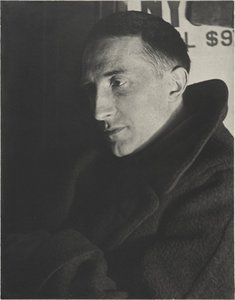
Marcel Duchamp
1887 - 1968 , Ranska
Tietoa taiteilijasta
- Artistic Movement Or Style:
- Kubismi
- Dadaismi
- Artists Or Movements Influenced By This Artist: ['Kubismi']
- Date Of Birth: 28 heinäkuuta 1887
- Date Of Death: 2 oktoberia 1968
- Full Name: Marcel Duchamp
- Nationality: Ranskalainen-Amerikkalainen
- Notable Artworks:
- Fontana
- L.H.O.O.Q.
- Suuri lasi
- Place Of Birth: Blainville, Ranska
Aiheeseen liittyvät artikkelit

Wassily Kandinskin 25 mestariteosta: Värien ja muodon syvä maailma | OriginalUniqueArt
Tutustu Wassily Kandinskin 25 vaikuttavinta teosta! Uppoudu abstraktin taiteen maailmaan, värien symboliikkaan ja modernin ekspressionismin historiaan. Löydä inspiraatiota kodin sisustukseen OriginalUniqueArt.com:ista – laadukkaat taideprintit ja reproduktiot.

Geometrisen abstraktion mestariteokset: Taidetta kotiin OriginalUniqueArtilta
Tutustu geometrisen abstraktion 10 mestariteokseen! Piet Mondrian, Kandinsky ja muut taiteilijat muovasivat modernin taiteen historiaa. Löydä inspiraatiota kotiisi OriginalUniqueArtilta – laadukkaat taideprintit ja sisustusehdotukset odottavat. Tutki kokoelma verkossa!

Beyond Form & Color: Geometric Abstraction's Evolution in 20th/21st Century Art
Explore the evolution of geometric abstraction from Cubism to contemporary art. Discover key artists like Malevich & Mondrian, investment insights, and expert collecting advice at OriginalUniqueArt.
Beyond Form: Exploring the Philosophical Foundations of Geometric Abstraction
Explore the philosophical roots & artistic evolution of geometric abstraction with OriginalUniqueArt. Discover Mondrian, Malevich, De Stijl & more. Expert insights for collectors and art enthusiasts.
Beyond Form & Color: Geometric Abstraction's Enduring Legacy in Art History
Explore the captivating world of geometric abstraction! Discover its origins, key artists like Malevich & Mondrian, and why this movement remains highly valued by art collectors today. Expert insights at OriginalUniqueArt.


