Expressionist Cubism
Lovers (Marc Chagall)
Marc Chagall (1887–1985) on luonut teoksen Lovers. Se kuuluu Expressionist Cubism-liikkeeseen. Se on valmistettu materiaalilla Acrylic On Canvas. Koko on 23 × 18 cm.
- Acrylic On Canvas
- 23 × 18 cm

 Esikatselu

 Käsinmaalattu öljymaalaus
 Jaa teos
 Jaa
 Tiedot-arkki


 Lataa kuva
 Samanlaisia kohteita
 Röntgenkuvaus
 Diaesitys
 Kysymykset ja vastaukset

 Tilastot
Lovers lyhyesti
- Otsikko
- Lovers
- Taiteilija
- Marc Chagall (1887–1985)
- Taiteilija syntynyt
- Ljozna, Valko-Venäjä
- Tekniikka
- Acrylic On Canvas
- Mitat
- 23 × 18 cm
- Tyylisuunta
- Expressionist Cubism
- Aihe
- love, kissing, chagall, romance, dreamlike, vitebsk
Mitä Lovers esittää?
A Dreamscape of Love and Longing: Marc Chagall’s “Lovers”
Marc Chagall's "Lovers," rendered in a captivating monochrome palette, isn’t merely a depiction of an intimate moment; it’s a portal into the artist’s deeply personal world—a realm where memory intertwines with myth and the familiar landscapes of his childhood bleed into fantastical visions. This evocative piece, often associated with Chagall's exploration of Russian folklore and Jewish identity, speaks to universal themes of love, connection, and the bittersweet ache of longing. The painting immediately draws the viewer in with its central focus: two figures locked in a tender embrace, their faces nearly touching within an oval frame that simultaneously protects and confines them.
The composition is deliberately flattened, eschewing traditional perspective for a more symbolic approach. Chagall’s signature style—a potent blend of Cubism, Expressionism, and Symbolism—is evident in the simplified forms and distorted features. The figures aren't rendered with photographic realism; instead, they are stylized representations imbued with emotional weight. Notice how their limbs flow organically, mirroring the undulating lines that define the background – a suggestion of rolling hills and perhaps even a distant village, hinting at Chagall’s roots in Vitebsk, Belarus. The three indistinct figures lurking in the periphery add to the dreamlike quality, acting as silent witnesses or perhaps echoes of past loves and experiences.
Technique and Materials: A Dance of Ink and Line
Examining the technique reveals a deliberate layering of textures achieved through meticulous hatching and cross-hatching. These subtle variations in tone create a sense of depth and volume, particularly noticeable in the rendering of the figures’ clothing and hair. The artist skillfully employed black ink or charcoal on paper, creating a surface that is both delicate and robust. The visible lines themselves become part of the artwork's narrative—a testament to the hand that brought this vision to life. It’s a technique reminiscent of his early training as a sign painter, grounding the fantastical elements in a tangible, almost tactile reality.
Interestingly, research into Chagall’s work reveals parallels with “Lovers’ Sky” (1957), another painting featuring intertwined figures against a vibrant, swirling backdrop. This suggests a recurring motif—the idea of love transcending earthly boundaries and soaring towards the heavens. The monochromatic palette in "Lovers" amplifies this sense of elevation, stripping away distractions and focusing solely on the emotional core of the scene.
Symbolism and Emotional Resonance
Beyond its visual appeal, “Lovers” is rich with symbolic meaning. The oval frame can be interpreted as a representation of intimacy, protection, or even imprisonment—a space where love exists in isolation. The close proximity of the figures’ faces underscores their profound connection, while the lack of explicit detail invites viewers to project their own experiences and emotions onto the scene. The painting evokes a powerful sense of nostalgia, a yearning for a lost moment or an idealized past.
Chagall himself often spoke of his childhood memories in Vitebsk—the vibrant colors, the bustling marketplaces, and the deep-seated traditions of his Jewish community. “Lovers” is arguably a distillation of these memories, filtered through the lens of his artistic vision. It’s a testament to the enduring power of personal experience to shape an artist's work and resonate with audiences across generations.
A Timeless Masterpiece for Home and Collection
Reproductions of “Lovers” offer a beautiful way to bring Chagall’s dreamlike world into your home. The artwork’s enduring appeal lies in its ability to evoke powerful emotions—a sense of romance, longing, and the beauty of human connection. Whether displayed as a statement piece in a contemporary space or incorporated into a more traditional setting, this captivating image will undoubtedly serve as a source of inspiration and contemplation for years to come. Consider a hand-painted reproduction – a faithful recreation that captures the essence of Chagall’s original vision, allowing you to experience the magic of “Lovers” firsthand.
Lovers korkearesoluutioiset kuvat

Protected by copyright: these files are for personal reference, not a licence to republish.
Marc Chagall, Lovers.
Kysymyksiä teoksesta Lovers, vastaukset
Mitä tekniikkaa Marc Chagall:n "Lovers" on käytetty?
"Lovers" on toteutettu tekniikalla Acrylic On Canvas.
Mikä on Marc Chagall:n "Lovers" todellinen koko?
Teoksen "Lovers" alkuperäiset mitat ovat 23 x 18 cm. Alkuperäiset mitat ovat hyödyllinen vertailukohta, kun valitset reproduktion kokoa.
Mitä Marc Chagall:n "Lovers" esittää?
Teoksen Marc Chagall:n "Lovers" teemoihin kuuluvat love, kissing, chagall, romance, dreamlike, vitebsk, symbolism. Yhdessä ne tiivistävät teoksen aiheen.
Onko teoksen Marc Chagall:n "Lovers" kuva vapaasti käytettävissä?
Tekijänoikeustiedot teokselle Marc Chagall:n "Lovers": teos on on edelleen tekijänoikeuden alainen. Tämä määrittää, voidaanko kuvasta tehdä vapaasti jäljennöksiä.
Kenen teokseksi "Lovers" on merkitty?
Teoksen "Lovers" taiteilija on Marc Chagall. Teos on luetteloitu Marc Chagall nimellä.
Mihin taidesuuntaukseen Marc Chagall:n "Lovers" kuuluu?
Teoksen Marc Chagall:n "Lovers" tyylisuunta on Expressionist Cubism. Tämä luokittelu sijoittaa teoksen muiden samankaltaisten taiteilijoiden ja teosten joukkoon.
Mihin Marc Chagall'n uran vaiheeseen "Lovers" kuuluu?
"Lovers" kuuluu Marc Chagall uran Mature Period-vaiheeseen. Tämä luokittelu yhdistää teoksen taiteilijan kehitysvaiheeseen.
Mikä selittää teoksen Marc Chagall:n "Lovers" tekijänoikeustilanteen?
Marc Chagalln teos "Lovers" on on edelleen tekijänoikeuden alainen. Tekijänoikeusajat lasketaan taiteilijan kuolinvuodesta, ja Marc Chagall kuoli vuonna 1985.
Miten teos "Lovers" sijoittuu osaksi Marc Chagall'n tuotantoa?
"Lovers" kuuluu Marc Chagall:n Expressionist Cubism-kauden tuotantoon, jonka tunnettuun teemaan kuuluvat folklore, jewish tradition, dreams, russian culture, vitebsk memories, cubism, expressionism, symbolism."
Tietoa taiteilijasta, Marc Chagall
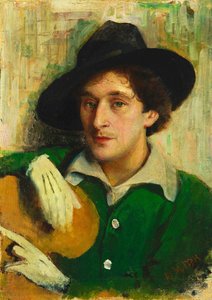
1887–1985, Valko-Venäjä
Marc Chagall
Early Life, Family and Training Marc Chagall enters the world on July 7, 1887, in Vitebsk, Russian Empire, born Moishe Segal. He is the first of nine children in a modest Jewish family. Life is defined by the rhythms of labor and small-scale commerce. His father, Khatskel Segal, works as a herring pickler at a warehouse, while his mother, Feïga-Ita Tchernina, manages a small grocery store.
Tietoa kohteesta Marc Chagall Marc Chagalln merkittävimpiä teoksia
Myös Marc Chagall -teoksia
 Minä ja kylä1911
 Valkoinen ristiinnaulitseminen1938
 Syntymäpäivä1915
 Ylöpässä1918
Esseitä teoksesta Lovers
 Belarusian artworks of the 1960sIconic Belarusian artworks of the 1960s, including masterpieces by Marc Chagall. Explore the full collection online at OriginalUniqueArt.co…
 Shadow and Sanguine: The Technical Mastery of Chiaroscuro and Red Chalk in Fine ArtMaster the technical secrets of chiaroscuro and red chalk through historical analysis. Explore the science of light and shadow today.
 Dreaming in Color: The 25 Most Iconic Masterpieces by Marc ChagallStep into the dreamlike world of Marc Chagall. Explore 25 iconic masterpieces, from vibrant surrealist tales to soulful folklore. Find insp…