
 Esikatselu
 Jaa teos
 Jaa
Jaa
 Tiedot
 Opas
Opas

 Lataa kuva
 Samanlaisia kohteita
 Röntgenkuvaus
 Diaesitys
 Kysymykset ja vastaukset
 Tilastot
Portrait of Anna Codde

- 86.0 x 66.0 cm


 Lue lisää
Giclée- ja taideprintit
Museolaatuisia giclée- tai kankaitaulun tulosteita nopealla tuotannolla ja joustavilla viimeistelyvaihtoehdoilla. ( Osta käsinmaalattu taideteos Siirry digitaaliseen kuvaan)




P118B €10

P118H €10

P118W €10

P438Z €10

P508JH €12

P508YH €12

P805H €10

P805Z €10

P919BZ €10

P919G €10

P919XJ €10

P959ZH €10

P968JZ €12

W106C €8

W218G €10

W218JH €8

W218Y €10

W307PJ €10

W316G €10

W316PJ €8

W316Y €10

W398PJ €8

W4111J €10

W500HY €15

W500JH €15

W692G €12

W849H €8

W940BG €15

W953PJ €8




Valitse valmiista mitoistamme sellaiset, jotka vastaavat teoksen alkuperäisiä mittasuhteita.

Syötä tarvitsemasi leveys ja korkeus, jotta tuloste sopii kehyksiisi tai seinällesi. Tulostetta voidaan vain leikata, sitä ei voida koskaan suurentaa alkuperäistä kuvaa suuremmaksi, joten eri muotoinen koko aiheuttaa osan kuvasta katoamisen. Lähetämme sinulle digitaalisen mallikuvan hyväksyttäväksi ennen kuin aloitamme tulostuksen. Tällä sivulla näkyvä kuva ei näytä lopullista rajausta — vain mallikuva näyttää sen.
Maailmanlaajuinen toimitus () 2 viikossa tavallisen 4–5 viikon sijaan. (5 marraskuu)

Ilmainen pikatoimitus ympäri maailman

Korkealaatuinen pellavakangas

Kattava kuljetusvakuutus

Tulliveron palautustakuu

Takuu täydellisestä värien vastaavuudesta

100 päivän palautusoikeus (vain valmistusvirheet)

100% rahat takaisin -takuu

Määräalennus tarjolla
 Lasivaihtoehto on saatavilla vain alle 110 cm kokoisille teoksille

Portrait of Anna Codde
Giclée- ja taideprintit
Replikaatin koko
-


Kokonaishinta
€ 72
A Window into the Dutch Renaissance: The Portrait of Anna Codde
Maerten van Heemskerck’s “Portrait of Anna Codde,” painted in 1529, isn't merely a likeness; it’s a meticulously crafted tableau vivant – a snapshot of life within the burgeoning world of early Dutch Renaissance society. More than just a portrait, this work offers a rare glimpse into the domestic sphere, revealing a woman engaged in a timeless activity: spinning wool. The scene unfolds with quiet dignity and understated elegance, capturing not only Anna’s physical appearance but also her role as a skilled artisan and devoted wife – a common yet increasingly valued ideal within the Dutch merchant class of the era.
The painting immediately draws the eye to Anna herself, seated comfortably in a simple chair. Her long, flowing hair is partially arranged, suggesting a deliberate effort towards presentation, while her gaze is direct and engaging, inviting the viewer into her world. The spindle she holds isn’t just an object of craft; it's a symbol of domesticity, industry, and the woman’s vital contribution to the household economy. Her dress, though modest in style, speaks volumes about her status – a subtle indication of wealth and refinement. Notice the careful attention to detail in the rendering of her hands, demonstrating Heemskerck’s mastery of capturing texture and form.
The Painter's Palette: Technique and Style
Heemskerck’s style is immediately recognizable as a masterful blend of Italian Renaissance ideals with distinctly Dutch sensibilities. The influence of Jan van Scorel, his former teacher, is evident in the use of light and shadow – a technique known as *chiaroscuro* – which creates a sense of depth and volume within the composition. However, Heemskerck departs from the purely idealized forms often found in Italian portraits, opting for a more naturalistic approach that reflects the growing interest in portraying individuals with greater realism.
The painting’s color palette is restrained yet sophisticated, dominated by earthy tones – browns, ochres, and muted greens – which evoke the textures of the wool and the surrounding domestic environment. The background, featuring a chair and a clock on the wall, provides context without overwhelming the central figure. Heemskerck's skill lies not just in depicting individual features but also in creating a harmonious whole, where every element contributes to the overall narrative.
A Portrait of an Era: Historical Context
“Portrait of Anna Codde” was painted during a period of significant social and economic transformation in the Netherlands. The rise of merchant families like the Coddes fueled a burgeoning economy and a growing emphasis on wealth, status, and family lineage. Portraits became increasingly important as a means of documenting these achievements and solidifying one’s place within society. The inclusion of domestic scenes like this one was not uncommon; it served to portray the subject as both a successful businesswoman and a devoted wife – qualities highly valued in 16th-century Dutch culture.
Furthermore, the painting reflects the growing interest in secular portraiture during this time. While religious subjects remained important, artists began experimenting with depicting everyday life and capturing the personalities of their patrons. The meticulous detail and realistic portrayal of Anna Codde demonstrate Heemskerck’s commitment to portraying his subject with honesty and dignity.
Symbolism and Emotional Resonance
Beyond its technical merits, “Portrait of Anna Codde” is rich in symbolism. The spinning wheel represents not only her craft but also the woman's role as a provider for her household – a vital contribution to the family’s well-being. The clock on the wall serves as a reminder of time and the passage of life, subtly emphasizing the importance of cherishing each moment. The birds in the background, one near the top right corner and another towards the bottom left of the painting, may represent good fortune or simply add to the idyllic scene.
Ultimately, “Portrait of Anna Codde” is a poignant reminder of a bygone era – a time when domesticity was intertwined with prosperity and artistry. It’s a testament to Heemskerck's skill as a painter and his ability to capture not just a likeness but also the essence of a human being within her historical context. Reproductions of this captivating work offer a beautiful window into the heart of the Dutch Renaissance.
Kysymykset ja vastaukset
Onko Maerten Van Heemskerck:n "Portrait of Anna Codde" maalaus, piirros vai grafiikan lehti?
Maerten Van Heemskerck:n "Portrait of Anna Codde" on luokiteltu tyypiksi WallArt. Luokitus kertoo, minkä tyyppinen alkuperäisteos on kyseessä.
Missä voin nähdä alkuperäisen teoksen Maerten Van Heemskerck:n "Portrait of Anna Codde"?
Voit nähdä alkuperäisteoksen "Portrait of Anna Codde" kohteessa Rijksmuseum, Amsterdam, Netherlands.
Onko Maerten Van Heemskerck:n "Portrait of Anna Codde" vapaasti käytettävissä oleva teos?
Maerten Van Heemskerck:n "Portrait of Anna Codde" on vapaasti käytettävissä – tekijänoikeussuoja on päättynyt. Tämä tila määrittää, miten teoksen kuvaa saa käyttää uudelleen.
Taiteilijan elämäkerta
nuoruus ja taiteellinen koulutus
maerten van heemskerck, hollantilainen mestari ja merkittävä muotokuva- sekä uskonnollinen maalaaja, syntyi 1. kesäkuuta 1498 Heemskerkin kylässä Pohjois-Hollannissa. Hänen taiteellinen matkansa sai alkunsa Haarlemissa Cornelius Willemszin johdatuksessa, ja sitä seurasi lyhyt mutta merkittävä ajanjakso Delftissä Jan Lucaszin oppilaana. Lopulta hänestä tuli jan van scorelin oppilas, jolta hän omaksui tämän italialaisvaikutteisen tyylin, joka myöhemmin määritti hänen koko tuotantoaan.uran kohokohdat
- maerten van heemskerckin taideteokset tunnetaan niiden innovatiivisesta tavasta yhdistää hollantilaisia ja italialaisia vaikutteita, mikä näkyy selvästi hänen kuuluisassa perhemuotokuvassaan – teoksessa, jota pidetään ensimmäisenä laatuaan pitkässä hollantilaisessa perhemaalausten historiassa.
- Hänen yhteistyönsä antonio da sangallo nuoremman, battista francon ja francesco de' rossin (il salviati) kanssa Rooman porta san sebastianon uudistamisessa – triumfikaarena kunnioittamassa Kaarle V:tä – todistaa hänen poikkeuksellisesta nopeudestaan ja taidostaan lavastemaalarina.
- Heemskerckin piirrokset klassisista veistoksista ja arkkitehtuurista, jotka on nykyään säilytetty kahdessa luonnoskirjassa berliinin kupferstichkabinettissa, ilmentävät hänen kykyään vangita italialaisen taiteen todellinen olemus.
merkittävät teokset ja perintö
- lahjoittaja ja pyhä Maria Magdalena (katso OriginalUniqueArt-palvelussa)
- Neitsyt ja pyhä Johannes Evankelista (katso OriginalUniqueArt-palvelussa)
- Samson murtamassa temppelin pylväitä, maarten van heemskerck (katso OriginalUniqueArt-palvelussa)
johtopäätös
maerten van heemskerckin syvä vaikutus taidemaailmaan on kiistaton. Hänen teoksensa, jotka kuuluvat nykyään useiden museoiden kokoelmiin, kuten Rijksmuseumin varallisuuteen, jatkavat inspiroidaa taiteilijoita ja taiteen ystäviä ympäri maailmaa. Tutustuaksesi lisää hänen mestariteoksiinsa, vieraile maerten van heemskerckin sivulla OriginalUniqueArtssa. Syvemmän ymmärryksen saamiseksi hänen elämästään ja teoksistaan, tutustu hänen elämäkertansa Wikipedia-artikkeliin.
Maerten Van Heemskerck
1498 - 1574 , Alankomaat
Pähkinänkuoressa
- Artistic Movement Or Style: Mannerismi
- Artists Who Influenced This Artist:
- Jan van Scorel
- Antonio da Sangallo nuorempi
- Date Of Birth: 1. kesäkuuta 1498
- Date Of Death: 1. lokakuuta 1574
- Full Name: Maerten Jacobsz van Heemskerck
- Nationality: Hollantilainen
- Notable Artworks:
- Kristuksen kuoleman surunvalitus
- Pieter Jan Foppeszoon ja hänen perheensä
- Kristus kärsivänä miehenä
- Place Of Birth: Heemskerk, Alankomaat
Aiheeseen liittyvät artikkelit

Maerten van Heemskerck: Bridging Mannerism & Renaissance Ideals
Explore the captivating world of Maerten van Heemskerck, a pivotal Dutch Renaissance painter bridging Mannerism & Italian influence. Discover his masterpieces and legacy with OriginalUniqueArt.

Willem van de Velde the Elder: Master of Maritime Painting & Chronicler of the Dutch Golden Age
Discover the captivating maritime paintings of Willem van de Velde the Elder, a master chronicler of the Dutch Golden Age. Explore his unparalleled realism and lasting influence on naval art history.

Jan van Goyen: Master of Dutch Landscape & Atmospheric Perspective
Discover Jan van Goyen, the master of Dutch landscape painting. Explore his subtle technique, atmospheric realism & lasting influence on art history. Learn about this 17th-century pioneer at OriginalUniqueArt.
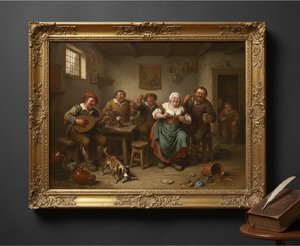
Adriaen van Ostade: A Master of Dutch Genre Painting & Social Commentary
Explore the life & work of Adriaen van Ostade, a leading Dutch Golden Age painter. Discover his realistic genre scenes, social commentary, and lasting influence on art history. Learn more at OriginalUniqueArt.

Rembrandtin mestariteokset: 25 taideteosta valokuvapainatuksina kotiisi | OriginalUniqueArt
Tutustu Rembrandtin 25 mestariteokseen – valokuvapainatuksina kotiisi! Uppoudu hollantilaisen kultakauden taiteeseen, varjoihin ja valoon. Löydä ikonisia muotokuvia ja historiallisia maalauksia OriginalUniqueArt.comista. Tutustu kokoelma!
