

 Katso seinällä
 Lähetä
 Jaa
Jaa
 Tarkemmat tiedot
 Opas
Opas

 Lataa kuva
 Samanlaisia kohteita
 Röntgenkuvaus
 Diaesitys
 Tilastot
Card Players
 Oil On Panel
- Renaissance Humanism
 1525
1525 40.0 x 50.0 cm
 Thyssen-Bornemisza Museo
 Lue lisää
Giclée- ja taideprintit
Museolaatuisia giclée- tai kankaitaulun tulosteita nopealla tuotannolla ja joustavilla viimeistelyvaihtoehdoilla. ( Tilaa käsinmaalattu jäljennös Siirry digitaaliseen kuvaan)




P118B €10

P118H €10

P118W €10

P438Z €10

P508JH €12

P508YH €12

P805H €10

P805Z €10

P919BZ €10

P919G €10

P919XJ €10

P959ZH €10

P968JZ €12

W106C €8

W218G €10

W218JH €8

W218Y €10

W307PJ €10

W316G €10

W316PJ €8

W316Y €10

W398PJ €8

W4111J €10

W500HY €15

W500JH €15

W692G €12

W849H €8

W940BG €15

W953PJ €8




Valitse valmiista mitoistamme sellaiset, jotka vastaavat teoksen alkuperäisiä mittasuhteita.

Kirjoita tarvitsemasi leveys ja korkeus, jotta tuloste sopii kehyskokoon tai seinällesi. Tulostetta voidaan vain leikata, sitä ei voi koskaan tehdä suuremmaksi kuin alkuperäinen kuva, joten eri muotoinen koko aiheuttaa osan kuvasta katoamisen. Lähetämme sinulle digitaalisen mallikuvan hyväksyttäväksi ennen kuin aloitamme tulostuksen. Tällä sivulla näkyvä kuva ei näytä lopullista leikkausta — vain mallikuva näyttää sen.
Maailmanlaajuinen toimitus () 2 viikossa tavallisen 4–5 viikon sijaan. (25 lokakuu)

Ilmainen pikatoimitus ympäri maailman

Korkealaatuinen pellavakangas

Kattava kuljetusvakuutus

Tulliveron palautustakuu

Takuu täydellisestä värien vastaavuudesta

100 päivän palautusoikeus valmistusvirhetapauksissa

100% rahat takaisin -takuu

Määräalennus saatavilla
 Lasivaihtoehto on saatavilla vain alle 110 cm kokoisille teoksille

Card Players
Giclée- ja taideprintit
Replikaatin koko
-


Kokonaishinta
€ 70
The Quiet Intensity of “Card Players” by Lucas van Leyden
Lucas van Leyden’s “Card Players,” painted in 1525, is more than just a depiction of a game; it's a meticulously crafted snapshot of a burgeoning social world. Often referred to as the "Genesis of a Game," this oil-on-panel work offers a rare glimpse into the lives and leisure activities of the early 16th century Netherlands – a period marked by both artistic innovation and profound societal shifts. Van Leyden, a master painter and engraver deeply influenced by both Italian Renaissance ideals and his native Flemish traditions, has created an image that resonates with quiet intensity and unspoken narratives, inviting viewers to contemplate the complexities of human interaction.
The painting’s origins are rooted in the evolving social landscape of Europe. As urban centers flourished, new forms of social engagement emerged, and card games – previously largely confined to aristocratic circles – began to gain popularity among merchants, artisans, and a rising middle class. Van Leyden brilliantly captures this transformation by presenting not a grand tournament or formal competition, but a private gathering—a moment of shared camaraderie amidst the everyday realities of life. The composition itself is carefully orchestrated; the three figures are arranged in a dynamic triangular formation, drawing the eye to each individual while simultaneously suggesting an interplay between them – a silent conversation unfolding beneath the surface.
A Study in Detail: Technique and Composition
Van Leyden’s technical mastery is immediately evident. Every detail, from the folds of the clothing to the glint of light on the cards, is rendered with painstaking precision. The artist employs a masterful use of chiaroscuro – the dramatic contrast between light and shadow – to sculpt the figures, creating a sense of depth and volume that draws the viewer into the scene. Notice how the dark background serves to isolate the players, intensifying their presence and emphasizing their engagement with the game. The meticulous rendering of textures—the rough weave of the robes, the smooth surface of the cards—adds a remarkable level of realism, while the subtle variations in color contribute to the overall sense of atmosphere.
Furthermore, Van Leyden’s compositional choices are deliberate and sophisticated. The triangular arrangement of figures creates visual stability and directs the viewer's eye across the canvas. The placement of the women, particularly the central figure with her elaborate headdress, subtly asserts a position of authority within the group—a reflection of the changing roles of women in society during this period. The use of perspective, though not entirely linear, contributes to the illusion of depth and space, further immersing the viewer in the scene.
Symbolism and Context: A Window into Renaissance Life
Beyond its technical brilliance, “Card Players” is rich in symbolic meaning. The game itself represents more than just a pastime; it symbolizes social status, wealth, and intellectual engagement. The piles of gold coins scattered on the table are a clear indication of prosperity and success—a key aspiration for many merchants and artisans during this era. The cards themselves can be interpreted as metaphors for chance, fortune, and the unpredictable nature of life. The quiet expressions on the faces of the players suggest a blend of concentration, anticipation, and perhaps even a touch of rivalry.
Moreover, the painting reflects the humanist ideals that were gaining prominence during the Renaissance. Van Leyden’s focus on human interaction and everyday life—rather than grand historical events or religious narratives—aligns with this broader cultural shift. The scene is not idealized; it's grounded in reality, offering a nuanced portrayal of social dynamics and the complexities of human relationships. The painting serves as a testament to the Renaissance fascination with observing and representing the world around us.
Emotional Resonance: A Moment Frozen in Time
“Card Players” possesses a remarkable emotional resonance that transcends its historical context. Despite the lack of overt drama, the painting evokes a sense of quiet intensity—a feeling of being privy to a private moment of connection and shared experience. The subtle expressions on the faces of the players invite viewers to speculate about their thoughts and feelings, creating a powerful sense of empathy. The scene is both familiar and enigmatic, capturing the timeless appeal of human interaction and the enduring fascination with games of chance.
Whether viewed as a historical document, an artistic masterpiece, or simply a captivating image, “Card Players” continues to resonate with audiences today—a testament to Lucas van Leyden’s skill as a painter and his profound understanding of the human condition.
Kysymykset ja vastaukset
Miten teos "Card Players" on valmistettu ja kuinka suuri se on?
Teoksen Lucas Van Leyden:n "Card Players" tekniikka on Oil On Panel, ja sen mitat ovat 40 x 50 cm.
Mitkä ovat alkuperäisen teoksen Lucas Van Leyden:n "Card Players" mitat?
Alkuperäisen teoksen Lucas Van Leyden:n "Card Players" mitat ovat 40 x 50 cm.
Onko "Card Players"-teoksen luoja Lucas Van Leyden tunnettu myös muilla nimillä?
Muita Lucas Van Leyden-nimelle, teoksen "Card Players" tekijälle, rekisteröityjä nimiä ovat Lucas Hugensz Van Leyden, Lucas Jacobsz..
Taiteilijan elämäkerta
Varhaiset Vuodet Ja Koulutus
Lucas van Leyden, hollantilainen taidemaalari ja piirtäjä, syntyi Leidenissä vuonna 1494. Hänen isänsä, Huygh Jacobsz, oli myös maalari, ja Lucas aloitti taiteellisen koulutuksensa isänsä johdolla. Vuonna 1508 hän liittyi Cornelis Engelbrechtszin työpajaan, jossa hän hioi taitojaan entisestään. Nämä varhaiset vuodet muovasivat Leydenin pohjan tulevalle taiteelliselle uralla, antaen hänelle sekä perinteisen käsityötaidon että mahdollisuuden kokeilla ja kehittää omaa ainutlaatuista tyyliään. Hänen nuoruudessaan Leiden oli vilkas kauppakeskus, joka tarjosi inspiraatiota ja uusia vaikutteita, mutta samalla myös haastoi taiteilijat luomaan jotain uutta ja erottuvaa.Taiteellinen Kehitys Ja Innovaatio
Lucas van Leyden oli yksi ensimmäisistä hollantilaisista genremaalauksen edustajista, ja hän osoitti poikkeuksellista taitoa myös piirtämisen alalla. Hänen varhaiset teoksensa (noin 1506-1512) ovat tunnusomaisia puolihenkilökuvistaan, jotka paljastavat jo hänen ennennäkemättömän omaperäisyytensä. Ajan myötä Leydenin maisemamaalaukset kehittyivät ja syvenivät, ja hän hallitsi piirtämisen tekniikan hämmästyttävän nuorena. Hänen varhaisin tunnettu piirustuksensa, Mohammed ja murhattu munkki (1508), todistaa hänen mestaruutensa tässä mediassa. Leydenin innovatiivinen lähestymistapa taiteeseen teki hänestä nopeasti merkittävän hahmon hollantilaisessa taidemaailmassa. Hän ei tyytynyt pelkästään jäljittelemään olemassa olevia tyylejä, vaan pyrki luomaan jotain uutta ja henkilökohtaista.Merkittäviä Teoksia Ja Tyyli
Lucas van Leydenin tuotantoon kuuluu seitsemäntoista varmasti hänelle attribuoitua maalausta. Näihin kuuluvat muun muassa Sokean miehen parantaminen Jerikossa, mestariteos, jossa on useita hahmoja rehevien metsämaisemien taustalla; Pyhä Paavali, joka osoittaa hänen piirustustaitonsa; ja kaiverrus Maitotyttö (1510), joka korostaa hänen varhaista taitoaan tässä mediassa. Leydenin tyyliä leimaavat raikkaat värit ja ilmavasti toteutettu perspektiivi, jota Albrecht Dürerkin arvosti. Hänen teoksissaan on usein huomattava psykologinen syvyys ja tarkka yksityiskohtien kuvaus, mikä tekee niistä erityisen vaikuttavia. Leydenin pyrkimyksenä oli vangita ihmisten tunteet ja elämän todellisuus hänen taiteessaan.Museokokoelmat Ja Perintö
Lucas van Leydenin töitä on esillä useissa museoissa, kuten Van Gogh -museossa (Alankomaat), jossa on laaja kokoelma hänen piirustuksiaan ja maalauksiaan. Verkkoalustat, kuten OriginalUniqueArt.com, tarjoavat kattavan valikoiman hänen teoksiaan, jolloin taiteen ystävät voivat tutkia hänen tuotantoaan yksityiskohtaisesti. Leydenin panos hollantilaiselle genremaalaukselle ja piirtämiselle on kiistaton. Hänen innovatiivinen tyylinsä ja tekninen taitonsa ovat tehneet hänestä arvostetun hahmon taidemaailmassa. Hollantilaisen taiteen uranuurtajana hänen perintönsä inspiroi edelleen taiteilijoita ja taiteen ystäviä ympäri maailmaa.- Tutustu Lucas van Leydenin teoksiin osoitteessa OriginalUniqueArt.com
- Tutustu Van Gogh -museon (Alankomaat) kokoelmaan verkossa
- Löydä lisää hollantilaista taidetta ja sen pioneereita osoitteessa OriginalUniqueArt.comin blogissa

Lucas Van Leyden
1494 - 1533 , Alankomaat
Tietoa taiteilijasta
- Kansallisuus: Hollantilainen
- Koko Nimi: Lucas Hugensz van Leyden
- Kuolinaika: 1533
- Merkittäviä Teoksia:
- Parantunut sokea mies
- Pyhä Paavali
- Maidontyttö
- Syntymäaika: Leiden, Alankomaat (1494)
- Syntymäpaikka: Leiden, Alankomaat
- Taidesuuntaus: Varhainen alankomaalainen renessanssi
- Taiteilijat Joihin Vaikutti: ['Saksalainen renessanssi']
- Vaikuttaneet Taiteilijat: ['Albrecht Dürer']
Aiheeseen liittyvät artikkelit

Jan van Goyen: Master of Dutch Landscape & Atmospheric Perspective
Discover Jan van Goyen, the master of Dutch landscape painting. Explore his subtle technique, atmospheric realism & lasting influence on art history. Learn about this 17th-century pioneer at OriginalUniqueArt.

Golden Light & Dutch Skies: The Timeless Magic of Dutch Golden Age Landscapes
Discover the breathtaking beauty of Dutch Golden Age landscapes. Explore the mastery of light, chiaroscuro, and 17th-century realism through an expert art history lens, celebrating the enduring legacy of the Dutch Masters for discerning collectors and art lovers.

Rembrandtin mestariteokset: 25 taideteosta valokuvapainatuksina kotiisi | OriginalUniqueArt
Tutustu Rembrandtin 25 mestariteokseen – valokuvapainatuksina kotiisi! Uppoudu hollantilaisen kultakauden taiteeseen, varjoihin ja valoon. Löydä ikonisia muotokuvia ja historiallisia maalauksia OriginalUniqueArt.comista. Tutustu kokoelma!

Lucas van Leyden: Innovation & Intimacy in Early Netherlandish Printmaking
Explore the groundbreaking prints of Lucas van Leyden, a Dutch master bridging Gothic detail & Renaissance innovation. Discover his rare works, investment potential, and legacy for discerning collectors.
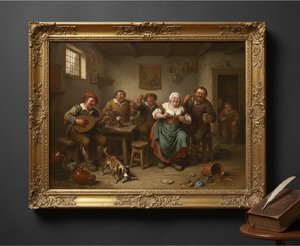
Adriaen van Ostade: A Master of Dutch Genre Painting & Social Commentary
Explore the life & work of Adriaen van Ostade, a leading Dutch Golden Age painter. Discover his realistic genre scenes, social commentary, and lasting influence on art history. Learn more at OriginalUniqueArt.
