

 Katso seinällä
 Lähetä
 Jaa
Jaa
 Tarkemmat tiedot
 Opas
Opas

 Lataa kuva
 Samanlaisia kohteita
 Röntgenkuvaus
 Diaesitys
 Tilastot
John Bright (1811–1889)
 Akryyli kankaalle
- Seinätaide
- Pre-Raphaelite Realism
 1873
1873 237.0 x 147.0 cm
 Touchstones Rochdale
 Lue lisää
Giclée- ja taideprintit
Museolaatuisia giclée- tai kankaitaulun tulosteita nopealla tuotannolla ja joustavilla viimeistelyvaihtoehdoilla. ( Tilaa käsinmaalattu jäljennös Siirry digitaaliseen kuvaan)




P118B €10

P118H €10

P118W €10

P438Z €10

P508JH €12

P508YH €12

P805H €10

P805Z €10

P919BZ €10

P919G €10

P919XJ €10

P959ZH €10

P968JZ €12

W106C €8

W218G €10

W218JH €8

W218Y €10

W307PJ €10

W316G €10

W316PJ €8

W316Y €10

W398PJ €8

W4111J €10

W500HY €15

W500JH €15

W692G €12

W849H €8

W940BG €15

W953PJ €8




Valitse valmiista mitoistamme sellaiset, jotka vastaavat teoksen alkuperäisiä mittasuhteita.

Kirjoita tarvitsemasi leveys ja korkeus, jotta tuloste sopii kehyskokoon tai seinällesi. Tulostetta voidaan vain leikata, sitä ei voi koskaan tehdä suuremmaksi kuin alkuperäinen kuva, joten eri muotoinen koko aiheuttaa osan kuvasta katoamisen. Lähetämme sinulle digitaalisen mallikuvan hyväksyttäväksi ennen kuin aloitamme tulostuksen. Tällä sivulla näkyvä kuva ei näytä lopullista leikkausta — vain mallikuva näyttää sen.
Maailmanlaajuinen toimitus () 2 viikossa tavallisen 4–5 viikon sijaan. (25 lokakuu)

Ilmainen pikatoimitus ympäri maailman

Korkealaatuinen pellavakangas

Kattava kuljetusvakuutus

Tulliveron palautustakuu

Takuu täydellisestä värien vastaavuudesta

100 päivän palautusoikeus valmistusvirhetapauksissa

100% rahat takaisin -takuu

Määräalennus saatavilla
 Lasivaihtoehto on saatavilla vain alle 110 cm kokoisille teoksille

John Bright (1811–1889)
Giclée- ja taideprintit
Replikaatin koko
-


Kokonaishinta
€ 70
John Bright (1811–1889): A Portrait of Moral Resolve
Lowes Cato Dickinson’s 1873 depiction of John Bright stands as a testament to Victorian England's fascination with portraiture and its commitment to documenting prominent figures shaping the nation’s intellectual landscape. Located at Touchstones Rochdale, this oil on canvas masterpiece transcends mere likeness; it embodies a profound exploration of character and conviction. Dickinson skillfully captures Bright’s solemn gaze and thoughtful posture within a dimly lit study setting—a deliberate choice that underscores his contemplative nature and intellectual pursuits.- Artist: Lowes Cato Dickinson (1862 – 1932)
- Year Painted: 1873
- Dimensions: 237 x 147 cm
- Location: Touchstones Rochdale, United Kingdom
- Medium: Oil on Canvas
Detailed Analysis: Technique and Style
Dickinson’s masterful brushwork contributes to the painting’s remarkable realism. He employs a glazing technique—applying thin layers of translucent paint over previous coats—to build up color gradually, achieving luminous effects that capture the nuances of light and shadow. This meticulous process ensures accuracy in depicting Bright's complexion and clothing textures. The artist’s careful attention to detail elevates the artwork beyond mere representation, transforming it into a compelling visual narrative.Historical Context: Victorian Moral Reform
Painted during the height of Victorian moral reform, John Bright’s portrait reflects the era’s preoccupation with ethical conduct and social justice. Bright was a prominent voice in advocating for universal suffrage and challenging prevailing prejudices—issues that fueled considerable debate within British society. Dickinson's depiction captures this intellectual fervor and underscores the importance of confronting societal injustices.Emotional Impact: Reflection and Resolve
Ultimately, John Bright (1811–1889) by Lowes Cato Dickinson resonates with viewers through its portrayal of inner contemplation and moral fortitude. The painting invites reflection on themes of integrity and conviction—qualities that remain relevant across generations. It serves as a poignant reminder of the power of intellect to inspire action and champion noble ideals.Kysymykset ja vastaukset
Mistä "John Bright (1811–1889)" on tehty ja millä tyylillä?
Lowes Cato Dickinson:n "John Bright (1811–1889)" yhdistää Akryyli kankaalle-tekniikan ja Pre-Raphaelite Realism-tyylin. Tekniikka ja tyylisuunta kuvaavat teoksen valmistustapaa ja tyyliä.
Mikä taiteilija ja mikä tyyli ovat takana teoksen "John Bright (1811–1889)"?
"John Bright (1811–1889)" on Lowes Cato Dickinsonn luoma teos, joka edustaa Pre-Raphaelite Realism-tyyliä. Taiteilija ja tyylisuunta määrittelevät teoksen perinteet.
Mitkä värit hallitsevat teosta Lowes Cato Dickinson:n "John Bright (1811–1889)"?
Lowes Cato Dickinson:n "John Bright (1811–1889)"-teoksessa käytetään Maanläheinen väripalettia, jossa Espresso (#40311c) on hallitseva väri.
Taiteilijan elämäkerta
A Life Etched in Portraits: The World of Lowes Cato Dickinson
Lowes Cato Dickinson, born in Kilburn, London, in 1819, was a figure deeply embedded within the artistic and social currents of Victorian England. Coming from a family intimately connected to the art world—his father, Joseph Dickinson, being a respected lithographer and publisher on Bond Street—Dickinson’s path seemed preordained. Yet, his journey wasn't merely one of inheritance but of active engagement with the evolving aesthetic sensibilities and progressive social movements of his time. One of eleven siblings, he received his early education at Topsham School and Dr Lord's School in Tooting, grounding him in a solid foundation before fully immersing himself within the family business following his father’s death in 1849. He then joined forces with his brothers, Gilbert Bell Dickinson and William Robert Dickinson, to continue the legacy of Dickinson Brothers on Bond Street, a firm that quickly became synonymous with quality art publishing and photography. This early exposure wasn't simply about commerce; it was an apprenticeship in visual culture, shaping his eye for detail and composition—qualities that would define his later work as a portraitist.The Pre-Raphaelite Circle and the Call of Social Reform
Dickinson’s artistic development took a significant turn with a three-year sojourn in Italy around 1850. This period proved formative, exposing him to the masterpieces of the Renaissance and influencing his evolving style. Upon his return to England, he found himself drawn into the orbit of the Pre-Raphaelite Brotherhood. Though not a formal member, Dickinson engaged in correspondence and collaboration with key figures like Dante Gabriel Rossetti and John Ruskin, absorbing their emphasis on truth to nature and emotional intensity. He even lectured alongside them, solidifying his position within this influential artistic milieu. This association wasn’t purely aesthetic; it was intertwined with a burgeoning sense of social responsibility. Dickinson became deeply involved in the Christian socialist movement, a group advocating for social justice through the lens of faith. His commitment manifested most concretely in 1854 with the co-founding of the Working Men's College in London. This institution, dedicated to providing accessible education to working-class individuals, was a testament to his belief in the transformative power of knowledge and a reflection of his desire to bridge social divides. The presence of Ford Madox Brown, who worked for Dickinson Brothers, further underscores his connection to this vibrant artistic and intellectual network. He championed the idea that art should serve as a catalyst for societal betterment—a conviction that underpinned his lifelong dedication to fostering intellectual curiosity and promoting ethical values.A Portraitist of Victorian Society
Dickinson’s skill lay not in grand historical narratives or dramatic allegories but in capturing the essence of his sitters—the prominent figures who shaped British society. He painted Queen Victoria herself, members of Parliament, leading scientists like Arthur Cayley and James Clerk Maxwell, and fervent Christian socialists such as Charles Kingsley and Thomas Hughes. He developed a remarkable technique, often focusing solely on rendering the faces of his subjects with meticulous detail, leaving the depiction of clothing and accessories to other artists. This collaborative approach allowed him to concentrate on conveying personality and character through nuanced facial expressions and subtle shading. Perhaps one of his most celebrated achievements was the 1868 cabinet portrait of Mr. Gladstone—a work that offers a fascinating glimpse into the inner workings of British politics. He meticulously studied anatomy and light, striving for an unparalleled level of realism. His portraits weren’t merely representations; they were windows into the souls of their subjects, imbued with warmth, dignity, and psychological insight.Notable Achievements and Legacy
Dickinson regularly exhibited portraits at the Royal Academy from 1848 to 1891, missing only the years 1849, 1853, and 1884. Among his numerous subjects were Princess Alice, Lord Napier of Magdala, Sir Henry Norman, George Grote, Viscount Goschen, Sir Henry Maine, Prof. Edmund Lushington, Sir Arthur Helps, Professor Cayley, Sir George Gabriel Stokes, Professor Clerk Maxwell, Dean Stanley (now at Rugby), Mr. Gladstone's cabinet in 1872 (now in the Devonshire club), Mr. Gladstone, Lord Cairns, Lord Palmerston, *Sir Granville*, *John Bright,* and Quintin Hogg. His striking posthumous portrait of General Gordon at Khartoum hangs in the dining-hall of the Gordon Boys’ Home—a testament to his enduring fascination with heroism and resilience. Many of his portraits hang in college halls at Cambridge, and those marked with an asterisk have been engraved. He had an almost unique gift for posthumous portraiture in crayons—a technique he perfected to capture subtle nuances of expression that would otherwise be lost. Dickinson’s life embodies a fascinating confluence of artistic talent, social conscience, and intellectual curiosity. He wasn't merely a painter of portraits; he was a chronicler of his time—a visual historian who captured the spirit of an era defined by both progress and profound societal challenges. His legacy endures not only in the images he created but also in the institutions he helped build, continuing to inspire generations with their commitment to education, social justice, and the power of art.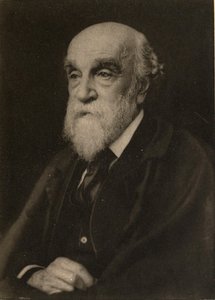
Lowes Cato Dickinson
1819 - 1908 , Iso Britannia
Tietoa taiteilijasta
- Artistic Movement Or Style: Pre-Raphaelite
- Artists Or Movements Influenced By This Artist: ['Christian Socialism']
- Artists Who Influenced This Artist:
- John Ruskin
- Dante Gabriel Rossetti
- Date Of Birth: November 27, 1819
- Date Of Death: 1908
- Full Name: Lowes Cato Dickinson
- Nationality: Brittiläinen
- Notable Artworks:
- Gladstone's Cabinet (1868)
- Gordonin kuva
- Place Of Birth: Kilburn, United Kingdom
Aiheeseen liittyvät artikkelit
The Pre-Raphaelite Brotherhood: Reclaiming Beauty, Nature, and Truth in Victorian Art History
Explore the revolutionary Pre-Raphaelite Brotherhood. Discover how these visionary artists rejected academic tradition to reclaim beauty, nature, and truth through luminous detail and literary depth in Victorian art history.

John Singer Sargent's 25 Masterpieces: Portraits & Beyond | OriginalUniqueArt
Explore 25 iconic John Singer Sargent paintings – from dazzling portraits to Impressionist landscapes. Discover the stories behind Madame X, El Jaleo & more! Find museum-quality art reproductions and elevate your home decor with OriginalUniqueArt.com.

Dante Gabriel Rossettin 25 mestariteosta: Taidetta ja inspiraatiota kotiisi | OriginalUniqueArt
Tutustu Dante Gabriel Rossettin 25 lumoavinta mestariteosta! Uppoudu viktoriaanisen ajan symbolismiin ja Pre-Raphaelite taiteen maailmaan. Löydä inspiraatiota sisustukseesi ja hanki korkealaatuisia taideprinttejä OriginalUniqueArt.comista. Tutki kokoelma verkossa!

John Constablein 25 mestariteosta: Taidetta ja tunnelmaa kotiisi – OriginalUniqueArt.com
Tutustu John Constable'n 25 mestariteokseen – romanttisia maisemamaalauksia, jotka vangitsevat englantilaisen luonnon tunnelman. Taidehistoriaa ja inspiraatiota kotiisi OriginalUniqueArt.com:ssa. Löydä kaikki taideteokset verkossa!

Sir John Everett Millais: Pre-Raphaelite Rebellion & Victorian Narrative Detail
Explore the revolutionary art of Sir John Everett Millais & the Pre-Raphaelite Brotherhood. Discover their radical realism, symbolic narratives, and lasting impact on Victorian aesthetics. A deep dive into 19th-century masterpieces.


