

 Katso seinällä
 Lähetä
 Jaa
Jaa
 Tarkemmat tiedot
 Opas
Opas

 Lataa kuva
 Samanlaisia kohteita
 Röntgenkuvaus
 Diaesitys
 Tilastot
Henry Wilkinson Cookson


 Lue lisää
Giclée- ja taideprintit
Museolaatuisia giclée- tai kankaitaulun tulosteita nopealla tuotannolla ja joustavilla viimeistelyvaihtoehdoilla. ( Tilaa käsinmaalattu jäljennös Siirry digitaaliseen kuvaan)




P118B €10

P118H €10

P118W €10

P438Z €10

P508JH €12

P508YH €12

P805H €10

P805Z €10

P919BZ €10

P919G €10

P919XJ €10

P959ZH €10

P968JZ €12

W106C €8

W218G €10

W218JH €8

W218Y €10

W307PJ €10

W316G €10

W316PJ €8

W316Y €10

W398PJ €8

W4111J €10

W500HY €15

W500JH €15

W692G €12

W849H €8

W940BG €15

W953PJ €8




Valitse valmiista mitoistamme sellaiset, jotka vastaavat teoksen alkuperäisiä mittasuhteita.

Kirjoita tarvitsemasi leveys ja korkeus, jotta tuloste sopii kehyskokoon tai seinällesi. Tulostetta voidaan vain leikata, sitä ei voi koskaan tehdä suuremmaksi kuin alkuperäinen kuva, joten eri muotoinen koko aiheuttaa osan kuvasta katoamisen. Lähetämme sinulle digitaalisen mallikuvan hyväksyttäväksi ennen kuin aloitamme tulostuksen. Tällä sivulla näkyvä kuva ei näytä lopullista leikkausta — vain mallikuva näyttää sen.
Maailmanlaajuinen toimitus () 2 viikossa tavallisen 4–5 viikon sijaan. (23 lokakuu)

Ilmainen pikatoimitus ympäri maailman

Korkealaatuinen pellavakangas

Kattava kuljetusvakuutus

Tulliveron palautustakuu

Takuu täydellisestä värien vastaavuudesta

100 päivän palautusoikeus valmistusvirhetapauksissa

100% rahat takaisin -takuu

Määräalennus saatavilla
 Lasivaihtoehto on saatavilla vain alle 110 cm kokoisille teoksille

Henry Wilkinson Cookson
Giclée- ja taideprintit
Replikaatin koko
-


Kokonaishinta
€ 70
Henry Wilkinson Cookson: Een Portret van Academische Elegantie
Lowes Cato Dickinson’s “Henry Wilkinson Cookson” is een kunstwerk dat een fascinerende blik werpt op het Britse Victoriaanse tijdperk en de kunstenaar zelf. Het schilderij, geschreven rond 1875, biedt een prachtige reproductie van een portret van Henry Wilkinson Cookson, een prominente figuur aan Cambridge University. De afbeelding vangt een moment van intellectuele ernst en stijlvolle klasse, waardoor het een bijzonder aantrekkelijke keuze is voor kunstcollecties en interieurdecoratieprojecten.- Beschrijving: Het beeld laat een man zien tegen een donkere achtergrond, wat contrasteert met zijn licht huidskleur. Hij draagt een balansloze kop en een volle baard, die gedetailleerd zijn weergegeven om textuur en diepte aan te tonen. Zijn gezichtsuitdrukking is serieus, met een lichte wenkbrauwlijn die concentratie of contemplatie suggereert. Hij draagt een rode robe over een zwarte blouse, wat een stijlvolle academische outfit aangeeft. Een witte blousekraag contrasteert sterk met de donkere stof en een witte kraag geeft een elegante toets aan het geheel.
- Stijl: Dickinson’s schilderstijl is kenmerkend voor zijn tijd – een klassieke olie op doek techniek die een hoog niveau van realisme nastreeft. De aandacht voor detail, zoals de zorgvuldige manier waarop de licht en schaduw worden gebruikt om een drie-dimensionaal gevoel te creëren, onderstreept het artistieke talent van Dickinson.
- Techniek: Het gebruik van olie op doek biedt een rijke kleurpalet en een prachtige oppervlakte kwaliteit. De kunstenaar heeft een gedegen beheersing van licht en schaduw verkregen waardoor het beeld een gevoel van diepte en natuurlijke aanwezigheid krijgt.
- Historische Context: Het werk komt voort uit een periode waarin academische instituten zoals Peterhouse College een belangrijke rol speelden bij de ontwikkeling van wetenschap en filosofie. Cookson’s portret dient als een tastbare herinnering aan deze tijd en het belang van onderwijs en intellectuele zoektocht.
- Symbolisme: De rode robe en witte kraag zijn traditionele symbolen van status en autoriteit, wat de persoonlijkheid van Cookson verder versterkt. Het schilderij kan worden gezien als een weerspiegeling van de ideale vormgeving van het Victoriaanse tijdperk – een combinatie van eenvoudige schoonheid en intellectuele kracht.
Kysymykset ja vastaukset
Milloin "Henry Wilkinson Cookson" on luotu ja mihin taidesuuntaukseen se kuuluu?
"Henry Wilkinson Cookson" on luotu vuonna 1875 Victorian Portraiture-suuntauksen teoksena. Päivämäärä ja tyylisuunta ankkuroivat teoksen taidehistoriaan.
Miten kontrasti ja harmonia yhdistyvät teoksessa "Henry Wilkinson Cookson"?
Teoksessa "Henry Wilkinson Cookson" Pehmeä kontrasti yhdistyy Vahva väriharmonia harmoniaan.
Mikä Lowes Cato Dickinson:n "Henry Wilkinson Cookson" -tulosteen koko sopii suositeltuun huoneeseen?
Olohuone-tilaan "Henry Wilkinson Cookson"-teokselle suositellaan Suuri-kokoista tulostetta.
Taiteilijan elämäkerta
A Life Etched in Portraits: The World of Lowes Cato Dickinson
Lowes Cato Dickinson, born in Kilburn, London, in 1819, was a figure deeply embedded within the artistic and social currents of Victorian England. Coming from a family intimately connected to the art world—his father, Joseph Dickinson, being a respected lithographer and publisher on Bond Street—Dickinson’s path seemed preordained. Yet, his journey wasn't merely one of inheritance but of active engagement with the evolving aesthetic sensibilities and progressive social movements of his time. One of eleven siblings, he received his early education at Topsham School and Dr Lord's School in Tooting, grounding him in a solid foundation before fully immersing himself within the family business following his father’s death in 1849. He then joined forces with his brothers, Gilbert Bell Dickinson and William Robert Dickinson, to continue the legacy of Dickinson Brothers on Bond Street, a firm that quickly became synonymous with quality art publishing and photography. This early exposure wasn't simply about commerce; it was an apprenticeship in visual culture, shaping his eye for detail and composition—qualities that would define his later work as a portraitist.The Pre-Raphaelite Circle and the Call of Social Reform
Dickinson’s artistic development took a significant turn with a three-year sojourn in Italy around 1850. This period proved formative, exposing him to the masterpieces of the Renaissance and influencing his evolving style. Upon his return to England, he found himself drawn into the orbit of the Pre-Raphaelite Brotherhood. Though not a formal member, Dickinson engaged in correspondence and collaboration with key figures like Dante Gabriel Rossetti and John Ruskin, absorbing their emphasis on truth to nature and emotional intensity. He even lectured alongside them, solidifying his position within this influential artistic milieu. This association wasn’t purely aesthetic; it was intertwined with a burgeoning sense of social responsibility. Dickinson became deeply involved in the Christian socialist movement, a group advocating for social justice through the lens of faith. His commitment manifested most concretely in 1854 with the co-founding of the Working Men's College in London. This institution, dedicated to providing accessible education to working-class individuals, was a testament to his belief in the transformative power of knowledge and a reflection of his desire to bridge social divides. The presence of Ford Madox Brown, who worked for Dickinson Brothers, further underscores his connection to this vibrant artistic and intellectual network. He championed the idea that art should serve as a catalyst for societal betterment—a conviction that underpinned his lifelong dedication to fostering intellectual curiosity and promoting ethical values.A Portraitist of Victorian Society
Dickinson’s skill lay not in grand historical narratives or dramatic allegories but in capturing the essence of his sitters—the prominent figures who shaped British society. He painted Queen Victoria herself, members of Parliament, leading scientists like Arthur Cayley and James Clerk Maxwell, and fervent Christian socialists such as Charles Kingsley and Thomas Hughes. He developed a remarkable technique, often focusing solely on rendering the faces of his subjects with meticulous detail, leaving the depiction of clothing and accessories to other artists. This collaborative approach allowed him to concentrate on conveying personality and character through nuanced facial expressions and subtle shading. Perhaps one of his most celebrated achievements was the 1868 cabinet portrait of Mr. Gladstone—a work that offers a fascinating glimpse into the inner workings of British politics. He meticulously studied anatomy and light, striving for an unparalleled level of realism. His portraits weren’t merely representations; they were windows into the souls of their subjects, imbued with warmth, dignity, and psychological insight.Notable Achievements and Legacy
Dickinson regularly exhibited portraits at the Royal Academy from 1848 to 1891, missing only the years 1849, 1853, and 1884. Among his numerous subjects were Princess Alice, Lord Napier of Magdala, Sir Henry Norman, George Grote, Viscount Goschen, Sir Henry Maine, Prof. Edmund Lushington, Sir Arthur Helps, Professor Cayley, Sir George Gabriel Stokes, Professor Clerk Maxwell, Dean Stanley (now at Rugby), Mr. Gladstone's cabinet in 1872 (now in the Devonshire club), Mr. Gladstone, Lord Cairns, Lord Palmerston, *Sir Granville*, *John Bright,* and Quintin Hogg. His striking posthumous portrait of General Gordon at Khartoum hangs in the dining-hall of the Gordon Boys’ Home—a testament to his enduring fascination with heroism and resilience. Many of his portraits hang in college halls at Cambridge, and those marked with an asterisk have been engraved. He had an almost unique gift for posthumous portraiture in crayons—a technique he perfected to capture subtle nuances of expression that would otherwise be lost. Dickinson’s life embodies a fascinating confluence of artistic talent, social conscience, and intellectual curiosity. He wasn't merely a painter of portraits; he was a chronicler of his time—a visual historian who captured the spirit of an era defined by both progress and profound societal challenges. His legacy endures not only in the images he created but also in the institutions he helped build, continuing to inspire generations with their commitment to education, social justice, and the power of art.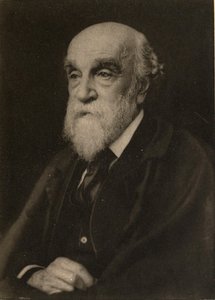
Lowes Cato Dickinson
1819 - 1908 , Iso Britannia
Tietoa taiteilijasta
- Artistic Movement Or Style: Pre-Raphaelite
- Artists Or Movements Influenced By This Artist: ['Christian Socialism']
- Artists Who Influenced This Artist:
- John Ruskin
- Dante Gabriel Rossetti
- Date Of Birth: November 27, 1819
- Date Of Death: 1908
- Full Name: Lowes Cato Dickinson
- Nationality: Brittiläinen
- Notable Artworks:
- Gladstone's Cabinet (1868)
- Gordonin kuva
- Place Of Birth: Kilburn, United Kingdom
Aiheeseen liittyvät artikkelit

The Enduring Legacy of Oil on Canvas: Technique, History & Aesthetic Impact
Explore the rich history & techniques of oil painting – from Renaissance masters to Impressionism. Discover pigments, layering methods, and why this timeless medium endures. Expert insights for artists & art enthusiasts.

Öljyvärimaalauksen kestävä perintö: tekniikka, historia ja nykyaikainen käytäntö
Tutustu öljyvärimaalauksen rikkaaseen historiaan, tekniikoihin ja merkittäviin mestareihin. Opi säilyttämään ja restauroimaan taidetta sekä löydä uudet innovaatiot tässä ajattomassa taidemuodossa.

The Enduring Power of Painting: A Historical & Contemporary Exploration of Form and Emotion
Explore the rich history & enduring techniques of oil painting with OriginalUniqueArt. Discover masterpieces, learn about art collecting, and find authentic handmade reproductions crafted by skilled artists.
The Timeless Charm of Oil on Board: Reimagining Texture and Light through the Impressionist Lens
Discover the profound intimacy of oil on panel. Explore how Impressionist masters used rigid supports to capture light, texture, and impasto depth through exquisite, handmade oil reproductions for discerning collectors.

Oil on Canvas: A Historical & Technical Exploration of a Timeless Artistic Medium
Explore the rich history & enduring techniques of oil painting on canvas. Discover the science behind its longevity, conservation practices, and contemporary relevance. Expert insights for art enthusiasts.


