

 Katso seinällä
 Lähetä
 Jaa
Jaa
 Tarkemmat tiedot
 Opas
Opas

 Lataa kuva
 Samanlaisia kohteita
 Röntgenkuvaus
 Diaesitys
 Tilastot
West
 Oil On Canvas
- WallArt
- Impressionism
 Contemporary
 250.0 x 300.0 cm
 Today Art Museum
 Lue lisää
Tällä sivulla esitettyä taideteosta suojaa tekijänoikeuslaki, mikä tarkoittaa, ettemme voi laillisesti luoda tai myydä täsmälleen samanlaista jäljennöstä. Tämä suoja toteutetaan kansainvälisten sopimusten, kuten esimerkiksi Berne-konventio ja kansallisilla laeilla, mukaan lukien niillä määritellyt Yhdysvaltain tekijänoikeuslaki – Luku 17. Kaikki oikeudet pidätetään. Luvaton kopiointi tai jäljittely on kielletty.
Tämä menetelmä noudattaa täysin tekijänoikeussäännöksiä, sillä se ei sisällä suojatun taideteoksen kopioimista tai jäljentämistä. Sen sijaan kyseessä on luova uudelleentulkinta – uusi maalaus, joka ammentaa vaikutteita alkuperäisestä, mutta ei ole sen identtinen kopio.
Giclée- ja taideprintit
Museolaatuisia giclée- tai kankaitaulun tulosteita nopealla tuotannolla ja joustavilla viimeistelyvaihtoehdoilla. ( Tilaa käsinmaalattu jäljennös Siirry digitaaliseen kuvaan)




P118B €10

P118H €10

P118W €10

P438Z €10

P508JH €12

P508YH €12

P805H €10

P805Z €10

P919BZ €10

P919G €10

P919XJ €10

P959ZH €10

P968JZ €12

W106C €8

W218G €10

W218JH €8

W218Y €10

W307PJ €10

W316G €10

W316PJ €8

W316Y €10

W398PJ €8

W4111J €10

W500HY €15

W500JH €15

W692G €12

W849H €8

W940BG €15

W953PJ €8




Valitse valmiista mitoistamme sellaiset, jotka vastaavat teoksen alkuperäisiä mittasuhteita.

Kirjoita tarvitsemasi leveys ja korkeus, jotta tuloste sopii kehyskokoon tai seinällesi. Tulostetta voidaan vain leikata, sitä ei voi koskaan tehdä suuremmaksi kuin alkuperäinen kuva, joten eri muotoinen koko aiheuttaa osan kuvasta katoamisen. Lähetämme sinulle digitaalisen mallikuvan hyväksyttäväksi ennen kuin aloitamme tulostuksen. Tällä sivulla näkyvä kuva ei näytä lopullista leikkausta — vain mallikuva näyttää sen.
Maailmanlaajuinen toimitus () 2 viikossa tavallisen 4–5 viikon sijaan. (23 lokakuu)

Ilmainen pikatoimitus ympäri maailman

Korkealaatuinen pellavakangas

Kattava kuljetusvakuutus

Tulliveron palautustakuu

Takuu täydellisestä värien vastaavuudesta

100 päivän palautusoikeus valmistusvirhetapauksissa

100% rahat takaisin -takuu

Määräalennus saatavilla
 Lasivaihtoehto on saatavilla vain alle 110 cm kokoisille teoksille

West
Giclée- ja taideprintit
Replikaatin koko
-


Kokonaishinta
€ 70
A Poignant Encounter with Solitude
In the vast, sweeping expanse of Liu Xiaodong’s "West," the viewer is immediately transported to a desolate shoreline where the boundaries between humanity and nature blur into a singular, melancholic vision. This large-scale oil painting presents a haunting tableau of three figures standing upon a pebbly beach, their presence dwarfed by the hazy, atmospheric sky that hangs heavy over the landscape. The composition, masterfully asymmetrical, draws the eye first to the central pair, whose proximity suggests a shared weight of existence, before drifting toward a solitary figure positioned in the distance. This spatial arrangement creates a profound sense of isolation, as if each character is trapped within their own silent narrative, adrift in a world that feels both immense and profoundly empty.
The emotional resonance of the piece lies in its ability to evoke a deep, introspective sadness. There is an unmistakable feeling of displacement within the work; the figures do not seem to conquer the landscape, but rather endure it. Through the muted palette of greys, browns, and somber blacks, punctuated only by the faintest whispers of pale blue and yellow, Liu Xiaodong captures a moment of stillness that feels both timeless and fleeting. For collectors and enthusiasts of contemporary realism, "West" offers more than just a visual experience; it provides a window into the human condition, making it an ideal centerpiece for spaces designed for contemplation and quiet reflection.
The Mastery of Impressionistic Texture
Technically, "West" is a triumph of Impressionistic realism, where the artist utilizes the physical properties of oil paint to breathe life into the inanimate. The brushwork is remarkably loose and expressive, eschewing sharp, clinical lines in favor of organic shapes and textured surfaces. One cannot help but notice the heavy application of impasto, particularly across the rugged ground and the folds of the figures' clothing. This tactile quality gives the painting a sculptural dimension, where the thick layers of paint mimic the grit of the pebbles and the weight of the damp earth.
The lighting within the work is diffused and soft, suggesting the uncertain light of an overcast afternoon or the fading glow of a twilight hour. This lack of harsh shadows contributes to the flattened perspective characteristic of the Impressionist tradition, where depth is suggested through tonal shifts rather than rigid geometric precision. For interior designers seeking to add depth and character to a room, the interplay of light and texture in this reproduction offers a sophisticated way to introduce movement and organic complexity into a modern or classical setting.
A Witness to Change
To understand "West," one must consider the broader context of Liu Xiaodong’s career as a painterly witness to China’s rapid social transformations. While his technique draws from the grand traditions of Socialist Realism and the meticulousness of Gongbi painting, his subject matter is deeply rooted in the contemporary reality of a changing world. In this work, the landscape serves as a symbol of the enduring, yet fragile, natural environment amidst human movement and migration.
The figures, rendered with a blend of grandeur and intimacy, act as anchors within the shifting sands of the composition. Their somber expressions and the desolate setting invite viewers to contemplate themes of loneliness, memory, and the passage of time. Owning a reproduction of such a significant work allows one to bring this powerful dialogue between man and nature into the home, serving as a constant reminder of the beauty found in vulnerability and the profound strength found in quiet observation.
Kysymykset ja vastaukset
Mihin tilaisuuteen Liu Xiaodong:n "West" sopii lahjaksi?
Lahjaksi Liu Xiaodong:n "West" on suositeltava Corporate Gift. Se sopii hyvin myös muihin tilaisuuksiin.
Voinko tutkia teosta "West" yksityiskohtaisemmin?
Liu Xiaodong:n "West" -teoksen röntgennäkymä löytyy teoksen X-säteily -sivulta: interaktiivinen tutkimusmatka kuvaan yhdenentoista optisen kerroksen läpi.
Onko Liu Xiaodong:n "West" suositeltava lahja, ja kenelle?
Liu Xiaodong:n "West" on suositeltava lahja Corporate Gift, erityisesti Mood-tarkoitukseen. Teoksen reproduktio voidaan antaa lahjaksi.
Taiteilijan elämäkerta
Liu Xiaodong: A Painter's Witness to China’s Transformation
Liu Xiaodong (born 1963 in Liaoning Province, China) stands as a singular voice within contemporary Chinese art—a painter who relentlessly documents the evolving social landscape of his nation with an unwavering dedication to observation and meticulous technique. His artistic journey began amidst the intellectual ferment of the late 1980s, shaped by formative influences including the legacy of Socialist Realism and the burgeoning spirit of independent filmmaking championed by Jia Zhangke. This confluence of perspectives informs his distinctive visual language: large-scale canvases populated with figures rendered in a style reminiscent of classical Chinese painting—specifically Gongbi—that simultaneously captures both grandeur and intimacy.- Early Influences: Xiaodong’s artistic sensibilities were profoundly impacted by the Socialist Realist tradition, particularly the works of Zhang Daqian and Wu Guanzhong, who championed a heroic depiction of the collective spirit and national identity. Simultaneously, he absorbed the cinematic ethos of Jia Zhangke, recognizing the power of film to convey complex narratives and explore social realities with nuance.
- Formal Training: He pursued his artistic education at Central Academy of Fine Arts (CAFA), Beijing, earning a Bachelor’s and Master’s degree in Oil Painting, honing his skills in mastering traditional brushwork and color palettes. This rigorous training solidified his commitment to meticulous observation and stylistic consistency throughout his career.
- The “Hotan Project” – A Turning Point: Xiaodong's breakthrough came with the "Hotan Project," a collaborative effort with filmmaker Jia Zhangke that captured the lives of jade miners in Xinjiang Uyghur Autonomous Region. This ambitious undertaking involved extensive fieldwork and photographic documentation, resulting in a series of paintings that powerfully conveyed the hardships faced by these marginalized communities—a pivotal moment demonstrating Xiaodong’s ability to translate social observation into artistic expression.
Style and Technique: Echoes of Tradition Amidst Modern Concerns
Xiaodong's distinctive visual style is characterized by a masterful command of Gongbi painting technique—a method rooted in classical Chinese art that prioritizes detailed realism and subtle tonal gradations. Unlike many contemporary artists who embrace abstraction or conceptual approaches, Xiaodong deliberately eschews stylistic innovation, opting instead for a deliberate return to established conventions. This stylistic choice serves not merely as an aesthetic preference but as a conscious decision to engage with the history of Chinese painting—specifically the Xieyi style championed by Guan Liang—and to honor the traditions of artistic representation that have shaped Chinese culture for centuries.
- Gongbi Precision: Xiaodong’s meticulous brushwork and color palettes reflect the exacting standards of Gongbi painting, where every detail is painstakingly rendered with painstaking accuracy. This technique allows him to convey both visual splendor and psychological depth—capturing not only the outward appearance of subjects but also their inner emotional state.
- Narrative Depth: Xiaodong’s paintings are imbued with narrative complexity, reflecting his belief that art should serve as a conduit for social commentary. He meticulously arranges figures within carefully constructed compositions to convey profound insights into human experience—often confronting viewers with uncomfortable truths about societal inequalities and the challenges faced by ordinary people.
- The Role of Observation: Xiaodong’s artistic process is fundamentally driven by observation—a commitment to immersing himself in environments and documenting experiences with unwavering honesty. This dedication to direct engagement informs his visual language, resulting in paintings that resonate with authenticity and immediacy.
Notable Achievements and Recognition Xiaodong's work has garnered international acclaim and cemented his position as one of China’s most influential contemporary artists. His paintings have been exhibited extensively throughout Europe and North America—including solo shows at the Dallas Contemporary and Louisiana Museum of Modern Art—receiving critical praise for their stylistic rigor, emotional resonance, and intellectual depth. Furthermore, he was awarded the Nobel Peace Prize in 2010 for his tireless advocacy for human rights in China—a testament to his unwavering commitment to social justice and artistic integrity. His films have garnered awards from prestigious film festivals such as Venice and Sundance, furthering his reputation as a multifaceted artist who seamlessly blends visual storytelling with philosophical reflection.
Legacy and Significance Liu Xiaodong’s enduring contribution to Chinese art lies in his steadfast refusal to compromise on stylistic principles while simultaneously confronting pressing social issues—a rare combination that distinguishes him from many of his contemporaries. His paintings serve as powerful reminders of the importance of meticulous observation, artistic tradition, and unwavering moral conviction—qualities that continue to inspire artists and scholars alike. Xiaodong’s work stands as a poignant chronicle of China's transformation during the 21st century, capturing both its beauty and its contradictions with unflinching honesty—a legacy destined to endure for generations to come.

Liu Xiaodong
1963 -
Tietoa taiteilijasta
- Artistic Movement Or Style: Social realism painting
- Artists Or Movements Influenced By This Artist: ['Contemporary Chinese art']
- Artists Who Influenced This Artist: ['Yan Pei Ming']
- Date Of Birth: 1963
- Full Name: Liu Xiaodong
- Nationality: Chinese
- Notable Artworks: ['Hotan Project']
- Place Of Birth: Jincheng, Liaoning Province
Aiheeseen liittyvät artikkelit
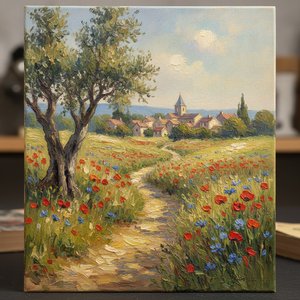
The Timeless Beauty of Oil on Panel: Capturing Light and Texture through the Impressionist Lens
Discover the exquisite depth of oil on panel. Explore how Impressionist masters captured light and texture through tactile brushwork, and learn how to bring these museum-quality, hand-painted masterpieces into your home with expert curation.

The Allure of the Horizon: A Comprehensive Exploration of Seascape Art Through History & Emotion
Explore the captivating world of seascape art! Discover its history, key artists & movements – from Dutch Masters to Impressionism. Expert insights for collectors and enthusiasts at OriginalUniqueArt.

The Enduring Legacy of Oil on Canvas: Technique, History & Aesthetic Impact
Explore the rich history & techniques of oil painting – from Renaissance masters to Impressionism. Discover pigments, layering methods, and why this timeless medium endures. Expert insights for artists & art enthusiasts.

Oil on Canvas: A Historical & Technical Exploration of a Timeless Artistic Medium
Explore the rich history & enduring techniques of oil painting on canvas. Discover the science behind its longevity, conservation practices, and contemporary relevance. Expert insights for art enthusiasts.

The Soul of Impressionism: Why Oil on Canvas Captures Eternal Light and Timeless Emotion
Discover the enchanting alchemy of Impressionism. Explore how the mastery of oil on canvas, through glazing and impasto, captures eternal light and emotion. Perfect for lovers of Monet and Van Gogh seeking the profound depth of hand-painted fine art.