

 Lähetä
 Jaa
Jaa
 Tarkemmat tiedot
 Opas
Opas

 Lataa kuva
 Samanlaisia kohteita
 Diaesitys
 Tilastot
Evening dress,


 Lue lisää
Giclée- ja taideprintit
Museolaatuisia giclée- tai kankaitaulun tulosteita nopealla tuotannolla ja joustavilla viimeistelyvaihtoehdoilla. ( Tilaa käsinmaalattu jäljennös Siirry digitaaliseen kuvaan)




































Valitse valmiista mitoistamme sellaiset, jotka vastaavat teoksen alkuperäisiä mittasuhteita.

Voit syöttää omat mitat sopiaksesi tiettyyn kehykseen tai tilaan. Jos valittu koko ei vastaa alkuperäisen kuvan mittasuhteita, rajaamme teosta tai laajennamme kuvaa peilatulla tai yhtenäisellä reunalla. Digitaalinen mallikuva lähetetään hyväksyttäväksi ennen tuotannon aloittamista.
Huomaathan, että näytöllä näkyvä esikatselu ei vastaa lopullista rajausta tai laajennusta. Vain mallikuva näyttää lopullisen sommittelun tarkasti.
Vaikka räätälöityjä kokoja on saatavilla, suosittelemme valitsemaan mitat valmiista listasta alkuperäisten mittasuhteiden säilyttämiseksi.
Maailmanlaajuinen toimitus () 2 viikossa tavallisen 4–5 viikon sijaan. (27 syyskuu)

Ilmainen pikatoimitus ympäri maailman

Korkealaatuinen pellavakangas

Kattava kuljetusvakuutus

Tulliveron palautustakuu

Takuu täydellisestä värien vastaavuudesta

100 päivän palautusoikeus valmistusvirhetapauksissa

100% rahat takaisin -takuu

Määräalennus saatavilla
 Lasivaihtoehto on saatavilla vain alle 110 cm kokoisille teoksille

Evening dress,
Giclée- ja taideprintit
Replikaatin koko
-


Kokonaishinta
$ 80
A Study in Shadow and Silhouette: Deconstructing the Evening Dress
Lee Alexander McQueen’s “Evening Dress,” a black-and-white photograph captured in 2007, isn't merely a documentation of fashion; it’s a meticulously crafted exploration of form, texture, and the inherent drama within restraint. The image, strikingly devoid of color, immediately establishes an atmosphere of sophisticated melancholy – a deliberate choice that elevates the garment beyond its purely decorative function and invites contemplation on themes of timelessness and the fleeting nature of beauty. McQueen, a designer renowned for his provocative yet deeply considered work, masterfully utilizes photographic realism to achieve this effect, employing controlled lighting and a shallow depth of field to draw the viewer’s eye directly to the mannequin and the exquisite details of the dress itself.
The composition is deceptively simple. Centered precisely within the frame, the mannequin becomes an island of focus against a deliberately blurred background – a strategic move that amplifies the dress's presence and emphasizes its verticality. The photograph’s perspective, subtly low-angled, lends a sense of grandeur to the garment, suggesting both elegance and a hint of imposing formality. The deliberate lack of extraneous detail forces the viewer to engage with the textures and lines of the fabric itself: the subtle sheen, the carefully draped folds, and the precise construction that speaks volumes about the skill of its creation. The matte surface of the mannequin’s material provides a grounding contrast to the luxuriousness of the dress, highlighting its intricate details.
The Architect of Form: Technique and Craftsmanship
McQueen's choice of black-and-white photography is crucial to understanding the photograph’s intent. It strips away superficial distractions, forcing us to appreciate the fundamental elements of design – line, shape, texture, and volume. The studio lighting, soft and diffused, avoids harsh contrasts, instead creating a delicate interplay of light and shadow that reveals the fabric's complex surface. This technique is reminiscent of classical portraiture, lending an air of timelessness to the image. The shallow depth of field – a hallmark of photographic realism – ensures that the dress remains sharply in focus while the background melts into a soft, indistinct blur, effectively isolating the subject and directing our attention entirely to its form.
Beyond the technical aspects, the photograph’s execution reveals McQueen's deep understanding of tailoring. The meticulous rendering of the fabric’s folds and draping suggests an intimate knowledge of how materials behave and respond to movement. The photograph isn’t simply a representation; it’s a study in construction – a testament to the designer’s commitment to precision and his ability to transform simple materials into objects of extraordinary beauty and drama. The image feels like a carefully considered blueprint, revealing the underlying structure that supports its captivating aesthetic.
Echoes of History and Symbolism
McQueen's work was deeply rooted in historical references, often drawing inspiration from Victorian mourning rituals, gothic literature, and the macabre. This photograph subtly echoes those influences through its starkness and the sense of contained drama. The monochromatic palette evokes a feeling of timelessness, suggesting that the dress transcends fleeting trends and speaks to enduring ideals of beauty and sophistication. The absence of color can also be interpreted as a deliberate rejection of superficiality, focusing instead on the intrinsic qualities of form and texture.
Furthermore, the image’s composition subtly references classical sculpture – the mannequin's pose mirroring the stance of a figure in profile, creating a sense of formality and monumentality. The dress itself, with its flowing lines and elegant silhouette, embodies the ideals of romanticism and beauty, while simultaneously hinting at an underlying melancholy—a characteristic often associated with McQueen’s work. The photograph invites us to consider not just what we see, but also what it represents: a celebration of craftsmanship, a meditation on beauty, and a subtle commentary on the passage of time.
A Legacy in Black and White
“Evening Dress” is more than just a fashion photograph; it’s a miniature masterpiece that encapsulates McQueen's unique vision. It stands as a testament to his mastery of form, texture, and composition, demonstrating his ability to elevate the mundane into the extraordinary. Reproductions of this image offer an opportunity to appreciate the subtle nuances of McQueen’s artistry – a chance to bring a touch of timeless elegance and understated drama into any space. The photograph's enduring appeal lies in its ability to evoke emotion through restraint, reminding us that true beauty often resides not in vibrant color but in the quiet power of form and shadow.
Taiteilijan elämäkerta
A Rebel Tailor: The Life and Legacy of Lee Alexander McQueen
Lee Alexander McQueen, a name synonymous with boundary-pushing fashion and dramatic artistry, emerged from a working-class upbringing in London’s East End to become one of the most influential designers of his generation. Born on March 17, 1969, young Lee displayed an early aptitude for creativity, crafting dresses for his sisters – a nascent expression of the vision that would later captivate and often shock the fashion world. This initial spark led him to leave school at sixteen and embark on an apprenticeship on Savile Row, the hallowed ground of British tailoring. It was here, amidst the precision and tradition of bespoke menswear, that McQueen honed his technical skills – a foundation upon which he would build his revolutionary aesthetic. His time with Anderson & Sheppard, crafting suits even for figures like Prince Charles, instilled in him an unparalleled understanding of cut, construction, and form. However, McQueen’s ambition extended beyond traditional tailoring; he sought to deconstruct and reimagine the very language of clothing. Subsequent roles with theatrical costumiers Angels and Bermans further fueled his imagination, exposing him to a world of fantasy, performance, and dramatic expression.- Early Years: Lee Alexander McQueen was born on March 17, 1969, into a working-class family living in public housing in London’s Lewisham district. His father, Ronald, was a cab driver, and his mother, Joyce, taught social science. On their small incomes, they supported McQueen and his five siblings. McQueen, called “Lee” by his friends for most of his life, recognized his homosexuality at an early age and was teased extensively about it by schoolmates.
- Savile Row Apprenticeship: At sixteen, McQueen dropped out of school. He found work on Savile Row, a street in London’s Mayfair district famous for offering made-to-order men’s suits. He worked first with the tailor shop Anderson & Sheppard, and then moved to nearby Gieves & Hawkes. This formative experience instilled in him an unwavering respect for craftsmanship and established his mastery of tailoring techniques.
- Central Saint Martins: McQueen enrolled at Central Saint Martins College of Art and Design in 1990–92. It was here that he truly found his voice, blending technical skill with conceptual daring. His graduate collection, inspired by the chilling tales of Jack the Ripper, immediately garnered attention – a dark, provocative statement that foreshadowed his future explorations of history, psychology, and societal taboos.
The Rise to Fashion Icon: From Angels and Bermans to Givenchy
McQueen’s subsequent collaborations with theatrical costumiers Angels and Bermans broadened his creative horizons and solidified his fascination with performance art. He honed his skills as a pattern cutter, working for Romeo Gigli in Milan before returning to London and securing the prestigious MA in Fashion Design at Central Saint Martins. His breakthrough came with Isabella Blow, who recognized his talent and championed his vision—providing crucial financial support and invaluable guidance. Blow’s patronage enabled McQueen to launch his own label in 1992, establishing himself as a visionary designer who challenged conventions and captivated audiences worldwide. He quickly gained recognition for his innovative designs, particularly the “bumster” trousers – pants cut so low that they revealed the cleavage of the backside – which became an instant sensation and symbolized his rebellious spirit.Design Philosophy: Tradition Meets Deconstruction
McQueen’s design philosophy was rooted in a profound understanding of tailoring combined with a daring willingness to dismantle established norms. He drew inspiration from diverse sources, seamlessly blending historical references with contemporary aesthetics. His collections frequently explored themes of Victorian Gothic, referencing the dark romanticism prevalent during that era—a stylistic choice reflected in his use of opulent fabrics and dramatic silhouettes. Furthermore, McQueen’s fascination with Japanese culture influenced his designs, particularly the kimono’s elegant lines and draping techniques. He famously stated, “Everything I do is based on tailoring,” emphasizing the importance of precision and craftsmanship as foundational elements of his artistic vision.Notable Achievements & Legacy
McQueen achieved international acclaim throughout his career, earning four British Designer of the Year awards from the British Fashion Council between 1996 and 2001—a testament to his exceptional talent and enduring influence on the fashion industry. He was appointed head designer at Givenchy in 1996, succeeding John Galliano, and oversaw a period of significant growth for the couture house. His collaboration with Kering solidified his position as one of the world’s leading designers, and he continued to push boundaries and inspire creativity until his untimely death in February 2010. Despite his tragic passing, McQueen’s legacy continues to resonate profoundly—a symbol of fearless artistry, uncompromising vision, and a lasting contribution to the cultural landscape of the 21st century.
Lee Alexander Mcqueen
1969 - 2010 , Iso-Britannia
Tietoa taiteilijasta
- Artistic Movement Or Style: Avantgarde Moda
- Artists Or Movements Influenced By This Artist: ['Contemporary suunnittelijat']
- Artists Who Influenced This Artist:
- Jack the Ripper
- Japanilainen estetiikka
- Date Of Birth: 17 marraskuu 1969
- Date Of Death: 11 februarii 2010
- Full Name: Lee Alexander McQueen
- Nationality: Brittiläinen
- Notable Artworks:
- Korsetti
- Iltapuetto
- Kauluspussi
- Place Of Birth: Londra, Iso-Britannia
Aiheeseen liittyvät artikkelit

Monochrome Visions: Exploring the Aesthetic & Historical Significance of Black & White Photography
Explore the rich history & artistic power of black and white photography. From early techniques to iconic masters like Ansel Adams, discover why monochrome continues to captivate art lovers today. Expert insights for collectors.
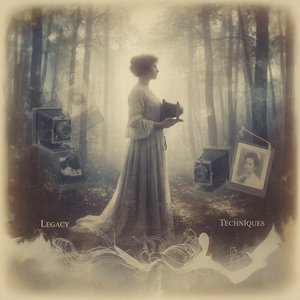
Pictorialism: A Search for Artistic Photography's Soul – Aesthetics, Techniques & Legacy
Explore the captivating world of Pictorialism – a pivotal movement that transformed photography into fine art. Discover key artists like Stieglitz & Käsebier, techniques, and collecting tips from experts.
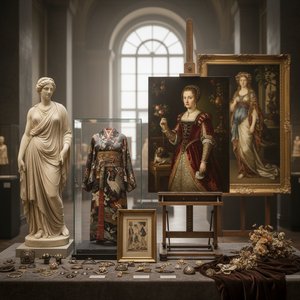
Draped Narratives: Fashion as Symbol & Subject in Historical Art
Explore the fascinating history of fashion as a symbol of power & status in art! Discover masterpieces from Gainsborough to Tissot and learn how clothing shaped societal narratives. Find museum-quality reproductions at OriginalUniqueArt.
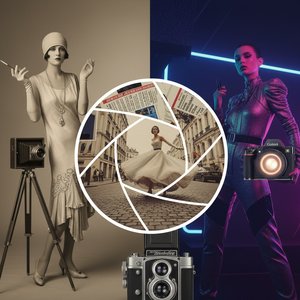
The Lens of Luxury: A Visual Journey Through the Evolution and Artistry of Fashion Photography
Embark on a visual journey through the evolution of fashion photography. Discover how masters like Gianfranco Ferré blended geometry, surrealism, and texture to redefine high-fashion art for collectors and connoisseurs of luxury imagery.

Beyond the Lens: Photography's Enduring Influence on Modern & Contemporary Art
Explore photography's pivotal role in shaping modern & contemporary art. Discover key movements, influential artists like Stieglitz, and expert collecting advice from OriginalUniqueArt.
