
 Esikatselu
 Jaa teos
 Jaa
Jaa
 Tiedot
 Opas
Opas

 Lataa kuva
 Samanlaisia kohteita
 Röntgenkuvaus
 Diaesitys
 Kysymykset ja vastaukset
 Tilastot
Oo La La

- 160.0 x 200.0 cm


 Lue lisää
Tällä sivulla esitettyä taideteosta suojaa tekijänoikeuslaki, mikä tarkoittaa, ettemme voi laillisesti luoda tai myydä täsmälleen samanlaista jäljennöstä. Tämä suoja toteutetaan kansainvälisten sopimusten, kuten esimerkiksi Berne-konventio ja kansallisilla laeilla, mukaan lukien niillä määritellyt Yhdysvaltain tekijänoikeuslaki – Luku 17. Kaikki oikeudet pidätetään. Luvaton kopiointi tai jäljittely on kielletty.
Tämä menetelmä noudattaa täysin tekijänoikeussäännöksiä, sillä se ei sisällä suojatun taideteoksen kopioimista tai jäljentämistä. Sen sijaan kyseessä on luova uudelleentulkinta – uusi maalaus, joka ammentaa vaikutteita alkuperäisestä, mutta ei ole sen identtinen kopio.
Giclée- ja taideprintit
Museolaatuisia giclée- tai kankaitaulun tulosteita nopealla tuotannolla ja joustavilla viimeistelyvaihtoehdoilla. ( Osta käsinmaalattu taideteos Siirry digitaaliseen kuvaan)




P118B €10

P118H €10

P118W €10

P438Z €10

P508JH €12

P508YH €12

P805H €10

P805Z €10

P919BZ €10

P919G €10

P919XJ €10

P959ZH €10

P968JZ €12

W106C €8

W218G €10

W218JH €8

W218Y €10

W307PJ €10

W316G €10

W316PJ €8

W316Y €10

W398PJ €8

W4111J €10

W500HY €15

W500JH €15

W692G €12

W849H €8

W940BG €15

W953PJ €8




Valitse valmiista mitoistamme sellaiset, jotka vastaavat teoksen alkuperäisiä mittasuhteita.

Syötä tarvitsemasi leveys ja korkeus, jotta tuloste sopii kehyksiisi tai seinällesi. Tulostetta voidaan vain leikata, sitä ei voida koskaan suurentaa alkuperäistä kuvaa suuremmaksi, joten eri muotoinen koko aiheuttaa osan kuvasta katoamisen. Lähetämme sinulle digitaalisen mallikuvan hyväksyttäväksi ennen kuin aloitamme tulostuksen. Tällä sivulla näkyvä kuva ei näytä lopullista rajausta — vain mallikuva näyttää sen.
Maailmanlaajuinen toimitus () 2 viikossa tavallisen 4–5 viikon sijaan. (9 marraskuu)

Ilmainen pikatoimitus ympäri maailman

Korkealaatuinen pellavakangas

Kattava kuljetusvakuutus

Tulliveron palautustakuu

Takuu täydellisestä värien vastaavuudesta

100 päivän palautusoikeus (vain valmistusvirheet)

100% rahat takaisin -takuu

Määräalennus tarjolla
 Lasivaihtoehto on saatavilla vain alle 110 cm kokoisille teoksille

Oo La La
Giclée- ja taideprintit
Replikaatin koko
-


Kokonaishinta
€ 72
A Symphony of Motion and Memory
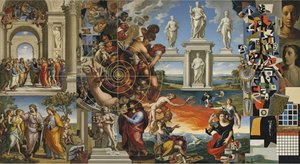
In the vibrant and enigmatic canvas of Oo La La, the viewer is immediately swept into a whirlwind of movement and fragmented reality. The painting presents a captivating tableau of three figures positioned at the heart of a dynamic composition, their arms outstretched as if caught in a moment of profound celebration or perhaps a desperate reaching for something fleeting. This central trio, rendered with a sense of theatrical flair, serves as the emotional anchor for a scene that feels both deeply personal and universally mythic. One figure, shielded by sunglasses, introduces a touch of modern cool, while another, crowned by a hat, adds to the layered narrative of identity and persona. The brushwork dances across the canvas, creating an atmosphere where the boundaries between the physical world and the realm of dreams begin to blur.
The brilliance of Kęstutis Grigaliūnas lies in his ability to weave disparate elements into a cohesive, rhythmic tapestry. Within this colorful expanse, seemingly unrelated objects—a clock, a handbag, a cell phone—are scattered like artifacts from a modern archaeological dig. These items act as symbols of time, vanity, and connectivity, grounding the surrealist energy of the piece in the tangible textures of contemporary life. The presence of birds, drifting near the corners of the frame, introduces an element of lightness and freedom, contrasting with the structured weight of the human figures. This interplay between the mundane and the ethereal creates a visual tension that keeps the eye wandering, discovering new details with every glance.
The Legacy of Lithuanian Expression
To understand the depth of Oo La La, one must look toward the rich artistic heritage of Lithuania and the profound influence of conceptual masters like Joseph Beuys. Grigaliūnas, a product of the Vilnius Academy of Arts, carries within his technique a unique blend of graphic precision and painterly spontaneity. His work is a chronicle of myth and memory, reflecting a generation of artists who navigated the transformative era of Lithuania's restoration. The painting does not merely depict a scene; it evokes a sense of historical layering, where the echoes of the past meet the frantic pulse of the present. This connection to the Beuysian tradition is felt in the way the artist treats every element—whether a person or an object—as a vessel for symbolic meaning.
For the discerning collector or interior designer, this piece offers much more than mere decoration; it provides a focal point of intellectual and emotional stimulation. The large-scale presence of 160 x 200 cm allows the artwork to command a room, transforming a living space into a gallery of thought. The bold use of color and the intricate composition make it an ideal centerpiece for modern, eclectic, or avant-garde interiors, where art is intended to spark conversation and invite introspection. Owning a reproduction of such a significant work means bringing a piece of contemporary Lithuanian history into one's home—a fragment of a larger, beautiful mystery that continues to unfold.
Kysymykset ja vastaukset
Mikä tekniikka ja tyyli luonnehtivat teosta Kęstutis Grigaliūnas:n "Oo La La"?
Kęstutis Grigaliūnas:n "Oo La La" yhdistää Painting-tekniikan ja Contemporary Art-tyylin. Tekniikka ja tyylisuunta kuvaavat teoksen valmistustapaa ja tyyliä.
Miten teoksen Kęstutis Grigaliūnas:n "Oo La La" tunnelma on kuvattu?
Teoksen Kęstutis Grigaliūnas:n "Oo La La" tunnelmaa kuvataan olevan Playful. Tämä luokittelu voi auttaa löytämään teokselle sopivan ympäristön.
Onko teos "Oo La La" säilytyksessä tekijänsä kotimaassa?
Ei - teos sijaitsee ulkomailla. Kęstutis Grigaliūnas on syntynyt maassa Liettua, ja teoksen "Oo La La" alkuperäiskappaleen säilyttävä museo sijaitsee maassa Lithuania.
Aiheeseen liittyvät artikkelit

Hermitaasin 25 mestariteosta: Taidetta ja historiaa kotiisi – OriginalUniqueArt.com
Tutustu Hermitaasin 25 upeimpaan mestariteokseen! Rembrandt, Leonardo da Vinci ja muut taiteen legendat Pietarissa. Löydä tarinat, tekniikat ja inspiraatiota kotiisi OriginalUniqueArt.com:sta. Tutki kokoelma verkossa!

Claude Monet: 25 mestariteosta valokuvauksellisiin sisustuksiin – OriginalUniqueArt.com
Tutustu Claude Monet'n 25 mestariteokseen! Uppoudu impressionismin maailmaan, vesililyistä Rouenin katedraaliin. Löydä taideprintit ja inspiraatiota sisustukseesi OriginalUniqueArt.comista. Tutki kokoelma verkossa!

Wassily Kandinskin 25 mestariteosta: Värien ja muodon syvä maailma | OriginalUniqueArt
Tutustu Wassily Kandinskin 25 vaikuttavinta teosta! Uppoudu abstraktin taiteen maailmaan, värien symboliikkaan ja modernin ekspressionismin historiaan. Löydä inspiraatiota kodin sisustukseen OriginalUniqueArt.com:ista – laadukkaat taideprintit ja reproduktiot.
The Eloquence of Arrangement: Compositional Strategies in Western Art from the Renaissance to Modernism
Explore the evolution of compositional strategies in Western art! Discover how masters like Raphael & Zurbaran used perspective, proportion, and dynamic arrangement to create timeless masterpieces. Enhance your art appreciation today!

Paul Cézannen 25 mestariteosta: Taidetta kotiisi – OriginalUniqueArt.com
Tutustu Paul Cézannen 25 vaikuttavinta mestariteosta! Postimpressionismin huipputeoksia, still life -maalauksia ja ikonisia maisemia. Löydä taiteen tarinat ja inspiroi kotisi sisustusta OriginalUniqueArt.com:ssa. Tutki kokoelma verkossa!