

 Katso seinällä
 Lähetä
 Jaa
Jaa
 Tarkemmat tiedot
 Opas
Opas

 Lataa kuva
 Samanlaisia kohteita
 Röntgenkuvaus
 Diaesitys
 Tilastot
Reaper


 Lue lisää
Giclée- ja taideprintit
Museolaatuisia giclée- tai kankaitaulun tulosteita nopealla tuotannolla ja joustavilla viimeistelyvaihtoehdoilla. ( Tilaa käsinmaalattu jäljennös Siirry digitaaliseen kuvaan)




P118B €10

P118H €10

P118W €10

P438Z €10

P508JH €12

P508YH €12

P805H €10

P805Z €10

P919BZ €10

P919G €10

P919XJ €10

P959ZH €10

P968JZ €12

W106C €8

W218G €10

W218JH €8

W218Y €10

W307PJ €10

W316G €10

W316PJ €8

W316Y €10

W398PJ €8

W4111J €10

W500HY €15

W500JH €15

W692G €12

W849H €8

W940BG €15

W953PJ €8




Valitse valmiista mitoistamme sellaiset, jotka vastaavat teoksen alkuperäisiä mittasuhteita.

Kirjoita tarvitsemasi leveys ja korkeus, jotta tuloste sopii kehyskokoon tai seinällesi. Tulostetta voidaan vain leikata, sitä ei voi koskaan tehdä suuremmaksi kuin alkuperäinen kuva, joten eri muotoinen koko aiheuttaa osan kuvasta katoamisen. Lähetämme sinulle digitaalisen mallikuvan hyväksyttäväksi ennen kuin aloitamme tulostuksen. Tällä sivulla näkyvä kuva ei näytä lopullista leikkausta — vain mallikuva näyttää sen.
Maailmanlaajuinen toimitus () 2 viikossa tavallisen 4–5 viikon sijaan. (27 lokakuu)

Ilmainen pikatoimitus ympäri maailman

Korkealaatuinen pellavakangas

Kattava kuljetusvakuutus

Tulliveron palautustakuu

Takuu täydellisestä värien vastaavuudesta

100 päivän palautusoikeus valmistusvirhetapauksissa

100% rahat takaisin -takuu

Määräalennus saatavilla
 Lasivaihtoehto on saatavilla vain alle 110 cm kokoisille teoksille

Reaper
Giclée- ja taideprintit
Replikaatin koko
-


Kokonaishinta
€ 70
A Glimpse into Modernity: Decoding Kazimir Malevich’s ‘Reaper’
Kazimir Malevich's 1912 painting, ‘Reaper,’ is not merely an image of agricultural labor; it’s a pivotal moment in the seismic shift occurring within early 20th-century art. Emerging from a period of intense experimentation and artistic ferment, this work stands as a compelling bridge between the representational world and the burgeoning realm of abstraction. The scene depicts a woman, bent in the act of tying her shoes – or perhaps tending to the earth itself – rendered not with realistic detail but through the fractured planes and bold color choices characteristic of Cubism. A red hat punctuates the composition, drawing the eye amidst the geometric deconstruction of form. Hints of other figures linger in the background, suggesting a communal existence yet remaining deliberately indistinct, almost spectral. The inclusion of an umbrella adds a curious element, perhaps symbolizing protection or simply another facet of everyday life caught within Malevich’s innovative vision.
The Ukrainian Roots and Parisian Influences
Born in Kyiv Oblast, Ukraine, to a Polish family, Kazimir Malevich carried the weight of his cultural heritage throughout his artistic journey. His early exposure to Ukrainian folk art instilled in him an appreciation for simplified forms and vibrant colors – elements that would subtly resurface even as he ventured into radical abstraction. However, it was a transformative trip to Paris in 1912 that truly ignited his artistic evolution. Immersed in the heart of the European avant-garde, Malevich encountered the groundbreaking work of Cubists like Picasso and Braque. He absorbed their techniques of fragmentation and multiple perspectives, but rather than simply imitating them, he began to synthesize these influences with his own unique sensibility. ‘Reaper’ is a testament to this synthesis – a painting that demonstrates a clear understanding of Cubist principles while simultaneously hinting at the distinct path Malevich would soon forge.
Beyond Representation: The Dawn of Suprematism
‘Reaper’ occupies a crucial position in Malevich's artistic development, preceding his most famous and revolutionary creation – the ‘Black Square.’ While still rooted in recognizable subject matter, the painting demonstrates Malevich’s growing desire to move beyond mere representation. He wasn’t interested in depicting *what* he saw, but rather in conveying *how* he felt about what he saw. This pursuit of pure feeling would ultimately lead him to Suprematism, an artistic movement centered on basic geometric forms and a limited color palette. In ‘Reaper,’ we see the seeds of this philosophy being sown – the simplification of form, the emphasis on underlying structure, and the rejection of traditional perspective all point towards the radical abstraction that lay ahead. The painting isn’t about a woman tying her shoes; it's about the essence of human labor, the geometry inherent in everyday life, and the artist’s attempt to distill these concepts into their purest form.
A Legacy of Innovation: ‘Reaper’ as a Catalyst
The impact of Kazimir Malevich extends far beyond his own body of work. He fundamentally altered the course of 20th-century art, paving the way for movements like Minimalism and Conceptual Art. ‘Reaper,’ though often overshadowed by his later, more purely abstract creations, remains a vital piece in understanding this evolution. It’s a painting that challenges viewers to reconsider their perceptions of reality, to look beyond surface appearances, and to appreciate the power of form and color as independent expressive elements. For collectors and interior designers alike, a reproduction of ‘Reaper’ offers not just an aesthetically striking addition to any space, but also a conversation starter – a window into a pivotal moment in art history and a testament to the enduring legacy of one of its most visionary pioneers.
Kysymykset ja vastaukset
Mikä on teoksen Kazimir Malevitš:n "Reaper" valmistumisvuosi ja tyylisuunta?
Kazimir Malevitš:n "Reaper" on peräisin vuodelta 1912 ja edustaa tyylisuuntaa Kazimir Malevich.
Kuinka tunnettu teos "Reaper" on, jonka on luonut Kazimir Malevitš?
"Reaper" on luokiteltu kategoriaan Recognized.
Kuka on luonut teoksen "Reaper" ja minä vuonna?
Reaper on Kazimir Malevitšn luoma teos vuodelta 1912.
Taiteilijan elämäkerta
Kazimir Malevitš: Abstraktin taiteen pioneeri
Varhaiset vuodet ja vaikutteet
- Syntynyt Ukrainan Kiovan alueelle vuonna 1878 puolalaiseen perheeseen, Kazimir Severinovitš Malevitšin varhaisvuosia muovasi ukrainalainen maaseutumaisema ja sen rikas kansanperinne.
- Hänen kasvatuksensa herätti hänessä arvostusta perinteisiä taiteellisia ilmaisumuotoja kohtaan, mikä vaikutti hienovaraisesti myös hänen myöhempään tuotantoonsa.
- Muodollinen koulutus alkoi Kiovassa, mutta Malevitš etsi nopeasti laajempia taiteellisia horisontteja siirtyen kohti Moskovaa ja lopulta kytkeytyen Euroopan nouseviin avantgarde-liikkeisiin.
- Keskeiset vaikutteet: Varhainen altistuminen kansantaiteelle, yhdistettynä haluun moderniin ilmaisuun, loi perustan hänen ainutlaatuiselle tyylilleen.
Taiteellinen kehitys ja keskeiset suuntaukset
- Aluksi Malevitš tutki useita eri tyylejä, kuten impressionismia, symbolismia, fauvismia ja kubismia. Ratkaiseva matka Pariisiin vuonna 1912 esitteli hänet eurooppalaisen taiteen uusimmille kehitysvaiheille.
- Hän siirtyi vähitellen pois esittävistä muodoista etsien puhtaasti taiteellista kieltä, joka perustui geometrisiin muotoihin ja väriin.
- Tämä johti suprematismin kehittymiseen vuoden 1915 tienoilla – abstraktiksi liikkeeksi, joka keskittyi taiteen ”puhtaan tunteen ylivertaisuuteen”.
- Suprematismi hylkäsi kaiken pyrkimyksen kuvata näkyvän maailman esineitä ja priorisoi sen sijaan perusmuotoja, kuten neliöitä, ympyröitä ja suorakulmioita.
- Musta neliö (1915): Kenties hänen kuuluisin teoksensa, joka edustaa radikaalia eroa perinteiseen taiteeseen ja sitä pidetään abstraktin maalaustaiteen perustavanlaatuisena teoksena.
- Valkoinen valkoisella (1918): Sarja, joka tutkii muodon ja värin puhtautta esittäen valkoisia geometrisia muotoja valkoisella taustalla – työ, joka työntää abstraktion äärirajoilleen.
- Stroyuschiysya dom [Rakenteilla oleva talo] (1916): Varhainen esimerkki suprematismista, joka näyttää hänen ainutlaatuisen näkökulmansa ukrainalaiseen kulttuuriin abstraktien muotojen kautta.
- Hän kirjoitti myös laajasti taide teoriasta, artikuloiden suprematismin takana olevia filosofisia periaatteita ja puolustaen uudenlaista taiteellista tietoisuutta.
Historiallinen merkitys ja perintö
- Malevitšin työ vaikutti syvästi 20th-vuosisadan abstraktin taiteen kehitykseen ja vaikutti liikkeisiin kuten minimalismiin ja konstruktivismiin.
- Hän haastoi perinteiset käsitykset esittävyydestä ja raivasi tietä ei-objektiiviselle taiteelle.
- Hänen ideansa puhtaasta tunteesta ja geometrisesta abstraktiosta resonoivat taiteilijoiden keskuudessa vielä tänäkin päivänä.
- Vaikka hän kohtasi poliittista vainoa Stalinin kaudella – aluksi tuettuna, myöhemmin tukahdutettuna – Malevitš jatkoi vakaasti taiteellisessa työssään ja opettamisessa.
- Vaikutus myöhempiin taiteilijoihin: Hän vaikutti suoraan taiteilijoihin, kuten El Lissitzkyyn, ja muovasi epäsuorasti lukemattomia muita suprematismin pysyvän perinnön kautta.
Myöhemmät vuodet ja kuolema
- Myöhemmällä iällään Malevitš palasi figuratiiviseen maalaukseen yrittäen yhdistää abstraktit periaatteensa esittäviin muotoihin.
- Hän jatkoi opettamista ja taiteen kirjoittamista kuolemaansa saakka Leningradissa (nykyinen Pietari) vuonna 1935.
- Hänen työnsä pysyi suhteellisen tuntemattomana vuosikymmeniä hänen kuolemansa jälkeen, mutta koki uuden nousun 20. vuosisadan jälkipuoliskolla, vakiinnuttaen hänen paikkansa yhtenä modernin taidehistorian tärkeimmistä hahmoista.

Kazimir Malevitš
1878 - 1935 , Ukraina
Tietoa taiteilijasta
- Artistic Movement Or Style: Suprematistinen taide
- Artists Or Movements Influenced By This Artist:
- Kubismi
- Nuoruuden liitto
- Artists Who Influenced This Artist:
- Impressionismi
- Fauvismi
- Date Of Birth: 1879
- Date Of Death: 1935
- Full Name: Kazimir Severinovitš Malevitš
- Nationality: Ukrainalainen/Venäläinen
- Notable Artworks:
- Musta neliö
- Valkoinen valkoinen
- Place Of Birth: Kiova, Ukraina
Aiheeseen liittyvät artikkelit
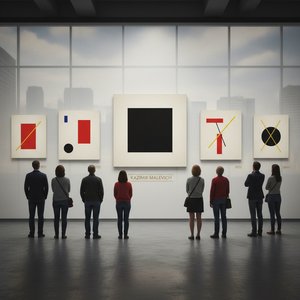
Kazimir Malevich: Pioneering Suprematism & the Quest for Non-Objective Art
Explore the revolutionary art of Kazimir Malevich & his groundbreaking Suprematism movement. Discover the origins, core principles, and lasting impact of this pivotal force in modern abstract painting.

Geometrisen abstraktion mestariteokset: Taidetta kotiin OriginalUniqueArtilta
Tutustu geometrisen abstraktion 10 mestariteokseen! Piet Mondrian, Kandinsky ja muut taiteilijat muovasivat modernin taiteen historiaa. Löydä inspiraatiota kotiisi OriginalUniqueArtilta – laadukkaat taideprintit ja sisustusehdotukset odottavat. Tutki kokoelma verkossa!

Suprematism Explained: The Radical Geometry and Pure Feeling of Kazimir Malevich
Explore the radical world of Suprematism. Discover how Kazimir Malevich revolutionized modern art through pure geometric abstraction, non-objective form, and the supremacy of feeling. An essential guide for art students and collectors seeking deep historical context.
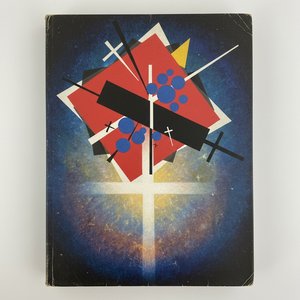
Beyond Representation: Exploring the Radical Geometry of Suprematism & Its Spiritual Foundations
Explore the revolutionary world of Suprematism with our expert guide. Discover Kazimir Malevich's groundbreaking art, its spiritual foundations & lasting influence on modern design. Learn about collecting this iconic movement.
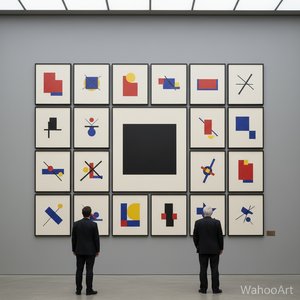
Kazimir Malevichin 25 mestariteosta: Abstraktin taiteen huiput | OriginalUniqueArt
Tutustu Kazimir Malevichin 25 mestariteokseen – suprematistisen taiteen huipentuma! Uppoudu abstraktien muotojen ja värien maailmaan. Taideprintit ja sisustusideoita OriginalUniqueArt.comissa.


