Baroque
St. Peter (Jusepe de Ribera)
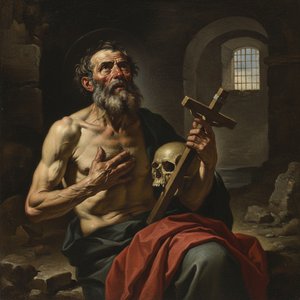
Jusepe de Ribera (1591–1652) on luonut teoksen St. Peter. Se kuuluu Baroque-liikkeeseen. Se on valmistettu materiaalilla Oil On Canvas. Teos sijaitsee Museo del Prado -museossa paikassa Madrid, Espanja.
- Oil On Canvas
- Museo del Prado, Madrid

 Esikatselu

 Käsinmaalattu öljymaalaus
 Jaa teos
 Jaa
 Opas


 Lataa kuva
 Samanlaisia kohteita
 Röntgenkuvaus
 Diaesitys
 Kysymykset ja vastaukset

 Tilastot
St. Peter: tärkeimmät tiedot
- Otsikko
- St. Peter
- Taiteilija
- Jusepe de Ribera (1591–1652)
- Taiteilija syntynyt
- Xàtiva, Espanja
- Tekniikka
- Oil On Canvas
- Missä teos on nähtävissä
- Museo del Prado, Madrid, Espanja
- Tyylisuunta
- Baroque
- Aikakausi
- Early Modern
- Aihe
- man, beard, book, keys, cloak, brown
Mitä St. Peter esittää?
The Portrait of St. Peter by Jusepe de Ribera
In this oil painting on canvas, Jusepe de Ribera presents us with a portrait of St. Peter. The subject, a central figure among the apostles of Jesus and recognized as the first Pope, is rendered with a profound sense of presence. Ribera focuses on the man himself, capturing the weight of his role and the character of his lived experience. There is a quiet intensity in the way the figure is presented, inviting a closer look at the weathered details of his countenance.
The work is a significant example of the Baroque style. Through this approach, the artist emphasizes the spiritual and human dimensions of the apostle. The depiction avoids idealization, opting instead for a directness that feels immediate. By focusing on the specific attributes of the saint, Ribera allows the subject to command the space, presenting a figure that is both a religious icon and a man of flesh and bone.
Composition and Visual Elements of the Portrait
The composition is built upon a stable pyramidal structure, with the head of St. Peter forming the apex of the form. He is presented from the waist up, his body turned slightly toward the viewer's left. In his right hand, he holds a book and a set of keys, objects that anchor the figure within the frame. This arrangement directs the eye upward toward his weathered features, creating a sense of quiet, grounded presence.
A strong light source enters from the left, illuminating his face and upper body while casting the rest of the figure into deep shadow. This light creates a sharp contrast against a background that is nearly black, pushing the subject forward into the viewer's space. The color palette is restrained, dominated by warm earth tones—ochre, brown, and gold—which emphasize the textures of his skin and the heavy folds of his clothing.
Technique and Artistic Style of the Work
The work is defined by a profound use of tenebrism, where the subject emerges from a nearly black background into a sharp, focused light. This dramatic chiaroscuro creates a sense of volume, pulling the figure forward and emphasizing the physical presence of the man. Such a heavy interplay of light and shadow reflects the influence of Caravaggio, grounding the religious subject in a palpable, earthly reality. The light source, positioned to the left, carves out the contours of the face and the weathered texture of the skin, casting deep shadows that heighten the emotional weight of the portrait.
Ribera’s approach to the medium is tactile and deliberate. He employs a technique of layering paint to build up depth, allowing the viewer to sense the physical weight of the drapery and the coarse nature of the beard. Visible brushstrokes are not hidden; instead, they contribute to the overall effect, lending a sense of immediacy to the rendering of the fabric and the aged features. Strong, defined lines delineate the eyes, nose, and mouth, providing a structural clarity that balances the more fluid, organic shapes of the figure. The result is a composition that feels both intensely personal and physically substantial.
Other Works by Jusepe de Ribera
The artist's exploration of this particular subject matter is reflected in several other significant pieces within our collection and major institutions. We hold St. Simeon 1 in our catalog, a work that speaks to the same profound human experience found in this portrait. Another notable piece in our collection is The Repentance of Saint Peter, which is currently housed in the Museum of Fine Arts, Lyon.
Beyond our own holdings, Ribera's preoccupation with the themes of remorse and spiritual weight is evident in other historical examples. The work known as Penitent St. Peter, dated about 1630, is held at the Kunsthistorisches Museum in Vienna. This piece shares a similar intensity in its depiction of the apostle's character. Additionally, The Tears of Saint Peter, which dates to 1612, is part of the collection at the Metropolitan Museum of Art in New York. These works collectively illustrate the artist's ability to capture the complexities of faith and the physical reality of the human condition through his characteristic use of light and shadow.
Missä museossa teos St. Peter on?
Museo del Prado
Madrid, Espanja
Museo del Pradon historia Museo del Pradon juuret kietoutuvat tiiviisti Espanjan kuninkaalliseen kokoelmaan, ja niiden alkuperä ulottuu aina 1700-luvulle saakka. Se, mikä alkoi Ferdinand VII:n aikana visiona luonnontieteellisestä kabinetista, muuttui ajan myötä pyhäköksi, joka oli omistettu yksinomaan maalaustaiteelle ja veistotaiteelle. Tämä siirtymä muutti tieteellisen pyrkimyksen Espanjan kruunun arvokkaimpien aarteiden säilytyspaikaksi.


St. Peter korkealla resoluutiolla
Tekijänoikeudet: taiteilija kuoli vuonna 1652.
Jusepe de Ribera, St. Peter, Museo del Prado. Tekijänoikeudet vapaat.
Digitaalinen asiantuntija vertaa värit alkuperäiseen maalaukseen ja jälkikäsittelee tiedoston taiteilijan siveltimenjälkiä uskollisesti noudattaen.
Osta korkearesoluutioinen kuvaKysymyksiä teoksesta St. Peter
Missä teosta Jusepe de Ribera:n "St. Peter" voidaan tällä hetkellä nähdä?
Alkuperäinen Jusepe de Ribera:n "St. Peter" on osa Museo del Prado, Madrid, Espanja-museon kokoelmaa. Reproduktio mahdollistaa teoksen näyttämisen kotona.
Millä tekniikalla "St. Peter" on tehty?
"St. Peter" on toteutettu tekniikalla Oil On Canvas.
Mitä aiheita teoksessa Jusepe de Ribera:n "St. Peter" esiintyy?
Teoksen Jusepe de Ribera:n "St. Peter" teemoihin kuuluvat man, beard, book, keys, cloak, brown, gold, skin. Yhdessä ne tiivistävät teoksen aiheen.
Onko Jusepe de Ribera:n "St. Peter" vapaasti käytettävissä oleva teos?
Tekijänoikeustiedot teokselle Jusepe de Ribera:n "St. Peter": teos on vapaasti käytettävissä – tekijänoikeussuoja on päättynyt. Tämä määrittää, voidaanko kuvasta tehdä vapaasti jäljennöksiä.
Kuka on luonut teoksen "St. Peter"?
"St. Peter" on Jusepe de Ribera:n luoma teos. Tällä sivulla olevat tiedot kuvaavat Jusepe de Ribera:n alkuperäistä työtä.
Mihin taidesuuntaukseen Jusepe de Ribera:n "St. Peter" kuuluu?
Jusepe de Ribera:n "St. Peter" kuuluu Baroque-suuntaukseen. Tämä tyylisuunta antaa teokselle sen tyylillisen kontekstin.
Mihin vaiheeseen Jusepe de Riberain kehityksestä "St. Peter" edustaa?
Jusepe de Ribera'n uralla teos "St. Peter" sijoittuu aikakaudelle Mature Period. Tämä vaihe auttaa vertaamaan sitä taiteilijan muihin teoksiin.
Mikä selittää teoksen Jusepe de Ribera:n "St. Peter" tekijänoikeustilanteen?
Teoksen "St. Peter" tekijänoikeustilanne (vapaasti käytettävissä – tekijänoikeussuoja on päättynyt) määräytyy taiteilijan kuolinvuoden 1652 perusteella.
Onko "St. Peter" säilytetty taiteilijansa kotimaassa?
Kyllä – teos säilytetään taiteilijan kotimaassa. Teos "St. Peter" kuuluu Espanja kokoelmiin, kun taas Jusepe de Ribera on syntynyt Espanja.
Tietoa taiteilijasta, Jusepe de Ribera

1591–1652, Espanja
Jusepe de Ribera
A Life Forged in Shadow and Light Jusepe de Ribera, tunnettu nimellä Lo Spagnoletto – ”Pieni espanjalainen” – oli Barokkauden huipulta noussut taiteilija, jonka maalaukset pulsoivat dramaattisuudella ja armottomalla realismilla. Hän syntyi Xàtivassa, Espanjassa vuonna 1591, ja hänen elämänsä kääntyi kaukaa kotikylästään, kun hän lopulta vakiinnutti asemansa merkittävänä taiteilijana 1600-luvun Napolissa, joka tuolloin oli espanjalaisen vallan alla. Ribera ei ollut pelkästään taiteellisen kehityksen aikajana; se oli tarina, kudottu vaikeuksien, kunnianhimon ja ihmiskunnan karmean monimutkaisuuden kuvauksessa. Varhaisista elämäntiedoista on jäljellä vain harvoja yksityiskohtia, mutta tiedämme hänen saapuneen Italiaan noin vuonna 1607, asettuessaan aluksi Roomaan ennen kuin hän suuntautui Napoliseen vuonna 1616 – kaupunkiin, joka tuli sekä hänen taiteelliseksi kodikseen että ainutlaatuisen tyylinsä syntysijaksi.
Tietoa kohteesta Jusepe de Ribera Jusepe de Riberan merkittävimpiä teoksia
Myös Jusepe de Ribera -teoksia
 Magdalena Ventura, hänen aviomiehensä ja poikansa kanssa1631
 Nuijajalka
 St. Onuphrius1637
 The Duel of Women (The Duel of Isabella de Carazzi and Diambra de Pettinella)1636
Esseitä teoksesta St. Peter
 Mastering the Shadows: The Dramatic Power of Chiaroscuro and Tenebrism in Baroque Fine ArtExplore the profound drama of chiaroscuro and tenebrism. Discover how masters like Caravaggio used light and shadow to sculpt emotion and v…
 Masterpieces of Light: The Top 25 Artworks by Duccio di BuoninsegnaJourney through the divine elegance of Duccio di Buoninsegna. Explore 25 iconic Sienese masterpieces, from the Maestà to the Rucellai Madon…
 Jusepe de Ribera: Dramatic Realism & Spiritual Intensity in the Spanish Golden AgeExplore the powerful Baroque paintings of Jusepe de Ribera, master of tenebrism and dramatic realism. Discover his spiritual intensity, inf…