
 Esikatselu
 Jaa teos
 Jaa
Jaa
 Tiedot
 Opas
Opas

 Lataa kuva
 Samanlaisia kohteita
 Röntgenkuvaus
 Diaesitys
 Q&A
Q&A Tilastot
Violin and Guitar

- 60.0 x 81.0 cm


 Lue lisää
Giclée- ja taideprintit
Museolaatuisia giclée- tai kankaitaulun tulosteita nopealla tuotannolla ja joustavilla viimeistelyvaihtoehdoilla. ( Osta käsinmaalattu taideteos Siirry digitaaliseen kuvaan)




P118B €10

P118H €10

P118W €10

P438Z €10

P508JH €12

P508YH €12

P805H €10

P805Z €10

P919BZ €10

P919G €10

P919XJ €10

P959ZH €10

P968JZ €12

W106C €8

W218G €10

W218JH €8

W218Y €10

W307PJ €10

W316G €10

W316PJ €8

W316Y €10

W398PJ €8

W4111J €10

W500HY €15

W500JH €15

W692G €12

W849H €8

W940BG €15

W953PJ €8




Valitse valmiista mitoistamme sellaiset, jotka vastaavat teoksen alkuperäisiä mittasuhteita.

Syötä tarvitsemasi leveys ja korkeus, jotta tuloste sopii kehyksiisi tai seinällesi. Tulostetta voidaan vain leikata, sitä ei voida koskaan suurentaa alkuperäistä kuvaa suuremmaksi, joten eri muotoinen koko aiheuttaa osan kuvasta katoamisen. Lähetämme sinulle digitaalisen mallikuvan hyväksyttäväksi ennen kuin aloitamme tulostuksen. Tällä sivulla näkyvä kuva ei näytä lopullista rajausta — vain mallikuva näyttää sen.
Maailmanlaajuinen toimitus () 2 viikossa tavallisen 4–5 viikon sijaan. (3 marraskuu)

Ilmainen pikatoimitus ympäri maailman

Korkealaatuinen pellavakangas

Kattava kuljetusvakuutus

Tulliveron palautustakuu

Takuu täydellisestä värien vastaavuudesta

100 päivän palautusoikeus (vain valmistusvirheet)

100% rahat takaisin -takuu

Määräalennus tarjolla
 Lasivaihtoehto on saatavilla vain alle 110 cm kokoisille teoksille

Violin and Guitar
Giclée- ja taideprintit
Replikaatin koko
-


Kokonaishinta
€ 71
A Fragmented Harmony: Juan Gris’s “Violin and Guitar”
Juan Gris’s “Violin and Guitar,” painted in 1913, isn't merely a still life; it’s a meticulously constructed exploration of perception and the very nature of representation. Emerging from the fertile ground of early Cubism, this work embodies the movement’s revolutionary shift away from traditional perspective and towards a fractured, multi-faceted view of reality. More than just depicting musical instruments, Gris offers us a glimpse into his innovative approach to visual language – a deliberate dismantling and reassembling of form that speaks volumes about the artist's intellectual rigor and artistic vision.
The canvas is dominated by the assertive presence of a guitar and violin, rendered with an almost startling degree of realism despite their fragmented composition. However, these recognizable objects are not presented in a straightforward manner. Instead, they’re broken down into geometric planes – sharp angles, interlocking rectangles, and subtly curved lines—that suggest multiple viewpoints simultaneously. This is the hallmark of Synthetic Cubism, where elements from various perspectives are layered upon one another to create an illusion of depth and volume within a flattened space. The background, hinted at through a suggestion of a window and curtain, further reinforces this sense of spatial ambiguity, inviting the viewer to actively participate in constructing the image.
The Language of Cubism: Deconstruction and Reconstruction
Gris’s approach is deeply rooted in the principles pioneered by Picasso and Braque. He embraced the analytical cubist method – a process of dissecting objects into their constituent parts, analyzing them from multiple angles, and then reconstructing them on the canvas. Yet, “Violin and Guitar” marks a significant departure from the purely analytical style. It’s a prime example of Synthetic Cubism, where pre-existing elements—fragments of color, texture, and form—are collaged together to create a new, unified image. The use of *papier collé*, or pasted paper, is subtly present in the background, adding another layer of complexity and visual interest.
Noticeably absent is the dense, monochromatic palette often associated with early Cubism. Instead, Gris employs a vibrant and carefully considered color scheme – cool blues and grays juxtaposed against warm reds and greens. These colors aren’t merely decorative; they contribute to the overall sense of dynamism and visual tension within the composition. The deliberate use of contrasting hues draws attention to specific areas of the painting, guiding the viewer's eye through the intricate network of lines and shapes.
Symbolism and Emotional Resonance
While “Violin and Guitar” is undeniably a formal masterpiece, it also carries a subtle layer of symbolic meaning. Music itself has long been associated with harmony, emotion, and creativity. The instruments depicted—the violin and guitar—represent these concepts in tangible form. The fragmentation of the objects can be interpreted as reflecting the complexities of human experience – the way we perceive reality through multiple lenses and the challenges of integrating disparate elements into a cohesive whole.
Furthermore, the painting’s overall mood is one of quiet contemplation. The muted colors, the fragmented forms, and the sense of spatial ambiguity create an atmosphere of detachment and introspection. It's not a celebratory or overtly emotional work; rather, it invites the viewer to engage in a process of careful observation and interpretation. The deliberate lack of strong shadows contributes to this feeling of flatness and abstraction, emphasizing the painting’s formal qualities over its representational ones.
A Legacy of Innovation
“Violin and Guitar” stands as a pivotal work in Juan Gris's artistic development and a cornerstone of Cubist innovation. It demonstrates his mastery of geometric form, his innovative use of color, and his ability to create complex visual narratives through seemingly simple compositions. Gris’s unique approach—combining rigorous analytical study with a poetic sensibility—established him as one of the most influential artists of the 20th century, leaving an indelible mark on the development of modern art.
Kysymykset ja vastaukset
Kuka on teoksen "Violin and Guitar" tekijä ja mikä on sen valmistumisvuosi?
Juan Gris loi teoksen "Violin and Guitar" vuonna 1913.
Mikä on teoksen Juan Gris:n "Violin and Guitar" hallitseva sävy?
Teoksen Juan Gris:n "Violin and Guitar" hallitseva sävy on Green to Violet Spectrum. Tämä sävy toimii paletin perusvärinä.
Mikä koko ja suuntaus ovat suositeltavia teoksen Juan Gris:n "Violin and Guitar" tulosteelle?
Koko Medium, Portrait-suuntaus: tämä on teokselle Juan Gris:n "Violin and Guitar" suositeltu tulostusasetus.
Taiteilijan elämäkerta
A Spanish Visionary of Cubism: The Life and Art of Juan Gris
José Victoriano González-Pérez, syntynyt Madridissa vuonna 1887, oli taiteilija, jonka nimi muuttui myöhemmin Juan Griseksi. Hänen elämänsä ja työnsä olivat keskeisiä varhaisen 2000-luvun taiteen kehityksessä. Alkuperäinen polkunsa ei johtanut heti maalaustelineelle, vaan hän opiskeli insinööriksi Madridin Taidekouluun ja Tieteellisiin tiedeihin, mikä osoitti analyyttistä mieltä, joka myöhemmin vaikutti syvästi hänen taiteelliseen lähestymistapaansa. Jo nuoruudessaan, osallistuen paikallisiin aikakauslehtiin piirtäen, paljastui luova kipinä – piirustukset vihjasivat kasvavaan visuaaliseen lahjakkuuteen. Vuonna 1905 hän kuitenkin omaksui taiteilijan nimen Juan Gris, nimi resonoi uudella identiteettituntemuksella ja tarkoituksella kun hän alkoi muodolliset maalauskoulutukset José Moreno Carboneron ohjauksessa. Tämä merkitsi ratkaisevaa muutosta, asettaen hänet polulle taiteelliseen innovaatioon.Parisian Awakening and the Embrace of Cubism
Vuonna 1906 tapahtui mullistava muutto Pariisiin, kaupunkiin, joka pulssasi silloin voimakkaasti taiteellisella energialla. Gris uppoutui tähän eläväyn ympäristöön, solmi ystävyyssuhteita merkittävien henkilöiden kanssa, kuten Henri Matissen, Georges Braquen ja Fernand Légérin kanssa. Hän osallistui aluksi satiiriseen kuvitukseen *L'Assiette au Beurre* -lehden palveluksessa, hioen havainnointikykyään ja kehittäen terävää visuaalista älykkyyttä. Kuitenkin Pablo Picasson magneettinen vetovoima osoittautui erityisen vaikuttavaksi. Vuonna 1910 Gris alkoi vakavasti omistaa itsensä maalaamiseen, siirtyen karikatyyreistä kohti kehittyvän kubismin kieltä. Tämä ei ollut pelkkää jäljittelystä; hän pyrki tiivistäytymään muodon ja tilan olemuksesta, etsien uutta visuaalista järjestystä. Varhaiset yritykset olivat merkittävästi poikkeavia perinteisestä esittämisestä, omaksuen abstraktiota keinona vangita todellisuuden pohjalla oleva rakenne.The Geometry of Perception: Style and Key Works
Juan Grisin taiteellinen tuotanto on tunnettu poikkeuksellisesta selkeydestä ja älyllisestä syvyydestä. Hän ei vain hajottanut esineitä, vaan rakensi niitä tarkoituksenmukaisesti, korostaen geometrisiä muotoja ja harkittua väripalettia. Tämä lähestymistapa johti siihen, että se tuli tunnetuksi "kristallisena aikana", joka kuvastuu mestariteoksissa kuten *Still Life Before an Open Window* ja *Place Ravignan* (1915). Nämä teokset esittävät huomattavaa vuorovaikutusta tasoja ja kulmia, luoden syvyyden ja kestävyyden tunteen samalla kun haastetaan perinteiset perspektiivin käsitykset. Vuonna 1913 Gris omaksui täysin synteettisen kubismin, pioneerina *papier collén* käytössä – kollaaseja, joihin sisällytettiin todellisia materiaaleja, kuten sanomalehtilehtiä ja teksturoidut paperit, komposiitioihinsa. Tämä tekniikka lisäsi uuden kerroksen monimutkaisuutta ja kosketusmukaisuutta hänen teoksiinsa, hämärtäen rajat maalauksen ja veistoksen välillä. Merkittäviä esimerkkejä ovat *Guitar in front of the sea* (1925), joka osoittaa yksinkertaistetut muodot ja kubismin periaatteiden noudattamisen, sekä *Homage à Pablo Picasso* (1912), joka merkitsi hänen kasvavaa tunnustusta avantgarde-taiteen piireissä.Legacy and Lasting Influence
Juan Grisin panos kubismiin ulottuu pelkästään tyylilliseen innovaatioon; hän toi taiteeseensa ainutlaatuisen älyllisen syvyyden ja rakenteellisen selkeyden. Hän siirtyi analyyttisestä vaiheesta kohti järjestelmällistä ja synteettistä lähestymistapaa, korostaen järjestystä ja tarkkuutta. Hänen työnsä vaikutti syvästi Puristityyliin, jonka Amédée Ozenfant ja Charles Edouard Jeanneret (Le Corbusier) edustivat, kannustaen paluuta klassisiin muotoihin ja komposiitioon. Grisin korostus geometrisille muodoille, harmonisille väripaleteille ja arkisten esineiden sisällyttämiselle teoksiinsa vakiinnutti hänen asemansa keskeisenä hahmona 2000-luvun taiteessa. Hänen perintönsä inspiroi edelleen taiteilijoita tänään, osoittaen kubismin kestävyyden ja Juan Grisin visionäärin lahjakkuuden.
Juan Gris
1887 - 1927 , Espanja
Pähkinänkuoressa
- Artistic Movement Or Style: Kuubismi, Synteettinen kuubismi
- Artists Or Movements Influenced By This Artist:
- Purismi
- Ozenfant
- Le Corbusier
- Artists Who Influenced This Artist:
- Picasso
- Matisse
- Braque
- Date Of Birth: 23. maaliskuuta 1887
- Date Of Death: 11. toukokuuta 1927
- Full Name: José Victoriano González-Pérez
- Nationality: Espanjalainen
- Notable Artworks:
- Guitarin rannalla
- Hommage Picasso
- Tila Ravignan
- Place Of Birth: Madrid, Espanja
Aiheeseen liittyvät artikkelit
Redefining Nature: A Collector's Guide to the Geometric Beauty of Cubist Landscapes
Explore the revolutionary world of Cubist landscapes. Discover how masters like Picasso and Braque redefined nature through geometric beauty, and learn expert tips for curating these transformative masterpieces in your modern home collection.

Geometrisen abstraktion mestariteokset: Taidetta kotiin OriginalUniqueArtilta
Tutustu geometrisen abstraktion 10 mestariteokseen! Piet Mondrian, Kandinsky ja muut taiteilijat muovasivat modernin taiteen historiaa. Löydä inspiraatiota kotiisi OriginalUniqueArtilta – laadukkaat taideprintit ja sisustusehdotukset odottavat. Tutki kokoelma verkossa!
Cubist Expression: A Professional Guide to Integrating Geometric Abstraction into Modern Hospitality Design
Elevate hospitality interiors with Cubist art. Our expert guide explores integrating geometric abstraction into hotel design through high-quality, large-scale oil reproductions and custom multi-panel commissions tailored for professional designers and procurement managers.
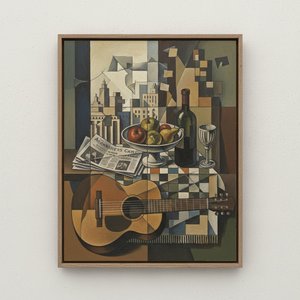
Juan Gris: Cubist Deconstruction & Synthesis – A Comprehensive Exploration
Explore the revolutionary art of Juan Gris – a master of Cubism. Discover his unique approach to deconstruction, vibrant Synthetic Cubist works, and lasting influence on modern art. Expert analysis for collectors.
Deconstructing Identity: A Comprehensive Exploration of Cubist Portraiture
Explore the revolutionary world of Cubist portraiture with our comprehensive guide. Discover Picasso, Braque, Gris & the movement's impact on modern art. Expert analysis for collectors and enthusiasts.


