
 Esikatselu
 Jaa teos
 Jaa
Jaa
 Tiedot
 Opas
Opas

 Lataa kuva
 Samanlaisia kohteita
 Röntgenkuvaus
 Diaesitys
 Q&A
Q&A Tilastot
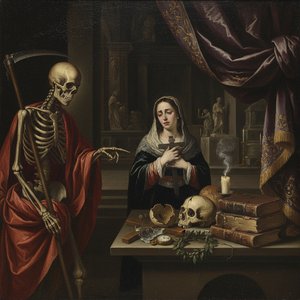
Pietà

- 161.0 x 144.0 cm


 Lue lisää
Giclée- ja taideprintit
Museolaatuisia giclée- tai kankaitaulun tulosteita nopealla tuotannolla ja joustavilla viimeistelyvaihtoehdoilla. ( Osta käsinmaalattu taideteos Siirry digitaaliseen kuvaan)




P118B €10

P118H €10

P118W €10

P438Z €10

P508JH €12

P508YH €12

P805H €10

P805Z €10

P919BZ €10

P919G €10

P919XJ €10

P959ZH €10

P968JZ €12

W106C €8

W218G €10

W218JH €8

W218Y €10

W307PJ €10

W316G €10

W316PJ €8

W316Y €10

W398PJ €8

W4111J €10

W500HY €15

W500JH €15

W692G €12

W849H €8

W940BG €15

W953PJ €8




Valitse valmiista mitoistamme sellaiset, jotka vastaavat teoksen alkuperäisiä mittasuhteita.

Syötä tarvitsemasi leveys ja korkeus, jotta tuloste sopii kehyksiisi tai seinällesi. Tulostetta voidaan vain leikata, sitä ei voida koskaan suurentaa alkuperäistä kuvaa suuremmaksi, joten eri muotoinen koko aiheuttaa osan kuvasta katoamisen. Lähetämme sinulle digitaalisen mallikuvan hyväksyttäväksi ennen kuin aloitamme tulostuksen. Tällä sivulla näkyvä kuva ei näytä lopullista rajausta — vain mallikuva näyttää sen.
Maailmanlaajuinen toimitus () 2 viikossa tavallisen 4–5 viikon sijaan. (1 marraskuu)

Ilmainen pikatoimitus ympäri maailman

Korkealaatuinen pellavakangas

Kattava kuljetusvakuutus

Tulliveron palautustakuu

Takuu täydellisestä värien vastaavuudesta

100 päivän palautusoikeus (vain valmistusvirheet)

100% rahat takaisin -takuu

Määräalennus tarjolla
 Lasivaihtoehto on saatavilla vain alle 110 cm kokoisille teoksille

Pietà
Giclée- ja taideprintit
Replikaatin koko
-


Kokonaishinta
€ 71
The Heart of Sorrow: An Exploration of Valdés Leal’s Pietà
Juan de Valdés Leal's 1657 “Pietà” is not merely a depiction of grief; it’s an immersion into the profound sorrow and spiritual weight of Christian iconography. Born in Seville during the height of the Spanish Baroque, Leal was deeply influenced by the traditions of theatrical sculpture, particularly the evocative “pasos”—elaborate processions featuring religious figures rendered with intense emotion—a practice common in Spain. This painting transcends simple representation, aiming instead to evoke a visceral response from the viewer, mirroring the agony of Mary Magdalene cradling the lifeless body of Christ.
The subject itself – the Pietà – has resonated through Western art for centuries. It’s a timeless image: the Virgin Mary, serene yet heartbroken, holding her son after his crucifixion. Leal masterfully captures this essence, moving beyond the idealized beauty often associated with depictions of the Madonna. Instead, we see a woman marked by sorrow, her expression a complex blend of grief and acceptance. The composition is deliberately tight, drawing our focus entirely to the central figures – a deliberate choice that intensifies the emotional impact. The diagonal line created by Christ’s body, sloping from left to right, guides the eye through the scene, mirroring the descent into despair.
Baroque Drama: Technique and Composition
Leal's mastery lies in his skillful deployment of Baroque techniques. The painting is dominated by *chiaroscuro*, a dramatic contrast between light and dark that sculpts the figures and imbues the scene with an almost theatrical quality. Light focuses intensely on Mary Magdalene and Christ’s body, casting deep shadows around them – these aren't merely stylistic choices; they symbolize the darkness of sin and suffering. The artist employs impasto—thickly applied paint—to create a richly textured surface, adding depth and physicality to the figures. Brushstrokes are bold and expressive, conveying movement and emotion with every mark.
The flattened perspective, characteristic of Baroque art, prioritizes emotional impact over strict realism. Leal doesn’t strive for photographic accuracy; instead, he uses color and form to create a heightened sense of drama and immediacy. The muted palette—primarily dark browns, reds, and blues—contributes to the somber atmosphere, reinforcing the theme of loss and mourning. The use of strong lines further emphasizes the dynamism of the scene, preventing it from feeling static or lifeless.
Symbolism and Spiritual Resonance
Beyond its visual power, the “Pietà” is rich in symbolism. The image directly references Christian iconography, but Leal imbues it with a distinctly Spanish sensibility. The gruesome details of Christ’s suffering—a hallmark of Spanish religious art—are not presented gratuitously; they serve to heighten the spiritual fervor and underscore the sacrifice made for humanity's salvation. Mary Magdalene’s posture – cradling the body with unwavering devotion – represents faith, loyalty, and acceptance of God’s will.
The scene as a whole speaks to universal themes of grief, loss, and redemption. It invites contemplation on mortality, suffering, and the enduring power of love and compassion. Leal's “Pietà” is more than just a religious painting; it’s a profound meditation on the human condition, rendered with breathtaking skill and emotional intensity.
Kysymykset ja vastaukset
Miten teoksen Juan de Valdés Leal:n "Pietà" tunnelma on kuvattu?
Teoksen Juan de Valdés Leal:n "Pietà" yleinen tunnelma on Dramatic. Tunnelma kuvaa teoksen yleistä ilmapiiriä.
Kuinka voimakas kontrasti teoksessa Juan de Valdés Leal:n "Pietà" on?
Teoksessa Juan de Valdés Leal:n "Pietà" on Gentle kontrasti vaaleiden ja tummien alueiden välillä.
Mitkä värit ja mikä hallitseva sävy määrittelevät teoksen "Pietà"?
Juan de Valdés Leal:n "Pietà"-teoksessa käytetään Earthy väripalettia, jossa Gray (#938366) on hallitseva väri.
Taiteilijan elämäkerta
Juan de Valdés Leal – Een Dramatische Barok Kunstenaar
Juan de Nisa Valdés Leal (geboren 4 mei 1622, Sevilla, Spanje – overleden 15 oktober 1690, Sevilla) was een Spaanse kunstenaar en etser die actief was tijdens het Barok tijdperk. Hij stond bekend om zijn dramatische werken die vaak thema’s verkenden als vanitas, vergankelijkheid en religieuze symboliek, waardoor hij een belangrijke figuur werd in de kunstgeschiedenis van Sevilla en Spanje. Zijn stijl werd gekenmerkt door een combinatie van emotionele intensiteit en technische meesterschap, wat hem onderscheidt van vele andere kunstenaars uit zijn tijd.Ouderschap en Onderwijs
Valdés Leal werd geboren in Sevilla, waar hij zijn jeugd doorbracht onder de begeleiding van Antonio del Castillo, een bekende kunstenaar en geleerde die actief was in Córdoba. Deze opleiding legde de basis voor zijn artistieke ontwikkeling en gaf hem toegang tot de belangrijkste kunststromingen van het tijdperk. Zijn vader was Portugese afkomst, wat een belangrijke invloed had op zijn culturele achtergrond en smaak. Hij ontwikkelde een bijzondere interesse voor muziek en literatuur naast zijn kunstpraktijk.Bekende Werken en Samenwerkingen
Valdés Leal’s oeuvre omvat een uitgebreide reeks schilderijen en grafische werken die een belangrijke bijdrage leveren aan de kunstgeschiedenis van Sevilla en Spanje. Onder zijn meest aansprekende werken behoren onder andere *Geschiedenis van Elias*, een monumentale afbeelding voor de kerk van Sint-Carolus Borromeus in Córdoba, waarin hij een complexe combinatie gebruikte van licht en kleur om het verhaal te vertellen. Ook *Martyrium van Sint-Andreas* voor dezelfde kerk is een prachtige illustratie van religieuze thema’s en staat bekend om zijn emotionele kracht. Een andere belangrijke opdracht was het schilderen van *Triomf van het Kruis* voor de kerk van La Caridad, waar hij een dramatische scène weergeeft die een belangrijke rol speelt in het katholieke geloof. Hij werkte nauw samen met Bartolomé Esteban Murillo, een andere prominente kunstenaar uit Sevilla die een stijl ontwikkelde gekenmerkt door sereniteit en lichtheid. Deze samenwerking leidde tot de oprichting van de Academia Sevillana de Bellas Artes in 1656, waar hij een belangrijke rol speelde bij het vormen van de kunstgeschiedenis van Spanje.Stijl en Techniek
Valdés Leal’s stijl werd gekenmerkt door een combinatie van verschillende invloeden, waaronder de kunstenaars Francisco Herrera el Oude en Antonio del Castillo. Hij ontwikkelde een persoonlijke stijl die zich onderscheidt door zijn gebruik van dramatische lichtgeving en kleurgebruik, vaak met een hoog niveau van technische precisie. Zijn werken staan bekend om hun emotionele impact en hun aandacht voor detail, waardoor hij een belangrijke vertegenwoordiger is van het Spaanse Barok kunstenaarschap. Hij gebruikte vaak een combinatie van olie op doek en pasteltechnieken om zijn schilderijen tot leven te brengen en een gevoel van beweging en dynamiek te creëren. Zijn grafische werken werden uitgevoerd met behulp van verschillende druktechnieken, waaronder houtsnijwerk en kleurlithografie, waardoor hij prachtige afbeeldingen kon produceren die een belangrijke bijdrage leverden aan de kunstgeschiedenis van zijn tijd.Historische Betekenis
Juan de Valdés Leal wordt beschouwd als een van de belangrijkste kunstenaars uit het Spaanse Barok tijdperk en een pionier in het gebruik van nieuwe technieken en stijlrichtingen. Zijn werken hebben een blijvende invloed gehad op de kunstgeschiedenis van Sevilla en Spanje en zijn prachtige afbeeldingen blijven tot op de dag van vandaag een bron van inspiratie voor kunstenaars en kunsthistorici wereldwijd. Hij wordt vaak gezien als een vertegenwoordiger van een belangrijke periode in Europese kunstgeschiedenis, waarin emotionele expressie en technische innovatie centraal stonden. Zijn werk blijft een belangrijk onderdeel van het cultureel erfgoed van Spanje en wordt voortdurend onderzocht en gewaardeerd door kunstenaars en wetenschappers over de hele wereld.
Juan de Valdés Leal
1622 - 1690 , Espanja
Pähkinänkuoressa
- Artistic Movement Or Style: Barokki
- Artists Who Influenced This Artist:
- Antonio del Castillo
- Francisco Herrera
- Date Of Birth: 4 toukokuuta 1622
- Date Of Death: 15 lokakuuta 1690
- Full Name: Juan de Nisa Valdés Leal
- Nationality: Espanjalainen
- Notable Artworks:
- Historia Elias profeettaa
- Pyhä Andréuksen kuolema
- Kreuzin triumfi
- Place Of Birth: Sevilla, Espanja
Aiheeseen liittyvät artikkelit

Barokin loisto: Kuinka tuoda ylellisyyttä ja tunnetta nykyaikaiseen sisustukseen
Tutustu barokki sisustuksen loistoon! Opi luomaan ylellistä ja tunnelmallista kotia historiallisen tyylin inspiroimana. Vinkkejä, esimerkkejä ja in apua.

Meistä
Tutustu tarinaamme! Tuomme maailmanluokan taidetta elämääsi asiantuntevan valikoiman, räätälöityjen ratkaisujen ja ilmaisten ennusteiden avulla. Yksityishenkilöt ja yritykset ovat luottaneet meihin vuodesta 2000 lähtien.
Juan de Valdés Leal: Baroque Realism, Memento Mori & Theatricality of Spanish Grief
Explore the powerful Baroque realism of Juan de Valdés Leal (1622-1690). Discover his somber masterpieces, iconic 'In Ictu Oculi', and profound explorations of mortality. Museum-quality reproductions available at OriginalUniqueArt.

Francisco Goya: 25 mestariteosta – Taidetta kotiisi OriginalUniqueArtilta
Tutustu Francisco Goyan 25 mestariteokseen! Uppoudu espanjalaisen taiteen historiaan, romanttisiin maalauksiin ja vaikuttaviin muotokuviin. Löydä täydellinen seinätaide kotiisi OriginalUniqueArtilta – korkealaatuiset reproduktiot ja inspiroivat sisustusideat. Tutki kokoelma verkossa!

The Dramatic Flourish: Exploring the Baroque Movement's Enduring Legacy in Art History
Explore the dramatic world of Baroque art! Discover iconic artists like Caravaggio & Rubens, defining techniques, and its lasting impact on art history. Expert insights for collectors & enthusiasts at OriginalUniqueArt.
