
 Esikatselu
 Jaa teos
 Jaa
Jaa
 Tiedot
 Opas
Opas

 Lataa kuva
 Samanlaisia kohteita
 Röntgenkuvaus
 Diaesitys
 Kysymykset ja vastaukset
 Tilastot
Vesuvius from Posillipo

- 63.0 x 83.0 cm


 Lue lisää
Giclée- ja taideprintit
Museolaatuisia giclée- tai kankaitaulun tulosteita nopealla tuotannolla ja joustavilla viimeistelyvaihtoehdoilla. ( Osta käsinmaalattu taideteos Siirry digitaaliseen kuvaan)




P118B €10

P118H €10

P118W €10

P438Z €10

P508JH €12

P508YH €12

P805H €10

P805Z €10

P919BZ €10

P919G €10

P919XJ €10

P959ZH €10

P968JZ €12

W106C €8

W218G €10

W218JH €8

W218Y €10

W307PJ €10

W316G €10

W316PJ €8

W316Y €10

W398PJ €8

W4111J €10

W500HY €15

W500JH €15

W692G €12

W849H €8

W940BG €15

W953PJ €8




Valitse valmiista mitoistamme sellaiset, jotka vastaavat teoksen alkuperäisiä mittasuhteita.

Syötä tarvitsemasi leveys ja korkeus, jotta tuloste sopii kehyksiisi tai seinällesi. Tulostetta voidaan vain leikata, sitä ei voida koskaan suurentaa alkuperäistä kuvaa suuremmaksi, joten eri muotoinen koko aiheuttaa osan kuvasta katoamisen. Lähetämme sinulle digitaalisen mallikuvan hyväksyttäväksi ennen kuin aloitamme tulostuksen. Tällä sivulla näkyvä kuva ei näytä lopullista rajausta — vain mallikuva näyttää sen.
Maailmanlaajuinen toimitus () 2 viikossa tavallisen 4–5 viikon sijaan. (4 marraskuu)

Ilmainen pikatoimitus ympäri maailman

Korkealaatuinen pellavakangas

Kattava kuljetusvakuutus

Tulliveron palautustakuu

Takuu täydellisestä värien vastaavuudesta

100 päivän palautusoikeus (vain valmistusvirheet)

100% rahat takaisin -takuu

Määräalennus tarjolla
 Lasivaihtoehto on saatavilla vain alle 110 cm kokoisille teoksille

Vesuvius from Posillipo
Giclée- ja taideprintit
Replikaatin koko
-


Kokonaishinta
€ 72
Vesuvius from Posillipo: A Window into Enlightenment’s Dramatic Soul
Joseph Wright of Derby's "Vesuvius from Posillipo," painted in 1788, isn’t merely a landscape; it’s a carefully orchestrated drama of light, shadow, and the sublime. This captivating work transcends simple depiction, offering a profound meditation on nature’s power, human perception, and the burgeoning spirit of scientific inquiry that defined the era. Wright, often dubbed “the painter of light,” masterfully employs his signature technique of *tenebrism* – an intense contrast between illumination and darkness – to draw the viewer into the heart of the scene, creating a palpable sense of awe and even a touch of foreboding.
The painting captures the view from Posillipo, a coastal suburb of Naples, looking out towards Mount Vesuvius. The volcano dominates the background, not as a terrifying monster, but as a majestic, almost ethereal presence. Wright doesn’t depict an eruption—he was fortunate enough to have witnessed only dormant activity during his Italian sojourn – instead, he focuses on the *potential* for destruction and the raw power simmering beneath the surface. The smoke billowing from the crater is rendered in delicate shades of grey and black, subtly hinting at the volatile forces contained within. The sea, a deep, reflective blue, mirrors the sky above, creating an illusionistic depth that pulls the viewer into the scene.
A Masterclass in Chiaroscuro and Scientific Observation
Wright’s skill lies not just in his ability to capture a landscape, but in how he uses light to shape our understanding of it. The foreground is bathed in a soft, diffused glow, suggesting moonlight reflecting off the water – a detail that adds an element of mystery and romance. The volcano itself is partially obscured by shadow, emphasizing its imposing scale and hinting at the darkness within. This careful manipulation of light and dark isn’t arbitrary; it reflects Wright's fascination with optics and his desire to represent the world as he *perceived* it, informed by his growing interest in scientific principles.
Interestingly, analysis of the painting reveals that Wright employed a unique approach to color. The ground is painted using gypsum rather than chalk, a detail that contributes to the overall sense of drama and depth. The use of subtle yellows and oranges within the smoke suggests the presence of sulfur, further grounding the scene in scientific observation. This meticulous attention to detail speaks volumes about Wright’s commitment to capturing not just the appearance of Vesuvius, but also its underlying geological reality.
Symbolism and the Age of Enlightenment
“Vesuvius from Posillipo” is deeply intertwined with the intellectual currents of the late 18th century. Wright's trip to Italy coincided with a renewed interest in classical antiquity and a growing fascination with scientific discovery. The painting can be seen as an allegory for the forces shaping Europe at the time – the potential for both creation and destruction, progress and ruin. The Lunar Society of Birmingham, a group of scientists, philosophers, and industrialists that Wright frequented, were deeply interested in understanding the natural world through observation and experimentation. This painting embodies their spirit of inquiry, prompting viewers to contemplate the relationship between humanity and nature.
Furthermore, the dramatic lighting evokes the theatricality favored by Enlightenment thinkers who sought to illuminate complex ideas through compelling narratives. Wright’s use of chiaroscuro mirrors the philosophical debates of the era, exploring themes of light and darkness, reason and intuition. The painting serves as a visual representation of this intellectual ferment, capturing the excitement and uncertainty of a world undergoing rapid transformation.
A Timeless Vision: Reproduction and Beyond
Reproductions of “Vesuvius from Posillipo” offer a remarkable opportunity to experience Wright’s masterful technique and evocative vision. Whether adorning a grand salon or a more intimate space, this painting continues to captivate viewers with its dramatic intensity and profound symbolism. It's a testament to Wright's ability to transform a natural phenomenon into a powerful meditation on the human condition – a timeless reminder of nature’s beauty, power, and inherent drama.
Kysymykset ja vastaukset
Millä tekniikalla "Vesuvius from Posillipo" on tehty?
Joseph Wright of Derby käytti teoksessa "Vesuvius from Posillipo" Oil On Canvas-tekniikkaa. Tekniikka määrittelee alkuperäisen teoksen materiaalisen luonteen.
Mikä tekniikka ja tyyli luonnehtivat teosta Joseph Wright of Derby:n "Vesuvius from Posillipo"?
Joseph Wright of Derby:n "Vesuvius from Posillipo" yhdistää Oil On Canvas-tekniikan ja Romanticism-tyylin. Tekniikka ja tyylisuunta kuvaavat teoksen valmistustapaa ja tyyliä.
Mikä on teoksen Joseph Wright of Derby:n "Vesuvius from Posillipo" tekniikka ja valmistumisvuosi?
"Vesuvius from Posillipo" on valmistettu vuonna 1788 käyttäen Oil On Canvas-tekniikkaa. Materiaali ja päivämäärä kertovat, miten ja milloin alkuperäisteos on tehty.
Taiteilijan elämäkerta
The Luminary of Derby: Joseph Wright and the Dawn of the Industrial Age
Joseph Wright, tunnetuin nimeltään “Wright of Derby,” oli paljon enemmän kuin pelkkä maalaaja; hän oli visuaalinen filosofi, joka vangitsi ihmiskunnan kriittisen hetken. Syntynyt vuonna 1734 keskeiselle Englannin Midlands-alueelle, Wright ei ainoastaan kuvannut aikaansa – hän *valoi* sitä valoa ja varjoa käyttäen, sekä kirjaimellisesti että symbolisesti. Hänen maalinsa eivät olleet täynnä suurikokoisia historiallisia tarinaa tai aristokraattisia muotokuvia yksinään; ne pulsoivat tieteen löytöjen, valistuksen ajatusten dramaattisen ja ihmiskunnan muuttuneen maiseman karu kauneuden voimalla. Hän on ensimmäinen merkittävä taiteilija, joka todella kamppaili ja juhli teollisuuden vallankumouksen henkeä – aikakautta, joka mullistaisi koko sivilisaation. Varhainen elämä Derbyssa, jossa oli juurtunut hänen isänsä lakimiehen käytännölliseen maailmaan, tarjosi pohjaa, joka saattoi vaikuttaa myöhempään kiinnostukseensa tarkkuutta ja havainnointia kohtaan. Vaikka häneltä oli alun perin määrä tulla asianajajaksi, nuoren Josephin taiteellinen taipumus osoittautui vastustamattomaksi, mikä johti hänen siirtymiseensä Lontooseen 17-vuotiaana opiskelemaan Thomas Hudsonin johdolla, merkittäväksi muotokuvaajan aikanaan. Tämä muodollinen koulutus loi perustan, mutta Wrightin luontainen uteliaisuus ja itsenäinen henki loivat lopulta hänen ainutlaatuisen taiteellisen polkunsa.Chiaroscuro ja kyselyn henki
Wrightin tekninen mestaruus on heti havaittavissa dramaattisessa käytössänsä chiaroscurosta, tekniikasta, jonka Caravaggion kaltaiset barokkimaalarit ottivat käyttöön, mutta jota käytettiin selvästi modernilla tavalla. Hän ei ollut ainoastaan kiinnostunut luomaan visuaalista draamaa; hän hyödynsi valoa ja varjoa tiedon paljastamisen, pimeyden ja ymmärryksen välistä taistelun symboloimiseksi. Mieti esimerkiksi mestariteoksia *An Experiment on a Bird in the Air Pump* (1768), jossa kynttilänvalo heittää terävää korostusta katsojien kasvoille, jotka todistavat tieteellistä demonstraatiota – kohtaus täynnä sekä ihmettelyä että huolta. Maalaus ei ole vain demonstroituksen kuvaus; se on ihmiskunnan kasvavan uteliaisuuden, sen valmiutta tutkia luonnon salaisuuksia ja näiden pyrkimysten eettisiä vaikutuksia tutkimista. Samoin *A Philosopher Lecturing on the Orrery* (1766) esittää kiehtovan kohtauksen, jossa pienikokoinen aurinkokunta paljastetaan, valaisten ei ainoastaan katsojien kasvoja vaan myös laajenevaa ajatusten universumia. Nämä eivät olleet erillisiä tapahtumia; Wright pyrki jatkuvasti aiheisiin, jotka mahdollistivat hänen tutkivansa tiedettä, filosofiaa ja ihmisen tunteita. Hänen tyylinsä oli hienovaraisesti vaikuttanut Alexander Cozensin ajatuksiin erityisesti kompositiossa, mutta hän säilytti vahvan itsenäisyytensä luoden ainutlaatuisen visuaalisen kielen.Muotokuvien ulkopuolella: Maisemat ja romantiikan tunne
Vaikka Wright on tunnettu "kynttilänvalon maalauksistaan", hänen rajoittaminen vain tähän taiteelliseen aspektiin olisi suuri epäreiluus. Hän oli myös lahjakas maisema-taiteilija, joka vangitsi Derbyyn ja muihin paikkoihin liittyvän karun kauneuden romantiikan tunteen avulla. Teokset kuten *Dovedale by Moonlight* osoittavat hänen kykyään luoda tunnelmaa ja tunteita hienovaraisten valon ja varjon asteikoiden avulla, muuttaen tutut näkymät lumoaviksi visioiksi. Hänen maisemansa eivät olleet ainoastaan topografisia esityksiä; niissä oli ihailun ja kunnioituksen tunne luontoa kohtaan – tunne, joka resonoi syvälle kasvavan romantiikan liikkeen kanssa. Vaikka nämä näyttivätkin rauhallisilta, niissä on usein myös pohjautuva melankolia tai mysteeri, joka vihjaa luonnon haurauteen ja muuttumattomuuden väistämättömyyteen. *Rydal Waterfall* (1795) esimerkillisesti tätä taitoa, osoittaen hänen hallintaansa sekä voiman että rauhan vangitsemisessa yhdessä kuvassa.Perintö, joka on muotoiltu valon ja varjon avulla
Wrightin vaikutus brittiläiseen taiteeseen oli merkittävä, vaikka se ei välttämättä ollut heti havaittavissa hänen eläessään. Häntä vastustettiin joissakin muodollisissa taiteellisissa piireissä, kieltäytyen esimerkiksi tästä Royal Academiasta tuntevaisuutensa vuoksi – mikä on todiste hänen itsenäisen henkensä voimasta. Laajemmassa mielessä Wrightin työ avasi tietä uudelle sukupolvelle taiteilijoita, jotka pyrkivät vangitsemaan modernin maailman dynaamisuuden ja monimutkaisuus. Hän ei ainoastaan maalannut sitä, mitä näki; hän maalasi sitä, mitä *tuntui* – innostuksen, huolenpidon, ihmeen – uudesta aikakaudesta, joka oli valmis haastamaan kaiken, tutkimaan tuntematonta ja omaksumaan uuden ajan mahdollisuudet. Hänen maalauksensa ovat edelleen voimakkaita muistutuksia ajasta, jolloin ihmiskunta uskalsi kyseenalaistaa kaiken, tutkia tuntematonta ja omaksua uuden aikakauden mahdollisuudet. Nykyään hänen teoksiaan säilytetään suurissa museoissa ympäri maailmaa, varmistaen että valon lumoava taiteilija Derbystä jatkaa ymmärryksen valaisemista meidän taiteestamme, tieteestä ja ihmisen hengestä.- Merkittävät teokset: *An Experiment on a Bird in the Air Pump*, *A Philosopher Lecturing on the Orrery*, *Dovedale by Moonlight*.
- Vaikutukset: Thomas Hudson, Alexander Cozens, barokkimaalarit kuten Caravaggio.
- Keskeiset piirteet: dramaattinen chiaroscuro, tieteellisten teemojen tutkimus, romanttisia maisemia.

Joseph Wright of Derby
1734 - 1797 , Iso-Britannia
Pähkinänkuoressa
- Artistic Movement Or Style: Chiaroscuro, Romantiikka
- Artists Who Influenced This Artist:
- Thomas Hudson
- Alexander Cozens
- Date Of Birth: 3. syyskuuta 1734
- Date Of Death: 29. elokuuta 1797
- Full Name: Joseph Wright of Derby
- Nationality: Brittiläinen
- Notable Artworks:
- An Experiment...
- Philosofin luento...
- Dovedalen kuussa
- Place Of Birth: Derby, Iso-Britannia
Aiheeseen liittyvät artikkelit

Romanttisen maisemamaalauksen mestariteokset: Taidetta ja inspiraatiota kotiin
Uppoudu romanttisen maisemamaalauksen maailmaan! Tutustu Caspar David Friedrichin, Turnerin ja muiden mestareiden ikonisiin teoksiin. Löydä inspiraatiota kotiisi taiteen avulla OriginalUniqueArt.comista – laadukkaat taideprintit ja sisustusideoita.

Evocations of Place: A Historical Journey Through Landscape Art
Explore the rich history of landscape art with OriginalUniqueArt. Discover renowned artists, movements like Impressionism & Romanticism, and expert guidance for collecting timeless pieces. Find your perfect serene escape today!
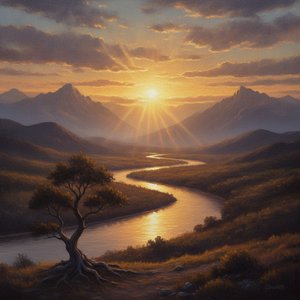
Golden Hour Magic: Capturing the Ethereal Beauty of Sunset Landscapes in Fine Art
Embark on a visual journey through the golden hour. Discover how master painters capture the ethereal glow of sunsets, from Monet's Impressionism to the Hudson River School. Explore timeless techniques and bring the magic of twilight into your home with exquisite fine art reproductions.

Evoking Atmosphere & Identity: A Journey Through Landscape Painting's History
Explore the rich history of landscape painting! Discover renowned artists, movements like Romanticism, & techniques such as atmospheric perspective. Find inspiration and quality reproductions at OriginalUniqueArt.

John Constablein 25 mestariteosta: Taidetta ja tunnelmaa kotiisi – OriginalUniqueArt.com
Tutustu John Constable'n 25 mestariteokseen – romanttisia maisemamaalauksia, jotka vangitsevat englantilaisen luonnon tunnelman. Taidehistoriaa ja inspiraatiota kotiisi OriginalUniqueArt.com:ssa. Löydä kaikki taideteokset verkossa!
