 Esikatselu
 Jaa teos
 Jaa
Jaa
 Tiedot
 Opas
Opas

 Lataa kuva
 Samanlaisia kohteita
 Röntgenkuvaus
 Diaesitys
 Kysymykset ja vastaukset
 Tilastot
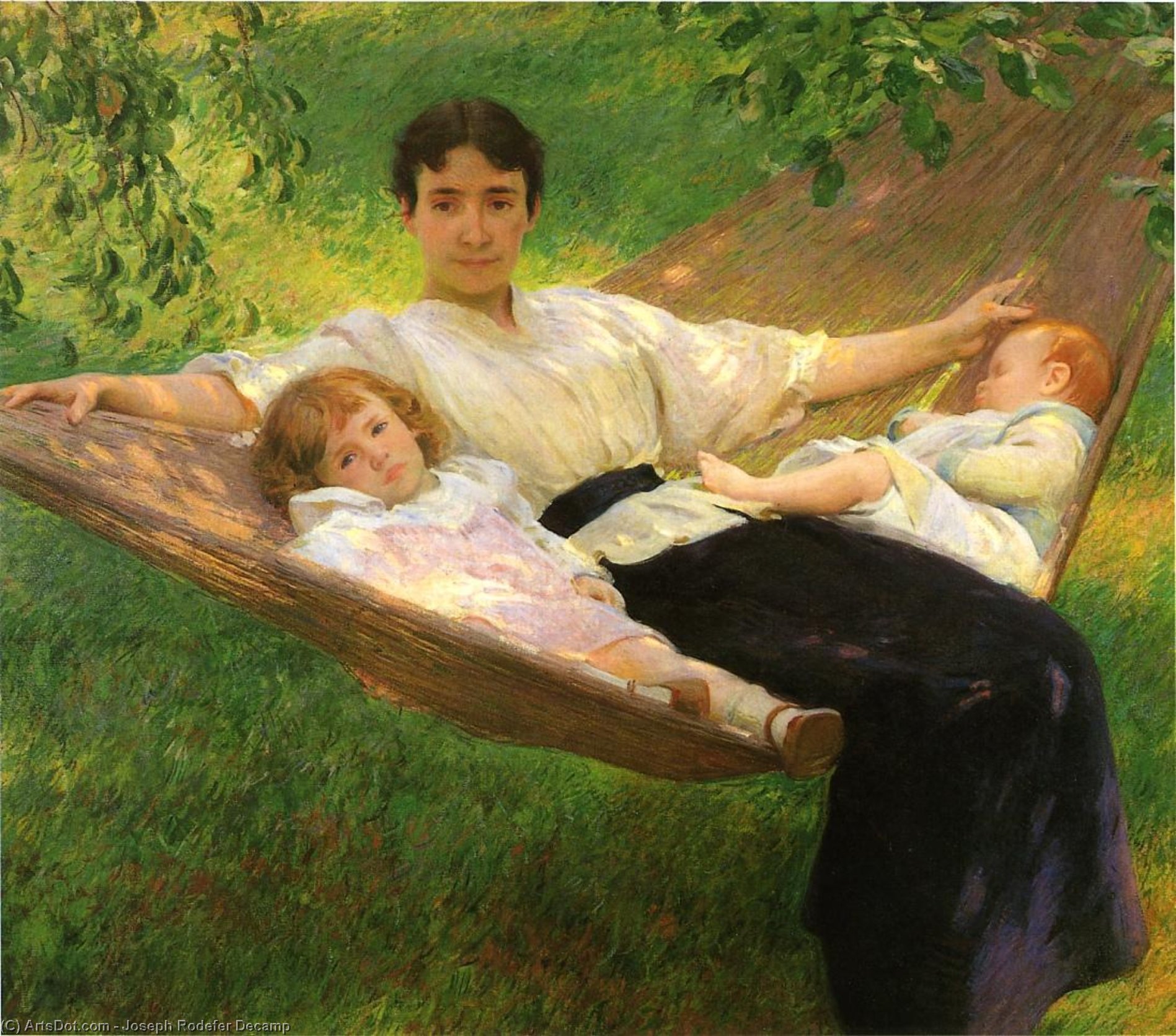
The Hammock
 Lue lisää
Saat tulostusvalmiin tiedoston, jonka laatu ylittää verkkonäkymän huomattavasti. Jokainen myymämme digitaalinen kuva on peräisin arkistomme korkearesoluutioisesta mestariteoksesta — yleensä 5 000–15 000 pikselin levyisenä — joten voit tulostaa suuria kokoja, rajata tiukasti tai toistaa hienovaraiset yksityiskohdat luottavaisin mielin.
Mikään tiedosto ei lähde studiostamme muuttamatta. Digitaalinen asiantuntija vertaa värejä alkuperäiseen maalaukseen ja korjaa niitä tarvittaessa, minkä jälkeen hän parantaa kuvan selkeyttä ja yksityiskohtia ammattimaisilla retusointityökaluilla — säilyttäen aina uskollisena taiteilijan siveltimenjäljen ja tyylin. Lopputuloksena on kuva, joka näyttää maalaukselta, eikä suodatetulta skannaukselta.
Hyväksyt työn ennen valmistumistaan: asiantuntijamme lähettää kuvan tarkistettavaksi sähköpostitse 72 tunnin kuluessa. Etkö ole tyytyväinen? Pyydä parannuksia tai korjauksia, tai pyydä hyvitystä, mikäli laatu ei vastaa odotuksia.
Tämä on laatua, johon kustantamot, design-studiot, galleriat ja painotalot luottavat.
Digitaalinen kuva
Lataa korkearesoluutioinen tiedosto henkilökohtaiseen näyttelyyn, tulostamiseen ja luoviin projekteihin. ( Vaihda tulosteeseen Osta käsinmaalattu taideteos)
Sisältyy jokaiseen digitaalisen kuvan tilaukseen
Asiantunteva digitaalinen toimitus, laatu taattu
Kun valitset OriginalUniqueArt.com-palvelun, et saa vain kuvaa – saat ammattimaisesti viimeistellyn digitaalisen taideteoksen, joka on luotu tarkkuudella ja jonka takaa tulee tyytyväisyystakuu. Tässä on kaikki, mitä tilauksesi sisältää, automaattisesti:

Nopea sähköpostitoimitus
Saat korkearesoluutioisen digitaalisen kuvatiedostosi sähköpostiisi 72 tunnin kuluessa tilauksesta – valmiina käytettäväksi välittömästi.

Tekoälyllä parannettu digitaalinen tiedosto
Teoksesi on optimoitu ammattimaisesti edistyneiden tekoälytyökalujen ja manuaalisen jälkikäsittelyn avulla, mikä takaa maksimaalisen yksityiskohtaisuuden, selkeyden ja väritarkkuuden.

Ilmainen uudelleenlähetys elinikäisesti
Oletko vahingossa poistanut tai kadottanut tiedostosi? Ei hätää – lähetämme sen sinulle uudelleen milloin tahansa täysin maksutta.

Ei tuontimaksuja – koskaan
Nauti taiteestasi välittömästi ilman tullimaksuja, veroja tai toimituskuluja – digitaaliset lataukset ovat aina verovapaita.

Värintoiston tarkkuustakuu
Varmistamme, että digitaalinen kuvasi vastaa alkuperäisiä värejä mahdollisimman tarkasti käyttämällä ammattilaistason työkaluja ja värinhallintaa.

100 päivän tyytyväisyystakuu
Jos et ole tyytyväinen digitaaliseen kuvaasi, muokkaamme sitä tai palautamme 100% hinnan 100 päivän kuluessa – kysymystä ei esitetä.

100% Rahat takaisin -takuu
Et ole tyytyväinen? Saat täyden hyvityksen 100 päivän kuluessa digitaalisen tiedostosi vastaanottamisesta – kysymystä ei esitetä.

Määräalennukset
Osta 3 kuvaa, säästä 10% - Osta 5, säästä 15% - Osta 10+, säästä 20%. Erinomainen valinta luoviin projekteihin, gallerioille ja toimistoille.
Taiteilijan esittely
Joseph Rodefer DeCamp (1858–1923): Explore luminous portraits & interiors by this American Impressionist master of the Boston School
Joseph Rodefer DeCamp, a name synonymous with the refined elegance of American Impressionism and the distinctive style of the Boston School, occupies a pivotal position in the narrative of late 19th and early 20th-century American art. Born in Cincinnati, Ohio, in 1858, DeCamp’s artistic journey was one of dedicated study, evolving influences, and ultimately, a masterful synthesis of realism, impressionistic light, and an enduring fascination with the subtleties of human experience. His canvases offer glimpses into a world of quiet domesticity, luminous interiors, and portraits that capture not merely likeness but also the inner lives of his subjects. From early training under Thomas S. Noble and Frank Duveneck in Cincinnati to formative years spent absorbing artistic traditions in Munich and Florence, DeCamp’s foundation was built upon rigorous academic principles before blossoming into a uniquely American vision.Formative Years and European Influences
DeCamp's initial exposure to art came at the McMicken School of Design in Cincinnati, where he honed his foundational skills under Noble, whose emphasis on draftsmanship would remain a cornerstone of DeCamp’s technique. However, it was his association with Frank Duveneck that proved particularly impactful, steering him towards a bolder, more direct approach to painting. This influence propelled DeCamp across the Atlantic in the 1870s, joining Duveneck and a cohort of American students at the Royal Academy of Munich. While initially embracing the academic rigor of the academy, DeCamp soon gravitated toward Duveneck’s independent spirit and followed him to Florence, immersing himself in the rich artistic heritage of Italy. These European experiences were crucial, providing not only technical training but also exposure to the Old Masters – particularly the Dutch painters like Jan Vermeer – whose influence would become increasingly apparent in his later work. The meticulous detail, subtle lighting, and quiet intimacy found in Vermeer’s interiors resonated deeply with DeCamp, shaping his aesthetic sensibilities and informing his approach to composition and atmosphere. He diligently studied the techniques of Rembrandt and Hals, absorbing their mastery of chiaroscuro—the dramatic interplay of light and shadow—which would become a hallmark of his own artistic style.The Boston School and a Distinctive Style
Upon returning to the United States in 1883, DeCamp settled in Boston, becoming an integral part of what would soon emerge as the Boston School. Alongside artists like Edmund C. Tarbell and Emil Otto Grundmann, he championed a style that blended Impressionist techniques with traditional academic training. This wasn’t a wholesale adoption of French Impressionism; rather, it was a uniquely American adaptation, prioritizing solid draftsmanship, carefully considered compositions, and a luminous quality of light achieved through subtle color harmonies. DeCamp's work during this period often depicted women engaged in everyday activities – sewing, reading, or simply lost in thought – bathed in the soft glow of interior light. He skillfully captured these scenes with remarkable precision and sensitivity, conveying not only visual accuracy but also emotional nuance. His incorporation of Japonisme—the influence of Japanese art and design—added another layer to his artistic vocabulary, introducing delicate patterns and a sense of refined elegance into his compositions. This stylistic fusion reflected DeCamp’s belief in the importance of both tradition and innovation – honoring the legacy of European masters while forging a distinctly American aesthetic.Notable Works
- The Hammock – Portrait of the Artist's Wife and Children: A tender depiction of domestic life, showcasing DeCamp’s skill in capturing familial intimacy.
- The Guitar Player (1908): Demonstrates his ability to blend figure painting with atmospheric effects, creating a captivating scene of musical contemplation.
- Portrait of Dr. Horace Howard Furness (1906): A masterful portrait that reveals not only the subject’s physical likeness but also his intellectual depth and character.
- The Cellist (1908): Exemplifies DeCamp's skill in portraying figures within subtly lit interiors, evoking a sense of quiet concentration and artistic passion.
- Jetty at Low Tide (also known as The Water Pier): Captures serene coastal beauty with texture and light.
Recognition and Enduring Legacy
Throughout his career, DeCamp received numerous accolades for his contributions to American art. He earned the Temple Gold Medal in 1899 for *Woman Drying Her Hair*, the Beck Gold Medal in 1912 for *Portrait of Francis I. Amory*, and the Lippincott Prize in 1920 for *The Red Kimono*. His work was also recognized internationally, receiving an honorable mention at the 1900 Exposition Universelle in Paris. Beyond his artistic achievements, DeCamp dedicated himself to education, serving as a faculty member at both the Massachusetts Normal Art School and the School of the Museum of Fine Arts in Boston, nurturing generations of aspiring artists. His influence extended far beyond his students; he helped shape the course of American painting, bridging the gap between academic tradition and modern innovation. He instilled in his pupils a commitment to meticulous observation and expressive technique—values that would continue to inform their artistic endeavors for decades to come. DeCamp’s canvases remain treasured examples of Luminist art, embodying the quiet beauty and contemplative spirit characteristic of the Boston School. His legacy endures as a testament to the transformative power of artistic exploration and the enduring fascination with capturing human experience in luminous detail.
Joseph Rodefer DeCamp
1858 - 1923 , Yhdysvallat
Pähkinänkuoressa
- Artistic Movement Or Style: Impressionismi & Bostonskoulu
- Artists Who Influenced This Artist:
- Frank Duveneck
- Jan Vermeer
- Thomas S. Noble
- Date Of Birth: November 5, 1858
- Date Of Death: February 11, 1923
- Full Name: Joseph Rodefer DeCamp
- Nationality: Amerikkalainen
- Notable Artworks:
- Hammocken
- Kitara pelaaja
- Viulisti
- Omistajan vaimo ja lapset
- Place Of Birth: Cincinnati, USA