Naiset
Käsinmaalattu öljykopio
Käsinmaalattu öljyväri kankaalle haluamassasi koossa ja kehyksissä, taiteilijoidemme valmistamana tilauksesta. ( Osta printti
Osta kuva)
P118B $10
P118H $10
P118W $10
P438Z $10
P508JH $12
P508YH $12
P805H $10
P805Z $10
P919BZ $10
P919G $10
P919XJ $10
P959ZH $10
P968JZ $12
W106C $8
W218G $10
W218JH $8
W218Y $10
W307PJ $10
W316G $10
W316PJ $8
W316Y $10
W398PJ $8
W4111J $10
W500HY $15
W500JH $15
W692G $12
W849H $8
W940BG $15
W953PJ $8
Valitse valmiista mitoistamme sellaiset, jotka vastaavat teoksen alkuperäisiä mittasuhteita.
Voit syöttää omat mitat sopimaan tiettyyn kehykseen tai tilaan. Jos valitsemasi koko ei vastaa alkuperäisen kuvan mittasuhteita, rajaamme taideteoksen tai jatkamme maalausta käsin maalatuilla elementeillä. Digitaalinen esikatselu lähetetään hyväksyttäväksi ennen tuotannon aloittamista.
Huomioithan, että näytöllä oleva esikatselu ei vastaa todellista rajausta tai jatkamista. Vain digitaalinen mallikuva näyttää lopullisen sommittelun tarkasti.
Vaikka mittatilaustyöt ovat mahdollisia, suosittelemme valitsemaan mitan ennalta määritetystä listasta alkuperäisten mittasuhteiden säilyttämiseksi.
Tilauksen jälkeen OriginalUniqueArt.com -tiimi lähettää asiakkaalle ohjeet ja esikatselukuvan.
Maailmanlaajuinen toimitus () 3–4 viikossa tavallisen 5 viikon sijaan. (22 elokuu). Laadusta ei tingitä.
Ilmainen pikatoimitus ympäri maailman
Korkealaatuinen pellavakangas
Kattava kuljetusvakuutus
Tulliveron palautustakuu
Täydellinen värien vastaavuustakuu
60 päivän palautusoikeus (vain valmistusvirheet)
100% rahat takaisin -takuu
Määräalennus tarjous
Naiset
Reproduktiotekniikka
Replikaatin koko
-
Kokonaishinta
$ 300
Teoksen kuvaus
José Clemente Orozco: Mysticism and Decay in “Mujeres”
José Clemente Orozco’s “Mujeres,” created in 1935, stands as one of his most arresting lithographs—a visceral exploration of mortality, femininity, and the crumbling edifice of societal values during Mexico's turbulent revolutionary era. Commissioned for the Palace of Fine Arts in Mexico City, this monumental print isn’t merely a depiction; it’s an embodiment of Orozco’s profound philosophical engagement with the human condition and his unwavering commitment to portraying the darker side of existence alongside moments of beauty. The artwork immediately confronts the viewer with a stark contrast—black ink against creamy paper—a technique that underscores the solemnity of its subject matter and enhances its dramatic impact.- Subject Matter: At first glance, “Mujeres” presents a disturbing tableau: a woman lying supine on her back, seemingly lifeless, while another figure looms above her, attempting to strangle her. Scattered around are additional figures—a man wielding a knife and cigarette—creating an unsettling ensemble that speaks volumes about the anxieties of the time.
- Style & Technique: Orozco’s masterful lithographic execution is characterized by meticulous detail and expressive shading. The artist skillfully utilizes hatching and cross-hatching to convey texture and depth, capturing the physicality of the figures with remarkable accuracy. However, beyond mere realism lies a deliberate stylistic choice—a rejection of idealized beauty in favor of confronting uncomfortable truths about human vulnerability.
Historical Context: Catharsis and the Revolution’s Shadow
“Mujeres” emerged from the crucible of Mexico's Second Great Revolution (1934-1940), a period marked by intense political polarization and social upheaval. Orozco, deeply influenced by Marxist ideology, viewed art as a tool for disseminating revolutionary ideas and exposing the hypocrisy of bourgeois morality. The mural itself, “Catharsis,” served as a visual manifesto—a deliberate provocation aimed at shattering illusions and forcing audiences to confront the grim realities of oppression and violence. Lithography, chosen as the medium, mirrored this spirit of rebellion; it allowed Orozco to disseminate his vision widely while maintaining artistic control over its execution.- Symbolism: The central figure—the woman lying prone—represents death itself, a stark reminder of mortality and decay. Above her stands the strangler, symbolizing the forces of domination and repression that threaten to extinguish human spirit. The scattered figures surrounding them embody the fragmented remnants of civilization—a crumbling world consumed by darkness.
- Emotional Impact: “Mujeres” is undeniably emotionally charged. Orozco’s deliberate use of unsettling imagery evokes feelings of fear, despair, and vulnerability. Yet, amidst this bleakness, there's also a glimmer of defiance—a suggestion that even in the face of annihilation, human resilience persists.
Influence & Legacy: A Masterpiece of Expressionism
“Mujeres” firmly establishes Orozco as a pivotal figure within Mexican Expressionism and aligns him with artists like Edvard Munch and Ernst Ludwig Kirchner—artists who similarly wrestled with themes of existential angst and psychological torment. The print’s uncompromising portrayal of human suffering resonated deeply with audiences during its time and continues to inspire admiration for its artistic merit and intellectual depth. Its enduring power lies in Orozco's ability to transform abstract concepts into visceral visual experience, cementing “Mujeres” as a timeless testament to the artist’s profound engagement with the complexities of human existence.Reproductions & Interior Design Considerations
A high-quality reproduction of “Mujeres” can serve as a striking centerpiece for contemporary interior design spaces—particularly those embracing minimalist aesthetics or exploring darker palettes. Selecting a faithful print from OriginalUniqueArt.com guarantees preservation of Orozco’s original artistic vision and ensures that its evocative symbolism remains accessible to collectors and enthusiasts alike. Consider framing it in a dark wood frame to accentuate the artwork's dramatic contrasts and enhance its visual impact—a gesture honoring the legacy of this unforgettable masterpiece.Taiteilijan elämäkerta
José Clemente Orozco (1883–1949): A Life Forged in Revolution
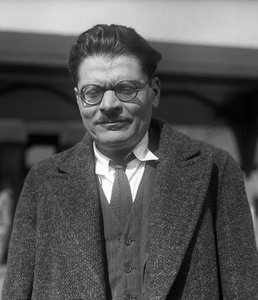
José Clemente Orozco, born November 23, 1883, in Zapotlán el Grande (now Ciudad Guzmán), Jalisco, Mexico, stands as a monumental figure in the pantheon of Mexican muralists. His life was inextricably linked to the tumultuous currents of his nation’s history—a period defined by revolution, social upheaval, and a fervent search for national identity. Orozco wasn't merely a painter; he was a visual chronicler of Mexico’s soul, translating its struggles, hopes, and contradictions onto vast canvases that continue to resonate with power today. From an early age, the vibrant yet often harsh realities of Mexican life captivated him. His initial artistic awakening occurred during his school years in Mexico City, where he became enthralled by the work of José Guadalupe Posada, a master engraver whose satirical depictions of death and daily life challenged societal norms. This exposure instilled in Orozco a commitment to art as a vehicle for social commentary—a principle that would define his entire career.Early Life & Artistic Influences
Orozco’s formative years were marked by both intellectual curiosity and personal tragedy. He demonstrated an early aptitude for drawing, fueled by the profound impact of Posada's engravings on his worldview. These prints confronted viewers with unflinching portrayals of mortality and social injustice—a stylistic approach that would permeate Orozco’s subsequent artistic endeavors. His formal training began at the Academy of San Carlos in 1906, where he encountered David Alfaro Siqueiros, a fellow student who would become another key player in the burgeoning Mexican mural movement. This period coincided with significant political unrest and growing demands for social justice—the aftermath of the Mexican Revolution (1910-1920). The revolution unleashed an unprecedented surge of artistic expression, driven by a desire to forge a uniquely Mexican aesthetic that honored indigenous culture and confronted the nation’s pressing challenges. Alongside Rivera and Siqueiros, Orozco became one of the “big three” muralists who spearheaded this movement—a collective determined to reshape Mexico's cultural landscape through monumental art projects.The Accident & Artistic Determination
A youthful accident profoundly altered Orozco’s life trajectory. At seventeen, while experimenting with explosives during a fireworks display, he suffered a devastating injury—the loss of his left hand. Despite this debilitating setback, Orozco refused to succumb to despair; instead, he channeled his grief and frustration into artistic creation. He returned to the Academy of San Carlos with renewed vigor, dedicating himself to mastering painting techniques and honing his craft. This unwavering resolve would become a hallmark of his artistic persona—a testament to his resilience and unwavering belief in the transformative power of art. His determination to overcome adversity served as inspiration for many artists who followed him.The Birth of Mexican Muralism & Orozco’s Distinct Voice
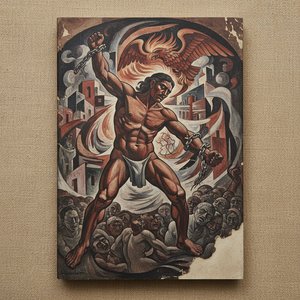
Orozco's vision of the mythical figure of Prometheus as an allegory for art intended for a broad audience highlights the ethos of post-revolutionary Mexican muralism as a means to transform society. The muralists viewed their art as a weapon for social justice and civic engagement. The work of Orozco and his peers is a model for a politically engaged life as an artist. He wasn’t interested in glorifying revolution; he sought to expose its cost—the pain, loss, and disillusionment that often accompanied it. His stylistic approach differed markedly from Rivera's optimistic depictions of Mexico’s past and future, and Siqueiros’ dynamic portrayals of revolutionary fervor. Orozco’s distinctive voice emerged from a deep engagement with Symbolism—a movement that emphasized the importance of myth and allegory in conveying profound truths about human experience. He skillfully blended elements of Surrealism and Expressionism into his artistic vocabulary—techniques that allowed him to express complex emotions and psychological states with remarkable intensity.Major Achievements & Legacy
Between 1922 and 1948, Orozco painted murals in Mexico City; Orizaba; Claremont, California; New York City; Hanover, New Hampshire; Guadalajara; and Jiquilpan, Michoacán—projects that cemented his reputation as one of the most influential muralists of his generation. His monumental canvases tackled ambitious themes—the struggles for social justice, the horrors of war, and the complexities of human psychology—often employing a dark palette and fragmented imagery to convey a sense of unease and disorientation. Notable works include *Omnisciencia*, which explores the concept of universal knowledge; *Los Desocupados*, depicting the plight of Mexico’s unemployed laborers; *Cortés & La Malinche*, examining the clash between Spanish conquest and indigenous culture; and *Mexican Soldiers*, portraying the heroism and sacrifice of Mexican soldiers during the Revolution. His influence extended far beyond the realm of art—inspiring artists worldwide with his unwavering commitment to social realism and his profound exploration of human suffering. José Clemente Orozco’s legacy continues to resonate today, reminding us that art can serve as a powerful catalyst for change and reflection.José Clemente Orozco
1883 - 1949 , Mexico
Pikatiedot
- Artistic Movement Or Style: Muralismo mexicano
- Artists Or Movements Influenced By This Artist: ['Diego Rivera']
- Artists Who Influenced This Artist: ['José Guadalupe Posada']
- Date Of Birth: November 23, 1883
- Date Of Death: September 7, 1949
- Full Name: José Clemente Orozco
- Nationality: Mexicano
- Notable Artworks:
- Omnisciencia
- Cortés & La Malinche
- Place Of Birth: Ciudad Guzmán, México


Lasivaihtoehto on saatavilla vain alle 110 cm kokoisina teoksina