

 Katso seinällä
 Lähetä
 Jaa
Jaa
 Tarkemmat tiedot
 Opas
Opas

 Lataa kuva
 Samanlaisia kohteita
 Röntgenkuvaus
 Diaesitys
 Tilastot
Elizabeth James Parkyns
 Oil
Oil- WallArt
- Romanticism
 1794
1794- Early Modern
 76.0 x 63.0 cm
 Taft Museum of Art
 Lue lisää
Giclée- ja taideprintit
Museolaatuisia giclée- tai kankaitaulun tulosteita nopealla tuotannolla ja joustavilla viimeistelyvaihtoehdoilla. ( Tilaa käsinmaalattu jäljennös Siirry digitaaliseen kuvaan)




P118B €10

P118H €10

P118W €10

P438Z €10

P508JH €12

P508YH €12

P805H €10

P805Z €10

P919BZ €10

P919G €10

P919XJ €10

P959ZH €10

P968JZ €12

W106C €8

W218G €10

W218JH €8

W218Y €10

W307PJ €10

W316G €10

W316PJ €8

W316Y €10

W398PJ €8

W4111J €10

W500HY €15

W500JH €15

W692G €12

W849H €8

W940BG €15

W953PJ €8




Valitse valmiista mitoistamme sellaiset, jotka vastaavat teoksen alkuperäisiä mittasuhteita.

Kirjoita tarvitsemasi leveys ja korkeus, jotta tuloste sopii kehyskokoon tai seinällesi. Tulostetta voidaan vain leikata, sitä ei voi koskaan tehdä suuremmaksi kuin alkuperäinen kuva, joten eri muotoinen koko aiheuttaa osan kuvasta katoamisen. Lähetämme sinulle digitaalisen mallikuvan hyväksyttäväksi ennen kuin aloitamme tulostuksen. Tällä sivulla näkyvä kuva ei näytä lopullista leikkausta — vain mallikuva näyttää sen.
Maailmanlaajuinen toimitus () 2 viikossa tavallisen 4–5 viikon sijaan. (23 lokakuu)

Ilmainen pikatoimitus ympäri maailman

Korkealaatuinen pellavakangas

Kattava kuljetusvakuutus

Tulliveron palautustakuu

Takuu täydellisestä värien vastaavuudesta

100 päivän palautusoikeus valmistusvirhetapauksissa

100% rahat takaisin -takuu

Määräalennus saatavilla
 Lasivaihtoehto on saatavilla vain alle 110 cm kokoisille teoksille

Elizabeth James Parkyns
Giclée- ja taideprintit
Replikaatin koko
-


Kokonaishinta
€ 70
A Vision of Serenity: The Ethereal Grace of Elizabeth James Parkyns
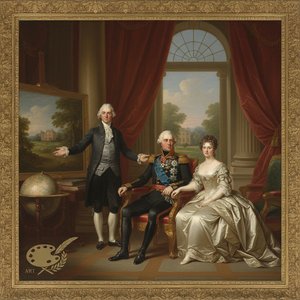
In the quietude of a sun-drenched meadow, John Hoppner’s 1794 masterpiece, Elizabeth James Parkyns, invites the viewer into a realm where time seems to suspend its forward march. This portrait is far more than a mere documentation of a young woman's features; it is an evocative window into the Romantic era’s profound fascination with idealized beauty and the delicate interplay between human emotion and the natural world. As one gazes upon the subject, there is an immediate sense of being enveloped by a soft, luminous atmosphere that speaks to both the artist's technical mastery and his deep psychological insight.
The composition centers on Elizabeth, whose presence is defined by a captivating duality of confidence and vulnerability. Dressed in a flowing white gown that catches the light with pearlescent brilliance, she stands amidst a tranquil landscape that feels almost dreamlike. The delicate lace trim of her attire and the dark, elegant shawl draped around her shoulders provide a sophisticated contrast to the organic textures of the grass and trees. Hoppner subtly integrates elements of nature to deepen the painting's narrative; two birds perched upon nearby branches serve as silent sentinels of the scene, acting as classical symbols of hope, freedom, and the fleeting nature of youth.
Mastery of Light and the Romantic Touch
Technically, the portrait is a triumph of late 18th-century oil painting. Hoppner, heavily influenced by the legendary Joshua Reynolds, employs a sophisticated layering technique known as glazing. By applying thin, translucent veils of color over dried paint, he achieves an ethereal glow that seems to emanately from within the canvas itself. This method allows for a remarkable depth of tone, particularly in the way the sunlight filters through the meadow, creating soft shadows and brilliant highlights that breathe life into the fabric of her gown.
His brushwork further distinguishes this piece; while he maintains the polished surfaces characteristic of the Reynoldsian style, Hoppner introduces a certain expressive freedom. The strokes are loose enough to convey the movement of wind through the grass and the soft texture of hair, yet precise enough to capture the intricate details of her jewelry and the delicate lace. For the discerning collector or interior designer, this balance of precision and fluidity makes the work exceptionally versatile, offering a sense of classical prestige that can anchor a room with quiet, sophisticated energy.
A Timeless Legacy for the Modern Collector
To possess a reproduction of Elizabeth James Parkyns is to bring a piece of English art history into the contemporary home. The painting emerged from a period of significant artistic innovation in London, a time when portraiture sought to elevate the sitter beyond their social station to reach a state of poetic grace. Hoppner’s ability to capture the "inner life" of his subjects ensures that the painting remains emotionally resonant centuries after its creation.
Whether placed in a sunlit library or as a focal point in a formal dining area, this artwork offers an enduring sense of peace. It serves as a reminder of the beauty found in stillness and the elegance of a life lived in harmony with nature. For those seeking to curate a space filled with inspiration, this portrait provides a sophisticated touch of Romanticism, blending historical depth with a timeless aesthetic that transcends passing trends.
Kysymykset ja vastaukset
Mihin vaiheeseen John Hoppnerin kehityksestä "Elizabeth James Parkyns" edustaa?
"Elizabeth James Parkyns" kuuluu John Hoppner uran Mature Period-vaiheeseen. Tämä luokittelu yhdistää teoksen taiteilijan kehitysvaiheeseen.
Mihin huoneeseen John Hoppner:n "Elizabeth James Parkyns" suositellaan sijoitettavaksi sen värien perusteella?
John Hoppner:n "Elizabeth James Parkyns" -teoksen Earthy värit soveltuvat erinomaisesti sen suositeltuun tilaan: Living Room.
Onko teos "Elizabeth James Parkyns" tekijänoikeusvapaa?
Tekijänoikeustiedot teokselle John Hoppner:n "Elizabeth James Parkyns": teos on tekijänoikeusvapaa – sen tekijänoikeussuoja on päättynyt. Tämä määrittää, voidaanko kuvasta tehdä vapaasti jäljennöksiä.
Taiteilijan elämäkerta
A Life Dedicated to Artistry and Royal Patronage
John Hoppner (1758–1810) stands as a beacon of 18th-century British portraiture, an artist whose vibrant palette and masterful technique captivated audiences and secured his place within the annals of art history. Born in Whitechapel, London, to German immigrant parents who worked at the court of George II., Hoppner’s life unfolded against a backdrop of aristocratic privilege and artistic fervor—a confluence that profoundly shaped his oeuvre.Early Life and Artistic Training
From his formative years as a chorister at the Royal Chapel, St James's Palace, Hoppner possessed an innate inclination towards visual expression. This passion propelled him toward enrollment in the Royal Academy in 1775, where he honed his skills under the tutelage of luminaries like Joshua Reynolds—a connection that would indelibly influence his artistic style. The prestigious silver medal awarded for drawing from life in 1778 and subsequently the gold medal for historical painting with “King Lear” in 1782 cemented his reputation as a prodigious talent, demonstrating an exceptional grasp of anatomical precision and compositional dynamism.Rise to Fame and Notable Works
Hoppner’s fame ascended rapidly thanks to his captivating portraits of women and children—works lauded by discerning critics for their sensitivity and expressive power. His distinctive touch, characterized by breadth and freedom, subtly mirrored Reynolds's approach, capturing the essence of human character with remarkable nuance. Among his most celebrated achievements are: “Mrs. Jordan as Viola” in Shakespeare’s “Twelfth Night,” currently housed at English Heritage (London), a masterpiece showcasing Hoppner’s unparalleled command of color and form; and portraits commissioned for the royal family—specifically depictions of King George III, Prince William Augustus Fitzroy Duke of York, Lord Rodney, and Lord Nelson—which adorned the state apartments at St James's Palace, symbolizing his elevated position within British society.Influences and Artistic Style
Hoppner’s artistic vision was undeniably shaped by Reynolds’s influence, whose emphasis on tonal harmony and dramatic lighting served as a guiding principle for Hoppner’s own compositions. However, Hoppner possessed an individual flair—a willingness to experiment with color and texture that distinguished him from his contemporaries. His canvases pulsated with life, infused with luminous hues and skillfully rendered details—a testament to his dedication to capturing the beauty of the human form and conveying emotion through visual language.Legacy and Historical Significance
Despite facing personal hardships – namely a debilitating liver disease – John Hoppner bequeathed to posterity an extraordinary legacy: a body of work that continues to inspire admiration for its artistic merit and psychological depth. His portraits stand as enduring symbols of Georgian elegance and royal patronage, reflecting the cultural values of his time while simultaneously transcending stylistic conventions. Today, Hoppner’s paintings reside in prestigious institutions worldwide—a testament to their timeless appeal and enduring contribution to British art history.
John Hoppner
1758 - 1810 , Iso-Britannia
Tietoa taiteilijasta
- Artistic Movement Or Style: Portraits
- Artists Who Influenced This Artist: ['Joshua Reynolds']
- Date Of Birth: 4. huhtikuuta 1758
- Date Of Death: 23. tammikuuta 1810
- Full Name: John Hoppner
- Nationality: Englanti
- Notable Artworks:
- Mrs. Jordan Viola
- Prinssi Wales
- Yorkin herttua
- Lord Rodney
- Lord Nelson
- Place Of Birth: Whitechapel, Lontoo
Aiheeseen liittyvät artikkelit
John Hoppner: Portraiture, Patronage & British Identity in the Late Georgian Era
Explore the life & work of John Hoppner, a leading Georgian portraitist. Discover his vibrant style, influential patrons, and lasting impact on British art history. Expert insights for collectors.

James Abbott McNeill Whistlerin 25 mestariteosta: Taidetta ja sisustusta OriginalUniqueArt.comissa
Tutustu James Abbott McNeill Whistlerin 25 vaikuttavinta mestariteosta! Uppoudu amerikkalaisen impressionismin maailmaan, tunnelmallisiin nocturneihin ja upeisiin muotokuviin. Löydä inspiraatiota sisustukseen OriginalUniqueArt.comista – taidekopiot museolaadulla. Explore the full collection online!

John Singer Sargent's 25 Masterpieces: Portraits & Beyond | OriginalUniqueArt
Explore 25 iconic John Singer Sargent paintings – from dazzling portraits to Impressionist landscapes. Discover the stories behind Madame X, El Jaleo & more! Find museum-quality art reproductions and elevate your home decor with OriginalUniqueArt.com.

Sir Alfred James Munningsin 25 mestariteosta: Hevosmaalausten lumo ja brittiläinen maalaisidylli
Tutustu Sir Alfred James Munningsin 25 lumoavinta mestariteosta! Uppoudu brittiläisen maalaisidyllin ja hevosmaalausten maailmaan. Löydä inspiraatiota kotiisi OriginalUniqueArt.com:ista – taideprintit museolaadulla.

John Constablein 25 mestariteosta: Taidetta ja tunnelmaa kotiisi – OriginalUniqueArt.com
Tutustu John Constable'n 25 mestariteokseen – romanttisia maisemamaalauksia, jotka vangitsevat englantilaisen luonnon tunnelman. Taidehistoriaa ja inspiraatiota kotiisi OriginalUniqueArt.com:ssa. Löydä kaikki taideteokset verkossa!

