

 Katso seinällä
 Lähetä
 Jaa
Jaa
 Tarkemmat tiedot
 Opas
Opas

 Lataa kuva
 Samanlaisia kohteita
 Röntgenkuvaus
 Diaesitys
 Tilastot
On the Scent

 Lue lisää
Käsinmaalattu öljyvärinen jäljennös
Käsinmaalattu öljyväri kankaalle haluamassasi koossa ja kehyksissä, taiteilijoidemme valmistamana tilauksesta. ( Vaihda tulosteeseen Siirry digitaaliseen kuvaan)




































Valitse valmiista mitoistamme sellaiset, jotka vastaavat teoksen alkuperäisiä mittasuhteita.

Kirjoita tarvitsemasi leveys ja korkeus, jotta teos sopii kehyskehyksiisi tai seinällesi. Koska kyseessä on käsinmaalattu teos, taiteilija voi maalata hieman enemmän kuvan ympärille tai rajata sitä hieman, jos haluat eri muotoisen koon — valinta on sinun. Lähetämme sinulle digitaalisen mallikuvan hyväksyttäväksi ennen kuin maalaus alkaa. Tällä sivulla näkyvä kuva ei vastaa lopullista tulosta — vain mallikuva näyttää sen.
Tilauksen jälkeen OriginalUniqueArt.com -tiimi lähettää asiakkaalle sähköpostitse ohjeet ja esikatselukuvan.
Maailmanlaajuinen toimitus () 3–4 viikossa tavallisen 5 viikon sijaan. (24 lokakuu). Laadusta ei tingitä.

Ilmainen pikatoimitus ympäri maailman

Korkealaatuinen pellavakangas

Kattava kuljetusvakuutus

Tulliveron palautustakuu

Takuu täydellisestä värien vastaavuudesta

100 päivän palautusoikeus valmistusvirhetapauksissa

100% rahat takaisin -takuu

Määräalennus saatavilla
 Lasivaihtoehto on saatavilla vain alle 110 cm kokoisille teoksille

On the Scent
Reproduktiotapa
Replikaatin koko
-


Kokonaishinta
€ 286
On the Scent: A Dynamic Hunting Scene by John Frederick Herring Senior
- Artist: John Frederick Herring Senior
- Date: Unknown
- Medium: Oil on Canvas
A Lively Depiction of 19th-Century Sporting Life
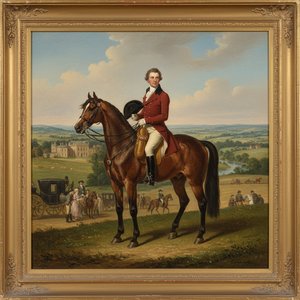
“On the Scent” by John Frederick Herring Senior captures a vibrant moment during a fox hunt, a popular pastime in 19th-century England. The artwork pulsates with energy as a mounted huntsman, distinguished by his striking red coat, leads a pack of hounds across an open field. The composition is skillfully arranged to draw the viewer's eye directly to the rider and his horse, while the surrounding landscape provides a naturalistic backdrop. Two additional figures on horseback are visible in the distance, hinting at the larger group participating in the chase. Herring’s keen observation of animal anatomy and movement brings this scene to life with remarkable realism.
Style and Technique: British Sporting Art at its Finest
Herring Senior was a leading figure in British sporting art, known for his realistic depictions of animals and landscapes. This painting exemplifies the style of the era, characterized by meticulous detail and an emphasis on capturing the excitement of outdoor pursuits. The artist’s technique involves visible brushstrokes that contribute to a textured appearance, adding depth and dynamism to the scene. The use of oil paints allows for rich color saturation and subtle gradations in tone, enhancing the overall visual impact. Notice how Herring uses strong vertical lines in the trees to contrast with the diagonal movement of the horse and hounds, creating a sense of forward momentum.
Symbolism and Emotional Impact
Beyond its depiction of a sporting event, "On the Scent" carries symbolic weight. The bright red coat worn by the huntsman signifies authority and leadership within the hunting party – he is the one guiding the chase. The hounds themselves represent loyalty and determination in pursuit of their quarry. The painting evokes feelings of energy, movement, and the thrill of the hunt—a reflection of the Victorian era’s fascination with outdoor activities and displays of skill. The natural lighting, with highlights on the horse and rider, further enhances the sense of immediacy and excitement.
Historical Context and the Herring Family Legacy
John Frederick Herring Senior (1795-1865) was born in London and later moved to Doncaster, where he established himself as a prominent artist. He is particularly celebrated for his depictions of horses and hunting scenes, often capturing the essence of rural life in 19th-century England. Remarkably, Herring Senior’s sons – John Frederick Herring Jr., Charles Herring, and Benjamin Herring – also became artists, contributing to a family legacy within the art world. His daughter Ann married Harrison Weir, further cementing the family's connection to artistic circles. This painting offers a glimpse into a period of significant social and cultural change in England, where sporting events like fox hunting were both a recreational pursuit and a symbol of status.
Kysymykset ja vastaukset
Miten voin hankkia teoksen John Frederick Herring I:n "On the Scent" digitaalisen tiedoston?
"On the Scent" on saatavilla muodossa korkearesoluutioinen digitaalinen kuvalataus, ja sen voi ostaa suoraan sivulta Digitaalinen kuva.
Miten teoksen "On the Scent" aihe liittyy John Frederick Herring I'n tavallisiin teemoihin?
John Frederick Herring I:n toistuvia teemoja ovat british sporting art traditions, realistic animal depiction focus, typical of herring's animal paintings, demonstrates skill in capturing movement, represents a key subject for the artist, popular 19th-century english pastime, celebration of rural life & sport, reflects aristocratic pursuits; "On the Scent" keskittyy aiheisiin hunting, horses, fox hunt, british art, animal painting, landscape, equestrian, red coat.
Miten voin löytää teoksia, jotka muistuttavat teosta John Frederick Herring I:n "On the Scent"?
Teokset, jotka muistuttavat teosta John Frederick Herring I:n "On the Scent", on koottu teoksen Samankaltaisia -sivulle.
Taiteilijan elämäkerta
John Frederick Herring Sr.: A Life in Art and Sport
John Frederick Herring Sr., a name synonymous with Victorian equestrian art, was more than just a painter; he embodied the spirit of his era – an appreciation for rural life, a fascination with horses, and a dedication to capturing their dynamism on canvas. Born September 12, 1795, in London, England, Herring’s early life foreshadowed his artistic destiny. His father, a Dutch merchant, instilled in him a love for observation and detail—qualities that would prove invaluable throughout his prolific career. From the outset, Herring rejected the bustle of city life, preferring the tranquility of the countryside and the companionship of animals, particularly horses.Early Life and Career: Observing Horses Closely
This inclination wasn’t merely sentimental; it was practical. Herring began his working life as a night coachman—a grueling profession that demanded physical stamina but also provided unparalleled access to the world of horse racing and hunting. It was during these journeys, traversing the English countryside under starry skies, that he honed his artistic eye. He meticulously sketched horses in motion, capturing their musculature, gait, and expressions with remarkable accuracy. Simultaneously, Herring pursued sign painting—a craft requiring precision and artistry—further developing his technical skills. Recognizing his talent, local gentry commissioned portraits of hunters and racehorses, establishing him as a respected artist within his community. Around 1818, he embarked on a significant artistic endeavor: documenting the winners of the St. Leger Cup and subsequently the Derby—events that captivated Victorian society and cemented Herring’s reputation as a recorder of sporting life. Engravings of these paintings disseminated his work widely, boosting its popularity among the public and securing his place in art history.Development as an Artist: Influences and Patronage
Herring briefly studied under Abraham Cooper, a celebrated animal painter who championed realism and anatomical precision—influences that undoubtedly shaped Herring’s artistic style. However, it was his unwavering commitment to observation and meticulous technique that truly distinguished him. In 1836, he formally adopted “Sr.” to his signature, differentiating himself from his son, John Frederick Herring Jr., who was also establishing a successful artistic career—a testament to the enduring legacy of their shared passion for art. Herring’s work gained royal patronage, notably from Queen Victoria and the Duchess of Kent, who recognized his exceptional talent and commissioned numerous paintings reflecting the grandeur of the monarchy and its connection to the natural world. His travels extended beyond England, culminating in a visit to Paris in 1840-1841 at the invitation of the Duc d’Orleans—an opportunity for Herring to immerse himself in artistic innovation and explore new subjects. He produced several captivating canvases for the Duc, demonstrating his versatility as an artist.Major Achievements and Style: Capturing Movement and Emotion
Herring's oeuvre comprises over 1,800 paintings—a staggering output that testifies to his dedication and prolific creativity. He exhibited extensively at prestigious institutions such as the Royal Academy (1818–1865), British Institution (1830–1865), and Society of British Artists (1836-1852)—establishing himself as one of the foremost animal painters of his time alongside Sir Edwin Landseer. His paintings are characterized by their vibrant colors, masterful brushwork, and an uncanny ability to convey movement—particularly the exhilarating pace of horse racing. Herring’s compositions often depict horses in dynamic poses, capturing not only their physical form but also their emotional state—a hallmark of Victorian art that sought to evoke feeling alongside visual beauty. His depictions of rural landscapes—farmyards teeming with livestock—were equally celebrated for their realism and evocative atmosphere. The enduring appeal of Herring's work lies in its ability to transport viewers back to a bygone era, capturing the essence of Victorian England’s fascination with sport and nature. ## Historical Significance: A Legacy Enduring Through Time John Frederick Herring Sr.’s contribution to British art transcends mere aesthetic achievement; he served as an emblem of his time—a symbol of rural tradition intertwined with artistic innovation. His paintings continue to inspire admiration for their technical brilliance and emotional resonance, securing his place among the most influential animal painters of the 19th century. Furthermore, Herring’s family lineage produced several accomplished artists—John Frederick Herring Jr., Benjamin Herring, and Emma Herring—demonstrating that artistic talent could be passed down through generations. Today, Herring's masterpieces reside in collections worldwide, ensuring that his legacy will endure for centuries to come—a testament to the enduring power of observation, skill, and a profound appreciation for the beauty of the natural world.
John Frederick Herring I
1795 - 1865 , Iso Britannia
Tietoa taiteilijasta
- Artistic Movement Or Style: Victorian art
- Artists Who Influenced This Artist: ['Abraham Cooper']
- Date Of Birth: September 12, 1795
- Full Name: John Frederick Herring Sr.
- Nationality: British
- Notable Artworks:
- Mazeppa Pursued by Wolves
- The Start of the Goodwood Gold Cup
- Sir Mark Wood with his filly Vespa
- Place Of Birth: London, United Kingdom
Aiheeseen liittyvät artikkelit
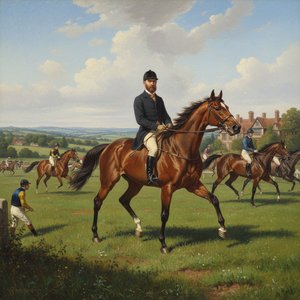
John Frederick Herring Sr.: Equestrian Mastery & the Rise of Sporting Art in Victorian England
Explore the life & work of John Frederick Herring Sr., a leading Victorian equestrian artist. Discover his masterpieces, patronage, techniques & investment potential. Expert insights for collectors.
The Noble Steed on Canvas: A Historical & Artistic Exploration of Horse Painting Across Cultures
Explore the rich history of horse painting! Discover masterpieces from Stubbs to Munnings & learn about symbolism, techniques & artists. Find museum-quality reproductions at OriginalUniqueArt.
Eläinten läsnäolo taiteessa ja sisustuksessa: Ikuinen side luontoon ja ihmiskuntaan
Tutustu eläinten kiehtovaan rooliin taiteessa ja sisustuksessa! Syvällinen analyysi symboliikasta, tyylisuunnista ja inspiraatiosta kotiisi. Laadukkaat öljyvärimaalaukset ja canvas-taulut ilta.
Beastly Brushstrokes: A Historical Journey Through Animal Painting & Aesthetic Movements
Explore the rich history of animal painting across cultures & movements. Discover iconic artists, symbolism, collecting trends & expert art consultation at OriginalUniqueArt.com.
Sr. John E. Ferneley: Equestrian Portraiture & England's Social Fabric
Explore the captivating world of Sr. John E. Ferneley, a master of British sporting art. Discover his exquisite equestrian paintings & insights into 19th-century society. Invest in timeless masterpieces with OriginalUniqueArt.