Text size

() ·

A painting made for you, by hand

Sketch for The Leaping Horse

Käsinmaalattu öljyvärinen jäljennös

Käsinmaalattu öljyväri kankaalle haluamassasi koossa ja kehyksissä, taiteilijoidemme valmistamana tilauksesta. ( Vaihda tulosteeseen Siirry digitaaliseen kuvaan)

Keräilykohteen kuvaus

Taiteilijan elämäkerta

John Constable (1776–1837) oli brittiläinen maalaustaideilija, joka loi tunnettuja englantilaisia maisemia ja kuvasi luonnon tunteita. Tutustu ikonisiin teoksiin!

from ·

Chapter 1

How large should it be?

Slide to change the size; the picture on the left shows the frame at its real width. The proportions of the original are kept.

Vakiokoko
räätälöity
CM
INCH

Valitse valmiista mitoistamme sellaiset, jotka vastaavat teoksen alkuperäisiä mittasuhteita.

leveys
korkeus

Kirjoita tarvitsemasi leveys ja korkeus, jotta teos sopii kehyksiisi tai seinällesi. Koska kyseessä on käsinmaalattu teos, taiteilija voi maalata hieman enemmän kuvan ympärille tai rajata sitä hieman, jos haluat eri muotoisen koon — valinta on sinun. Lähetämme sinulle digitaalisen mallikuvan hyväksyttäväksi ennen kuin maalaus alkaa. Tällä sivulla näkyvä kuva ei vastaa lopullista tulosta — vain mallikuva näyttää sen.

Chapter 2

How should it arrive?

Choose the edges of the stretched canvas

Choose your frame

Corner sample of the WhiteWrap canvas edge finish, stretched on massiivipuu bars
White €1
Corner sample of the BlurSideWrap canvas edge finish, stretched on massiivipuu bars
Blurside €1
Corner sample of the ExtendedWrap canvas edge finish, stretched on massiivipuu bars
Extended €1
Corner sample of the P118B picture frame: valettu polystyreeni, 5 cm wide and 3 cm thick
P118B €10
Corner sample of the P118H picture frame: valettu polystyreeni, 5 cm wide and 3 cm thick
P118H €10
Corner sample of the P118W picture frame: valettu polystyreeni, 5 cm wide and 3 cm thick
P118W €10
Corner sample of the P438Z picture frame: valettu polystyreeni, 5.5 cm wide and 3.5 cm thick
P438Z €10
Corner sample of the P508JH picture frame: valettu polystyreeni, 7 cm wide and 3.5 cm thick
P508JH €12
Corner sample of the P508YH picture frame: valettu polystyreeni, 7 cm wide and 3.5 cm thick
P508YH €12
Corner sample of the P805H picture frame: valettu polystyreeni, 5 cm wide and 3.5 cm thick
P805H €10
Corner sample of the P805Z picture frame: valettu polystyreeni, 5 cm wide and 3.5 cm thick
P805Z €10
Corner sample of the P919BZ picture frame: valettu polystyreeni, 7 cm wide and 3.5 cm thick
P919BZ €10
Corner sample of the P919G picture frame: valettu polystyreeni, 7 cm wide and 3.5 cm thick
P919G €10
Corner sample of the P919XJ picture frame: valettu polystyreeni, 7 cm wide and 3.5 cm thick
P919XJ €10
Corner sample of the P959ZH picture frame: valettu polystyreeni, 5 cm wide and 3 cm thick
P959ZH €10
Corner sample of the P968JZ picture frame: valettu polystyreeni, 6 cm wide and 4 cm thick
P968JZ €12
Corner sample of the W106C picture frame: massiivipuu, 5 cm wide and 3 cm thick
W106C €8
Corner sample of the W218G picture frame: massiivipuu, 5 cm wide and 3 cm thick
W218G €10
Corner sample of the W218JH picture frame: massiivipuu, 5 cm wide and 3 cm thick
W218JH €8
Corner sample of the W218Y picture frame: massiivipuu, 5 cm wide and 3 cm thick
W218Y €10
Corner sample of the W307PJ picture frame: massiivipuu, 6 cm wide and 3 cm thick
W307PJ €10
Corner sample of the W316G picture frame: massiivipuu, 6 cm wide and 3 cm thick
W316G €10
Corner sample of the W316PJ picture frame: massiivipuu, 6 cm wide and 3 cm thick
W316PJ €8
Corner sample of the W316Y picture frame: massiivipuu, 6 cm wide and 3 cm thick
W316Y €10
Corner sample of the W398PJ picture frame: massiivipuu, 5 cm wide and 3 cm thick
W398PJ €8
Corner sample of the W4111J picture frame: massiivipuu, 6.5 cm wide and 3.5 cm thick
W4111J €10
Corner sample of the W500HY picture frame: massiivipuu, 7 cm wide and 5 cm thick
W500HY €15
Corner sample of the W500JH picture frame: massiivipuu, 7 cm wide and 5 cm thick
W500JH €15
Corner sample of the W692G picture frame: massiivipuu, 8 cm wide and 4 cm thick
W692G €12
Corner sample of the W849H picture frame: massiivipuu, 5 cm wide and 3 cm thick
W849H €8
Corner sample of the W940BG picture frame: massiivipuu, 7.5 cm wide and 4.5 cm thick
W940BG €15
Corner sample of the W953PJ picture frame: massiivipuu, 6 cm wide and 3.5 cm thick
W953PJ €8
Corner sample of the H24-GOLD picture frame: kaiverrettua puuta ja gessoa, 10 cm wide and 6 cm thick
H24-GOLD €30
Corner sample of the H24-SILVER picture frame: kaiverrettua puuta ja gessoa, 10 cm wide and 6 cm thick
H24-SILVER €30
Corner sample of the H36-GOLD picture frame: kaiverrettua puuta ja gessoa, 15 cm wide and 6.5 cm thick
H36-GOLD €45
Corner sample of the H36-SILVER picture frame: kaiverrettua puuta ja gessoa, 15 cm wide and 6.5 cm thick
H36-SILVER €45
Kehyksen esikatselu
Kehystetty

Moulding: . Overall size with the frame: .

Chapter 3

Who paints it, and should anything change?

Examples of what can be changed: Replace face with customer photo; Add pet (e.g., replace cat with dog); Include hidden message in background; Change background landscape or elements.
After order, OriginalUniqueArt.com team will email client for instructions and provide a mockup preview

Maailmanlaajuinen toimitus () 3–4 viikossa tavallisen 5 viikon sijaan. (1 marraskuu). Laadusta ei tingitä.

Chapter 4

The finishing touches

A nameplate, as in a museum?

Kaiverretun pronssilaatan tiedot

This elegant plaque features the artist's name and the title of the artwork, finely engraved for a timeless presentation.

It is made from bronze with a refined, elegant finish. The text is precisely laser-engraved for a sharp and permanent result. Measuring 9x2 cm, the plaque is compact yet easy to read. It's built to be durable and scratch-resistant, offering a professional, museum-quality look. Mounting is simple thanks to the included adhesive backing.

Läpinäkyvän akryylilaatan tiedot

The plaque includes essential engraved details such as the artist's name, the title of the artwork, the date it was created, the type of media used-like oil on canvas or watercolor-a brief description of the piece, and a QR code that links to the complete artwork information.

It is crafted from clear acrylic, offering a sleek, modern appearance. The text is UV-engraved in black to ensure strong visual contrast. With a size of 10x15 cm, it ensures optimal readability. It comes equipped with two metal hooks for secure wall mounting. The plaque is designed to be weather-resistant, making it suitable for various environments, and it includes interactive features that work seamlessly with smartphone scanning.

Mustan akryylilaatan tiedot

This elegant plaque includes engraved information such as the artist's name, the title of the artwork, the date it was created, the type of media used (like oil on canvas or watercolor), a short description of the artwork, and a QR code for quick access to more information.

The plaque itself is made from refined black acrylic with a premium finish. The text is laser-engraved in white for high contrast and readability. Its size is 10x15 cm, designed to be easy to read. It comes with two metal hooks for professional mounting. The design is sleek and fits any interior style. It is also weather-resistant and durable, with built-in digital integration for mobile compatibility.

A protective varnish?

When do you need it?

Chapter 5

Your painting, as you ordered it

Sketch for The Leaping Horse

Reproduktiotekniikka

Replikaatin koko

-

Kokenut huipputaiteilija

Lisää yksityiskohtia, hienostuneisuutta ja enemmän aikaa tuotantoon

-

Reproduktion kehystysvaihtoehdot

-

-

Teoksille tai reproduktioille, joiden mikä tahansa sivu on suurempi kuin 105 cm (noin 41 tuumaa), kehys toimitetaan osina purettuna sarjana. Tämä menetelmä varmistaa turvallisen toimituksen ja ehkäisee vaurioita kuljetuksen aikana.

Vaatii ammattimaista kokoamista – kyseessä ei ole tee-se-itse-tuote.
Sarja on koottava ja kangas kiristettävä kokeneen kehystysammattilaisen toimesta käyttäen puuliimaa (ei sisälly pakkaukseen), kangaspinnetteitä ja puristimia, jotta kehyksen kulmat pysyvät suorina liiman kuivuessa. Virheellinen kokoaminen tai epätasainen kankaan kiristys voi vaurioittaa teosta pysyvästi, eikä tällaiset vauriot ala takuun piiriin.

  • Kaikki massiivipuupalat sisältyvät, tarkasti mittojen mukaan leikattuina.

  • Kootaan mukana tulevilla ruuveilla sekä kulmaliitoksia varten tarvittavalla puuliimalla, jota ei toimiteta, joten se on hankittava kehystäjältä.

  • Vaatii ammattilaisvälineitä, jotka eivät sisälly pakkaukseen: kankaan venytyspihdit (kiristin) ja puristimet, joilla pidetään kehyksen puut suorassa liiman kuivuessa.

Tärkeää:
Kulmaliitoksissa tarvitaan puuliimaa, kehyksien osat on pidettävä puristimilla, kunnes liima on täysin kuivunut, ja koottuun kehykseen jännitettävän kankaan kiristämiseen tarvitaan kangaspenssipihti. Mikään näistä ei sisälly pakkaukseen. Suosittelemme varmistamaan kokeneen kehystäjän saatavuuden ennen tämän kokoisen kehyksen tilaamista.

Nimilaatta

-

-

Suojalakkaus

Kiiltävä lakka (syventää värejä, suojaa valolta ja kosteudelta)

-

Mukauta taideteokseni

Esimerkkejä muokattavista asioista: Vaihda kasvot asiakkaan omaan valokuvaan; Lisää lemmikki (esim. vaihda kissa koiraan); Lisää taustalle piilotettu viesti; Muuta taustan maisemaa tai elementtejä.

-

Pikatoimitus

Maailmanlaajuinen toimitus () 3–4 viikossa tavallisen 5 viikon sijaan. (1 marraskuu). Laadusta ei tingitä.

-

Pikatoimitus

Maailmanlaajuinen toimitus () 5 viikon kuluessa. (8 marraskuu).

Sisältyy hintaan

Kokonaishinta

€ 267

Kokonaishinta € 267

Lasivaihtoehto on saatavilla vain alle 110 cm kokoisille teoksille

Included with every order

  • Ilmainen pikatoimitus ympäri maailman
  • Korkealaatuinen pellavakangas
  • Kattava kuljetusvakuutus
  • Tulliveron palautustakuu
  • Takuu täydellisestä värien vastaavuudesta
  • 100 päivän palautusoikeus (vain valmistusvirheet)
  • 100% rahat takaisin -takuu
  • Määräalennus tarjolla

A Moment Frozen in Time: John Constable’s ‘Sketch for The Leaping Horse’

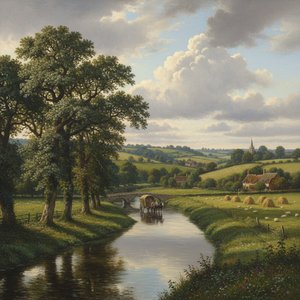
This evocative black and white sketch, measuring 129 x 188 cm, offers a rare glimpse into the creative process of one of England's most beloved landscape painters, John Constable. Dating back to 1824, it transcends a simple preparatory study; instead, it embodies the very essence of Constable’s profound connection with the Suffolk countryside – a world he meticulously rendered not just with accuracy but with an intensely felt emotional resonance. The image captures a fleeting moment in a rural scene: horses grazing peacefully across a vast field, punctuated by the scattered figures of individuals engaged in their daily routines. A small boat rests near the left edge, hinting at the proximity of human activity to the natural world, suggesting a harmonious coexistence that was increasingly rare during this period.

Constable’s artistic journey began not with formal training but within the familiar embrace of his family's estate in Dedham Vale. His father, a successful merchant, possessed both land and mills along the River Stour – providing an unparalleled opportunity for observation and inspiration. This intimate relationship with the landscape shaped Constable’s entire approach to painting. He wasn’t simply recording what he saw; he was attempting to capture the *feeling* of a place, its light, its atmosphere, and the subtle shifts in color that defined its character. The ‘Sketch for The Leaping Horse’ exemplifies this deeply personal engagement with nature, revealing an artist wholly absorbed in his subject.

The Language of Line and Light: Technique and Style

Executed with remarkable economy and precision, the sketch is a testament to Constable's mastery of line. He employs a loose, expressive charcoal technique, prioritizing tonal variation over meticulous detail. Notice how he uses rapid, broken strokes to suggest movement – particularly in the bodies of the horses – while simultaneously creating a sense of atmospheric depth through subtle gradations of gray. The absence of color forces the viewer to focus entirely on these nuances of line and value, highlighting the artist’s keen eye for capturing light and shadow. This technique is characteristic of Constable's early work, reflecting his desire to represent the ephemeral qualities of natural light with immediacy and spontaneity.

The composition itself is deceptively simple yet powerfully effective. The arrangement of figures and horses within the expansive field creates a sense of scale and openness, drawing the eye into the distance. Constable’s use of aerial perspective – diminishing details and colors in the background to suggest depth – further enhances this effect, immersing the viewer in the vastness of the Suffolk landscape. The placement of the boat adds an element of narrative, inviting speculation about the lives and activities unfolding within this rural setting.

Symbolism and the English Countryside

More than just a depiction of a pastoral scene, ‘Sketch for The Leaping Horse’ speaks to broader themes of rural life, human connection with nature, and the changing social landscape of early 19th-century England. The horses themselves are potent symbols – representing both industry (the agricultural economy) and freedom. Their leisurely grazing suggests a world largely untouched by the rapid industrialization that was transforming Britain at this time. The presence of people tending to them underscores the continued importance of agriculture, while also hinting at the enduring value placed on traditional rural skills.

The sketch’s inherent tranquility reflects Constable's own deeply held appreciation for the beauty and stability of the English countryside. He saw himself as a guardian of this landscape, striving to capture its essence before it was irrevocably altered by progress. This sentiment is powerfully conveyed in ‘Sketch for The Leaping Horse,’ offering a poignant reminder of a time when nature reigned supreme and the rhythms of rural life held an unparalleled allure.

Bringing Constable’s Vision Home: A Reproduction

OriginalUniqueArt offers meticulously crafted, hand-painted reproductions of this extraordinary sketch. Each reproduction is created by skilled artists who have painstakingly studied Constable's original techniques, ensuring that every detail – from the subtle nuances of line to the atmospheric depth – is faithfully reproduced. Whether you’re an art collector, a design enthusiast, or simply seeking to infuse your home with a touch of timeless beauty, this reproduction provides a stunning and authentic representation of one of England’s greatest landscape painters. Imagine this evocative scene adorning your walls, transporting you to the serene fields of Suffolk and allowing you to experience the profound emotional impact of Constable's art.

Kysymykset ja vastaukset

Millaista väriharmoniaa John Constable:n "Sketch for The Leaping Horse" edustaa?

John Constable:n "Sketch for The Leaping Horse" esittää Discordant Palette väriharmoniaa.

Mikä on alkuperäisen John Constable:n "Sketch for The Leaping Horse" tekniikka ja koko?

"Sketch for The Leaping Horse" on valmistettu tekniikalla Acrylic On Canvas, ja sen alkuperäinen koko on 129 x 188 cm.

Mistä John Constable:n "Sketch for The Leaping Horse" -teoksen vierailijat ovat kotoisin?

Teoksen John Constable:n "Sketch for The Leaping Horse" tilastot löytyvät sen Tilastot -sivulta: teoksen kuukausittaiset käynnit, taiteilijan muiden teosten käynnit sekä viimeisimpien kävijöiden maa- ja kielijakauma.

More about this painting

Esikatselu Esikatsele AR-tilassa Vaihda tulosteeseen Siirry digitaaliseen kuvaan Jaa teos
Tiedot Opas Lisää suosikkeihin Lataa kuva Samanlaisia kohteita Röntgenkuvaus Diaesitys Q&A Tilastot

In numbers

  • 1824the year it was painted
  • 29frames to choose from
  • standard sizes, in its own proportions
  • 5weeks to paint and deliver it
John Constable

John Constable

1776 - 1837, Iso-Britannia

Quick facts about John Constable

  • Artistic Movement Or Style: Romantiikka
  • Artists Or Movements Influenced By This Artist: ['Barbizon School']
  • Artists Who Influenced This Artist:
    • Claude Lorrain
    • Ruisdael
  • Date Of Birth: 11. kesäkuuta 1776
  • Date Of Death: 31. maaliskuuta 1837
  • Full Name: John Constable
  • Nationality: Brittiläinen
  • Notable Artworks:
    • Näköala Highgate Hillistä
    • Pilviasutus, Hampden
    • Salisbury Cathedral
  • Place Of Birth: East Bergholt, UK

Taiteilijan elämäkerta

A Life Rooted in the English Landscape

John Constable, syntynyt vuonna 1776 idyllisessä Suffolkin kylässä East Bergholtiin, ei ollut pelkästään maisemapeilaaja; hän oli maan runoilija, kääntäen sen hienovaraiset tunnelmat ja ikuisen kauneuden maalipinnoille ennennäkemättömällä tunteellisuudella. Hänen isänsä, menestyvä maataloustuottaja, joka omisti sekä Dedham Valea että joita Stour-joen varrella sijaitsevia myllyjä, ei ainoastaan tarjonnut taloudellista turvaa vaan myös itse aihetta, josta Constable määrittelisi taiteellisen elämänsä. Tämä varhainen sukellus maaseudun maailmaan – hitaan rytmin maatalouden elämälle, muuttuvan valon kentille ja veteen, luonnon intiimien yksityiskohtien – oli syvästi kaiverrettu hänen aivokuvansa sisään. Vaikka hänet oli alun perin määrätty seuraamaan isänsä liiketoimintaa, intohimo taiteeseen, joka oli ruuktuutunut paikallisten suojelijoiden, kuten George Beaumontin, kautta – joka esitteli hänelle Clauden Lorrainin teoksia – ohjasi lopulta hänet eri polulle. Constablen taiteellinen matka ei ollut välitön; se oli hidas ja asteittainen kehitys, muotoiltu huolellisella tarkkailulla ja jatkuvalla halulla vangita ei *mitä* hän näki, vaan *kuinka* siitä tuntui olevan läsnä maaseudussa.

Breaking with Convention: A New Vision of Nature

Constablen taiteellinen kehitys oli merkittävää harkitun hylkäyksen suhteen vallitseviin akateemisiin konventioihin. Hän oli pettynyt idealisoituihin ja usein teatraalisiin maisemiin, joita suositti Royal Academy, ja etsi sen sijaan totuudenmukaisen esityksen luonnosta, täynnä henkilökohtaista tunnetta. Häntä ei kiinnostanut suurikokoiset historialliset tarinat tai myyttiset kohtaukset; hänen keskittymisensä pysyi lujasti tuttujen maaseutojen ympärillä. Tämä sitoutuminen tavallisten aiheiden kuvaamiseen – heinänkärryt, maatilat, kyläelämä – kohosi aluksi kritiikin kohteeksi, koska ihmiset katsoivat hänen työnsä olevan liian arkista ja puuttuvaa kunnianhimoa. Silti Constable kesti, ohjautuen vakaumuksella, että kauneus löytyy jokapäiväisestä elämästä. Hän pioneeroi *plein air* -maalaustekniikan, lähtien ulos suoraan tarkkailemaan ja vangitsemaan valon ja sään hetkellisiä vaikutuksia. Tämä suora vuorovaikutus luonnon kanssa mahdollisti hänelle maalattujen pintojen täyttämisen välittömyydellä ja eloisuudella, joka oli aiemmin näkemätöntä brittiläisessä maisemamaalauksessa. Hänen siveltimenkäyttönsä muuttui yhä löysäksi ja ekspressiivisemmaksi, käyttäen *impasto*a – paksuja kerroksia maalia – luomaan tekstuurin ja välittämään tunteen liikkeestä ja tunnelmasta. Hän ei ainoastaan tallentanut sitä, mitä hän näki; hän muutti oman tunteensa maan sisään pääsystä visuaaliseksi muodoksi.

Iconic Works and Lasting Influence

Constablen ikonisin teokset ovat todiste hänen ainutlaatuisesta visiostaan. The Hay Wain (1821), ehkä hänen kuuluisimman maalauksensa, kuvaa quintessential rural -näkyä Stour-joen varrella, vangiten maatalouden elämän rauhan ja harmoniaa. Hadleigh Castle (1829) esittelee hänen dramaattista valon ja tunnelmien käyttöään, muuttaen rapistuneen linnan voimakkaaksi symboliksi ajan kulumisesta. Salisbury Cathedral -sarja (1831), jossa kuvataan katedraalia luonnollisen maiseman osana, demonstroi hänen taitoaan herättää erilaisia mielialoja ja aikoja vuorokaudessa. Netley Abbey (1824), jossa esitetään ihmisen luomuksen ja villin kauneuden yhdistelmää, on esimerkki hänen taidoistaan yhdistää arkkitehtoninen loisto luonnon ympärille. Vaikka Constable kohtasi aluksi vastustusta Englannissa, hän saavutti merkittävää arvostusta Ranskassa, jossa hänen innovatiiviset tekniikkansa ja henkilökohtainen tunteellisuus resonoi syvästi taiteilijoiden kanssa, jotka etsivät luonnollisempaa lähestymistapaa maisemamaalaukseen. Hän vaikutti merkittävästi Barbizon-kouluun, ryhmään ranskalaisia taiteilijoita, jotka jakavat hänen sitoutumisensa *plein air* -maalaustekniikkaan ja luonnon suoraan tarkkailuun.

Personal Life & Final Years

Constablen henkilökohtainen elämä oli merkittävää sekä iloa että surua. Hän avioliitti Maria Bicknellin kanssa vuonna 1816, ja heillä oli seitsemän lasta, vaikka useampi kuoli varhain. Hänen avioliitonsa tarjosi hänelle tunnetta, mutta myös taloudellista rasitusta. Hänet valittiin Royal Academyn jäseneksi vuonna 1829, ja hän kohtasi edelleen kritiikkiä joiltakin osapuolilta, erityisesti hänen epätavanomaisista tekniikoistaan. Hänen myöhemmät vuotensa varjoivat Mariaa, jonka terveys heikkeni ja kuoli vuonna 1828, tapahtuma, joka vaikutti häneen syvästi. Vaikka hän kohtasi näitä vaikeuksia, Constable pysyi omistautuneena taiteelleen, jatkaen maalaamista kuolemaansa marraskuussa 31, 1837. Hän jätti jälkeensä rikkaasti taiteellisen perinnön – todisteen hänen väsymättömästä sitoutumisestaan ​​englannin kauniin ja tunteellisesti resonanssin luonnon kuvaamiseen. Hänen maalauksensa ovat edelleen voimakkaita evästajoja menneestä ajasta, kutsuen katsojia kokemaan maiseman hänen ainutlaatuisen herkkyytensä kautta.

Pikaista tietoa

  • Subject or theme: Rural landscape
  • Year: 1824
  • Influences: Claude Lorrain
  • Dimensions: 129 x 188 cm
  • Notable elements: Horses, people, boat

Taidevisat

Jokaisessa kysymyksessä on vain yksi oikea vastaus.

Kysymys 1:
What is the primary subject matter depicted in ‘Sketch for The Leaping Horse’?
Kysymys 2:
According to the provided biography, what significantly influenced John Constable’s artistic path?
Kysymys 3:
In what year was ‘Sketch for The Leaping Horse’ created?
Kysymys 4:
The description mentions a boat in the painting. What does this element suggest about the scene’s setting?
Kysymys 5:
Based on the artist’s biography, what was John Constable's family background?